Smithsonian Channel: Titanic's Final Mystery Blu-ray Movie
HomeSmithsonian Channel: Titanic's Final Mystery Blu-ray Movie 
Inception Media Group | 2012 | 93 min | Rated TV-G | May 29, 2012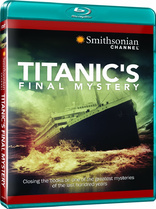
Price
List price:Listed on Amazon marketplace

Movie rating
7.6 | / 10 |
Blu-ray rating
| Users |  | 4.2 |
| Reviewer |  | 3.5 |
| Overall | | 3.5 |
Overview
Smithsonian Channel: Titanic's Final Mystery (2012)
Titanic scholar Tim Maltin sheds new light on the causes of the ship's sinking and the riddle of the "mystery ship" that might have rescued many of the passengers and crew who died that fateful night.
Starring: Don Murphy, Zora Bishop, Nick Figgis, John GuerrasioNarrator: Bernard Hill
Director: Nigel Levy
| Documentary | Uncertain |
| History | Uncertain |
Specifications
Video
Video codec: MPEG-4 AVC
Video resolution: 1080i
Aspect ratio: 1.78:1
Original aspect ratio: 1.78:1
Audio
English: Dolby Digital 5.1 (448 kbps)
Subtitles
None
Discs
25GB Blu-ray Disc
Single disc (1 BD)
Playback
Region A (C untested)
Review
Rating summary
| Movie | | 3.5 |
| Video |  | 4.0 |
| Audio |  | 3.0 |
| Extras |  | 0.0 |
| Overall | | 3.5 |
Smithsonian Channel: Titanic's Final Mystery Blu-ray Movie Review
Are You Ready to Go Back to Titanic?
Reviewed by Michael Reuben May 31, 2012The centennial of the sinking of the RMS Titanic did more than prompt a 3D version of the James Cameron blockbuster, plus its impending release on Blu-ray. The catastrophic event continues to exercise such power over the imagination that its anniversary also prompted multiple documentaries exploring numerous aspects of the subject. One of the most informative is this two-hour television program (just over ninety minutes without commercial breaks) based on the work of Tim Maltin, a Titanic scholar whose life-long obsession with the doomed ship rivals even that of Cameron. As a boy, Maltin constructed three-dimensional scale models of Titanic from layers of cardboard, drawing diagrams of the individual decks on each layer. As an adult, he has traveled the globe seeking historical records and transcripts of survivor interviews in an effort to get as close as possible to the actual events surrounding the ship's collision with an iceberg and the events immediately before and after. Maltin's painstaking inquiries have allowed him to debunk various myths and propose new explanations for aspects of the Titanic's loss that have baffled previous historians. This Smithsonian Channel documentary is largely based on Maltin's most recent book, A Very Deceiving Night. It's worth noting at the outset that Cameron's film is nowhere mentioned in the program. This is no doubt a deliberate choice, because Maltin wants to deal solely with the historical record, and much of what he discusses did not even appear in Cameron's film, because it wasn't germane to the epic romantic tale envisioned by Cameron. Still, Cameron's achievement as a filmmaker has been a boon to scholars like Maltin. Everything in this documentary—indeed, almost any discussion about Titanic since 1997—has an extra measure of urgency, because behind it we can't help but hear the distant voices of Rose and Jack.
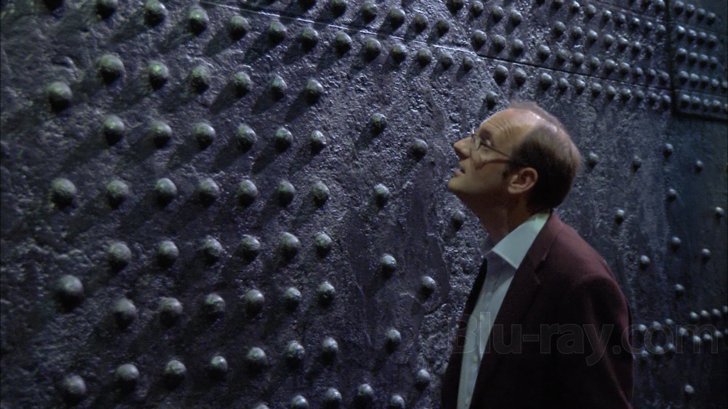
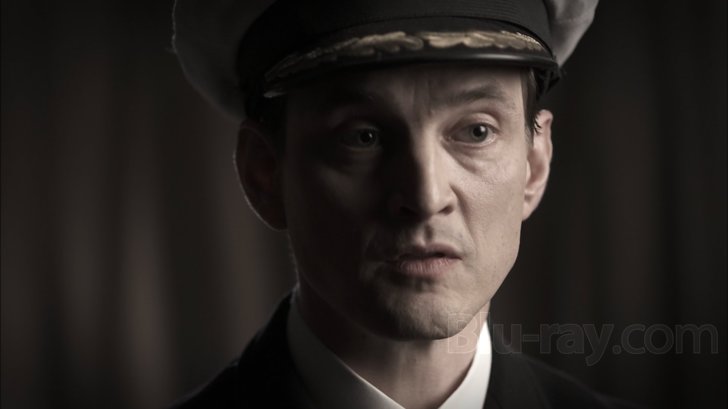
In parallel narratives, Titanic's Final Mystery follows Maltin to various destinations (beginning with the Titanic exhibit in Las Vegas) as he pieces together clues from diverse sources, and it also retells the story of Titanic's construction and maiden voyage, which turned out to be her last. The program uses computer animation, archival footage and photos, commentary by Maltin and one additional technique borrowed from the Ken Burns school of documentary filmmaking. Maltin has relentlessly tracked down every eyewitness interview taken from a Titanic survivor by either American or British authorities, both of which conducted investigations into the ship's sinking. Key excerpts are spoken by actors in period costumes with accents appropriate to the time and place, who address the camera directly, as if giving their testimony for the first time. The approach may seem hokey, but it has a cumulative impact and gives these accounts an immediacy that the printed page can't equal. One of the more familiar myths that Maltin debunks (and that Cameron's film perpetuated) is that Titanic was traveling too fast to proceed safely in ice-infested waters. Maltin's investigation of contemporary practices and weather conditions, among other things, establishes that any other captain would have traveled at the same speed, because the lookout would have expected to be able to see an iceberg in the ship's path at least twelve miles ahead on a clear night. At top speed, that would have given the ship's crew half an hour to change course, but all records and accounts suggest that they had only a minute's warning at best. (Even Cameron's fanciful explanation, namely, that the watch was distracted by Rose and Jack on the deck below, couldn't account for an entire half hour.) So why didn't the lookout see the fatal iceberg? Maltin's answer is closely linked to another question, the identity of the so-called "mystery ship" that several survivors reported seeing in the distance and believed would be coming to their rescue shortly. It never arrived. Subsequent studies of various logs revealed that the SS Californian had been stopped near an ice barrier in Titanic's vicinity and may have been the mystery ship, but no one on the Californian recalled having seen the Titanic. (An entire "subplot" involves misunderstood wireless transmissions between Titanic and Californian on the night in question that caused the Californian's communications officer to misunderstand the nature of Titanic's dire circumstances.) It's not a spoiler to give away Maltin's answer, because the entertainment value comes from watching him assemble it piece by piece until his case become truly compelling. The night may have been clear, Maltin concludes, but the visual field in the region encircling both Titanic and Californian was distorted by a phenomenon known as a "cold water mirage" (sailors have called it "Fata Morgana"), which is caused by wildly varying temperatures in contiguous layers of air. The result is to bend light in a manner that can radically change perceptions of distance, alter the appearance of distant objects or even render them invisible. Maltin makes a persuasive case, first, that this phenomenon existed in the region on that fateful evening, and second, that it caused the Titanic's lookout not to sight the iceberg in the distance and the Californian's crew not to recognize that what they saw in the distance was a ship in distress. If not for these mirages, Maltin concludes, the entire event might have played out differently. Of course, this will not be the last word on Titanic. Others will weigh in on Maltin's theory, and someone will almost certainly find conflicting evidence for which Maltin hasn't accounted. But Maltin has opened up a fascinating new chapter in a legendary historical catastrophe whose grip on the imagination isn't likely to be released anytime soon.
Smithsonian Channel: Titanic's Final Mystery Blu-ray Movie, Video Quality
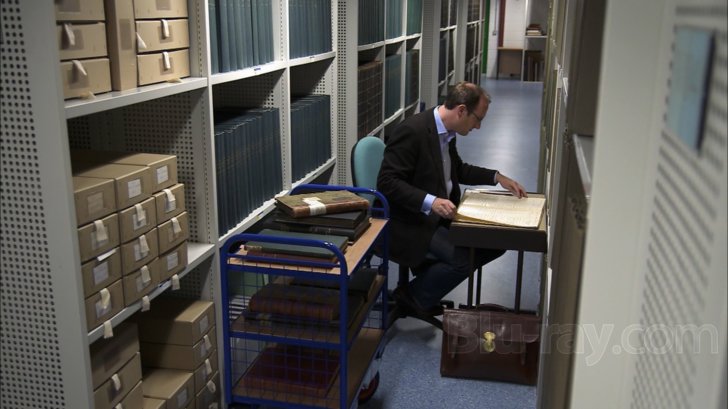
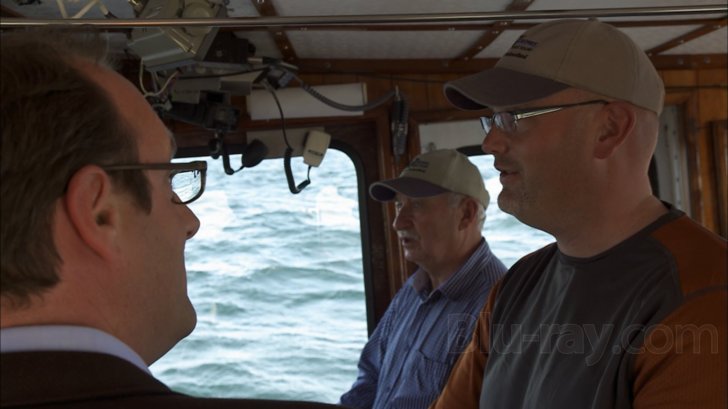
The bulk of Titanic's Final Mystery was shot on hi-def video, except for archival footage and portions that were computer-generated. Although the credits do not list a digital intermediate, a digital colorist is included, which would be essential to harmonize the variety of video, CG and archival sources. Inception Media's 1080i, AVC-encoded Blu-ray was presumably sourced from these digital files. In general, the Blu-ray looks terrific: sharp, clean and clear, with very good blacks (essential for the CG footage) and accurate colors for the numerous locales to which the story takes Maltin. The archival footage is weak, but that's only to be expected.
Smithsonian Channel: Titanic's Final Mystery Blu-ray Movie, Audio Quality
Once again, Inception Media has not included a lossless audio track, and once again I'll simply point out that, having actually heard the DD 5.1 track, it sounds quite good. As one would expect from a documentary, the only major audio element is the narration by Bill Ratner and the voices of Maltin and the actors playing the survivors who were interviewed, all of which remain clear and intelligible. The musical score and the sound effects (mostly accompanying the CG animation) remain very much in the background, so much so that I doubt even the most "golden" of ears could hear the difference between a lossy and a lossless presentation. Those who want to stand on principle should feel free. Those who are interested in this disc may acquire it with confidence that its DD 5.1 track is fine.
Smithsonian Channel: Titanic's Final Mystery Blu-ray Movie, Special Features and Extras
No supplements are included. As with previous Smithsonian Channel programs on Blu-ray, the disc is so barebones that the chapters aren't even labeled (although chapters stops have been included). The menu has a single item: "Play".
Smithsonian Channel: Titanic's Final Mystery Blu-ray Movie, Overall Score and Recommendation

A brief but fascinating section of Titanic's Final Mystery discusses some key points raised in Cameron's film: the sideswipe nature of the iceberg collision, which tore holes along an entire side of the ship and rendered its system of watertight doors useless. Those doors were considered state-of-the-art. With 20-20 hindsight and the luxury of time for careful analysis, it appears that the better decision at the short distance when the iceberg was spotted would have been not to turn the ship. The watertight doors had been designed for the kind of impact that a direct hit would have caused, and the ship would have had a much better chance of surviving if it had simply rammed the iceberg head-on. The designers had considered that possibility. They hadn't considered what actually happened. That, I suspect, is a big reason why Titanic continues to exercise such fascination. The best craftspeople and finest planners, with all resources available to them and no corners cut, did everything they could to anticipate every possibility, and still they failed. Bear that in mind the next time a financial professional tells you that a transaction or a market is fully "hedged" or "protected", or a surgeon tells you that an operation is "routine" and risk-free, or a lawyer says a case is airtight. No doubt they're sincere, and no doubt they've thought through every possibility—except for the ones they can't imagine. Recommended.
Similar titles
Similar titles you might also like
(Still not reliable for this title)

The American Revolution
2025

Trinity and Beyond: The Atomic Bomb Movie
70th Anniversary Special Edition
1995

America: The Story of Us
2010

Untold History of the United States Part 3: Reagan/Bush/Clinton/Obama
Oliver Stone's
2012-2013

When We Left Earth: The NASA Missions
2007

Clash of the Gods: Complete Season 1
2009

Mankind: The Story of All of Us
2012

The Dust Bowl
Ken Burns
2012

In the Shadow of the Moon
2007

Apollo 11
2019

The Americas 4K
2025

The War
2007

The Roosevelts: An Intimate History
2014

Up From Slavery
2011

Hillary's America
2016

The Farthest - Voyager in Space
2017

Hell and Back Again
2011

JFK Revisited: Through the Looking Glass
2021

Ancient Aliens: Season 7
2014-2015

The Cold Blue
2018