Short Night of Glass Dolls 4K Blu-ray Movie
HomeShort Night of Glass Dolls 4K Blu-ray Movie 
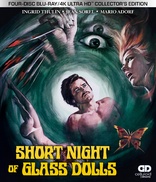
La corta notte delle bambole di vetro / 4K Ultra HD + Blu-rayCelluloid Dreams | 1971 | 97 min | Not rated | Apr 29, 2025

Price
List price:Amazon: $39.59 (Save 40%)
Third party: $39.59 (Save 40%)
Only 11 left in stock - order soon.

Movie rating
6.6 | / 10 |
Blu-ray rating
| Users |  | 0.0 |
| Reviewer |  | 5.0 |
| Overall | | 5.0 |
Overview
Short Night of Glass Dolls 4K (1971)
The corpse of reporter Gregory Moore (Jean Sorel of LIZARD IN A WOMAN'S SKIN) is found in a Prague plaza and brought to the local morgue. But Moore is actually alive, trapped inside his dead body and desperately recalling how the mysterious disappearance of his beautiful girlfriend (Barbara Bach of THE SPY WHO LOVED ME) led to a terrifying conspiracy of depravity. Can a reporter with no visible signs of life solve this perverse puzzle before he meets his ultimate deadline? Ingrid Thulin (THE DAMNED, SALON KITTY) co-stars in this unusual and startling giallo (also known as PARALYZED and MALASTRANA) that marked the debut of writer/director Aldo Lado (WHO SAW HER DIE?) and features a superb score by the legendary Ennio Morricone.
Starring: Ingrid Thulin, Jean Sorel, Mario Adorf, Barbara Bach, Fabijan ŠovagovićDirector: Aldo Lado
| Horror | Uncertain |
| Foreign | Uncertain |
| Mystery | Uncertain |
| Thriller | Uncertain |
Specifications
Video
Video codec: HEVC / H.265
Video resolution: 4K (2160p)
Aspect ratio: 2.39:1
Original aspect ratio: 2.39:1
Audio
Italian: DTS-HD Master Audio Mono (48kHz, 24-bit)
English: DTS-HD Master Audio Mono (48kHz, 24-bit)
Subtitles
English, English SDH
Discs
Blu-ray Disc
Four-disc set (4 BDs)
4K Ultra HD
Playback
Region A (B, C untested)
Review
Rating summary
| Movie |  | 4.5 |
| Video | | 4.5 |
| Audio |  | 4.0 |
| Extras | | 5.0 |
| Overall | | 5.0 |
Short Night of Glass Dolls 4K Blu-ray Movie Review
"I have to keep remembering...it's the only way I can tell I'm alive."
Reviewed by Justin Dekker April 24, 2025Aldo Lado's directorial debut, 'Short Night of Glass Dolls' (a.k.a. 'La corta notte delle bambole di vetro'), arrives on 4K UHD disc in this four-disc Collector's Edition courtesy of Celluoid Dreams. The film which stars Jean Sorel ('A Lizard In Woman's Skin'), Barbara Bach ('The Unseen', 'Street Law' 'The Spy Who Loved Me'), and frequent Bergman collaborator Ingrid Thulin ('Wild Strawberries', 'The Damned') is considered by many to be one of the very best gialli ever made, and also one of the most unique. 'Short Night of Glass Dolls' sees Greg (Sorel) seeking to understand why his girlfriend (Bach) has gone missing. The film features wonderful Eastern European locations and a dripping atmosphere of dread enhanced by an impressive 4K presentation and a wonderful score by Ennio Morricone. This release consists of one 4K UHD disc and three Blu-ray discs housed in a sturdy slipbox and packaged with a 64-page perfect-bound book. When purchased directly from Celluloid Dreams' website, a set of lobby card reproductions and a collectible 10-frame film strip are also included.
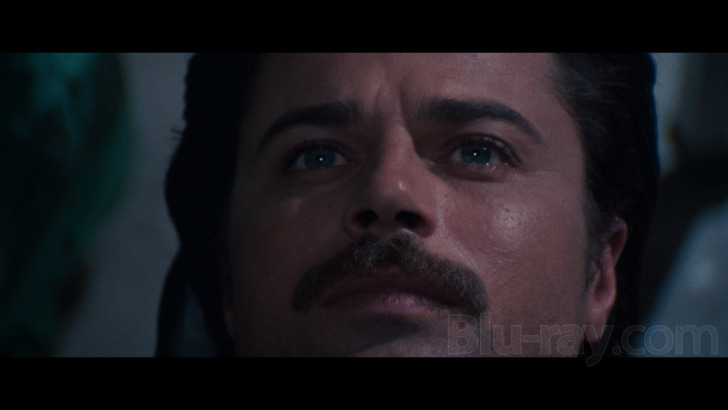
As a groundskeeper goes about his work in a park, a crow alerts him to a lifeless body lying nearby. Quickly ringing for assistance, the body (and the viewer) is rushed via ambulance through the ancient and winding Prague streets until it finally finds it way into the morgue. The man, Gregory Moore (Jean Sorel) via voiceover defiantly states that he's alive even as he's pronounced dead. Even as the medical staff is perplexed that rigor mortis hasn't set in and his body temperature refuses to drop in accordance with his "condition", Moore's and the audience's adventure is far from over. In a city that only becomes more alien and unsettling as the film progresses, Moore relives his final days, scouring his memories to understand what happened to his missing girlfriend, Myra Svoboda (Barbara Bach), whose disappearance he was investigating in his final days, and what exactly is the cause of his deathlike paralysis. Considered by many to be one of the best of its genre, Short Night of Glass Dolls does not follow the well-established blueprint and rules of a traditional giallo. There's no black-gloved killer striking with alarming frequency, and gore is kept to a minimum. The police, while not particularly useful, are not the inept bumblers they so often are in other gialli. Sex and nudity are handled tastefully when they arise, and only the pivotal scene near the film's end approaches luridness. Even then, though, while the camera documents and surveys the naked flesh on display, it never lingers overlong, attempts to titillate, and the scene doesn't persist long enough to feel exploitive. Instead, this important scene escalates the film's underlying sense of evil and dread to their zenith, serving as the last piece of evidence in an investigation whose solution has eluded Moore since the beginning.
Aldo Lado had been working on what would eventually become Short Night of Glass Dolls for quite some time before he was able to use the project as his directorial debut. Since he completed the story, he would decline various others who were interested in making the film, and resisted relocating the film's setting to Greece. And wisely so. Lado's attention to detail and the multilayered film reward repeat viewings, and Prague, as a setting, is as imposing and alien as it is breathtaking. Sorel is fantastic as Moore, instantly gaining sympathy for his condition and plight, and respect for his reporter's dogged determination in trying to unravel what had happened to him and Myra over the previous days. Bach excels as the vivacious Myra, a being seemingly filled with boundless life and joy, and serves as an interesting counterpoint to Ingrid Thulin's Jessica, a woman who is no less beautiful, and no less interested in Moore, but someone who seems content to live her life within the confines that Prague's elite have created. It's this choice that seems central to the film and the larger themes the film explores.
For additional thoughts on the film, please refer to Jeffrey Kaufman's review here, and Dr. Svet Atanasov's review here.
Short Night of Glass Dolls 4K Blu-ray Movie, Video Quality
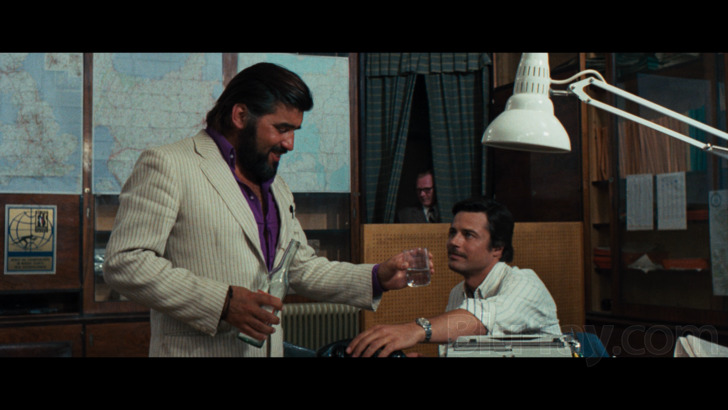
Per the notes about the 4K restoration included in the enclosed book, the original 2-perf Techniscope 35mm camera negative was scanned in at 4K.
Some scenes will retain a softer appearance due to source limitations and lab processes used. Celluloid Dreams removed thousands of instances of dirt,
debris, and damage, film splices, and resolved issues resulting from missing frames. The color grading strives to match the original color timing and
works to correct variances due to inconsistent lighting within scenes to create a more cohesive and consistent viewing experience. The results achieved
are quite
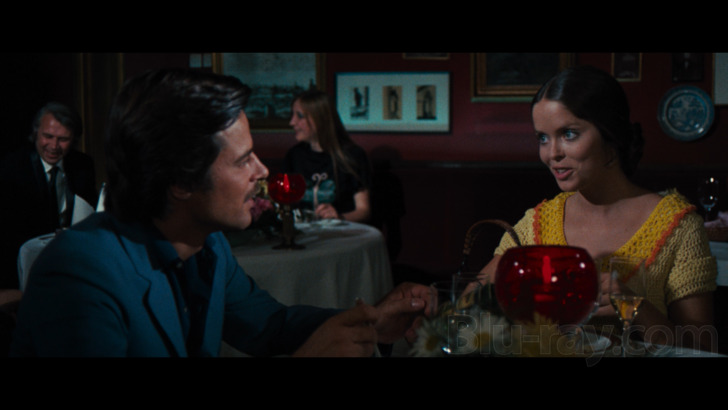
impressive, and the label is quickly establishing a high bar for its releases. Colors are richly saturated with reds, and the various colors in Thulin's
wardrobe pop nicely. Even under the cloudy skies, as Sorel and Bach roam the rain-dampened Prague streets and pass by the famed Astronomical
Clock,
Bach's colorful attire stands in lovely contrast to the drab earthen tones of the looming stonework facades. Once installed in the restaurant, her yellow
dress
leaps out against the deeper colors that populate the elegant location. Similarly, the infamous blues of Sorel's eyes and many pieces of his attire are
also quite eye-catching. Skin tones are universally healthy and realistic, save for those of the ghoulish elites who become less and less lifelike with each
successive encounter. Fine detail is typically quite high, with fine lines, wrinkles, and makeup specifics visible on the actors' faces. Each hair on Bach's
head and the subtle
variances of color therein are easily observable, and environmental details found in interiors and exteriors alike are open for inspection. Fine grain is
present but resolves naturally. Blacks are deep
and inky. Some softness is found in the image, particularly in the orgy/ritual scene near the end, though here it feels more like a directorial choice than
anything else. It's a beautiful transfer.
Please note that screenshots are sourced from the included 1080p disc.
Short Night of Glass Dolls 4K Blu-ray Movie, Audio Quality
Sonically, the Italian 1.0 DTS-HD Mono audio track is more than up to the task it's assigned here, handling dialogue and the typical assortment of mundane sound effects well. Dialogue always sounds clean and is devoid of issues. Morricone's score is likewise reproduced very well, with pleasing precision and depth. The English track yields identical results, and while the dub is solid, for me, the preferred viewing is the Italian track with English subtitles. As stated in the enclosed book, based on how dialogue was recorded entirely in post production, sync can appear loose, but should not be considered a defect. The real treat here, however, is the Isolated Score, which is listed with the supplemental material but is selectable under the setup menu. Without the distraction of the dialogue, Morricone's work is pushed brilliantly to the forefront, allowing the viewer to truly appreciate every note from the piano, various strings, the bouncing guitarwork of the dance scene, and Dell'Orso's haunting vocals.
Short Night of Glass Dolls 4K Blu-ray Movie, Special Features and Extras
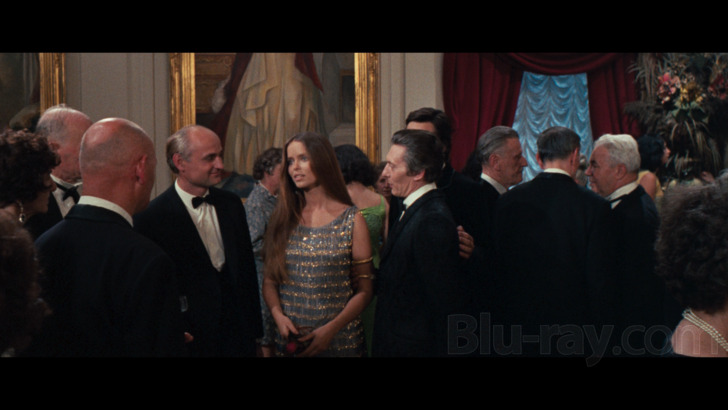
As one would expect, Celluloid Dreams packs this release with a host of special features that illuminate many facets of the film and its making and
are spread across each of the set's four discs.
Disc 1 and 2
- Feature Commentary with Director/Writer Aldo Lado & Frederico Caddeo - In this wide-ranging track, Lado demonstrates his impressive recall of a substantial amount of data regarding the production of Short Night of Glass Dolls, which spans every aspect from the story's genesis, to pre- production, to the shoot, and the film's release. While he asserts the opening scene was filmed in Prague, as were a number of others, many of the exterior location shots were actually done in Zagreb due to issues with getting permits issued in Prague, and the architectural and atmospheric similarities of between the two cities. Most of the exteriors in Prague were shot toward the end of the shoot when Lado told the local government officials he was working on a documentary, and then completed the scenes he required without the necessary permissions. The film itself was shot in about six weeks instead of the more usual eight and with a smaller budget than was typical - both of which were, in his opinion, acceptable modifications given that this was his first directorial effort. He spends a fair amount of time discussing the casting of both Thulin and Sorel. Lado chafes at the notion that the film is told in a series of flashbacks, with him clearly explaining that the film is rather simply told from George's (Sorel) point of view as he relives certain key events from a series of days to make sense of what he's seen and experienced in an effort to uncover the truth of what happened to Myra (Bach), and how he arrived at the point where we first encounter him at the start of the film. Thematically, he states, the film's Klub 99 and it's member's represent the bourgeoisie and their struggle to gather and retain power while simultaneously suppressing the freedoms of the youth and the lower class and pressuring them to conform with their world view.
- Commentary by Guido Henkel - Henkel begins by welcoming viewers to Prague as an establishing shot unspools before pointing out that the scene of the discovery of Gregory's body is incorrectly identified by Lado as being shot in Prague, when, due to certain landmarks, it's actually shot in Zagreb. Next, he shares that it wasn't until 2002 that US audiences had a chance to see a proper release of the film since it wasn't released here theatrically. As the film plays, Henkel, who is rarely quiet for long, shares an abundance of information about the film's cast, the production, the cinematography, and the editing. He can get fairly technical from time to time, but the track is always entertaining, and he rightly notes that the film, due to its complexity, rewards multiple viewings. There is a small amount of overlap between this track and the one recorded by Lado, but the vast majority is unique information. He also points out a few "errors" in the film, which, while interesting, do not diminish the power and impact of the film. He also discusses how inconsistencies in lighting presented a challenge for color grading. It seems Henkel is likely working from organized notes, but his delivery is typically rather relaxed and conversational as he points out numerous intricacies that may have escaped the notice of even the most focused and attentive viewers.
- Italian Trailer (3.08)
- English Trailer (3.07)
- Grindhouse Trailer (3.07)
- 'Catalepsis' Trailer (3.09)
- Isolated Score - Making the film even more dreamlike, this option removes all dialogue and sound effects, with Morricone's haunting score the only accompaniment to the film. It's an intense experience both with and without subtitles, though for those familiar with the film, not being distracted by subtitles may be preferable.
Disc 3 Special Features
- The Nights of Malastrana (2015 Interview with Aldo Lado and Jean Sorel) (1:41.08) - Lado opens by discussing not only how he started writing for the screen, but a moment of "crisis" brought about by his growing creative and professional frustration with crafting so many westerns, which were quite popular at the time. He begins discussing Short Night of Glass Dolls by sharing the real-life events of a magistrate who's story would inspire the events taking place in this film. He also felt that his Central European society was stuck in the old ways and was effectively smothering and stymying progress and the youth. He addresses his desire and eventual ability to have the film serve as his directorial debut, the changes made to the title, and difficulties shooting in Prague. Lado discusses how he was obligated to shoot a certain amount of the film in a studio, the origins of certain scenes, and the infamous song on the bridge. Eventually, he moves on to Who Saw Her Die? and how he became involved with that film. Footage of Sorel is inserted when needed as he shares what he remembers of the locations and other issues. Lado raves about Sorel, proclaiming him perfect for the role, and he shares similar feelings about Barbara Bach before moving on to others from the cast, and relaying how he inadvertently caused damage to Ingrid Thulin's eyes. Eventually, he turns the conversation toward working with Morricone, who, at the time, was not as famous as he is today. Once the film was edited, Morricone watched it and composed the music. Lado moves on to address the editing and other subjects before the feature concludes.(Italian with English subtitles.)
- All About Lado (2018 Interview with Aldo Lado) (32.32) - Lado discusses seeing a film starring Tyrone Power being shot when he was young which casued him to fall in love with filmmakeing as a career choice. He discusses his first film work, which he did in his mid- twentites. on the film Five Miles to Midnight, which was being shot in Paris. It was a project that taught him a great deal about his chosen profession. He goes on to cover the early days of his film career and the projects he worked on, including The Designated Victim, before going on to talk about how music was crafted for his films. Later he shares his intent to resist being a genre director or making similar films over and over again, moving on instead to a wide variety of projects from the film Night Train Murders to a television series for children. (Italian with English subtitles.)
- The Quest for Money (Interview with Enzo Doria) (20.10) - Producer Enzo Doria starts his time by discussing his switch from acting to a role behind the camera and working on multiple projects at once. It's not long before he begins to discuss Short Night, explaining that checks for the actors had bounced. Sorel is cut in, explaining that there always seemed to be financial problems on the set, much ot his obvious frustration. He shares that the film's title was changed by two of the producers who thought the original title wasn't right, and that the second choice was too close to another contemporary movie. He also shares memories from the production of Who Saw Her Die? and other films, including one tragic incident during the production of Tentacles. (Italian with English subtitles.)
- To Italy and Back (Interview with producer Dieter Geissler) (30.17) - Geissler explains that after seeing the classic Metropolis, he knew he had to work in film. As an actor, he states he consistently received smaller roles before landing a role on a television series in the UK, which lasted for a year and a half. He used the money he made there to produce his first film, 48 Hours to Acapulco, which was well-received, and led to him being involved in Pim de la Parra's Obsessions. Lado was already Short Night of Glass Dolls' director when he joined the project, and he states that Lado had a clear vision of what he wanted and worked pretty independently. He discusses the film's cast and is positive about the two leads. He then goes on to discuss other projects on which he worked. Morricone, it seems, had relatively complete freedom to produce music for the film as he saw fit, with none who felt they could critique his work. (German with English subtitles.)
- The Most Beautiful Voice in the World (Interview with singer Edda Dell'Orso) (21.44) - Edda Dell'Orso's etherial vocals instantly add lucious and otherworldly atmosphere to Short Night of Glass Dolls. Originally wanting to be a ballerina, she was made to study piano at age five, eventually going on to earn a degree in piano. She then began to learn to sing opera, but that didn't go as well as she had hoped. After singing in a choir, her singing career began to take off, and she remembers recording soundtracks fondly. She discusses meeting her husband Giacomo in 1952 while still in school and their subsequent work together. She describes her work on Once Upon a Time in the West before shifting to her contribution to this film. (Italian with English subtitles.)
- Cuts Like a Knife (Interview with Editor Mario Morra) (23.48) - Morra states that he got into editing due to his friend, well- known editor Sergio Montanari, who pitched the career as being more well-paying than what Morra was doing at the time. He describes witnessing the chaotic and artful process of Roberto Cinquini editing on a Moviola. After realizing it was a very creative craft, and lucrative as well, he became an assistant under Montanari and then Cinquini before getting the chance to be the editor on Mondo Cane 2, with his big break coming on The Battle of Algiers. He would go on to work on approximately 130 films in a decades-long career. He has fond memories of Aldo Lado, and recalls consoling him when he was fired from the film The Humanoid with Morra contending he was a scapegoat for the failings of another. (Italian with English subtitles.)
- The Man on the Bridge: Philosophy, Perception and Imprisonment in Aldo Lado's 'Short Night of Glass Dolls' (Retrospective Featurette) (23.03) - This visual essay by The Flying Maciste Brothers traces the origins of this film to the Prague Spring, its unfortunate aftermath, and Lado's scouting trip to Prague for a film that never materialized. Links to Fantastic Planet and several of Kafka's works are also explored, particularly the commonalities with The Metamorphosis . From that springboard, Lado dives into more philosophical territory that the segment works to explore and unravel, along with various narrative elements.
- 'Malastrana' Export Credits (4.19) - The credits scene used for the German release of the film, which used the original title of Malastrana.
- Image Gallery - Using the remote to advance the images, viewers are treated to various materials related to the film categorized as follows: Posters, Italian lobby cards (some of which will look familiar), Mexican lobby cards, Malastrana still photographs, Unter Dem Skalpell Des Teufels still photographs, Das Todessyndrom still photographs, and Miscellaneous.
Disc 4
- Grindhouse Version (1:37.08) - Taken from an original 35mm lab print, it is untouched and as such a number of issues and defects are visible and audible. Available in Italian and English.
- 'Paralyzed' VHS Version (1:36.35) - Numerous video and audio issues are on display due to the source material, though it does serve as an interesting companion to the restored presentation.
Book The included perfect-bound 64-page book contains the essay "Who Saw the Glass Dolls on the Night Train" by Andy Marshall-Roberts, two reproductions and English translations of reviews published at the time of the film's original release, notes on the restoration, and a host of stills from the film. The text is printed in a large white font that is easy to read. It's worth noting that the book is slightly too wide to fit perfectly inside the slipcase, with it protruding by a few millimeters. This is visible in a few shots of the packaging that I've included with the review. Some may take issue with it, but as I suspect most people will shelve this release so that the slipcase's spine with its large title is visible instead of the other way around, this is, in my opinion, not that significant.
Lobby Cards - Reproductions of eight 12″ x 8.25″ color lobby cards are also included with orders placed through Celluloid Dreams' website.
Original Filmstrip - The strip contains 10 frames, newly printed specifically for this release from the original camera negative of the trailer and packaged in a protective sleeve.
Short Night of Glass Dolls 4K Blu-ray Movie, Overall Score and Recommendation
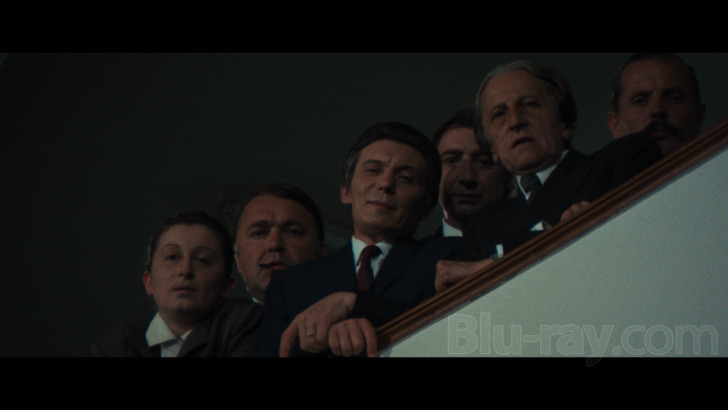
Short Night of Glass Dolls is a favorite of mine, though I came to the film after first finding Lado's much more graphic Night Train Murders and Who Saw Her Die?. The results Celluloid Dreams has achieved with their restoration are excellent, and the film has never looked or sounded better. The supplemental material included is more than worthwhile for anyone interested in Lado or the film, with the commentary tracks, the interviews with Morra and Dell'Orso, and the Isolated Score being particular standouts. Different from other entrants in the genre in a number of regards, this film is a deep, complex, and rewarding experience, with viewers likely to unearth something new with each successive screening. For established fans and those coming to it for the first time, the Short Night of Glass Dolls 4K Collector's Edition comes very highly recommended.
Other editions
Short Night of Glass Dolls: Other Editions

Similar titles
Similar titles you might also like

What Have You Done to Solange?
Cosa avete fatto a Solange?
1972

The Perfume of the Lady in Black
Il profumo della signora in nero
1974

Seven Blood Stained Orchids
Sette orchidee macchiate di rosso
1972

Who Saw Her Die?
Chi l'ha vista morire?
1972

The Bloodstained Shadow
Solamente nero
1978

The Bird with the Crystal Plumage
L'uccello dalle piume di cristallo | Remastered
1970

Enigma Rosso
Virgin Killer / Red Rings of Fear / Orgie des Todes
1978
Deep Red 4K
Profondo rosso
1975

All the Colors of the Dark
Tutti i colori del buio
1972

A Lizard in a Woman's Skin
Una lucertola con la pelle di donna
1971

Death Carries a Cane
Passi di danza su una lama di rasoio
1973

The Red Queen Kills Seven Times
La dama rossa uccide sette volte
1972

The Bloodstained Butterfly
Una farfalla con le ali insanguinate
1971

The Crimes of the Black Cat
Sette scialli di seta gialla | Standard Edition
1972

Death Walks on High Heels
Special Edition | La morte cammina con i tacchi alti
1971

The Cat o' Nine Tails 4K
Il gatto a nove code | Special Edition
1971

Death Walks at Midnight
Special Edition | La morte accarezza a mezzanotte
1972

Don't Torture a Duckling 4K
Non si sevizia un paperino | Limited Edition
1972

Luz
2018

Watch Me When I Kill
Special Edition
1977