Shogun's Ninja Blu-ray Movie
HomeShogun's Ninja Blu-ray Movie 
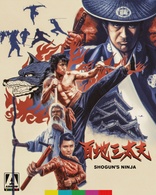
忍者武芸帖 百地三太夫 / Ninja bugeicho momochi sandayu | Limited EditionArrow | 1980 | 117 min | Not rated | Aug 25, 2026

Movie rating
6.5 | / 10 |
Blu-ray rating
| Users |  | 4.5 |
| Reviewer |  | 3.5 |
| Overall | | 3.5 |
Overview
Shogun's Ninja (1980)
In the middle of the 16th century, Hideyoshi, a power hungry warlord sets out to destroy the Momochi clan. He sends his war commander in search of the clan's hidden gold only to find that two daggers are the key to the hiding place of the treasured gold. Spanning decades, the quest for the missing daggers takes Shiranui through war and ancient tradition.
Starring: Shin'ichi Chiba, Hiroyuki Sanada, Etsuko Shihomi, Tetsurô Tanba, Isao NatsuyagiDirector: Norifumi Suzuki
| Foreign | Uncertain |
| Action | Uncertain |
| Adventure | Uncertain |
Specifications
Video
Video codec: MPEG-4 AVC
Video resolution: 1080p
Aspect ratio: 2.35:1
Original aspect ratio: 2.35:1
Audio
Japanese: LPCM 2.0 Mono
English: LPCM 2.0 Mono
Subtitles
English
Discs
Blu-ray Disc
Single disc (1 BD)
Packaging
Slipcover in original pressing
Playback
Region A (C untested)
Review
Rating summary
| Movie | | 3.5 |
| Video |  | 4.0 |
| Audio | | 3.5 |
| Extras |  | 2.0 |
| Overall | | 3.5 |
Shogun's Ninja Blu-ray Movie Review
Reviewed by Jeffrey Kauffman August 14, 2026There's some interesting background and contextual information offered on the supplements included with this release that get into the pretty dire straits the Japanese film industry had been experiencing since (in the words of Clément Rauger) 1958, when television viewing in that country started to increasingly erode people actually spending money to go to theaters to see movies. The sixties and seventies saw several different strategies to deal with this attrition, though even those efforts couldn't save Shintoho or Daiei, both of which went through bankruptcy proceedings (Daiei at least managed to rise as a somewhat injured phoenix under the auspices of Kadokawa). The only reason why Nikkatsu managed to weather the storm was by appealing to prurient sensibilities with their now infamous Roman Porno outings. Toei certainly had its own issues, but it managed a good deal better than its competitors by following what might be referred to as the "Warner Brothers roadmap" by churning out product for television while also revamping its film release regimen to offer fewer productions and marketing (if not actual budgets) that supported the idea that at least some of the films being offered were "epics". In that regard, when Rauger mentions a huge success from Kinji Fukasaku that helped sustain Toei, many might immediately think of Battles Without Honor and Humanity, but Rauger is actually referring to the somewhat later Shogun's Samurai, which maybe even more than the yakuza outing was a completely unexpected smash for the studio. If Shogun's Ninja is not an "official" sequel to Shogun's Samurai it probably owes its very existence (and its non-Japanese title) to the Fukasaku predecessor, and like that previous film it turned out to be very successful for Toei.
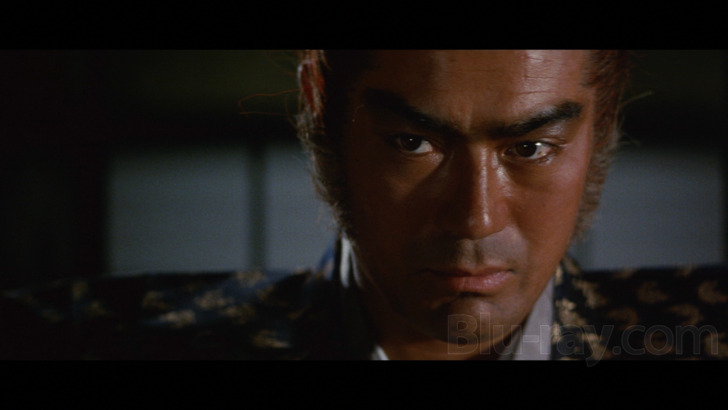
Shogun's Ninja is basically a revenge drama that Toei deliberately utilized to help propel Hiroyuki Sanada into superstardom, an intentional realization that the studio's stable of action stars, including this film's putative marquee attraction Sonny Chiba, were maybe starting to get a bit long in the tooth. The opening of Shogun's Ninja offers just the first of several pretty gonzo fight vignettes wherein a Warring States era "shogun" (at least for Western audiences) Shiranui (Sonny Chiba) takes out Momochi Sandayū (Masashi Ishibashi), leader of the Iga clan. While the "McGuffin" of this enterprise is a supposed cache of riches with a treasure map split into two pieces and hidden in daggers, the real narrative impetus here is simply the return of Sandayū's son Takamaru (Hiroyuki Sanada) to Japan ten years after his father's murder to avenge that killing. In the meantime Shiranui and his cohort have taken over control of Japan, and Takamaru must attempt to find and train his scattered clan members to launch a resistance.
The plot is frankly secondary to this enterprise, which instead relies on a near nonstop supply of adrenaline fueled fight sequences that liberally feature Chiba's Japan Action Club. Despite what was evidently not that huge of a budget (even if it was bigger than a "typical" Toei film), Shogun's Ninja also has at least an inkling of that aforementioned "epic" film, with some shots featuring a pretty large array of extras, and with some commendable production design and cinematography flair on display.
Shogun's Ninja Blu-ray Movie, Video Quality
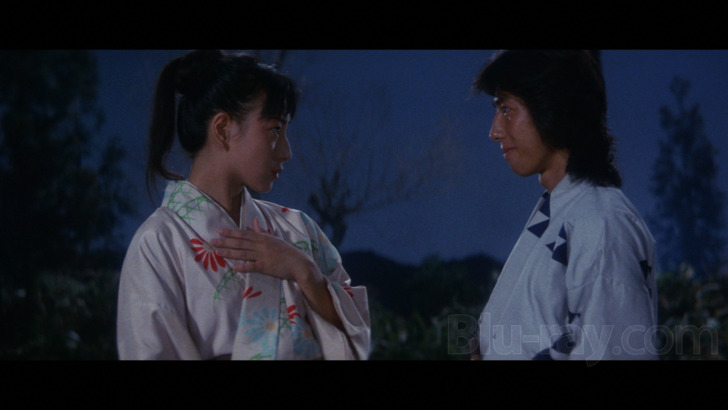
Shogun's Ninja is presented on Blu-ray courtesy of Arrow Video with an AVC encoded 1080p transfer in 2.35:1. Arrow's insert booklet contains the following minimal information about the presentation:
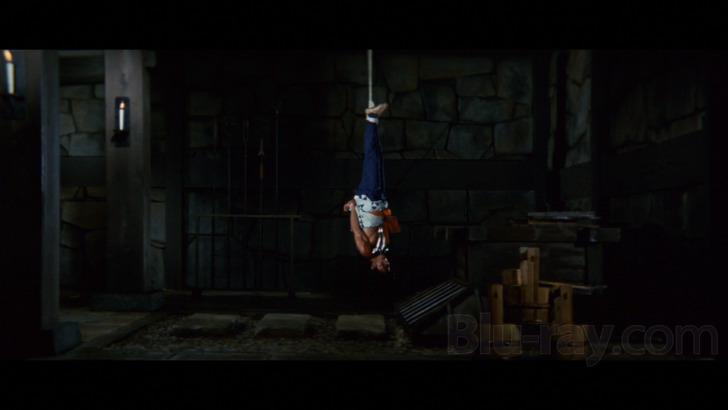
Shogun's Ninja / Ninja bugeicho Momochi Sandayu is presented in its original 2.35:1 aspect ratio with original lossless Japanese and English dubbed mono audio. The high definition master was provided by Toei Company, Ltd.A very healthy palette helps to make this an enjoyable presentation, especially in some of the outdoor location footage, where everything from lush green foliage to bright blue skies to almost Hammer-esque red blood all look very vivid and well suffused. A few moments in the outdoor footage can show occasional anamorphic warping toward the edges the frame that may not intrude as much in more stationary indoor material. Some of the set bound pieces may arguably not show the same levels of suffusion and at times even clarity and detail levels, as in several interstitial sequences that are slathered in blue (see screenshot 5 for an example). Those moments can look a bit on the fuzzy side, and there are a few other more normally lit/graded interior scenes that can show a similar downturn in clarity. While this doesn't look like it's been extensively restored, age related wear and tear is minimal.
Shogun's Ninja Blu-ray Movie, Audio Quality
Shogun's Ninja features LPCM 2.0 Mono options in either Japanese or English. The first thing many will notice whichever choice is made is the kind of gonzo rock score accompanying the film, but that said the Japanese track is noticeably brighter especially on the high end, to the point that audible hiss can be discerned (the few?) quieter moments. That high end may also tend to make some of the more frenetic cues a bit brash sounding, but flipping this comparison around some may feel like the English language track can sound a bit muffled in the mid to high ranges. These niggling comparative qualms aside, both tracks deliver dialogue, score and the traditional manic sound effects without any real issues. Optional English subtitles are available.
Shogun's Ninja Blu-ray Movie, Special Features and Extras
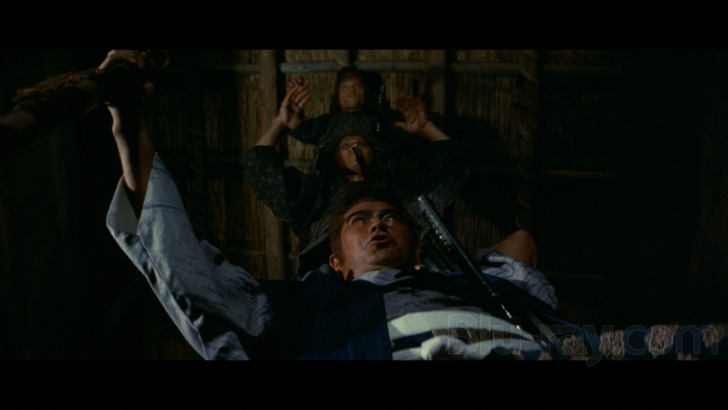
- Audio Commentary by Chris Poggiali
- The Rebirth of Japanese Action Cinema (HD; 22:09) is an informative overview by Clément Rauger. In French with English subtitles.
Shogun's Ninja Blu-ray Movie, Overall Score and Recommendation
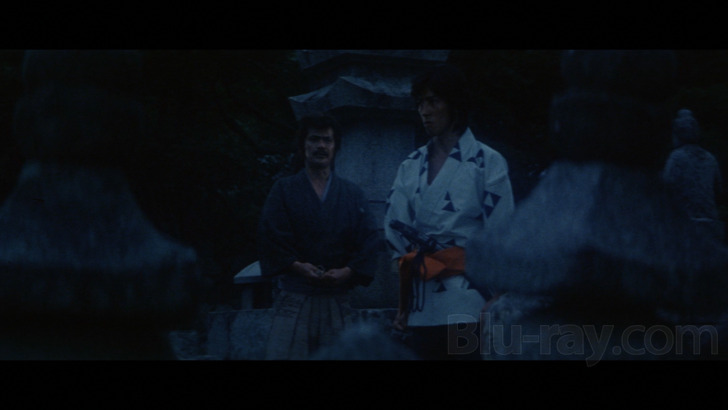
It's not hard to understand why Shogun's Ninja was such a success in Japan, but that is maybe to also suggest that this is the Japanese equivalent of a "popcorn movie" and maybe not the lost classic some latter day fans have tried to make it out to be. The manic fight choreography and askew framings (a couple of which I've tried to include in the screenshots) help to elevate what is at its core a pretty rote narrative. Technical merits are generally solid and the two on disc supplements appealing. Recommended.
Similar titles
Similar titles you might also like

The Killing Machine
少林寺拳法
1975

Shogun's Samurai: The Yagyu Clan Conspiracy
柳生一族の陰謀
1978

Five Element Ninjas
五遁忍術 / Ren zhe wu di
1982

Goemon
ゴエモン
2009

Legend of the Eight Samurai
里見八犬伝 / Satomi hakken-den | Masters of Cinema | Standard Edition
1983

Duel to the Death
生死決 / Sheng si jue / Sang sei kuet
1983

11 Samurai
十一人の侍 / Jūichinin no samurai
1967

Crazy Samurai: 400 vs. 1
Crazy Samurai Musashi / 狂武蔵 / Kyō Musashi
2020
Killer Constable
Wan ren zhan / Man yan jam / 萬人斬
1980

Kundo
2014

Ninja Wars
Death of A Ninja / Black Magic Wars / Iga Ninpôchô / 伊賀忍法帖 / Iga Magic Story
1982

Death Trance
デス・トランス
2005

Message from Space
Uchu kara no messeji
1978

13 Assassins
十三人の刺客 / Jūsannin no shikaku
1963

Samurai Fiction
1998

Black Tight Killers
Ore ni sawaru to abunaize
1966

The Chinese Boxer
龍虎鬥
1970

The Guillotines
Xue Di Zi
2012

Magnificent Bodyguards 3D
Fei do Guen Wan saan / Fei du Juan Yun shan / 飛渡捲雲山
1978

Dragon Inn
龍門客棧 / Long men kezhan
1967