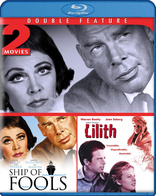
Ship of Fools / Lilith Blu-ray Movie
HomeShip of Fools / Lilith Blu-ray Movie 
Double FeatureMill Creek Entertainment | 1964-1965 | 2 Movies | 263 min | Not rated | Mar 26, 2013

Movie rating
Movie has not been rated yetBlu-ray rating
| Users |  | 4.0 |
| Reviewer |  | 3.0 |
| Overall | | 3.1 |
Overview
Ship of Fools / Lilith (1964-1965)
| Drama | 100% |
| Romance | 69% |
| War | 11% |
Specifications
Video
Video codec: MPEG-4 AVC
Video resolution: 1080p
Aspect ratio: 1.85:1
Original aspect ratio: 1.85:1
Audio
See individual releases
Subtitles
None
Discs
50GB Blu-ray Disc
Single disc (1 BD)
Playback
Region A (locked)
Review
Rating summary
| Movie | | 3.0 |
| Video | | 3.0 |
| Audio |  | 3.5 |
| Extras |  | 0.0 |
| Overall | | 3.0 |
Ship of Fools / Lilith Blu-ray Movie Review
Fools and Lunatics
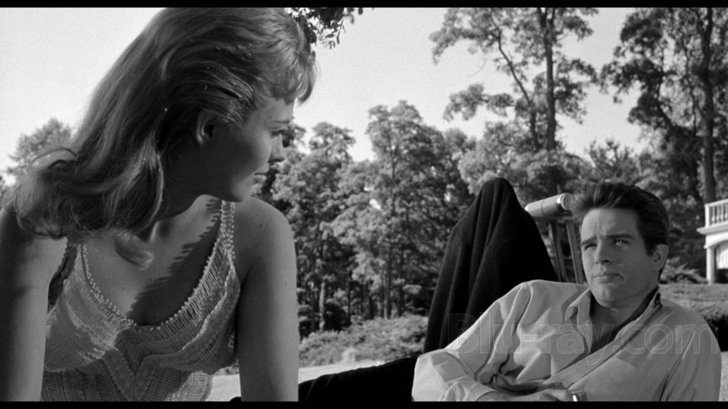
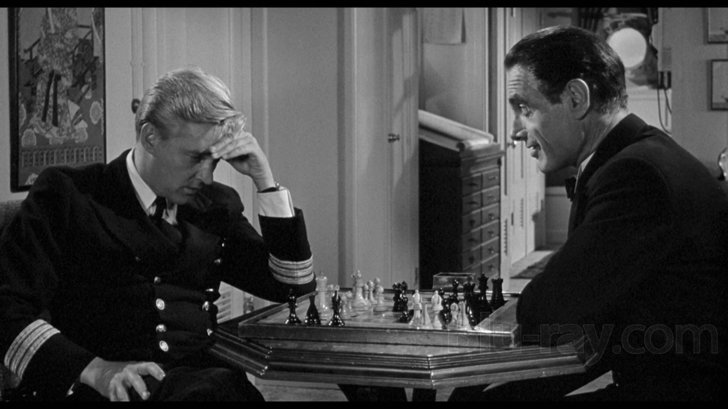
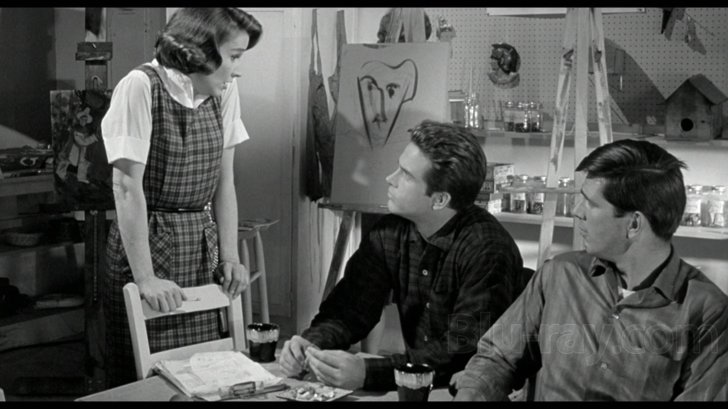
Reviewed by Michael Reuben April 10, 2013The notion of a "ship of fools" dates from medieval times, when it was generally used as an allegory for those who had been abandoned by God or, after the Renaissance, reason. Adrift in a vessel without a pilot or destination, unaware of their condition, their fate was at the mercy of weather and tide. In 1962, American author Katherine Anne Porter used the title for her only novel, which was published after many delays to mixed reviews but excellent sales. Porter based the book on her own experiences in 1931 crossing the Atlantic to study on a fellowship in Germany. The film adaptation followed in 1965, with a screenplay by Abby Mann (Judgment at Nuremberg) and direction by Stanley Kramer (It's a Mad Mad Mad Mad World). The film was nominated for eight Oscars and won two (for cinematography, black-and-white, and art direction, black-and-white). Porter wrote primarily short stories, and the most common criticism of her novel was that it consisted of vignettes that didn't cohere into a whole. The same can be said of Mann's script, which substantially cut down the number of characters—too much, according to Porter—but retained enough for a big international cast that included Simone Signoret, José Ferrer, Lee Marvin, Oskar Werner, Elizabeth Ashley, George Segal and, in her last film, Vivien Leigh (playing a role originally intended for Katherine Hepburn). Films with multi-stranded narratives following several plots simultaneously may be common today, but they were a novelty when Ship of Fools appeared. Mann advanced the time period from 1931 to 1933, the year when the Nazis achieved a major electoral victory, which had the effect of making the danger more immediate as the ship and its passengers steamed from Mexico toward the German port of Bremerhaven. Meanwhile, each individual lived out his or her story, with greater or lesser awareness of the historical juggernaut rolling toward them all. Mill Creek has chosen to combine Ship of Fools in a double feature with director Robert Rossen's last film, Lilith, although the two have little in common besides being mid-Sixties film in black-and-white that can both be connected to the general topic of insanity. Unlike Kramer's well-received film, and unlike Rossen's previous film, The Hustler, which everyone loved and is now regarded as a classic, no one liked Lilith, despite the presence of glamorous stars Warren Beatty and Jean Seberg, who is said to have regarded the film as her favorite among her performances (and this was the actress who made Breathless for Godard). Far from becoming a classic, Lilith is almost forgotten today: barely seen, seldom discussed and stubbornly resistant to easy consumption, despite attempts to decipher it by reference to Rossen's troubles with the House Un-American Activities Committee (HUAC), which has too often served as a "key to all mythologies" for writers, playwrights and directors of the era. Lilith might be easier to take in, if it were an obscure subtitled foreign film starring an unfamiliar young man with an ordinary face instead of Beatty in his pretty boy youth. Despite the Maryland setting taken directly from J.R. Salamanca's novel, the film plays out in a surreal universe that resembles no tangible neighborhood anywhere in America. This sense of detachment from reality doesn't just result from the story's setting among patients at a mental asylum. It persists even when characters leave the grounds to visit "normal" places. Despite Rossen's well-known preference for filming in a documentary style in real locations, his last film leaves the overwhelming sense of the world dissolving and flowing through one's fingers.
For a discussion of Ship of Fools, see the Ship of Fools Blu-ray review. For a discussion of Lilith, see the Lilith Blu-ray review.
Ship of Fools / Lilith Blu-ray Movie, Video Quality

For a discussion of Ship of Fools, see the Ship of Fools Blu-ray review. For a discussion of Lilith, see the Lilith Blu-ray review.
Ship of Fools / Lilith Blu-ray Movie, Audio Quality

For a discussion of Ship of Fools, see the Ship of Fools Blu-ray review. For a discussion of Lilith, see the Lilith Blu-ray review.
Ship of Fools / Lilith Blu-ray Movie, Special Features and Extras
This disc contains no extras for either film.
Ship of Fools / Lilith Blu-ray Movie, Overall Score and Recommendation
Neither of the films on this Mill Creek double feature has been given the best possible treatment, but both are among the lesser catalog titles that are unlikely to be revisited in the foreseeable future. Anyone interested in either film should strongly consider grinning (or grimacing) and bearing it and acquiring this disc, especially at current bargain prices. Both films are presented in superior versions to what DVD has to offer. They're just far less than the best that Blu-ray could provide.