Search for the Great Sharks Blu-ray Movie
HomeSearch for the Great Sharks Blu-ray Movie 
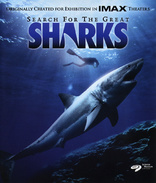
IMAXInception Media Group | 2010 | 46 min | Not rated | May 17, 2011

Movie rating
6.5 | / 10 |
Blu-ray rating
| Users |  | 0.0 |
| Reviewer |  | 3.5 |
| Overall | | 3.5 |
Overview
Search for the Great Sharks (2010)
This IMAX production takes an up close look at several species of sharks and examines why they attack humans and what may cause their feeding habits.
| Documentary | Uncertain |
| Nature | Uncertain |
Specifications
Video
Video codec: MPEG-4 AVC
Video resolution: 1080p
Aspect ratio: 1.78:1
Original aspect ratio: 1.78:1
Audio
English: DTS-HD Master Audio 5.1
French: DTS-HD Master Audio 5.1
Spanish: DTS-HD Master Audio 5.1
Subtitles
None
Discs
25GB Blu-ray Disc
Single disc (1 BD)
Playback
Region A (B, C untested)
Review
Rating summary
| Movie | | 3.5 |
| Video |  | 4.0 |
| Audio | | 4.0 |
| Extras | | 0.0 |
| Overall | | 3.5 |
Search for the Great Sharks Blu-ray Movie Review
Where's that John Williams da-dum music when you need it?
Reviewed by Jeffrey Kauffman May 18, 2011Did people have an overpowering fear of sharks prior to Jaws storming the best seller lists and then the summer Cineplexes? Surely there must have been regular attacks, vicious killings even, and the public at large certainly must have been cautious, even wary, if not outright scared. But once Peter Benchley’s iconic novel somehow chewed its way into the collective unconscious, sharks were never looked at the same way again, and they became perhaps the biggest bugaboo of the animal kingdom, more fearsome than lions, tigers, and bears, to quote a certain famous story and film. There is a coterie of scientists that wants to get beyond these preconceived notions about sharks to actually try to understand the beasts, and that’s the main focal point of the brief but rather interesting Search for the Great Sharks, an Imax production which, like many other mammoth screen spectacles, is migrating to Blu-ray for the first time. This isn’t an overly scientific enterprise, despite its imprimatur and scientist “stars,” and in fact gets as much of its majesty from the simple awesome footage of sharks in their underwater lair as it does from any supposed facts about the creature the film imparts. Split into three basic segments, Search for the Great Sharks wants to help the viewer understand why a relatively small percentage of sharks choose to attack humans, as well as to glean information about their seemingly instinctive knowledge of where and when to find certain kinds of food.
Cavemen may have not even have realized there were such things as sharks, and yet these voracious sea creatures pre-dated mankind, having existed for some 400 million years. And in fact the sharks were the undisputed masters of the sea until modern Man started invading their water space. And for better or worse as Search for the Great Sharks make clear, when we choose to invade that space, we enter the ocean as potential prey. That said, out of 370 shark species, only a very few ever attack humans. Several scientists want to figure out why. Our chief guide on this quick tour is Dr. Eugenie Clark, who is aided by Rodney Fox, a scientist who had an unfortunate 1963 tangle with a shark that left him 462 stitches worse for the wear.
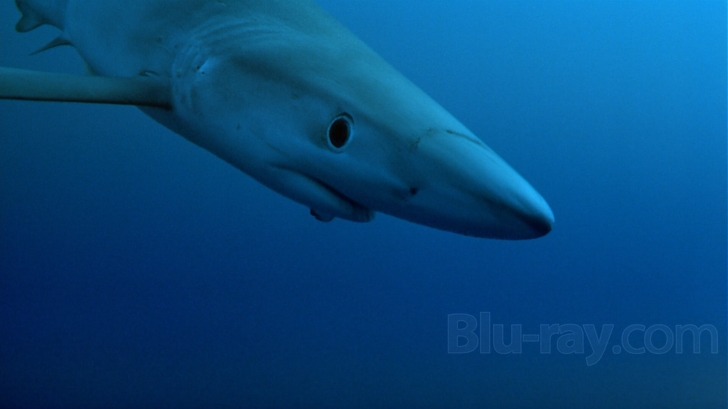
Search for the Great Sharks starts off with a disturbing underwater view of a shark, one which shows the beast’s weird, lifeless eyes which move almost laterally within their skulls. It almost looks like a CGI element it’s so unreal, and yet as the feature progresses, it’s often the sharks’ eyes rather than their jaws which turn out to be their most unsettling feature. Hidden within sharks, however, are a number of tantalizing features, including inherent substances that help to cure cancer.
That may be soothing in a way, but it ultimately doesn’t help dispel the very real feeling that sharks would just as soon chomp down on you as help you heal yourself. And that is evidently just as true for them from an internecine aspect. Unborn sharks have been known to actually devour their in the womb kin while still inside their mothers. Search for the Great Sharks may continually insist that most shark species are small and harmless, but hearing facts like that may lead to a certain understandable wariness.
That very wariness has led scientists to attempt to develop a shark repellent and the first third of this outing is devoted to tests, both in the lab and then in the field, on this liquid which is loaded into a huge pressurized spray gun and then shot at the sharks. In the lab, it seems to work fine, but in a sort of comical interlude, when it’s tested underwater, the “subject” shark actually seems to like the concoction and comes back for another taste. Back to the drawing board, evidently.
By far the most interesting segment of Search for the Great Sharks is the second sequence, which deals with the extremely rare giant whale shark. This sequence takes palce off the coast of Western Australia, and the scientific inquiry at hand has to do with how these huge creatures figure out the time there will be tons of plankton at the same moment that coral is spawning (coral is actually colonies of tiny animals). Evidently whale sharks can accurately predict the correct time when they’ll have access to copious foodstuffs. The actual reason for this ability is never fully addressed in the film, but the up side is we get to see great footage of these mammoth creatures, which are huge, flat headed things with bright blue dots decorating their bodies.
The whale sharks are the biggest fish in the world and actually dwarf some species of whales. Their bodies can grow to 50 feet long and the beasts can easily top 20 tons. And yet they are creatures of incredible grace and even gentleness, at least as depicted in this fascinating middle sequence.
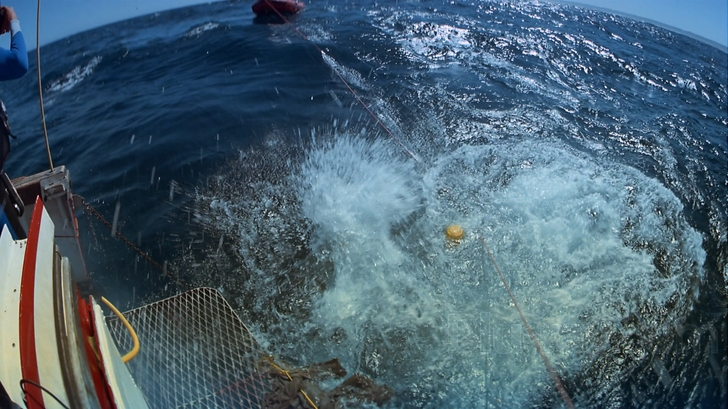
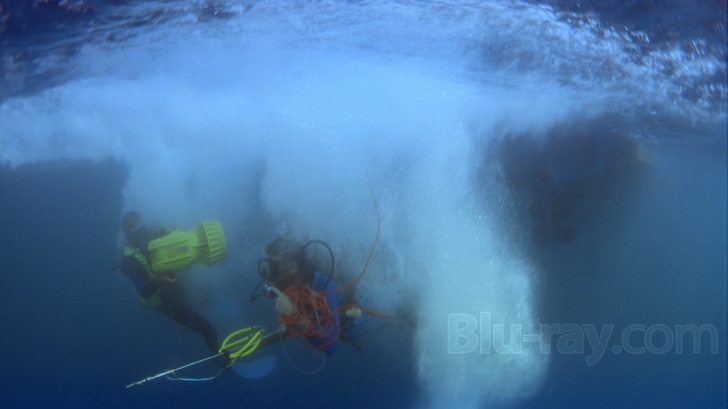
The vicious great white shark is the focus of the third element of Search for the Great Sharks, filmed in South Australia. This is the most rote of the three segments, with an attempt to see what exactly coaxes a shark to attack a human. Is it sight, smell, motion or, perhaps strangely, electrical fields which the sharks can detect? A special plexiglass-like tube has been constructed in which a diver is placed and then lowered into the ocean. The tube is completely transparent and so it should be able to help determine whether it’s simply seeing a human that leads a shark to attack. That turns out not to be the case, but a shark actually gets caught in the ropes holding the tube, leading to a scare. Whether or not this section, as well as one other putative scare, was staged is open to debate, but it gives the film a heart pounding moment or two.
As a scientific inquiry, Search for the Great Sharks certainly raises more questions than it ever effectively answers. But as a really fascinating up close and way personal look at these misunderstood creatures, it provides some of the most amazing footage ever captured of these amazing denizens of the ocean who Dr. Clark insists are not simply mechanical eating machines. You might still want to consider bringing along your own plexiglass tube just to be on the safe side if you're considering checking them out yourself.
Search for the Great Sharks Blu-ray Movie, Video Quality
Usually these IMAX Blu-rays offer spectacular image quality, and while Search for the Great Sharks is well above average in image quality, courtesy of an AVC/1080p transfer in 1.78:1, it suffers from softness and murkiness by simple dint of the fact that a lot of this feature was filmed underwater. While the underwater footage is astoundingly clear when taken within that context, objectively it just doesn't pop with the clarity and sharpness that "normal" footage does. In fact the above the water shots are startlingly clear and well detailed, offering robust and well saturated color and wonderful depth of field. The underwater footage is suitably gauzy given its watery source, and when fish or sharks get up close to the camera there's at least passable fine detail to be seen. But this IMAX feature just never offers the mind blowing clarity that more typical outdoor IMAX offerings feature, and for obvious and good reason.
Search for the Great Sharks Blu-ray Movie, Audio Quality
Three nice lossless tracks are offered on this Blu-ray, all DTS-HD Master Audio 5.1 mixes, in English, French and Spanish. Dialogue, narration and underscore are very well mixed, but the only real surround wonderment comes from the underwater moments, which are filled with gurgling, flapping and splashing noises which offer a very real sounding immersive soundfield. Fidelity is great, though some of this feature offers walkie talkie back and forth which is a bit hard to decipher despite the lossless audio. On the whole, though, this soundtrack is excellently detailed and very well mixed. Joseph Campanella narrates with his usual sonorous authority.
Search for the Great Sharks Blu-ray Movie, Special Features and Extras
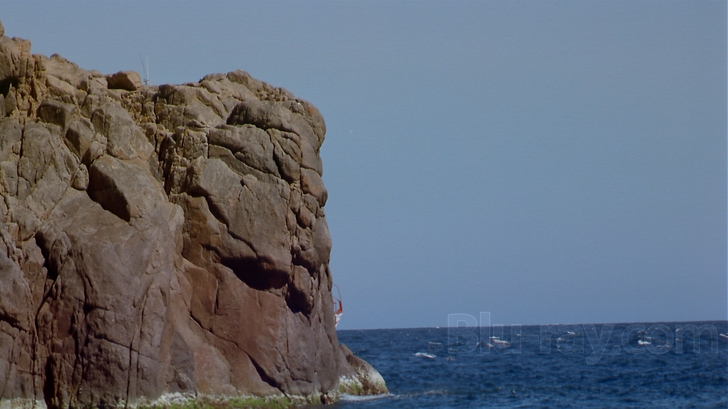
Only a long list of other IMAX trailers is included as a supplement, but I don't count trailers in my official scoring of bonus content.
Search for the Great Sharks Blu-ray Movie, Overall Score and Recommendation

This IMAX feature is probably simply too brief to ever delve deeply into any of the scientific questions it raises, and so for informational value, it's better in terms of those questions and the further study they may provoke than in offering any real definitive answers. Where this feature works spectacularly well is in simply letting us see these incredible beasts up close. The whale shark sequence is especially fantastic due to the extreme rarity of this species. With above average image and audio quality, this release, while not the best IMAX offering ever released in high definition, is still Recommended.
Similar titles
Similar titles you might also like
(Still not reliable for this title)

Wings 3D
2014

Last Chance to See
2009

An Inconvenient Truth
2006

Wild Africa
2015

Hurricane on the Bayou
IMAX
2007

Life After People
2008

Tiny Giants 3D
2014

Asia
2024

Planet Ocean
2012

Wonders of the Universe
BBC
2011

Journey to the Edge of the Universe
2009
Le monde du silence
The Silent World
1956

Journey Into Amazing Caves
IMAX
2001

Atmospheres: Earth, Air & Water
2008

Wonders of the Solar System
2010

Discovery Atlas: Complete Collection

Serengeti
2019

Over Ireland
1998

Relentless Enemies
2006

National Parks Exploration Series: The Grand Canyon - A Wonder of the Natural World
2012