Red Trees Blu-ray Movie
HomeRed Trees Blu-ray Movie 
Cohen Media Group | 2017 | 80 min | Not rated | Jan 23, 2018

Movie rating
6.5 | / 10 |
Blu-ray rating
| Users |  | 0.0 |
| Reviewer |  | 3.0 |
| Overall | | 3.0 |
Overview
Red Trees (2017)
Traces a family's journey as one of only twelve Jewish families to survive the Nazi occupation of Prague during World War II.
Narrator: Tim Pigott-SmithDirector: Marina Willer
| Documentary | 100% |
Specifications
Video
Video codec: MPEG-4 AVC
Video resolution: 1080p
Aspect ratio: 1.85:1
Original aspect ratio: 1.85:1
Audio
English: DTS-HD Master Audio 5.1
English: Dolby Digital 5.1
Subtitles
English SDH
Discs
Blu-ray Disc
Single disc (1 BD)
Playback
Region A (B, C untested)
Review
Rating summary
| Movie | | 3.0 |
| Video |  | 4.5 |
| Audio |  | 4.0 |
| Extras |  | 0.5 |
| Overall | | 3.0 |
Red Trees Blu-ray Movie Review
Shoah and tell.
Reviewed by Jeffrey Kauffman January 29, 2018Is it churlish to suggest that a Holocaust related documentary could be a vanity project? As discomfiting as that may sound, especially to those of us who lost relatives in the Holocaust, that’s kind of the feeling I was left with after having watched Red Trees, a fitfully engaging piece by Marina Willer which seeks to explore her father’s history, one that is wrapped up with the German occupation of Prague. The Willers were one of only twelve Jewish families to make it through that occupation (more or less) intact, but one of the kind of unusual things about Red Trees is that it doesn’t really exploit the “genre trappings” (if indeed they can even be called that) of typical Holocaust themed documentaries, staying away from archival footage of gaunt and emaciated "walking dead" victims staring out through concentration camp barbed wire, and instead focusing on the kind of bizarre journeys the Willers took that ultimately ended up with them in Brazil. Red Trees is almost curiously scenic, with one of the cinematographers capturing almost impressionistic imagery being the Academy Award nominated César Charlone (City of God). The imagery Willer employs in this piece is almost deliberately disjunctive at times, something that creates an almost subliminal unease as the memories of Willer’s father play out in voiceover as scenes of shimmering pools of water or sylvan forest glades drift into view. It’s a patently bizarre artifice, one perhaps made even weirder by the fact that Willer actually introduces her father up front, who begins reading from his memoirs, only to quickly replace him with Tim Pigott-Smith as a narrator enacting those same memoirs.
One of the things that tends to remove Red Trees from “typical” Holocaust documentaries is the fact that, at least relatively speaking, the Willers were among the lucky ones, a kind of patrician family already famous because Marina’s grandfather had been instrumental in the development of citric acid, which in those days was one of the chief ways foodstuffs were preserved. That had already elevated the Willer clan to a kind of respectability in Czechoslovakia that “regular” Jews didn’t really have. The elder Willer’s prominence ended up protecting the family (again, relatively speaking) so that some elements of Red Trees don’t really have the tragic immediacy that other Holocaust themed pieces often do.
There’s certainly some tragedy here, as is probably unavoidable given the fact that the Willers were Jews during World War II, and the documentary does at least tangentially touch upon some of the more typical trappings of Holocaust themed material, including references to Terezin. But really some of the most haunting imagery in this piece are Marina’s visits to old Czech factories, now overgrown with weeds and seemingly about ready to collapse on the filming crews. Rusty machinery rots in fetid corners and in one especially evocative sequence a ton of clothing is hung from the ceiling, in a kind of ghostly gallows display. It frankly doesn’t even really touch on some of the underlying themes of most Holocaust material, but it is undeniably interesting from a visual standpoint.
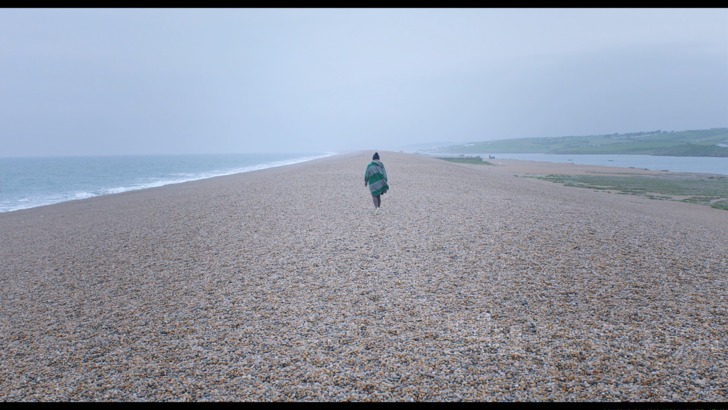
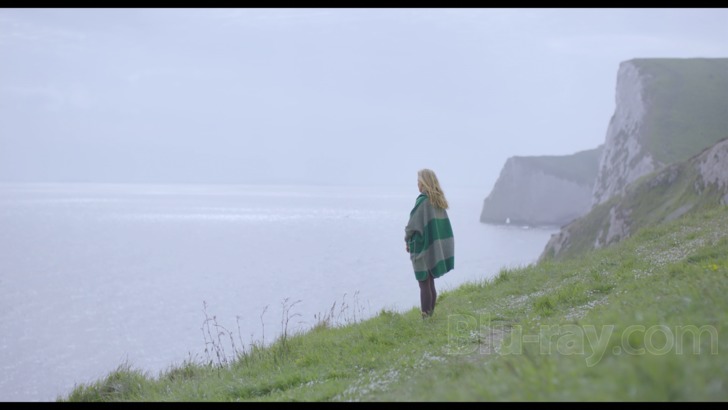
Red Trees perhaps lapses into that aforementioned vanity side of things with Marina’s penchant to show long lasting shots of her (typically taken from behind) as she looks out over various scenes, not always with relevant narration helping to anchor the film in its ostensible subject. Alfred seems like a totally fascinating character, especially in terms of his architectural prowess in Brazil (where he’s evidently something of a legend), but Red Trees tends to want to focus on the supposedly perilous journey, both literal and figurative, that Alfred took that got him to Brazil, and the simple fact is, the journey on a physical level at least was really not all that perilous, at least when compared to countless other stories of Jewish families who had to overcome almost obscene obstacles to achieve freedom.
There is some undeniably touching material here, both in terms of some of Alfred’s reminiscences, but also with regard to the Willer family as a whole, but, again, a lot of this material seems only tangentially related to what would seem to be Marina’s emphasis on the whole World War II aspect of the tale. One way or the other, Red Trees is kind of fascinating from a visual perspective, though the imagery (for me, anyway) tended to subvert rather than support Marina’s ostensible thesis.
Red Trees Blu-ray Movie, Video Quality

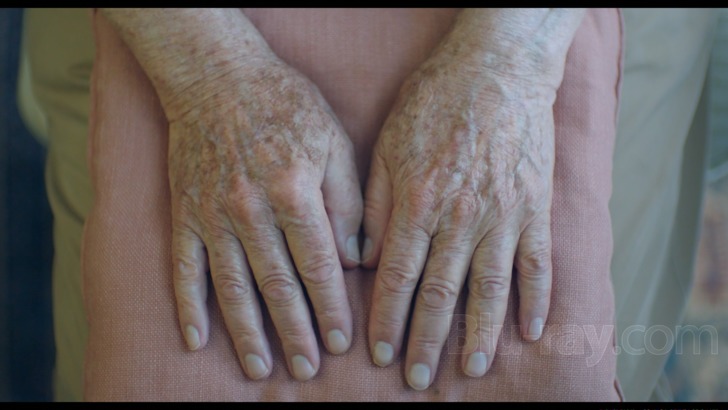
Red Trees is presented on Blu-ray courtesy of Cohen Media Group with an AVC encoded 1080p transfer (mostly) in 1.85:1 (some archival home movies are closer to Academy Ratio). For all of its supposedly tragic subject matter, this is often a rather ravishingly beautiful film, one filled with gorgeously lit and shot scenes that cover a wide array of interior and exterior locations. There are quite a few moments that follow Marina walking around either outside or in some of the abandoned industrial locales, and both depth of field (in the exterior shots) and general detail levels are uniformly quite impressive, even in less than optimal lighting conditions. There are "arty" shots of what I assume are her father's aged hands, or his face, and here in close-ups fine detail is also quite expressive. The palette is a bit on the cool side quite a bit of the time, but generally looks natural. There are no issues with image instability or compression anomalies.
Red Trees Blu-ray Movie, Audio Quality
Red Trees features a DTS-HD Master Audio 5.1 mix which frankly may be a bit of overkill, since so much of this documentary's sound design is comprised of voiceover and/or narration. There is still intermittent use of surround channels as Marina gets out and about, though, with discrete channelization of isolated effects often creating a nicely lifelike ambience, as when Marina is in an abandoned factory and the slight drip of water off an old piece of machinery can be heard. Fidelity is fine throughout, offering problem free support of the frequent narration.
Red Trees Blu-ray Movie, Special Features and Extras
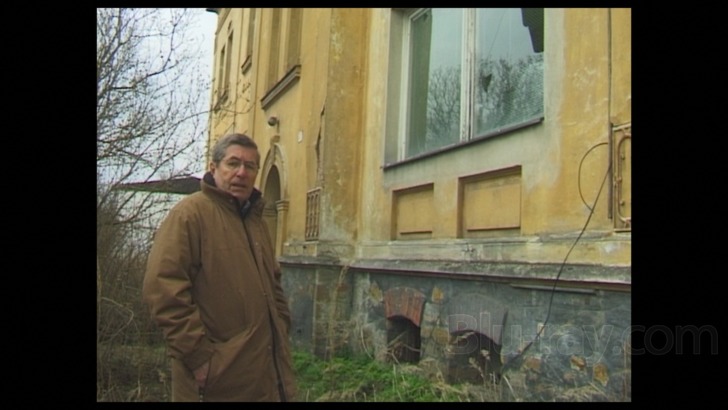
- Interview with Director Marina Willer (1080p; 2:11)
- Theatrical Trailer (1080p; 1:55)
Red Trees Blu-ray Movie, Overall Score and Recommendation
There are all sorts of interesting little factoids tossed around in Red Trees, as in the revelation that the title of the documentary refers to Willer coloring trees that hue as a child, something that led to the discovery that he was color blind, but — what does that have to do with surviving the German occupation of Czechoslovakia? Marina Willer's piece is perhaps not securely focused enough to ever really resonate, at least emotionally, but visually it's quite striking almost all of the time, and some who don't want to relive the horrors of Shoah may find this intermittently gripping, if never ever really all that compelling. Technical merits are strong for those considering a purchase.