Puccini: La Fanciulla del West Blu-ray Movie
HomePuccini: La Fanciulla del West Blu-ray Movie 
Nederlandse OperaOpus Arte | 2009 | 159 min | Not rated | Nov 16, 2010

Movie rating
7.1 | / 10 |
Blu-ray rating
| Users |  | 3.0 |
| Reviewer |  | 3.5 |
| Overall | | 3.4 |
Overview
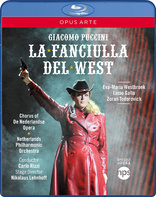
Puccini: La Fanciulla del West (2009)
Nikolaus Lehnhoff's Hollywood style production updates Belasco's Wild West story to the Capitalist culture of Wall Street, perfectly reflecting Puccini's innovatory spirit.
Starring: Eva-Maria Westbroek, Lucio Gallo (I)Director: Nikolaus Lehnhoff, Misjel Vermeiren
| Music | 100% |
Specifications
Video
Video codec: MPEG-4 AVC
Video resolution: 1080i
Aspect ratio: 1.78:1
Audio
Italian: DTS-HD Master Audio 5.1
Italian: LPCM 2.0
Subtitles
English, French, German, Italian, Spanish, Dutch
Discs
50GB Blu-ray Disc
Single disc (1 BD)
Playback
Region A (B, C untested)
Review
Rating summary
| Movie | | 3.0 |
| Video | | 3.5 |
| Audio |  | 4.5 |
| Extras |  | 2.5 |
| Overall | | 3.5 |
Puccini: La Fanciulla del West Blu-ray Movie Review
Wall Street: The Opera?
Reviewed by Jeffrey Kauffman January 15, 2011Mention the phrase “Italian opera” and, speaking of the 19th century at least, you’ll get two names and only two names, Verdi and Puccini. Puccini of course continued to work on into the early 20th century, but despite a slew of imitators and even innovators who followed in his wake, his name was the one most firmly associated with Italian opera, especially that of a certain grandiosity and emotionally hyperbolic appeal. And so what is one to make of Puccini’s “American opera,” a wild west piece that actually received its world premiere not in the rarified atmosphere of La Scala, but New York’s good old Metropolitan? In fact Puccini’s La fanciulla del West was the first ever world premiere at that transcendent institution, and it was a premiere which caught the public’s fancy in no small way. As with Puccini’s previous international success Madama Butterfly, the composer had taken a play by renowned playwright David Belasco (after whom the Broadway theater where so many epochal hits have played is named), in this case The Girl of the Golden West. (Film fans may know that Belasco’s play was filmed several times, including an early silent direct by Cecil B. de Mille, and, in the late 1930’s, a musical version—not based on Puccini—featuring none other than Nelson Eddy and Jeanette McDonald). As with someone “looking in from the outside,” as it were, Puccini and his librettists Guelfo Civinini and Carlo Zangarini romanticize their source material, draping it in, if not outright irony, at least a bit of skepticism. And so it’s perhaps at least a little understandable that director Nikolaus Lehnhoff, who has chalked up a variety of at times patently bizarre Wagner reinterpretations over the past several years, should decide to “update” this supposed Wild West story in terms of Wall Street and Hollywood.
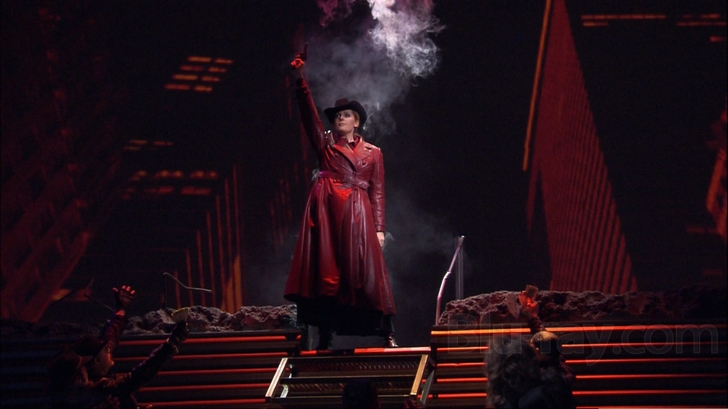
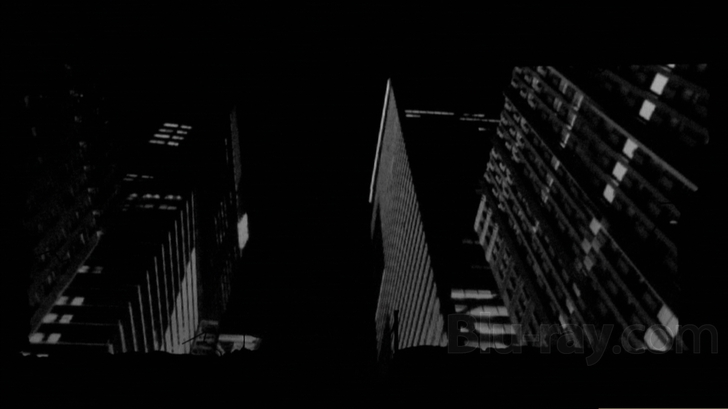
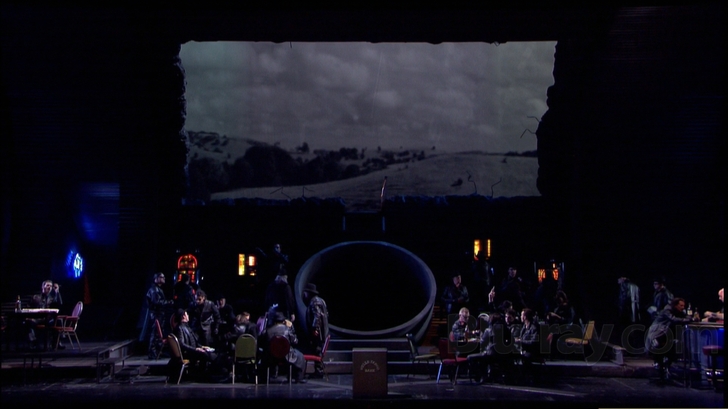
A worldly yet virginal saloon owner, Minnie (Eva-Maria Westbroek), runs a tight ship, which in Lehnhoff’s conception seems to be a leather clad gay bar. When people brawl, she steps in and recites passages from the Bible. The Gold Rush mining setting of Belasco’s original play and Puccini’s initial adaptation has here been updated to Wall Street, or at least one supposes from the film elements which show traders oogling falling cascades of dollar bills. Does this work within the confines of something which is otherwise shown as being a sort of Hollywood version of the Wild West, including singing troubadors in fringed jackets (think Glen Campbell)? No, not really, and in fact Lehnhoff seems to have misinterpreted the source material fairly badly in this instance. Neither Belasco’s play nor Puccini’s opera is about the false glamour and illusion of Hollywood, whether that be in its portrayal of the west or not. Nor is it really about outright greed and a mercenary spirit, making the Wall Street angle odd at the very least. The Girl of the Golden West was certainly not Belasco’s most literary achievement (and some would similarly argue it’s not Puccini’s greatest operatic one). The play, and Puccini’s opera, are better seen as nothing more than a simple starcrossed love scenario between Minnie and the outlaw, Ramirez ( ), with whom she falls in love. The rest is really only window dressing.
Despite the generally wrong headed approach Lehnhoff takes in this production, there’s actually quite a lot here to maintain interest. Though patently ridiculous at times (especially in the second act, which takes place within the fuzzy pink confines of what appears to be a trailer), the production design by Raimund Bauer is quite arresting and at the very least gives the eye a lot to take in. The third act is at once silly but also strangely effective, taking place in a junkyard full of piled cars. Not exactly the first thing that pops into American minds when you mention a possible lynching of a criminal, is it?
Westbroek has made her mark in a number of Wagnerian roles, and that heaviness of tone isn’t easily applicable to the relatively lighter fare of Puccini, especially in this piece which lacks the gravitas of some of the composer’s grander operas. She’s not terribly facile here, but she manages a deeply burnished tone and offers a nicely nuanced performance. Zoran Todorovich as Ramirez (who assumes the fake identity of Dick Johnson to evade the law) is passable but not impressive, and he seems to tire as the show goes on, with some intonation problems resulting.
Musically the best thing about this production is the assured conducting of Carlo Rizzo, leading the Netherlands Philharmonic Orchestra in a nicely balanced and passionate reading of the score. While this is not Puccini’s finest moment, despite critical brickbats having been thrown at this score for over one hundred years now, it really has a wealth of melodic material and the orchestra especially is handled with an ease and maturity that shows Puccini off admirably as the impeccable craftsman he was. It’s probably no accident that Andrew Lloyd Webber evidently chose this score to “inspire” his writing of The Phantom of the Opera, as a celebrated plagiarism case (and out of court settlement with the Puccini Estate) proved.
Puccini: La Fanciulla del West Blu-ray Movie, Video Quality
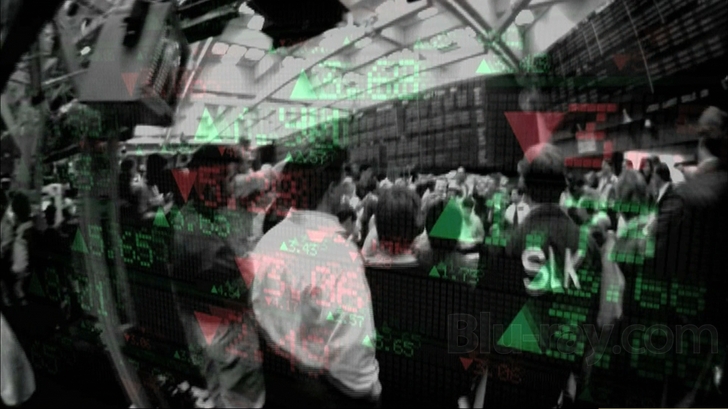
La fanciulla del West arrives on Blu-ray with an AVC encoded image in 1080i and 1.78:1. Unfortunately, this is one of the lesser offerings we've received from Opus Arte, with a garish and sometimes unpleasant appearance that has the tendency to bloom slightly, especially in the over the top red scenes, which are plentiful in this production. That tendency toward blooming robs the sets of a lot of detail. Costumes and skin tones fare somewhat better, with good detail and acceptable sharpness and clarity. Contrast is fine when the blooming isn't getting in the way, and black levels are stable.
Puccini: La Fanciulla del West Blu-ray Movie, Audio Quality
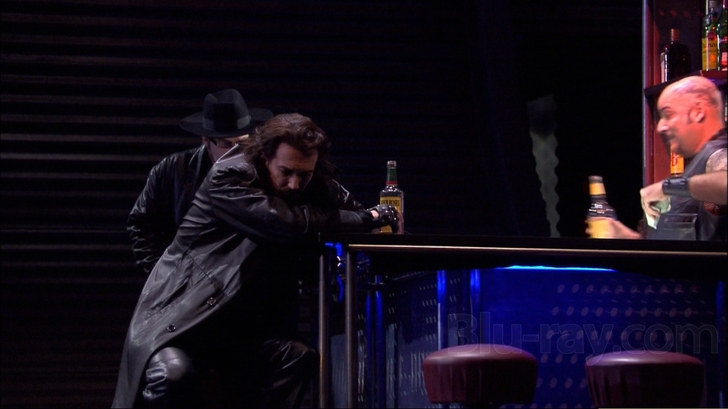
La fanciulla del West is presented with two very good lossless audio options, a DTS-HD Master Audio 5.0 mix and an LPCM 2.0 stereo mix. Fidelity and dynamic range are excellent throughout the opera, with brilliant reproduction of Puccini's soaring orchestral accompaniments. While there isn't any egregious problem with the balance between the singers and the orchestra, overall I personally would have preferred all of the vocals to have been mixed just slightly more up front into the overall soundfield. Surrounds are utilized effectively for hall ambience here, adding a nice degree of spaciousness to the overall sonic experience.
Puccini: La Fanciulla del West Blu-ray Movie, Special Features and Extras
Aside from the in-depth insert booklet, we have two supplements on the Blu-ray itself:
- Backstage Insights (1080i; 20:47) offers some interviews with cast and crew and background on the production.
- Cast Gallery
Puccini: La Fanciulla del West Blu-ray Movie, Overall Score and Recommendation
Lehnhoff is one of those directors who wants to put his mark on hoary classics. Sometimes he does very well with his reinterpretations and sometimes, frankly, he falls flat. This Fanciulla falls somewhere in between. It has interesting, if not completely successful, elements, but it also seems quite wide of the rather narrow mark that both Belasco and Puccini himself probably had in mind for their story. Nonetheless, this is an underappreciated piece of Puccini's, and deserves a wider audience, and for that reason alone I give a somewhat ambivalent recommendation to those who may be curious either about the opera itself, or this particular production of it.