Priest of Love Blu-ray Movie
HomePriest of Love Blu-ray Movie 
Kino Lorber | 1981 | 99 min | Rated R | Jun 21, 2011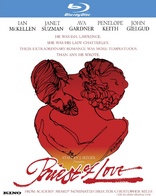

Movie rating
6.7 | / 10 |
Blu-ray rating
| Users |  | 0.0 |
| Reviewer |  | 3.0 |
| Overall | | 3.0 |
Overview
Priest of Love (1981)
A biographical drama depicting the last years of the famed author D.H. Lawrence, highlighted by the publication of "Lady Chatterley's Lover" and his relationship with his wife.
Starring: Ian McKellen, Ava Gardner (I), Janet Suzman, John Gielgud, Niall PaddenDirector: Christopher Miles
| Biography | Uncertain |
| Drama | Uncertain |
| Romance | Uncertain |
Specifications
Video
Video codec: MPEG-4 AVC
Video resolution: 1080p
Aspect ratio: 1.85:1
Original aspect ratio: 1.85:1
Audio
English: LPCM 2.0
Subtitles
None
Discs
50GB Blu-ray Disc
Single disc (1 BD)
Playback
Region A, B (C untested)
Review
Rating summary
| Movie | | 3.0 |
| Video |  | 4.0 |
| Audio | | 3.0 |
| Extras |  | 2.5 |
| Overall | | 3.0 |
Priest of Love Blu-ray Movie Review
A Portrait of an Artist as an Old Man with Tuberculosis
Reviewed by Casey Broadwater June 18, 2011Priest of Love may sound like the sordid tale of an unchaste Catholic clergyman, but it’s actually a biopic about the latter years of English novelist D.H. Lawrence’s life. Of course, Lawrence was no stranger to sordid tales himself, as his books pushed the limits of artistic decency in the early 20th century and were frequently banned or burned as obscene. As a self-described “priest of love,” Lawrence’s holy sacrament was sex—the psychology of it, the power of it, the joy of it—and for his willingness to openly examine this basic human function, he was widely reviled during his lifetime as a pornographer. This led to a self-imposed exile of sorts, and Lawrence spent most of his 30s and 40s drifting from country to country with his wife, Frieda, before dying of tuberculosis at 44, shortly after publishing what now seems to be a summation of his life’s work, Lady Chatterley’s Lover. Priest of Love charts the couple’s wanderlust, but it’s relatively free of, you know, lust lust. Considering Lawrence’s controversial reputation, this is a surprisingly passionless film, not just in terms of sex but also in the lack of a real dramatic thrust—so to speak—in the narrative.
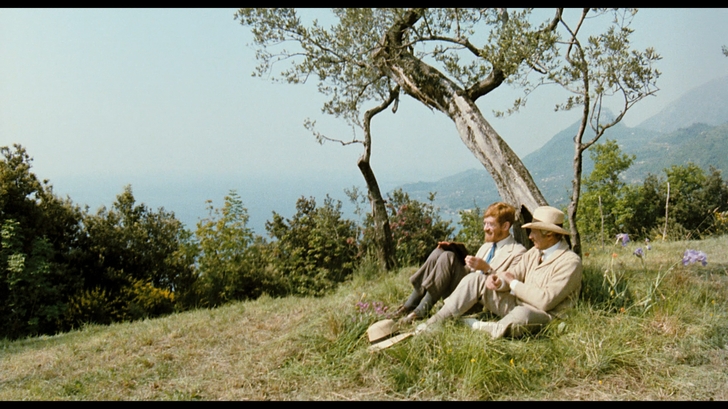
The most sexually revealing moment in the film is in one of the first scenes, where we see Lawrence, played wonderfully by Sir Ian McKellen, skinny- dipping in the ocean with his close friend and mentor, John Middleton Murray (Mike Gwilym). The implication is that Lawrence is bisexual—he almost certainly was—and this doesn’t help his reputation with the local English soldiers, who are keeping a close eye on him. The initial setting is coastal Cornwall during wartime, and Lawrence is a character of suspicion, not only because his novel The Rainbow was recently deemed obscene, but also because his wife, Frieda (Janet Suzman), is a former German aristocrat. Accused of being possible spies or sympathizers, they’re forced to leave their cottage and relocate. After military oppression and the constant efforts of government censor Herbert Muskett (John Gielgud) to ban Lawrence’s books, Lawrence and Frieda decide to leave England and spend the rest of their married life globe-hopping.
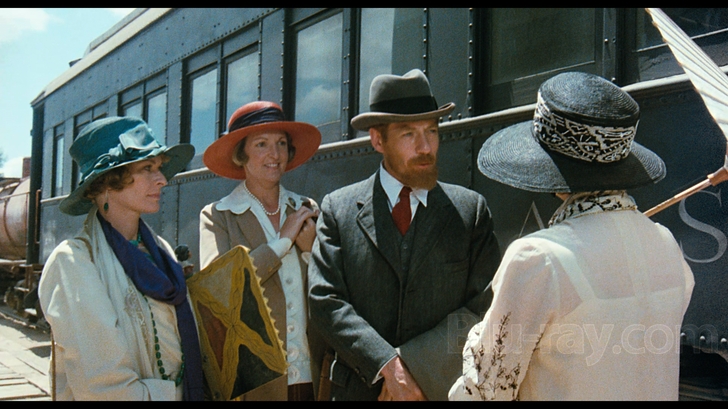
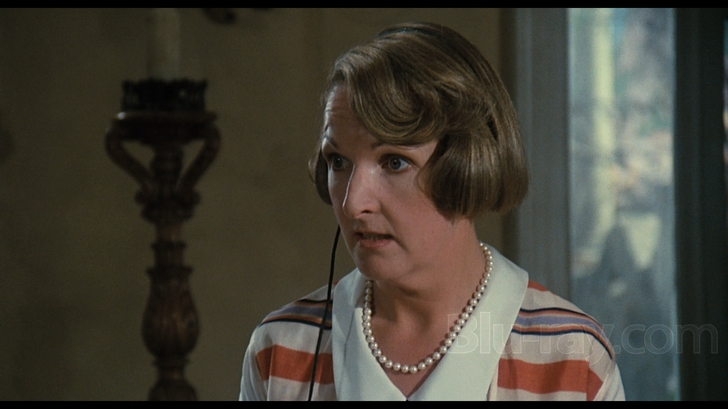
The film skips the couple’s journeys in Australia—where Lawrence wrote The Kangeroo—but it picks up in the early 1920s, when socialite and arts patron Maybel Dodge Luhan (Ava Gardner) invites them to stay in Taos, New Mexico, where she plans on creating a kind of artists’ compound/utopian community. Here, they’re joined by Dorothy Brett, a partially deaf painter who has a thing for the charming “Lorenzo,” as Frieda calls Lawrence. All three of these women—in their own ways—vie for Lorenzo’s affections, but only Frieda owns his heart. Those hoping for the kind of torrid love affairs that occur in Lawrence’s novels will have to look elsewhere.
Based on Harry T. Moore’s biography and Lawrence’s own letters, Priest of Love runs into the same problem that affects many films about literary legends: How do you show, on screen, the complex interior world of imagination, motivation, and inspiration that dictates a writer’s life and work? If the goal is to get inside of Lawrence’s head, to examine what made him such a brilliant, controversial figure, then Priest of Love isn’t entirely successful. Frieda is clearly Lawrence’s muse—he relied on her descriptions of the female sexual experience to write Lady Chatterley’s Lover—but we rarely get any deeper in their relationship than the surface idiosyncrasies. In flashbacks, director Christopher Miles (The Maids) shows us how Frieda left her husband and three children to devote herself unconditionally to Lawrence, and to some extent she’s the more fascinating of the two characters, never regretting her decisions but hoping she can one day reconcile with her kids. Lawrence just seems like a typical writer—more than a little arrogant, given to sudden tantrums, and prone to spouting off his own poetry whenever there’s a suitable occasion. Ian McKellen is perfectly cast—he even bears an uncanny resemblance to Lawrence—and he plays the role with a wry smile and a twinkle in his eye. It’s too bad he couldn’t have been given more to do.
Nothing much happens in Priest of Love, unfortunately. Lawrence and Frieda hopscotch from the southwestern U.S. to the temple ruins of Oaxaca, Mexico, and then on to Florence, Italy, and Vence, France, but each new location is little more than a change in scenery. Along the way, Aldous Huxley (James Faulkner) makes an appearance, Lawrence’s tuberculosis flairs up, and a publisher is finally found for Lady Chatterley, but there’s little drama besides the writer’s worsening health. Even when Lawrence gets his deaf friend Dorothy in bed, he hops out a second later, mumbling that she’s not right for him. The film could’ve been a study on how Lawrence’s relationships with women—and men—filtered into his novels, but instead it feels like we’re going on a rather uneventful family vacation, where the most exciting thing that happens is a short earthquake in a Mexican village. The film is never dull, exactly, but the lack of conflict makes for a story that’s too leisurely and unfocused. Where’s the energy, the passion? Lawrence’s career was defined by his attitudes about and openness towards sex, but the film doesn’t really deal with this in any meaningful, insightful way. I’m not saying Priest of Love should’ve been as explicit as Lawrence’s novels, but doesn’t it seem like an injustice that a man who pushed his whole life for sexual frankness should be honored by a film that’s so studiously chaste?
*Do note that this is the shorter 99-minute version of the film—supposedly the director’s preferred cut—and not the extended 125-minute original edit.
Priest of Love Blu-ray Movie, Video Quality

Priest of Love got a VHS release in the U.S., but never appeared on Region 1 DVD, so it's safe to say that Kino's new 1080p/AVC-encoded transfer is quite an upgrade. Most importantly, unlike older pan-and-scan releases, the film is presented here in its original 1.85:1 shooting ratio. All other aspects of the transfer seem true-to-source as well. The film's grain structure looks entirely natural, and there's no sign of digital noise reduction, edge enhancement, or any other attempts to tweak the image. Certain scenes are softer than others—the flashback sequences, for instance, were very clearly filmed with a "glamour shots" type filter—but in general, clarity is strong, giving texture to felt hats, nubby cardigans, wool suits, and the fine lines of the actors's faces. Aside from some minor brightness fluctuations, there are no problems with color reproduction either. Skin tones are warm and balanced, and other hues are rich and dense, bolstered by deep blacks and a good sense of contrast. Finally, I didn't spot any encode quirks or compression issues.
Priest of Love Blu-ray Movie, Audio Quality
The film's audio is reproduced here by way of a Linear PCM 2.0 track that serves its purpose but doesn't sound quite as clear or full as it could've. The first thing you'll notice is that there's a low but persistent hiss that runs almost throughout the entire film. You won't hear it as much when the score kicks in, but it's very apparent during quieter, dialogue-driven scenes. Although it never rises to the level or a true distraction, it's a shame some of the high-end noise couldn't have been filtered out. That said, dialogue remains easy to understand, and there's no excessive muffling or clipping to be worried about. For a bit of trivia, the score was composed by Francis James Brown and Stanley Joseph Seeger, who are credited singularly as "Joseph James." The music lacks dynamic range, especially in the low-end, but it's otherwise rich and clear. Be aware that there are no subtitle options on the disc whatsoever.
Priest of Love Blu-ray Movie, Special Features and Extras
- The Way We Got It Together (SD, 25:37): An extensive documentary about the making of the film, featuring several interview sequences with actress Penelope Keith.
- Interviews (SD): There are two interviews included here. In the first, Ian McKellen (23:41) looks back on his first major film role, and the second is a vintage interview with Christopher Miles (11:23), appearing on a British television show.
- Deleted Scenes (SD, 6:54): A few cut scenes, with commentary by the director.
- Outtakes (SD, 5:19): Ava Gardner and Ian McKellen flub some lines.
- Trailers: Includes trailers for Priest of Love, Pandora and the Flying Dutchman, The Maids, and Lady Chatterley. Only the trailer for Pandora is in high definition.
- Stills Galleries: Here you'll find sixteen production stills, six shots of the director, and most interestingly, a thirteen-shot "look-alikes" gallery that shows how the cast compares to their real-life counterparts.
Priest of Love Blu-ray Movie, Overall Score and Recommendation
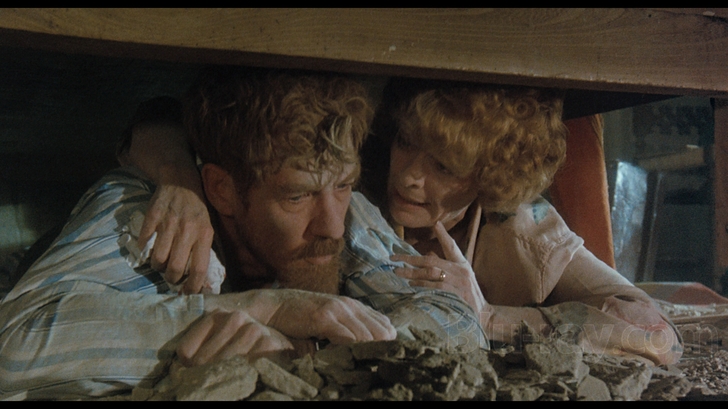
The literary biopic is a tricky sub-genre that isn't often done right. Priest of Love is a good example of a film that has a strong subject— controversial writer D.H. Lawrence—but can't quite mine its source material for insight or drama. Still, the movie is notable for being one of Sir Ian McKellen's first major film roles—and Ava Gardner's last—and it's worth seeing for its isolated moments of brilliance. Kino's dug up some great special features for this release, and although the audio has a bit of a hiss to it, the high definition transfer is excellent. Recommended for English majors and British film fans.
Similar titles
Similar titles you might also like

Loving
2016

Désirée
Limited Edition to 3000 - SOLD OUT
1954

Chaplin
15th Anniversary Edition
1992
Churchill
2017

The Salt of the Earth
Le Sel de la Terre
2014

Grace of Monaco
2014

Colette
2018

Papillon
2017

Jimmy's Hall
2014

The Falcon and the Snowman
1985

Cesar Chavez
2014

Mary Shelley
2017

Breathe
2017

Behind the Candelabra
2013

House of Gucci
2021

Frida
2002

Jefferson in Paris
1995

Southside with You
2016

The Apprentice
2024

Joe Bell
2021