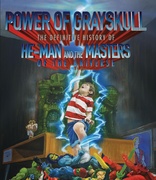
Power of Grayskull: The Definitive History of He-Man and the Masters of the Universe Blu-ray Movie
HomePower of Grayskull: The Definitive History of He-Man and the Masters of the Universe Blu-ray Movie 
Slipcover in Origina PressingETR Media | 2018 | 96 min | Not rated | Nov 26, 2024

Movie rating
6.9 | / 10 |
Blu-ray rating
| Users |  | 0.0 |
| Reviewer |  | 4.0 |
| Overall | | 4.0 |
Overview
Power of Grayskull: The Definitive History of He-Man and the Masters of the Universe (2018)
The history of Mattel's definitive action figure toy line.
Starring: Dolph Lundgren, Frank Langella, Anthony De Longis, William Stout, Richard EdlundDirector: Robert McCallum, Randall Lobb
| Documentary | 100% |
Specifications
Video
Video codec: MPEG-4 AVC
Video resolution: 1080p
Aspect ratio: 2.00:1
Original aspect ratio: 2.00:1
Audio
English: DTS-HD Master Audio 5.1 (48kHz, 24-bit)
English: Dolby Digital 5.1 (448 kbps)
English: Dolby Digital 2.0 (256 kbps)
Subtitles
English SDH
Discs
Blu-ray Disc
Single disc (1 BD)
Packaging
Slipcover in original pressing
Playback
Region A (B, C untested)
Review
Rating summary
| Movie | | 4.0 |
| Video | | 4.0 |
| Audio |  | 4.5 |
| Extras |  | 5.0 |
| Overall | | 4.0 |
Power of Grayskull: The Definitive History of He-Man and the Masters of the Universe Blu-ray Movie Review
Reviewed by Brian Orndorf November 13, 2024In 2017, Netflix released an episode of their popular show, “The Toys That Made Us,” that focused on the rise and fall of the “He-Man and the Masters of the Universe” toy line. It was done with the program’s attitude and speed, acting as more of an overview than a detailed breakdown of just what happened to the brand name during the 1980s and beyond. Directors Randall Lobb and Robert McCallum attempt to go deeper into the He-Man universe with “Power of Grayskull: The Definitive History of He-Man and the Masters of the Universe,” offering a more ambitious survey of the ins and outs of the Mattel moneymaker, looking to scan 40 years of development and execution in 90 minutes. “The Toys That Made Us” got there first, but Lobb and McCallum have more material to handle, offering some lively interviews and fascinating discoveries as they examine how He-Man exploded from a throwaway idea into a toy that was, for many years, the most popular item on store shelves.
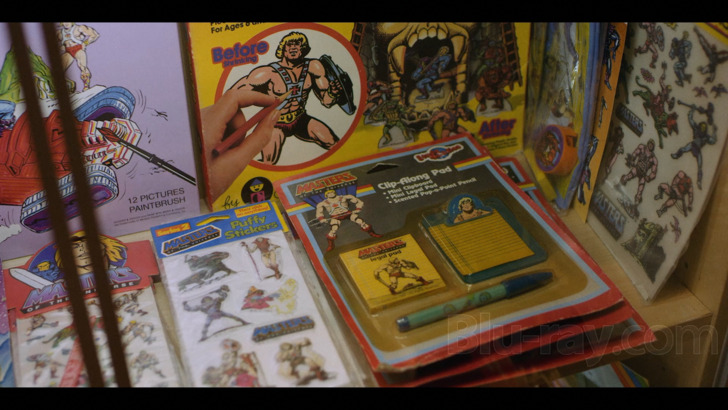
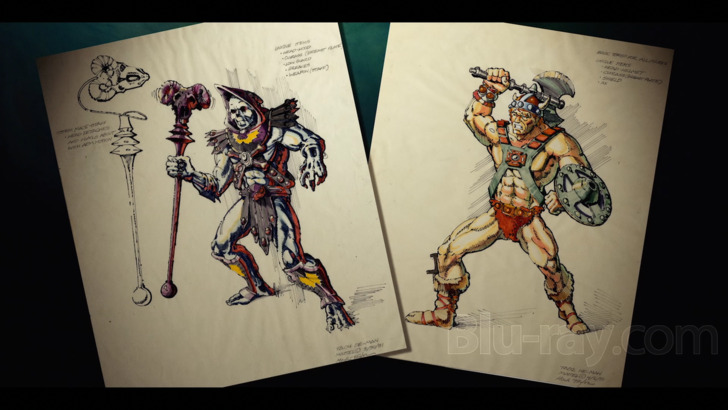
“Power of Grayskull” goes all the way to the beginning, branding 1975 as the year toys went from filler to killer, as “The Six Million Dollar Man” franchise accelerated the potential for adventure lines, with the action figure market exploding after the release of “Star Wars” and its business- altering approach to putting screen fantasy into grubby, outstretched hands everywhere. The documentary has some difficulty ironing out a proper timeline for Mattel’s corporate panic upon realization that they didn’t have anything to compete (they highlight the failed “Clash of the Titans” line as an example, which was released four years after the first “Star Wars”), but the idea is clear, as company designers such as Mark Taylor were tasked to create something to stand out in the marketplace. The push was for a barbarian figure using Frank Frazetta’s artful fingerprint, and He-Man was soon created, memorable not only for his defined masculinity but also for his scale, as Mattel offered a larger, bulkier figure to help kids immediately identify it. “Power of Grayskull” covers development and the early years of world-building, as minicomics were utilized to create the specifics of Eternia, home to a coterie of monsters and muscle-bound heroes. This never-ending battle between He-Man and Skeletor provided the inspiration to bring in all kinds of creatures, vehicles, and playsets, with the famous Castle Grayskull initially sold with unique paint jobs due to the specialty of its design.
It’s enormous fun to hear these “Masters of the Universe” origin stories, and “Power of Grayskull” collects an impressive roster of Mattel designers to explore the mindset behind such odd figures with odder names (e.g. Buzz-Off, Fisto, Ram Man), and everyone takes a moment to marvel over the success of the toy line, which went from a gamble in 1982 to a blockbuster soon after, making a fortune for a company that was trying to get away from movie tie-ins. Helping the cause was the start of production on a cartoon version of He-Man, finding Filmation and its president Lou Scheimer generating “He-Man and the Masters of the Universe,” offering children a chance to follow the world-building of Eternia on a daily basis, brought to life with iconic voicework and semi-competent animation for a budget program (interestingly, the doc points out how much rotoscoping was involved to complete episodes). The show was a big deal, and “Power of Grayskull” spends a lot of time on it, detailing creative choices (J. Michael Straczynski was part of the writing team), compromises, pressure from parental groups over violent content, the inner-workings of spin-off “She- Ra: Princess of Power,” and even sexism in the office, with director Gwen Wetzler subjected to harassment during production.
“Power of Grayskull” also traces the development of the 1987 “Masters of the Universe” movie, as Lobb and McCallum manage to nab sit-downs with stars Dolph Lundgren and Frank Langella, who, refreshingly, is absolutely delighted by his performance as Skeletor, describing his method and hope to rise above cartoon origins to make a meaner villain. Design achievements are highlighted, not necessarily the film’s quality, but it’s neat to hear about the plans that went into the picture, even if most of the grander ideas were hastily cut due to financing woes from a disintegrating Cannon Films. During this segment, “Power of Grayskull” clarifies concern at Mattel, who had high hopes for the feature to revive sagging toy sales, and a few interviewees identify a recycling approach to filling orders (e.g. Beast Man became Moss Man with a simple color change and some additional fur) that ended up killing off the toy line.
Power of Grayskull: The Definitive History of He-Man and the Masters of the Universe Blu-ray Movie, Video Quality
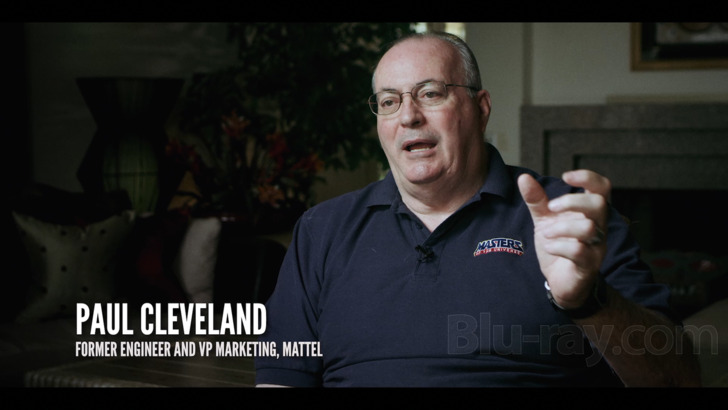
The AVC encoded image (2.00:1 aspect ratio) presentation handles color very well, examining explosive "Masters of the Universe" hues on the toys, packaging, and various elements of art. It's a nice display of primaries, capturing the varied looks in the toy line. Interviewee footage is intentionally muted, providing a cooler look at work spaces and clothing choices. Skin tones are natural. Detail does well during interviews, reaching tech limits with some sense of skin particulars and interior dimension. Toy shots retain plastic textures. Delineation is satisfactory. Compression largely holds together, with very mild banding spotted at times.
Power of Grayskull: The Definitive History of He-Man and the Masters of the Universe Blu-ray Movie, Audio Quality
The 5.1 DTS-HD MA mix offers a powerful, active low-end, delivering big booms during transitions and explosions, also keeping up with soundtrack beats. Interviewees maintain a crisp presence, capturing varied personalities and elements of age. Scoring support registers clearly, and musical moods fill up the surrounds, delivering an immersive listening experience.
Power of Grayskull: The Definitive History of He-Man and the Masters of the Universe Blu-ray Movie, Special Features and Extras
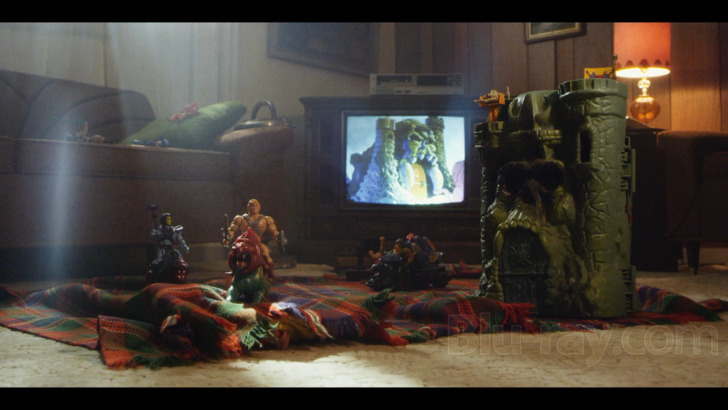
- Behind the Scenes (32:29, HD) examines the genesis and production experience of "Power of Grayskull," featuring interviews with cinematographer Isaac Elliott-Fisher, directors Rob McCallum and Randall Lobb, and editor Mark Hussey. This is a highly informative journey, exploring most aspects of the documentary experience.
- Deleted Scenes (HD) offer "Comics" (14:11), "Filmation" (22:14), "Mattel" (20:55), and "Reboots" (15:06).
- "She-Ra" (20:51, HD) is a featurette focusing on the development of the "He-Man" spin-off show.
- "The Fans of MOTU" (20:26, HD) is footage of the faithful detailing their intense relationship with the world of "Masters of the Universe."
- "Poster Time Lapse" (3:13) displays the creation of the "Power of Grayskull" art.
- "Raw Content" (HD) offers "Arnaud Collection" (5:55), "Bill Stout Archive" (17:38), "Charles Zembillas" (28:06), "Live Action Movie" (9:33), "Mark Taylor" (10:43), "Martin Arriola" (11:13), "Mike Barbato" (16:43), "Pop Mhan" (11:02), and "Ted Mayer" (7:38).
- And a Trailer (2:50, HD) is included.
Power of Grayskull: The Definitive History of He-Man and the Masters of the Universe Blu-ray Movie, Overall Score and Recommendation
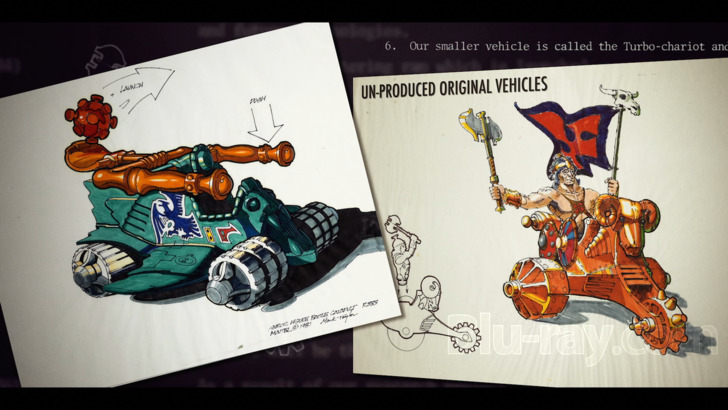
"Power of Grayskull" can't quite get its arms around the entire He-Man history. The last 20 minutes rushes through other iterations of the brand and its lasting appeal with collectors and fans. The documentary feels a bit anticlimactic, but the essentials are there, contributing a compelling history of He- Man, along with amusing anecdotes and fun insight into the assembly of plastic, paper, and film from those who were there on the front lines. It's not quite as definitive as promised in the title, but for fans and those curious about how a non-"Star Wars" toy could conquer the industry in the 1980s, Lobb and McCallum have prepared a slick and stocked documentary to answer most questions, all the while conjuring a picture that does well riding the line between nostalgia and journalism.
Other editions
Power of Grayskull: The Definitive History of He-Man and the Masters of the Universe: Other Editions

Similar titles
Similar titles you might also like

The Last Blockbuster
2020

3-D Rarities
1922-1962

They Went That-A-Way & That-A-Way
Inside Out
1978

IMAX: Dream Big: Engineering Our World 4K + 3D
2017

Wonders of the Arctic 4K + 3D
IMAX
2014

The Last Reef: Cities Beneath the Sea 4K + 3D
2012

Into the Deep 3D
IMAX
1994

National Parks Adventure 4K + 3D
2016

Icons Unearthed: Star Wars
2022

The Old Fashioned Way
1934

Mass Appeal
1984

Newhart: Complete Series - 1 - 8
1982-1990

The Mindy Project: The Complete Series
2012-2017

Charlie Chan and the Curse of the Dragon Queen
1981

The Flying Deuces
Laurel & Hardy
1939
Antarctica: On the Edge 4K
2014

Brian and Charles
2022

The Chicken Chronicles
1977

The Battle of the Sexes
1960

Ulee's Gold
1997