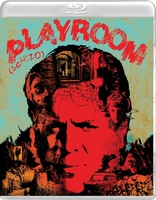
Playroom Blu-ray Movie
HomePlayroom Blu-ray Movie 
Schizo / Slipcover in Original PressingVinegar Syndrome | 1990 | 88 min | Rated R | Sep 30, 2025

Movie rating
6.4 | / 10 |
Blu-ray rating
| Users |  | 0.0 |
| Reviewer |  | 4.5 |
| Overall | | 4.5 |
Overview
Playroom (1990)
An archaeologist is haunted by a nightmare in which his family is murdered.
Starring: Lisa Aliff, Aron Eisenberg, Christopher McDonald, James Purcell, Jamie RoseDirector: Manny Coto
| Horror | Uncertain |
| Thriller | Uncertain |
Specifications
Video
Video codec: MPEG-4 AVC
Video resolution: 1080p
Aspect ratio: 1.85:1
Original aspect ratio: 1.85:1
Audio
English: DTS-HD Master Audio 2.0 (48kHz, 24-bit)
Subtitles
English SDH
Discs
Blu-ray Disc
Single disc (1 BD)
Packaging
Slipcover in original pressing
Playback
Region A (B, C untested)
Review
Rating summary
| Movie |  | 2.5 |
| Video | | 4.5 |
| Audio |  | 4.0 |
| Extras | | 4.5 |
| Overall | | 4.5 |
Playroom Blu-ray Movie Review
Reviewed by Brian Orndorf October 19, 2025Manny Coto, best know as the director of 1992’s “Dr. Giggles,” makes his helming debut with 1989’s “Playroom” (a.k.a. “Schizo”), establishing his love of horror with a story about a man confronting his past while reuniting with his insanity during an archaeological expedition in Yugoslavia. Coto and screenwriter Keaton Jones (the once and future Kelly Leak, Jackie Earle Haley, takes a story credit) arrange a small-scale inspection of an unraveling, keeping their budget low with a semi-slasher that struggles with psychological elements and basic suspense needs. While it has a cast who appear committed to the cause, “Playroom” just isn’t very thrilling, eventually settling on a few creative choices that border on the bewildering.
Chris (Christopher McDonald) is haunted by memories of his family’s murder, which occurred inside a Yugoslavian monastery. Attempting to confront his past and learn more about his father’s hunt for the Tomb of Prince Ilok, Chris decides to try his luck with new information, returning to Yugoslavia with magazine editor, and lover, Jenny (Lisa Aliff), alcoholic photographer Paul (James Purcell), and his topless model girlfriend, Marcy (Jamie Rose). The hope is to find the tomb and calm his mind, but madness quickly overtakes Chris, who’s driven to find the remains of Prince Ilok and his collection of torture devices. What Chris actually triggers is a reawakening of evil, found in the form of Daniel (Aron Eisenberg), his imaginary friend from childhood who’s back in business, urging his old buddy to kill everyone.
The mystery of the tomb largely drives what little suspense there is in “Playroom.” Chris is determined to find out what his father could not, discovering new information concerning the secret room’s whereabouts, inspiring a return to Yugoslavia. The archaeology portions of the plot work reasonably well, bringing a collection of odd characters into a monastery, ready to bring down a stone wall to reach potential treasure inside. Issues arrive in “Playroom” somewhat quickly, as McDonald doesn’t offer a nuanced take on encroaching madness. His hyperactive depiction of a crumbling mind leads to a few unintentional laughs, along with Coto’s adherence to genre demands of the day, working in some awkward stops for nudity and sex along the way.
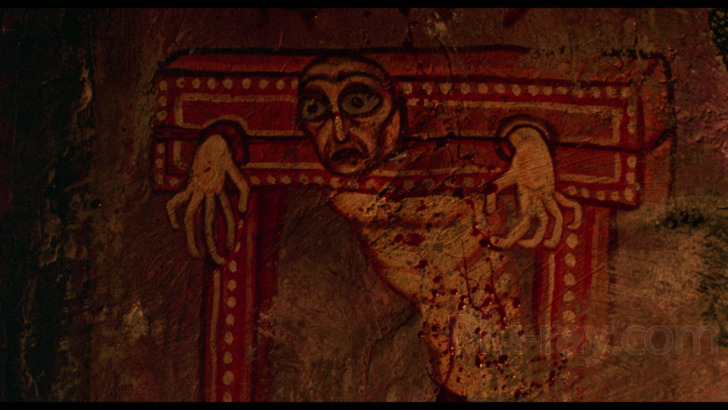
“Playroom” offers a little history on Prince Ilok and his fondness for watching others die. Torture devices are present and add a little evil energy to the feature, but the screenplay gets too distracted, also paying attention to the saga of Jelko (Petar Bozovic), an alcoholic cab driver who feels compelled to research the truth behind the murder of Chris’s family, getting involved with Roman (Vincent Schiavelli), an institutionalized man who knows a thing or two about what’s going on. It’s a superfluous addition to “Playroom,” with Coto clearly more interested in the wicked ways of Daniel and his dangerous influence over Chris, which gives the movie moments of bloodshed.
Playroom Blu-ray Movie, Video Quality
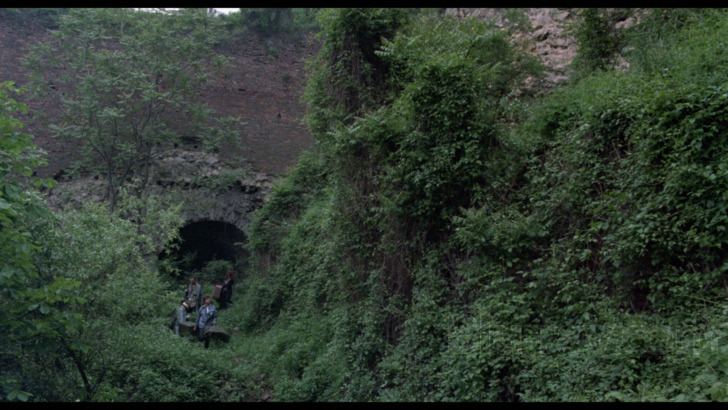
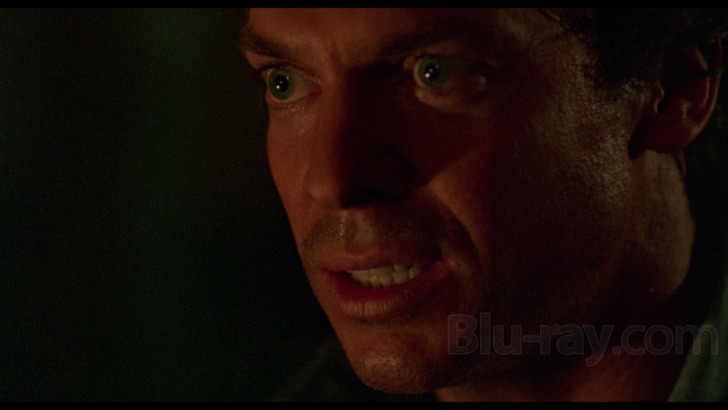
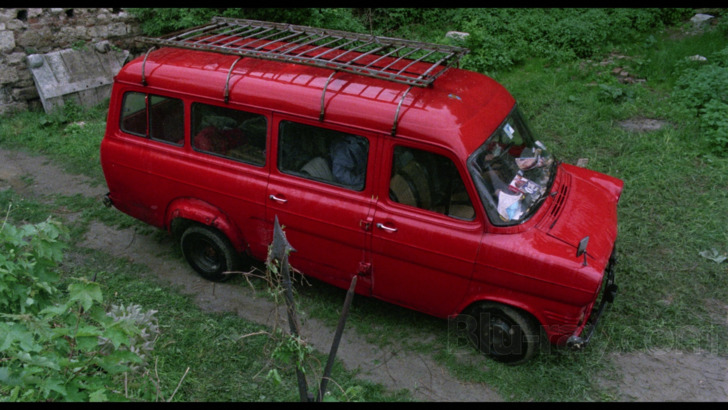
The image presentation (1.85:1 aspect ratio) for "Playroom" is listed as "newly scanned and restored in 4K from its 35mm internegative." The picture largely remains around the tomb area, and such exploration retains depth, preserving stone rooms and living spaces. Exteriors are dimensional, with a full sense of Yugoslavian expanse. Detail is strong with skin particulars, surveying differences in age and states of distress. Puppetry is also open for examination. Costuming is decently fibrous. Colors favor a cooler palette for a more mysterious look, preserving stony interiors, illuminated by orangey fire and warmer sunlight. Greenery is distinct. Skin tones are natural. Delineation is satisfactory. Grain is film-like. Source is in good condition, with some scratches.
Playroom Blu-ray Movie, Audio Quality
The 2.0 DTS-HD MA mix secures clear dialogue exchanges throughout most of the viewing experience. Performance choices are intact, and cavernous locations are noted. Scoring delivers sharp synth support, handling dramatic and horror happenings without overwhelming the action. Sound effects are appreciable. Brief damage is detected near in the end of the movie.
Playroom Blu-ray Movie, Special Features and Extras
- "Child's Play" (30:52, HD) is an interview with art director Greg Aronowitz, who rode his love of "Star Wars" into a moviemaking career, spending his formative years preparing for a leap into the industry during the late-1980s. Making a contact, Aronowitz found a job, eventually acquiring another gig on a low-budget feature titled "Hyperspace." Moving on to 1990's "Spaced Invaders," the interviewee shares an increase in production responsibilities, helping to launch his career. Talk turns to "Playroom," taking Aronowitz to Yugoslavia, putting his talents to the test while handling many assignments. Technical details from the creature creations are shared, examining the labor and vision involved to bring some odd visuals to life. More interesting is talk of Steve Johnson, who elected to leave the picture midway through filming, giving Aronowitz a quick promotion, suddenly in charge of building sets. The conversation closes with a candid assessment of the endeavor.
- "A Whole Different World" (20:12, HD) is an interview with actress Jamie Rose, who was inspired to join the entertainment industry by her parents, following in their footsteps as a child performer before taking a break, returning to work as young woman. Hired for "Playroom," Rose was moved to Yugoslavia for the shoot, receiving a quick lesson on a unique culture and people, also dealing with political issues of the day. Well-versed in the world of healing and yoga, Rose infused her character with her own interests, even rewriting parts of the script to fit her sense of humor. The interviewee offers memories of working with director Manny Coto and her co-stars, enjoying a reunion with Christopher McDonald, creating some comfort on the set. She also shares highlights from the rest of her career, happy with her employment experiences, and reflects on "Playroom," appreciating the memories it provided.
- "Playing in the Music Room" (19:52, HD) is an interview with composer David E. Russo, who found early success with his band Sun 60, getting a chance to participate in the music business. A move to film scoring followed, eventually finding work on 1990's "Spaced Invaders" and 1995's "Angus," developing something of a career. Time on "Playroom" is shared, highlighting the crude technology of the day and his creative process, working with significant budgetary and time restraints, unsure if director Manny Coto even liked what he was doing.
- "The Cutting Room" (20:42, HD) is an interview with editor Bernard Weiser, who took his love of photography and puzzles to the film industry, moving from USC to government movies, receiving a chance to really learn about production demands and various jobs. Connecting to director Manny Coto, Weiser became something of a mentor, guiding the young helmer through the editing process. The Yugoslavian experience is analyzed, dealing with the locals and some disorganization from the crew, and the interviewee assesses the creative effort, noting the young age of the professionals, lacking seasoning to pull off a more substantial endeavor.
- And a Video Trailer (:47, SD) is included.
Playroom Blu-ray Movie, Overall Score and Recommendation
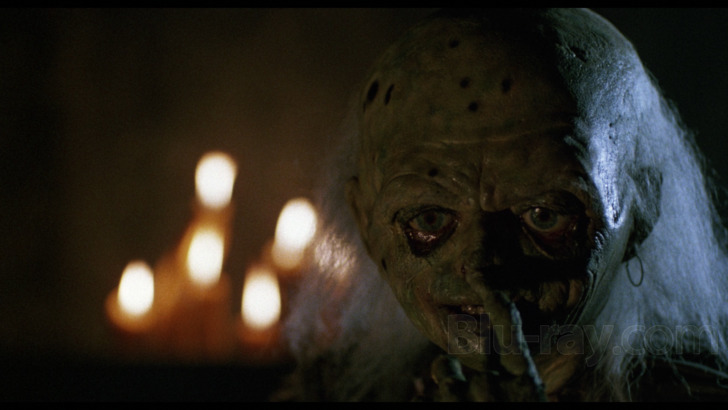
"Playroom" has a body count, but it mostly remains a tiresome viewing experience. Coto has a strange idea for a conclusion, bringing in a puppet to represent ultimate evil, and while the visual isn't entirely ridiculous, the tone of the climax is, finding everything suddenly played for laughs. This includes a shot where the villain takes a moment to pick his nose and eats some buried treasure of his own making. Newfound stupidity certainly wakes the feature up, but consistent tonality is punted away, and Coto can't recover for a final scene that's meant to be shocking. Instead, the viewer is meant to accept an awkward blend of ridiculousness and severity, but it takes stronger writing and directing to successfully sell that creative combo.
Similar titles
Similar titles you might also like

I Walked with a Zombie 4K
1943

Nanny
2022

The Shrouds
2024

Ganja & Hess
1973

Targets
1968

Knocking
Knackningar
2021

The Third Eye
1966

Shikoku
死国
1999

The Strange Door
1951

Purani Haveli
The Monster Wakes
1989

Nosferatu the Vampyre 4K
Nosferatu: Phantom der Nacht
1979

Purana Mandir
The Haunted Temple
1984

Ghost of Kasane Swamp
怪談累が淵 | Kaidan Kasane-ga-fuchi | The Masseur's Curse | Horror of an Ugly Woman | Limited Edition
1970

Scissors
1991

Door II: Tokyo Diary
1991

Bandh Darwaza
The Closed Door
1990

Inugami
狗神
2000

Litan
1982

Violated!
1975

The Strange Case of Dr. Jekyll and Miss Osbourne
Docteur Jekyll et les femmes
1981