Piotr Szulkin's Apocalypse Tetralogy Blu-ray Movie
HomePiotr Szulkin's Apocalypse Tetralogy Blu-ray Movie 
Vinegar Syndrome | 1980-1986 | 4 Movies | 363 min | Not rated | May 26, 2023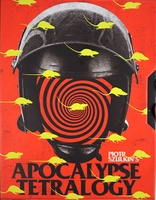
Price
List price:Listed on Amazon marketplace

Movie rating
Movie has not been rated yetBlu-ray rating
| Users |  | 0.0 |
| Reviewer |  | 4.0 |
| Overall | | 4.0 |
Overview
Piotr Szulkin's Apocalypse Tetralogy (1980-1986)
The late 70s and early-mid 80s in Poland were a time of incredible censorship and, miraculously, a time of phenomenal output from Polish filmmakers. Often overshadowed on the world stage by his peers, Piotr Szulkin was a visionary pioneer in the dystopian Sci-Fi genre. Presented here are the four films that comprise Szulkin's Apocalypse Tetralogy, originally released between 1980-1986, arguably the busiest period for the scissors of Polish censors. Cleverly working around content restrictions, Szulkin delivers tense and disturbing Sci-Fi, telling fantastical, and often horrific, allegories of living in a corrupt bureaucracy and police state. From aliens to artificially-created beings, from brainwashed masses and ultra-violent indulgences, Vinegar Syndrome is proud to present Piotr Szulkin's Apocalypse Tetralogy, making its Worldwide Blu-ray debut.
| Foreign | 100% |
| Drama | 47% |
| Horror | 46% |
| Mystery | 9% |
| Sci-Fi | Insignificant |
| Comedy | Insignificant |
| Thriller | Insignificant |
Specifications
Video
Video codec: MPEG-4 AVC
Video resolution: 1080p
Aspect ratio: 1.66:1, 1.85:1
Original aspect ratio: 1.85:1
Audio
Polish: DTS-HD Master Audio 2.0 Mono
Subtitles
English, English SDH
Discs
Blu-ray Disc
Two-disc set (2 BDs)
Packaging
Slipcover in original pressing
Playback
Region free
Review
Rating summary
| Movie | | 4.0 |
| Video |  | 4.5 |
| Audio | | 4.0 |
| Extras |  | 3.0 |
| Overall | | 4.0 |
Piotr Szulkin's Apocalypse Tetralogy Blu-ray Movie Review
Tearing down a wall of censorship...
Reviewed by Kenneth Brown December 18, 2023Take a moment and watch Vinegar Syndrome's trailer for Piotr Szulkin's Apocalypse Tetraology. In a single, one-minute reel comprised of erratic footage from four different films, and without anything in the way of context or narrative for the uninitiated, it provides the precise feelings, imagery, sounds and music you'll be hypnotized by over the course of the four startling Polish films -- created beneath the boot of extreme Cold War-era censorship -- that you'll discover in this 2-disc, 4-movie collection. Szulkin's art is less about the films and more about crafting expressionistic cries for cultural emancipation and warning future generations of the all-encompassing nightmare that is oppression in a society determined to contain and control free thought and free will. While some of the films featured in this collection are better than others, the four that have been selected and newly restored by Vinegar Syndrome represent an incredible piece of haunting, unnerving, often unhinged and unsettling art that must be seen (I'd recommend multiple times) to be fully appreciated and understood.
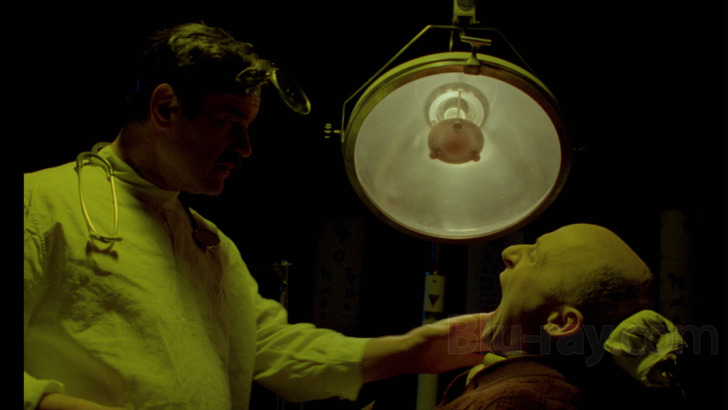
Poland: the late '70s and early to mid '80s. A time of incredible censorship and, miraculously, a time of phenomenal output from Polish filmmakers. Often overshadowed on the world stage by his peers, filmmaker Piotr Szulkin was a visionary pioneer in dystopian science fiction. Presented in this 2-disc Limited Edition collection are four films that comprise Szulkin's aptly named "Apocalypse Tetralogy", originally released between 1980-1986, arguably the busiest period for the scissors of Polish censors. Cleverly working around content restrictions, Szulkin delivers tense and disturbing sci-fi, telling fantastical, often horrific allegories of living in a corrupt bureaucracy and police state. From aliens to artificially created beings, from brainwashed masses and ultra-violent indulgences, Vinegar Syndrome presents Piotr Szulkin's Apocalypse Tetralogy, making its worldwide Blu-ray debut in this reverse cover-artwork collection, which includes Golem (1980), The War of the Worlds: Next Century (1981), O-Bi, O-Ba: The End of Civilization (1984) and Ga-Ga: Glory to the Heroes (1985).
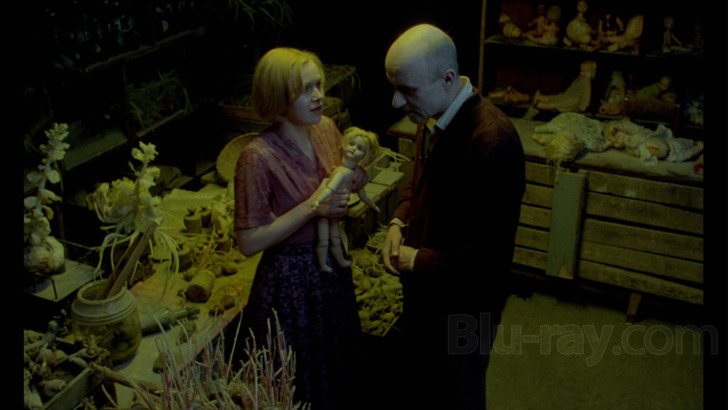
Golem (1980, Screenshots 1 + 5-13)
Synopsis: Pernat (Marek Walczewski) finds himself in a police interrogation, accused of a murder, and unable to recall any details of the crime, or even his own life. He's released back into a world of raving lunatics and deranged dentists, murderous doctors and scientists who believe the secret of human creation is inside the walls of a cast-iron oven. Pernat's odyssey to find out who he is, and what it is to be human, will force his path to cross with all of them. The 1980 film was inspired by the 1915 novel "The Golem" by Austrian author Gustav Meyrink. Co-written by Tadeusz Sobolewski, it also stars Krystyna Janda, Joanna Zólkowska, Anna Jaraczówna, Mariusz Dmochowski, Wieslaw Drzewicz and Krzysztof Majchrzak.
Part of the power of Szulkin's films are their continued ability to disarm and disturb decades after the dissolution of the USSR. In a time when the world is toying with a return to more authoritarian leaders and totalitarian states, it's also particularly resonant. Golem is a frightening tale of a man lost in and to himself, wandering in a desolate memory of a place he may have once called home. But he lacks purpose, which the film certainly does not, meaning his drive becomes the drive of an entire people, out of sync and thrust into dystopian destruction, attempting to reclaim, or even uncover, a history that has long been forgotten. It's visually stunning and simultaneously nauseating, not for any especially graphic reason, but because it all at once channels everything from Philip K. Dick to Terry Gilliam, with stark imagery that assaults the senses more than it graces the screen. Released contemporaneously with Andrei Tarkovsky’s Stalker, it serves as both a spiritual companion piece and Stalker's bipolar opposite, despite its shared claustrophobia and dreamscape reality. It's Brazil before Brazil existed, but decidedly less British and certainly more vicious. For such a low-budget film, the production design is clever and masterfully effective, bring together a morality tale that will not soon leave your consciousness.
The War of the Worlds: Next Century (1981, Screenshots 2 + 14-21)
Synopsis: The Martians have landed and they're not to be feared! Or at least that's what TV personality Iron Idem has been telling people. Soon after their arrival though, his apartment is ransacked and his wife kidnapped. He's tagged like a wild animal and his nightly scripts are being changed. What Idem's eyes are seeing no longer matches what he tells audiences night after night. Are the Martians as good-natured as he believed, or is he being used in a more sinister plot that endangers the entire planet? The 1981 film is inspired by the 1898 H. G. Wells novel "The War of the Worlds".
Next Century doesn't care about aliens or alien invasions. It's an existential, philosophical fever musing of Soviet occupation and, in the film, the manner in which an iron boot government uses outside crises as a means to exert further control over a populace. Like Shakespeare and other famed artisans of the centuries, Szulkin's metaphors and symbolism are broad and inexact, though history tells us exactly what message he's broadcasting and which regime he deems the enemy. The result is an adaptation that tosses aside the notion of adapting a story and instead utilizes the themes and emotions of an invaded people to explore the idea of a military state that would enter into a Faustian deal with the devil simply to increase its power and lord over its citizenry. Ignore the aliens and their design -- they don't work -- while at the same time their silliness and cartoonish appearance may actually make the farce of the real invasion of the human hierarchy more terrifying. The message is clear: even otherworldly entities pale in comparison to the horror we, as a society, can be to one another.
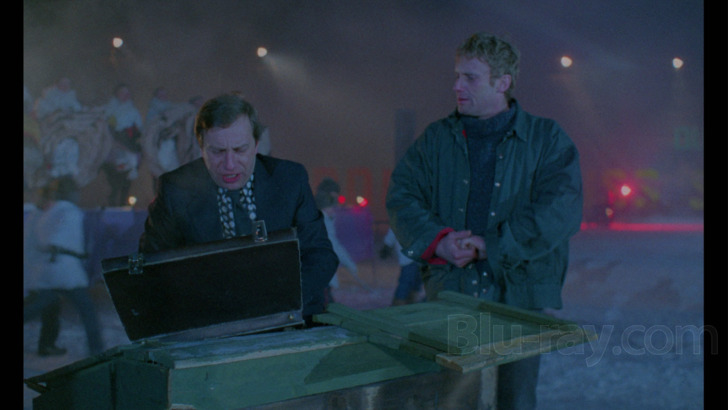
O-Bi, O-Ba: The End of Civilization (1984, Screenshots 3 + 22-30)
Synopsis: The world has been ravaged by nuclear war. The planet is frozen and radiation kills anyone or anything that ventures outside of 'The Dome'. Soft is a shepherd for the last remnants of humanity who have gathered together as they await rescue from a mysterious craft known only as 'The Ark.' He wanders among the masses, performing his regular daily tasks; keeping morale from plummeting, wooing prostitutes, squashing rebellions, and sometimes feeding the hungry. But as the true and sinister nature of 'The Dome' comes to light, Soft must ask himself if humanity is worth saving?
The End of Civilization was released in 1984 -- an ironic year that does not seem to escape Szulkin's attention and twisted sense of humor -- when censors were growing savvy to the director's subversive voice and satirical bag of tricks. As a result, the third film in the Apocalypse Tetralogy is as vague and surreal a vision as he can muster, and could easily be accused of being plotless, even meaningless. And if you find yourself dizzy by film's end, good. Read. Research. Watch it again. There's perhaps more to unearth in The End of Civilization than anything that comes before. O-Bi, O-Ba is easily Szulkin's most nihilistic vision of the future, steeped in our own need to self-destruct and our base impulses to find pleasure in our misery. It's a sad existence, but one that allows the director to explore deeper philosophical and existential questions than traditional storytelling affords. It's here that Szulkin's voice, distorted and defeated, comes alive and matures, allowing the filmmaker to push into new territory where censors would be no doubt left baffled and unsure of what to cut, what to be angry about, what to suppress. The Ark is a trap. The Dome its veil. And Soft is its victim, along with all that reside within. Ooph.
Ga-Ga: Glory to the Heroes (1985, Screenshots 4 + 31-40)
Synopsis: Scope is a prisoner on a behemoth space station and is chosen, like all his fellow prisoners, to 'volunteer' for the exploration of far-away planets. Landing on planet Australia 458, he is given a hero's welcome with all the sex, booze, and violence that any one man can stomach. But as his new caretakers push him towards even more heinous and deplorable acts, Scope finds that his freedom comes with a high price; his own violent demise, broadcast live for the viewing pleasure of Australia 458's inhabitants. Is there a way out? Or is Scope's fate sealed?
The last entry in Szulkin's Apocalypse Tetralogy is a sharp turn from the rest. What if mankind, now living in the sort of idyllic future it longs for, merely uses the least of its denizens to further exploit the masses and continue its march towards self-destruction? What if those granted new freedom were to realize that the gift given is actually a horrid trick, meant to transform their lives into entertainment? Glory to the Heroes is a study of apathy, stagnancy, debauchery and, more than anything, the ways in which systems of power exert their will regardless of how happy and docile its people may be. Szulkin suggests their is no escape from this awful cycle humanity finds itself in. We are the murders of our own futures, and we are the thieves who steal every precious possession from ourselves. Are we doomed to repeat these sins again and again? Szulkin seems to think so, and it's in this fatalism that the Tetralogy closes; in a prison of our own making, searching for an escape hatch we neglected, in our collective docility and civility, to build.
Piotr Szulkin's Apocalypse Tetralogy Blu-ray Movie, Video Quality
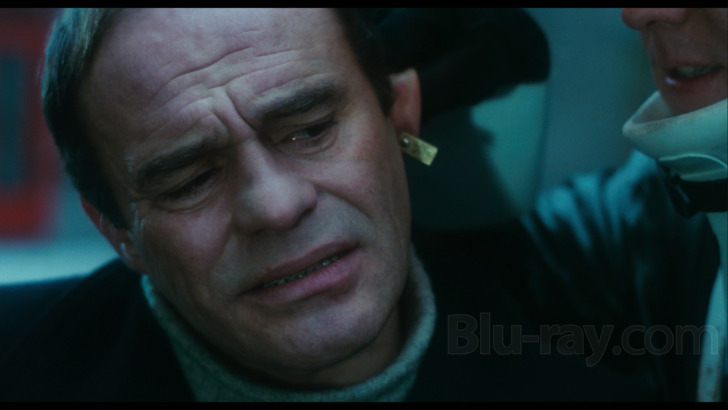
Radiance Films released three of the films included in Vinegar Syndrome's Apocalypse Tetralogy in a 3-disc set in December 2023. And,
because nothing can be
easy in the world of newly minted remasters, appears to have slightly different contrast and color grading from Vinegar Syndrome's collection. I don't
have the Radiance release, but, from the limited screenshot comparisons I've seen online, I strongly suspect the Vinegar Syndrome 1080p/AVC-encoded
video
presentation offers the more accurate, filmic transfer of the two, and is the most faithful to what I imagine the visual tone of the original elements would
produce. The fact that the Vinegar Syndrome release places two films per disc doesn't seem to be a problem either, as I didn't notice any
compression
limitations or artifacts in any of the four transfers. The Radiance transfers look great in screenshots, don't get me wrong. They're a bit brighter and
sometimes more vivid. But the more starkly contrasted blacks and whites are also a touch artificial to my eye. Less cinematic, less true to what I'd
expect to see in a properly lit theater. Your tastes and preferences may vary. And I can't stress this enough, I haven't seen the Radiance collection in
action. So you may need to take this entire paragraph with a grain of salt.
All that said, I couldn't be more pleased with the transfers of each of the four films in the Apocalypse Tetralogy. More than restored, Szulkin's
visions of the future have been renewed and rejuvenated. Primaries have real power, and the splashes of light and color that strike through the
darkness of the director's dystopias are bold and evocative. Black levels are deep and inky, without interfering with delineation in any significant way.
Szulkin loves cloaking imagery in shadow and detail retreats into the dark beautifully, as it's meant to. The End of Civilization shows a tad
more
wear and softness than the other films, but nothing too concerning. The Vinegar Syndrome restorative efforts are thorough and complete, and it's
clear just how much love and care was afforded to each presentation. Detail is also excellent, with preserved yet minimal grain (with the exception of
Glory to the Heroes, which has an intentionally oppressive grain field), revealing textures
and refined
edges. Not only shots and sequences are created equal, but any inconsistencies appear to trace back to the source, not the AVC encodes. Moreover,
banding, blocking and other such nonsense is absent. Golem, The War of the Worlds, The End of Civilization and Glory to
the Heroes could not, in my mind, look much better than they do here. I was able to switch off my critical brain more often than not and simply
take in the wonders and horrors of Szulkin's surrealism, nihilism and cold dystopian dreamscapes.
Piotr Szulkin's Apocalypse Tetralogy Blu-ray Movie, Audio Quality
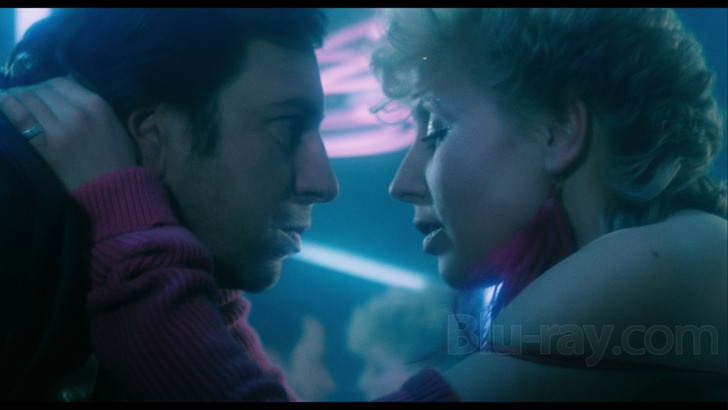
The films' DTS-HD Master Audio 2.0 Mono tracks are less impressive, I suppose. But only subjectively. While I would have loved to sample delirious 5.1 remixes of each movie's sound design, I also can appreciate audio tracks that cling to the source and prioritize faithfulness over newness. Dialogue is clear and neatly prioritized, although the more attentive among you will certainly notice moments where the original recordings and audio elements were not as forgiving, leading to small inconsistencies in clarity and fidelity. Nothing that buries a voice or loses a line, but the kind of reasonable shortcomings you'd expect in a low-budget Cold War-era Polish film created under difficult circumstances and censorship. Effects follow suit, with quaint but commendable realism. And music sounds great. Low-end support, rear speaker activity and a more 360-degree sense of immersion in Szulkin's worlds would have been a dream come true for this fan. But, again, don't take that as a complaint. Just a wish list item we'll probably never get our hands on.
Piotr Szulkin's Apocalypse Tetralogy Blu-ray Movie, Special Features and Extras
The real draw of the 3-film UK-released Radiance collection, aside from the fact that it's region free, is the additional special features and commentaries
offered and the 80-page booklet included.
Honestly, I'd recommend purchasing both releases; be a completist, why not? But in the meantime, enjoy the extras Vinegar Syndrome's 2-disc, 4-
film collection has on tap, which amounts to one significant special feature per movie:
- Golem Audio Commentary - Golem features an audio commentary with film historian and author Samm Deighan, who carefully deconstructs the meaning and dense satire of the film, delivering a genuinely engaging analysis of Szulkin's work and his first major feature production.
- The War of the Worlds Audio Commentary - The War of the Worlds: Next Century includes an audio commentary with film historian and author Michael Brooke, who is in some ways even more compelling than Deighan, delving into the particulars of Szulkin's loose adaptation, the film's messaging, its symbology and its ultimate judgements on the totalitarian state.
- Actually Existing Dystopia Video Essay (HD, 17 minutes) - This video essay from Jonathan Owen, subtitled "Politics, Delusion and Language", drills down on the themes, satire and symbols of O-Bi, O-Ba: The End of Civilization.
- Glory to the Heroes Video Essay (HD, 21 minutes) - This video essay from Andrew Nette, subtitled "Hard to Be a Hero", follows suit, providing clarity and insight into Szulkin's fourth film in the Apocalypse Tetralogy.
Piotr Szulkin's Apocalypse Tetralogy Blu-ray Movie, Overall Score and Recommendation
Don't delay. Grab this one before it's gone. Piotr Szulkin is a master Polish filmmaker with deep, disquieting things to say about totalitarianism, censorship, oppression and any power structure that would take advantage of its people for political gain. His voice is clear and ragged, his visuals unsettling and unnerving. His films are stunning in structure, opaque in narrative clarity and dense in meaning. Vinegar Syndrome's 2-disc, 4-film release is a tantalizing one, as is Radiance Films' 3-disc, 3-film collection (and it's region free to boot). I haven't gotten my hands on the latter but I recommend snatching up both, if only for the additional special features. Even if you can't (or don't) purchase the pair, Vinegar Syndrome's release is well worth your hard-earned cash thanks to four terrific, newly restored video transfers, strong DTS-HD Master Audio 2.0 Mono tracks, and a decent selection of supplements.