Pioneers: First Women Filmmakers Blu-ray Movie
HomePioneers: First Women Filmmakers Blu-ray Movie 
Kino Lorber | 1911-1929 | 14 Movies | 1710 min | Not rated | Nov 20, 2018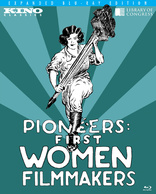
Price
List price:Listed on Amazon marketplace

Movie rating
7.6 | / 10 |
Blu-ray rating
| Users |  | 0.0 |
| Reviewer |  | 5.0 |
| Overall | | 5.0 |
Overview
Pioneers: First Women Filmmakers (1911-1929)
Starring: Mabel NormandDirector: Lois Weber, Alice Guy-Blaché
| Drama | 100% |
| Romance | 35% |
| Western | 8% |
| Period | Insignificant |
| Melodrama | Insignificant |
| Comedy | Insignificant |
| Crime | Insignificant |
Specifications
Video
Video codec: MPEG-4 AVC
Video resolution: 1080p
Aspect ratio: 1.32:1
Original aspect ratio: 1.33:1
Audio
Music: LPCM 2.0
Subtitles
None
Discs
Blu-ray Disc
Six-disc set (6 BDs)
Playback
Region A (C untested)
Review
Rating summary
| Movie | | 5.0 |
| Video |  | 4.5 |
| Audio |  | 4.0 |
| Extras | | 5.0 |
| Overall | | 5.0 |
Pioneers: First Women Filmmakers Blu-ray Movie Review
Reviewed by Jeffrey Kauffman December 9, 2018Google algorithms are a thing of mystery, at least to luddites like yours truly, but it’s kind of interesting to search for “women film directors” and see what that turns up. At least the first several that turned up in my particular search will probably be recognized by many contemporary filmgoers, with Kathryn Bigelow (Zero Dark Thirty), Ava DuVernay (Selma), Jane Campion (The Piano), Patty Jenkins (Wonder Woman) and Sofia Coppola (Lost in Translation) taking the top spots. But then after a modern day name that some may find at least slightly less recognizable, Mira Nair (Salaam Bombay!), there’s another kind of exotic sounding moniker that may cause even devoted cineastes to respond with a resounding, “Who is that?” The correct question should actually be “Who was that?”, since the Google search results I received listed Alice Guy-Blaché next, after Mira Nair, while also helpfully providing the year of her birth (1873) and death (1968). For those who may not know who Guy-Blaché was, or indeed even for those who do know who she was, this fantastic new set from Kino Lorber provides ample evidence that folks like Bigelow and DuVernay should probably be a little reticent to accept the accolade if someone decides to describe them as “pioneers”, since Guy-Blaché and a host of other women were making movies perhaps before the grandparents of either Bigelow or DuVernay were even alive. In fact one of the most fascinating things that Pioneers: First Women Filmmakers makes clear is that in the early days of cinema, by which I mean the late 19th century up until around the early 1920s or so, women were all over the film industry, often in very high ranking positions. It’s one of the odd vagaries of fate and/or history that women were routinely in positions of power and influence as the industry was being developed, but once things were more firmly established, they suddenly found themselves shunted more and more to the sidelines, at least in terms of the production side of the business. Pioneers: First Women Filmmakers aggregates a really fascinating cross section of early shorts and features helmed by women, while also providing a number of equally fascinating supplements that provide historical context and further information about the women behind the camera.
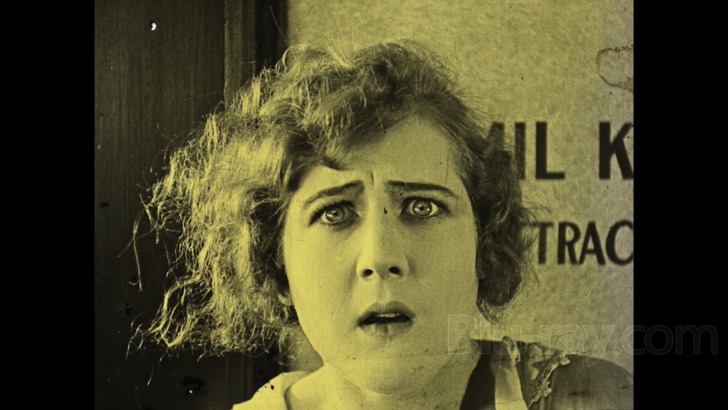
There is such a veritable glut of material here that I’m almost loathe to single out various things, but I’ll offer a few initial reactions, knowing that my inevitable return to this set could very easily highlight any number of things I won’t mention here. Aside from the sheer amount of material churned out by women in the early days of the film industry, what struck me repeatedly about many of the offerings here is how forward thinking so many of them are. Minorities are at least somewhat represented, though there are still kind of horrifying vestiges of another time and place in terms of both how some minorities are referred to in intertitles, but also what appears to be blackface at times. There’s also a perhaps understandable if still surprisingly energetic female empowerment subtext (and in fact text) that runs through many of these films. This may strike some as passé, but within the context of an American society where for many, maybe most, of these films' production years women didn’t yet have the right to vote, it really left me personally feeling a bit staggered. The subject matter for many of these probably inescapably female-centric plotlines is also unabashedly provocative at times, getting into gender roles, sexuality and even some amazingly frank (if quaintly discursive at times) takes on issues like birth control and abortion. There are even some vignettes that fairly overtly presage such modern day phenomena as the "#metoo" movement. There are going to be any number of pleasures that individual viewers will discover in this set, but for this devoted lover of Broadway musical flops, getting a chance to see so much of Mabel Normand (one of two title characters in the Jerry Herman musical Mack and Mabel) was a real joy, especially since as some of the supplements get into she managed to combine both a penchant for physical comedy with a rather winsome ingenue presence.
While the first two discs are labeled with iconic female directors' names, they may also include a smattering of other material not necessarily helmed by that particular person. The complete disc contents are listed below; those items with an asterisk (*) are exclusive to the Blu-ray set.
Disc One: Alice Guy-Blaché
- Mixed Pets (1911)
- Tramp Strategy (1911)
- Greater Love Hath No Man (1911)
- Algie the Miner (1912)
- Falling Leaves (1912)
- The Little Rangers (fragment) AKA Two Little Rangers (1912)
- Canned Harmony (1912)
- A Fool and His Money (1912)
- The High Cost of Living (1912)
- The Coming of Sunbeam* (1913)
- Burstup Homes’ Murder Case (1913)
- A House Divided (1913)
- Matrimony’s Speed Limit (1913)
- The Ocean Waif (1916)
- The Colleen Bawn (1911)
- On the Brink (fragment) (1911)
- The Cricket* (fragment) (1917)
- From Death to Life (1911)
- Fine Feathers (1912)
- The Rosary (1913)
- Suspense (1913)
- Lost by a Hair (fragment) (1914)
- Hypocrites (1915)
- Sunshine Molly (fragment) (1915)
- Idle Wives (fragment) (1916)
- Too Wise Wives* (1921)
- What Do Men Want? (fragment) (1921)
- The Hazards of Helen (1915)
- Episode 9: “The Leap from the Water Tower”*
- Episode 13: “The Escape on the Fast Freight”
- Episode 26: “The Wild Engine”
- The Purple Mask (1917)
- Episode 5, Reel 1*
- Episode 12: “The Vault of Mystery”
- Episode 13, Reel 1: “The Leap”
- A Daughter of “The Law” (1921)
- Eleanor’s Catch (1916)
- ’49 - ‘17 (1917)
- Caught in a Cabaret (1914)
- Mabel’s Blunder (1914)
- Mabel and Fatty’s Wash Day (1915)
- Mabel Lost and Won* (1915)
- That Ice Ticket (1922)
- Ethnographic Films (1929)
- Where Are My Children? (1916)
- Her Defiance (1916)
- When Little Lindy Sang (1916)
- The Curse of Quon Gwon: When the Far East Mingles with the West (1917)
- Scandal (1915)
- The Dream Lady (1918)
- Something New* (1920)
- The Risky Road (fragment) (1918)
- Bread (fragment) (1918)
- Salomé (1923)
- The Red Kimona (1925)
- Motherhood: Life’s Greatest Miracle* (1925)
- Linda (1929)
- The Call of the Cumberlands (1916)
- Broadway Love* (1918)
- Back to God’s Country (1919)
- The Song of Love (1923)
Pioneers: First Women Filmmakers Blu-ray Movie, Video Quality
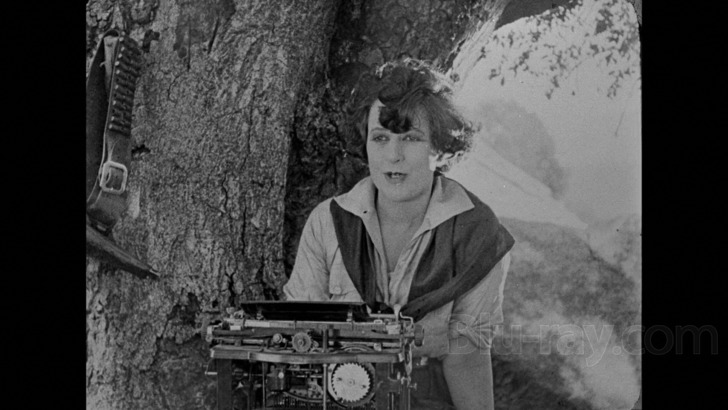
Pioneers: First Women Filmmakers is presented on Blu-ray courtesy of Kino Classics with AVC encoded 1080p transfers in an array of aspect ratios, with most hovering near Academy Ratio (our site automatically measures screenshots and the bulk of these particular screenshots came in at 1.32:1, though if you simply scroll through all 40 you can clearly see slight variances). The engaging insert booklet included with this release contains extensive "liner notes" about the transfers, from which the following is excerpted:
The films in this collection have been digitally restored by Kino Lorber, working from 2K and 4K scans provided by the archives at which the source elements are preserved. In addition to color grading and general damage repair, some masters have undergone varying degrees of digital dirt removal. Kino Lorber's policy is to apply such cleaning methods sparingly, so as to not remove important detail from the image, and to preserve the texture of film grain. In no instance was grain artificially added to the image. Films were color tinted only when the surviving film elements were tinted, or when there was a reliable record of the colors that were used in the original theatrical releases of those specific films.As should be expected with a collection of this type, there are wide, and in fact some may say huge, variances in video quality, sometimes within any given offering. Kino has gone the extra mile and provided a glut of source element information in the insert booklet, and everything from dupe negatives to fragmentary prints were utilized, and as such aspects that we typically assess like sharpness, clarity, contrast and grain structure are frankly all over the map. Damage also ranges on a scale from virtually non-existent to almost complete obliteration of individual frames. So, how to properly "score" something like this? As is detailed in some of the supplements, there simply has to be both slack and kudos granted to the team who put this collection together because of the immense, at times seemingly insurmountable, technical challenges they faced. First of all, just paying attention to the array of international sources that provided various elements proves what a global effort this was, even if the bulk of the material was handled by the Library of Congress. But the care and handling the sometimes precariously decayed elements were treated with shines through these transfers, even when damage is more than evident. There are moments in this set where you might think you're watching a film of fairly recent vintage, given fine detail levels and a nice, compact grain structure, but even in the most badly damaged moments, there's a genuine sense of "history" that suffuses the context of the viewing experience and which may help to alleviate some of the "bumpy" moments. While the insert booklet is probably the best overall source to get background information on any given film in this set, some of the offerings contain both preliminary text crawls that give some historical or other information, and some fragments are so fragmentary that there are interstitial descriptions stating things like "missing reel" and the like. That means not every film in this collection will be an "uninterrupted" viewing experience, but the overall presentational aspects here are spectacular from a restoration and curation standpoint, and I noticed no compression anomalies whatsoever. There are still a few things like wobbly intertitles and/or credits that conceivably could have been stabilized digitally, but this is an impressive feat by any standard and should certainly please lovers of rare silent cinema.
With only two exceptions, all the scores in the collection were commissioned specifically for this release, and a concerted effort was made to foreground women composers, including several who are scoring silent films for the first time. It was our intention that these composers provide scores in a variety of musical styles, to encourage the proper context by which these vintage films might be freshly evaluated.
Because silent films (especially pre 1926) were almost always shown at a frame rate slower than twenty four frames per second, the projection speeds of these films have been modified accordingly. IN some cases, films in this collection have been previously released on DVD or via online streaming sources, and viewers may notice those versions have longer running times. It is Kino Lorber's opinion (supported by recent research) that silent films are typically projected too slowly in the home video era, causing the pace of the films to drag. Great care was taken to determine the speeds at which the films are projected in this edition (generally twenty to twenty two frames per second). Any discrepancy in running times between these editions and previously released versions is due to the project speed, not an absence of content (in many cases, these new editions have restored footage missing from previously released versions).
Pioneers: First Women Filmmakers Blu-ray Movie, Audio Quality
Hoo boy. The audio element is going to be where some silent film fans may find this collection on the outré side. All of the films feature LPCM 2.0
audio, and as is mentioned above, the music accompanying these offerings was commissioned specifically for this release, and it's obvious that Kino
threw caution to the wind and simply let the composers come up with whatever their hearts desired. As someone with a musical background
myself, I laud this artistic freedom, but I have to question how much some of these scores actually support the films they're accompanying.
One of my personal mentors who had a background in television and film scoring told me once that the best film scores never draw attention to
themselves, and should work subliminally. Now that's perhaps not so salient an analysis when it comes to silent films, where arguably music is more
"front and center" in the viewer's (and listener's) consciousness, but for me personally, some of these scores drew too much attention to
themselves, and as a result proved a distraction rather than an addition to the viewing experience. Of course every listener will have to come to their
own conclusions about the scores included. One way or the other, fidelity is always fine and there are no quality issues whatsoever.
The somewhat clunky authoring I mention in the Supplements section below also ports over to the audio options here, since some of these films have
more than one score. There's no way to know this going in, however, unless one clicks on an individual film and a submenu appears if there is more
than one choice available. The insert booklet also lists the variant scores (if applicable) under the individual listings for every film.
Pioneers: First Women Filmmakers Blu-ray Movie, Special Features and Extras
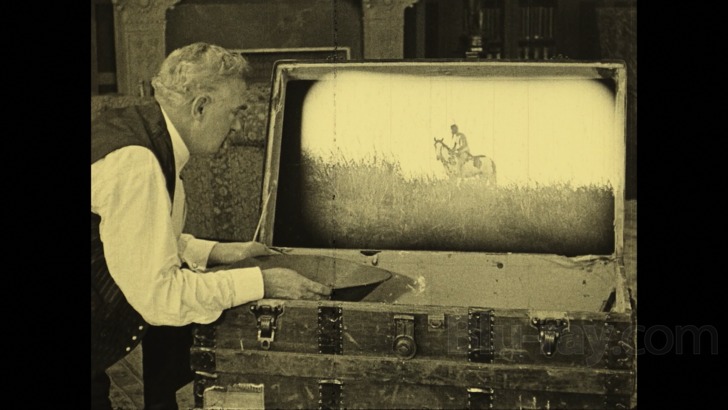
The supplements in this set are extensive, but they're authored a bit clunkily in my not so humble opinion. The commentaries are not listed
separately
under any given menu on any given disc, with the sole exception of Disc 5, where they're listed under the Extras menu, perhaps because they're the
only supplement on that disc. On all of the other discs, you must therefore select an individual film to see if it has a commentary (a submenu will
pop up if it
does; if it doesn't, the film just starts, another potential stumbling block for those looking for info quickly). The extensive booklet does list
some but not all of the
commentaries, in what I assume must have been a proofreading and/or editing error given the immense amount of material included in the booklet.
The commentaries that are listed are available under the individual listings for the film, but, again, that requires leafing through and looking for
them, plus the list is incomplete in any case, as mentioned. In terms of actual
disc
presentation, I'm not sure what exactly caused this, but on many of the supplementary documentaries, the pieces would start just a split second
into
things, frequently with the title and/or first snippet of a word cut off. Chapter skipping back to the beginning would then show the title and get the
missing phoneme or two. My standalone player almost acted like there was some kind of HDMI handshake going on where perhaps resolutions were
changing, but as you can see below, everything is in 1080p. All of that said, here are the supplements on each disc:
Disc One
- Documentary Short: An Introduction (1080p; 17:27) is the first of several excellent featurettes whose titles make the subjects self evident. Among the informative talking heads spread throughout all of these featurettes are Rob Stone, George Willeman and Lynane Schweighofer of the Library of Congress, along with Anthony Slide, Jane M. Gaines, Shelley Stamp, Karen Ward Maher, and Alison McMahan.
- Documentary Short: Alice Guy-Blache (1080p; 8:24)
- Documentary Short: About the Restorations (1080p; 11:08)
- Audio Commentaries
- Canned Harmony by Alison McMahan
- A Fool and His Money by Alison McMahan
- Burstup Homes' Murder Case by Alison McMahan
- A House Divided by Alison McMahan
- Matrimony's Speed Limit by Alison McMahan
- Documentary Short: Lois Weber (1080p; 8:35)
- Audio Commentaries
- Hypocrites by Paul Young
- Too Wise Wives by Gaylyn Studlar
- Documentary Short: Mabel Normand (1080p; 7:56)
- Documentary Short: Serial Queens (1080p; 7:01)
- Audio Commentary
- '49 - '17 by Anthony Slide
- Documentary Short: Social Commentary (1080p; 11:03)
- Audio Commentaries
- Bread by Anthony Slide
- Salome by Gaylyn Studlar
- The Red Kimona by Anthony Slide
- Documentary Short: End of an Era (1080p; 10:03)
Pioneers: First Women Filmmakers Blu-ray Movie, Overall Score and Recommendation
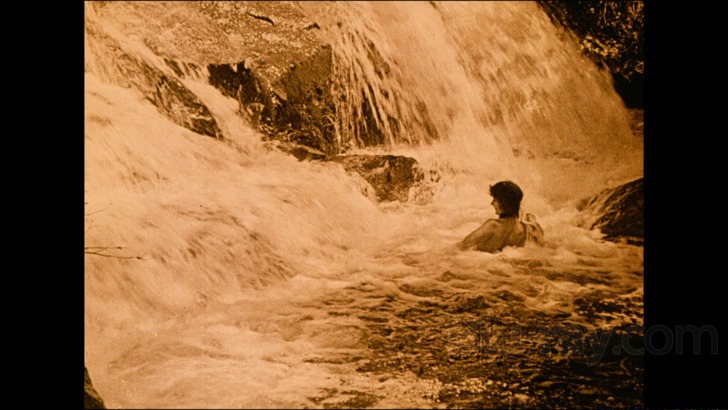
We reviewers are about to assemble our Ten Best list for 2018, and I can state authoritatively this set is going to be on my personal list. A treasure trove of material has been lovingly restored here, even if undeniable and sometimes quite extensive damage and age related wear and tear remain. But this is an amazing set by any standard, gathering together a wealth of really interesting material and upping the ante with some very appealing supplements, along with a deluxe booklet. Highly recommended.
Similar titles
Similar titles you might also like

Tie Me Up! Tie Me Down!
¡Átame!
1989

Thieves Like Us 4K
Standard Edition
1974

Port of Shadows
Le quai des brumes
1938

Made in Hong Kong
Heung Gong jai jo / Xiang Gang zhi zao / 香港製造
1997

Brazilian Western
2013

Monsoon Wedding
2001

The Tarnished Angels
1957

The Moderns
Collector's Edition
1988

Under Capricorn
1949

In the Mood for Love
花樣年華 / Faa yeung nin wa
2000

The Carpetbaggers
1964
Lonesome
1928
More
1969

Stardust Memories
Limited Edition to 3000
1980

Wild River
Fox Studio Classics
1960

Brokeback Mountain 4K
2005

The Furies
1950
Madame Bovary
1991

The French Dispatch of the Liberty, Kansas Evening Sun
2021

Will Success Spoil Rock Hunter?
Limited Edition to 3000
1957