Physical Evidence / The Anderson Tapes Blu-ray Movie
HomePhysical Evidence / The Anderson Tapes Blu-ray Movie 
Mill Creek Entertainment | 1971-1989 | 2 Movies | 198 min | Rated R | May 14, 2013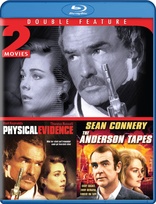
Price
List price:Listed on Amazon marketplace

Movie rating
Movie has not been rated yetBlu-ray rating
| Users |  | 3.5 |
| Reviewer |  | 2.5 |
| Overall | | 2.7 |
Overview
Physical Evidence / The Anderson Tapes (1971-1989)
| Drama | 100% |
| Crime | 33% |
| Thriller | 22% |
| Heist | 1% |
Specifications
Video
Video codec: MPEG-4 AVC
Video resolution: 1080p
Aspect ratio: 1.78:1
Original aspect ratio: 1.85:1
Audio
English: DTS-HD Master Audio 2.0
French: Dolby Digital 2.0
Anderson Tapes only.
Subtitles
English, French
Discs
50GB Blu-ray Disc
Single disc (1 BD)
Playback
Region A (locked)
Review
Rating summary
| Movie |  | 3.0 |
| Video | | 3.5 |
| Audio | | 2.5 |
| Extras |  | 0.0 |
| Overall | | 2.5 |
Physical Evidence / The Anderson Tapes Blu-ray Movie Review
Erase the evidence!
Reviewed by Martin Liebman June 3, 2013Physical Evidence
Score: 2.5/5
An edgy cop accused of murder. A young lawyer looking to make her mark. A determined district attorney. Bad men, corruption, and danger
around
every corner. Sound familiar? If it does, don't expect much in the way of bright ideas and new trends to emerge from 1989's Physical
Evidence, a by-the-books procedural that incorporates and embraces all of those pieces and fails to find even a smidgen of novelty from setup to
resolution. The film maneuvers through the paces effectively enough to keep things entertaining, though not always interesting. It banks more on
star power than it does narrative to draw in audiences, more on standby plot elements and devices more so than creativity to tell its story, more on
thin plot threads rather than bold twists and turns to bring it to conclusion. It's throwaway cinema at its finest, a movie that shouldn't
be on any cinephile's "must see" bucket list. Yet it's technically competent all the way around and, despite the lack of originality, not much of a
chore
to
watch. It's the ultimate in see-and-forget, but don't go to any great lengths to see. After all, the forget part will certainly come far more easily.
Disgraced and suspended cop Joe Paris (Burt Reynolds) has been accused of a murder he claims he didn't commit, framed when two cops enter his
apartment and "reveal" bloody, incriminating evidence. Considering his reputation for violence and checkered past history with the victim, it seems
like an
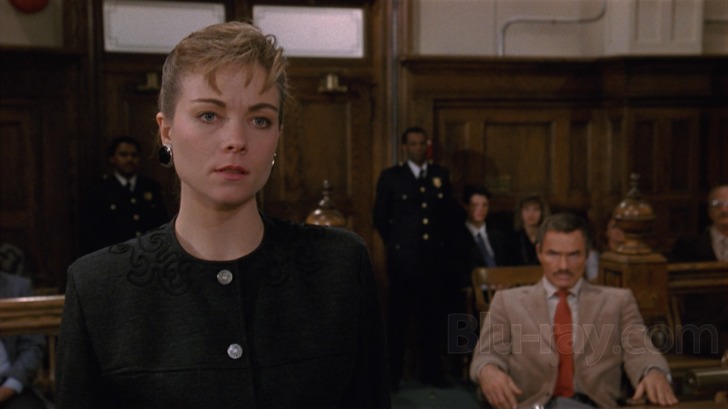
open-and-shut case for District Attorney James Nicks (Ned Beatty) and his prosecution team. Paris is assigned an up-and-coming public defender
named Jenny Hudson (Theresa Russell) who refuses to strike a bargain with Nicks and who comes to believe in her client's claim of innocence.
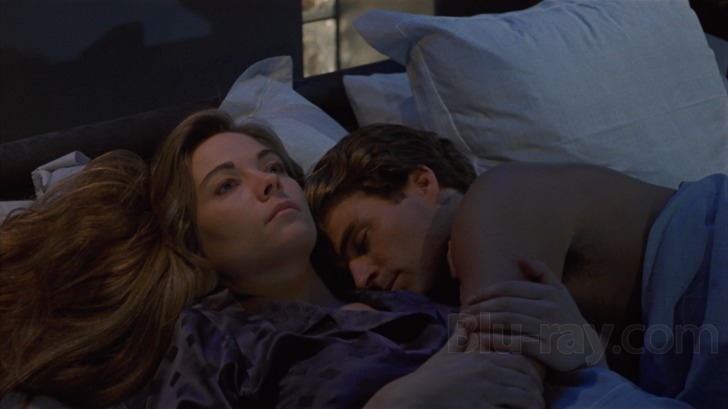
Meanwhile, Hudson struggles through a tepid, dissolving relationship with her wealthy playboy fiancé, Kyle (Ted McGinley), and finds herself drawn to
the rough-and-tumble Paris.
"Competent yet uninspired" best describes the late Director Michael Crichton's film. For a man as creative as he -- both on the page and up on the
screen with titles like Westworld and Coma under his directorial watch -- it's
difficult to fathom his name attached to a movie as thematically vacant, structurally simple, and wholly forgettable as this. It's a movie that falls
comfortably into routine from the outset and never once attempts to veer away into darker or, at least, more interesting territory. While the final
revelations aren't transparent, there's no sense of surprise, either, once the truth is revealed, largely because the lead-up doesn't accomplish much
in
the way of engendering a heightened sense of interest in the whodunit angle, which is pretty much the film's singular core focus. That doesn't bode
well for any other element, and indeed, the ancillary pieces of Physical Evidence define a film struggling to maintain any sort of positive on
the
way to clearing the hero of...duh-duh-dum!...a crime he didn't commit.
Physical Evidence does piece together a decent cast. Burt Reynolds lends a name and face but little more to the role of the wrongly accused
detective. He does little more than go through the motions and is often relegated to a background figure behind lead Theresa Russell who manages
a Sharon Stone-inspired performance as a smart-but-sometimes-sultry attorney who does a decent enough job hammering away at the case both in
the courtroom and outside of it. The film spends a little too much needless time on her relationship with her snobby and snotty fiancé and too little
time working on the fairly well constructed sexual tension that slowly brews between the Russell and Reynolds characters.
They make a decent enough pairing, but the flimsy script, unimaginative plot devices, and procedural cadence don't get nearly enough out of the
stars. They're another example of how the movie just seems to piece together whatever it needs to advance, not expertly blend together the
ingredients for a superior film.
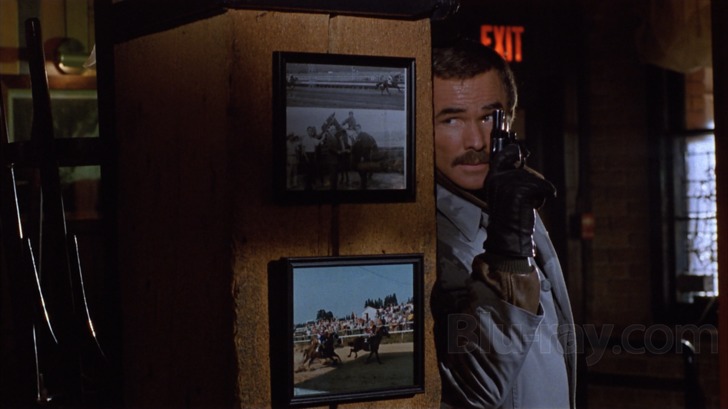
Let's get physical.
The Anderson Tapes
Score: 3.5/5
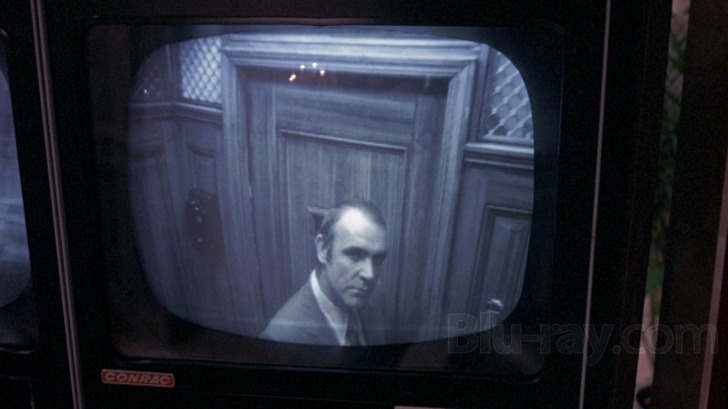
Imagine stepping into a world where there's a camera on every corner and up along each wall, where banks of monitors display the most mundane, the silliest, the most serious, the most private of moments of everyday life, where simple phone lines are transformed into complex listening devices, where anyone and everyone could be wired up for sound. That's a Sunday afternoon football game now and a given -- though certainly not always an appreciated or necessary or even warranted or welcome -- way of life in Y2K+13. In 1971, however, it was all pretty much state of the art boogeyman 1984 type of stuff that nobody had ever seen before and had only read about in dystopian novels warning of excess big brother intrusions into privacy. The Anderson Tapes takes the Caper movie and blends it with what was amongst the first of its kind, the high-tech surveillance Thriller. Sure it's all quite tame and silly in hindsight -- shoot, even the terrifying Enemy of the State no longer really seems in the least bit far-fetched or futuristic -- but it's still a chilling, albeit a dated and very goofy, look back at the beginnings of the all-seeing eye and the all-hearing ear, in this film weaved into a tale of how all the wires get crossed and a heist is put into place even when the camera isn't looking the other way.
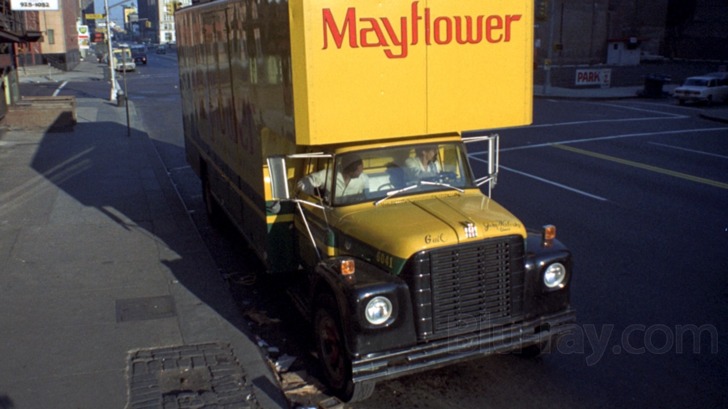
Duke Anderson (Sean Connery) is fresh-out-of-prison off a ten-year sentence. The ex-safe cracker's first task: reunite in the sack with his former girlfriend Ingrid (Dyan Cannon). His second? Hatch a scheme to rob her apartment building blind. It's his most ambitious idea yet, and why not? The building is a goldmine of New York's wealthiest. There's only one problem: He finds himself in a changed world, one dominated by surveillance cameras, wiretaps, and other not-so-secretive spy equipment watching his, and everyone else's, every move. Nevertheless, he moves forward with his plan, enlisting the help of several ex-cons, including a former drug dealer (Christopher Walken). The plan: map out the building and the contents therein, pull up a moving van to the door, and pack it full of treasures. It sounds simple enough, but when Anderson is forced to involve the mob in the planning stages, he's helped only if he agrees to off a particularly nasty man from the inside, Socks (Val Avery). Will this be the perfect crime or the perfect foiled plot in a brave new world of constant surveillance?
They say there's now more computing power in a wristwatch than what it took to send a man to the moon decades ago. That's progress. And that's not the only area that's seen progress. Things have gotten faster and, maybe more importantly, smaller. Significantly smaller. To be sure, high tech surveillance back in the day wasn't really all that, how to say it, nuanced. All of the things that play a key role in the movie -- banks of black and white monitors, amateur radio (admittedly still a wonderful and under-appreciated tool even in today's world), bulky reel-to-reel tape recording devices, clumsy cameras -- are all pretty much now combined in the palm of just about everyone's hand in the ubiquitous iPhone. Shoot, even the newly announced Xbox apparently won't let gamers play a round of Halo without the Kinect's prying eye seeing all and its microphone hearing everything. The Anderson Tapes' filmmakers probably couldn't believe what only forty-some years have produced, a major leap in technological evolution that places roomfuls of machines in the back pocket, and with significantly more power and precision to boot. In that light, the movie barely gets off the ground in hindsight viewing; it's like a kid from the Call of Duty generation pausing to play a game of Pong and crying foul about its antiquity, lack of options, absence of color, and so on, but it's at least interesting to see the origins of the high tech world at work in a film. If only technology -- or at least its nefarious uses -- matured as gracefully as star Sean Connery.
Connery is quite the suave dude in The Anderson Tapes, but that's really par for the course for a Connery film. He has a few choice lines, beds the attractive woman, and takes the lead role in the film's central conflict. In other words, it's all classic Connery in the middle of a strong cast that includes an infectious early performance from legend-in-the-making Christopher Walken and the then-already legendary Martin Balsam, amongst others. The cast gels nicely, though certainly most beyond Connery and Dyan Cannon really don't enjoy any sort of extensive development. Even Connery carries his character more on charisma than scripted character nuance, but that's not necessarily a bad thing. Director Sidney Lumet (Dog Day Afternoon, Network), even through the film's fairly deliberately choppy and sometimes even jarring editing, juggles the extended character roster, the high tech gadgets and gizmos, and the caper complexities with relative ease. The picture's style is hopelessly dated, but even decades removed from its christening it's still relatively easy to fall into the rhythm and enjoy the film as Lumet has assembled it.
Yet for the star power and all of the antique gadgets and even Lumet's weirdly styled direction, editing, and soundtrack, the film is at its finest when it's focused on the heist. It's a refreshing change-of-pace to witness the planning and execution of such a grand scale job; most movies settle for a single vault or location but The Anderson Tapes dares to stretch things out to an entire apartment complex filled with New York's wealthiest and, as it tuns out, most oddly eccentric individuals, from the granny who begs the thieves to take everything to the slime ball who won't surrender the code to his safe even when his wife is directly threatened with violence. Lumet keeps it rolling with a combination of serious and playful, mounting tension even in a rather comical middle-film scene in which the main members of the crew simultaneously enter the building but cannot quite overwhelm the front desk man. It never drags, even in the extended heist execution in the final act and particularly when Lumet cuts away to the police and chronicles their rather extended and quite low tech approach to infiltrating the building.
Physical Evidence / The Anderson Tapes Blu-ray Movie, Video Quality
Physical Evidence
Score: 3.5/5
Physical Evidence actually looks pretty nice. Mill Creek's Blu-ray presentation fares well all around, save for a few scattered spots and
speckles.
Grain retention is welcome; it's largely even, not too heavy, and aids in revealing the finer textural details to be seen throughout. To be sure, this is
no
stunner, but details come through well enough, from faces and clothes on down to smaller background details in Paris' apartment, Kyle's place, or the
courtroom. Clarity is fine and the stable, rather sharp image makes this a very watchable and enjoyable HD experience. Colors are satisfactory; the
palette never really pops but it's not excessively dull, either. Brighter scenes aren't awash in great colors, but darker scenes don't absorb the palette,
either. Black levels are quite sturdy, ditto flesh tones. All around, a very pleasing presentation from Mill Creek.
The Anderson Tapes
Score: 3.5/5
The Anderson Tapes is another Sony titled churned out by the Mill Creek video factory that looks satisfactory-to-good. Generally, the picture
enjoys a solid film-like texture, with a grain overlay that's occasionally uneven but never too spiky. Details are fine; this is definitely not a razor-sharp
modern film, but the resolution, combined with good source elements, results in crisp, accurate details on clothes, faces, and general backgrounds,
particularly the varied apartments throughout the building which open up some visual flavor and variety as they're entered one at a time for the
robbery.
The hotel lobby also enjoys some nicely defined woods, tiles, and marbles. Colors are neither bold nor dull; the palette is acceptable but certainly not
one
to provide a beautiful bouquet of exploding color. Wear and tear is minimal, as is banding and other intrusive eyesores. Black levels are fine, ditto
flesh
tones. It's not the world's best picture, but for what amounts to a decent movie appearing on Blu-ray for single-digit dollars, it's more than
acceptable.
Physical Evidence / The Anderson Tapes Blu-ray Movie, Audio Quality
Physical Evidence
Score: 2.5/5
Evidence points to another middling Mill Creek DTS-HD Master Audio 2.0 lossless soundtrack. Physical Evidence's presentation is certainly
underwhelming but that's not particularly much of a surprise. The track finds enough spacing -- front-end range -- and clarity to get by on the basics.
Musical delivery is adequate, smooth enough and with a decent bit of crispness and definition, though ultimately there's nothing at all memorable
about
it. General sound elements fail to impress; passing traffic, a car splashing through a couple of puddles, the background din of a busy courtroom or
bar, chirping birds and seagulls and all variety of ambient support never immerse the listener but at least define the environment well enough.
Dialogue, at least, comes through with enough precision that there's no struggle to define each syllable. It's not a winner, but it's not a loser either.
It
suffices for a low-end movie released on the lower end of the Blu-ray scale.
The Anderson Tapes
Score: 2.5/5
The Anderson Tapes features a fairly straightforward DTS-HD Master Audio 2.0 lossless soundtrack. It proves rather shallow, limited not only
by
the two channel presentation but the underwhelming source. It's very front heavy and oftentimes tinny, with a shallow feel to most everything but
dialogue and those godawful piercing electronic sounds that pop in from time to time to transition between scenes or accentuate a moment. Range?
What range? This one is almost the sole property of the front-middle; don't expect it to go very wide very often. Fortunately, dialogue is rather
smooth
and balanced. This is a serviceable track, nothing more, nothing less.
Physical Evidence / The Anderson Tapes Blu-ray Movie, Special Features and Extras
No supplements are included.
Physical Evidence / The Anderson Tapes Blu-ray Movie, Overall Score and Recommendation
Mill Creek's double feature of Physical Evidence and The Anderson Tapes features two dated pictures, the latter significantly more than the former, but it's also the latter that's the stronger picture. Both have their place in a collection, though, one good for mindless entertainment the other a bit more thought-provoking as a contrast for today's always-on world. Mill Creeks' Blu-ray double feature contains no extras, mediocre lossless soundtracks, and good picture qualities. Recommended.