Page One: Inside the New York Times Blu-ray Movie
HomePage One: Inside the New York Times Blu-ray Movie 
Magnolia Pictures | 2011 | 88 min | Rated R | Oct 18, 2011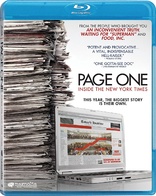
Price
List price:Listed on Amazon marketplace

Movie rating
7 | / 10 |
Blu-ray rating
| Users |  | 0.0 |
| Reviewer |  | 3.5 |
| Overall | | 3.5 |
Overview
Page One: Inside the New York Times (2011)
A behind-the-scenes look at the New York Times' newsroom yields a complex view of the transformation of a media landscape fraught with both peril and opportunity.
Starring: Sarah Ellison, David Carr (XVI), Bruce Headlam, Richard Perez-Pena, Clay ShirkyDirector: Andrew Rossi
| Documentary | 100% |
Specifications
Video
Video codec: MPEG-4 AVC
Video resolution: 1080p
Aspect ratio: 1.78:1
Original aspect ratio: 1.78:1
Audio
English: DTS-HD Master Audio 5.1
Subtitles
English SDH, Spanish
Discs
25GB Blu-ray Disc
Single disc (1 BD)
BD-Live
Playback
Region A (B, C untested)
Review
Rating summary
| Movie | | 3.5 |
| Video |  | 3.0 |
| Audio | | 3.5 |
| Extras | | 3.0 |
| Overall | | 3.5 |
Page One: Inside the New York Times Blu-ray Movie Review
Brave New(s) World
Reviewed by Casey Broadwater October 23, 2011The Gray Lady is in trouble, but she’s not alone. All over the country—scratch that, the world—newspapers are downsizing, dropping their overseas bureaus, and cutting back on expenses, if not folding altogether. “Old” media, still the mainstream but arguably not for long, has struggled to find a new business model in the post-Internet age, when advertising revenues have plummeted and readers expect to get the latest news online without having to open their wallets. The web has stolen most of print media’s consolidated power and sources of income. Why pay for a classified ad in the back of the paper when you can put one up on Craigslist—with pictures and as much text as you want—for free? Ditto for dating services and auto ads. And with a few clicks of a mouse—or, increasingly, a few taps on a touchscreen—you can get to aggregator websites where you can get your condensed daily dose of news, celebrity gossip, and how-to articles, culled from the far corners of the internet, all at no charge but what you pay for your wifi, broadband, or 3G connection. But yet much of this content still comes from traditional media. And there’s the rub. It’s also one of many conundrums touched upon in Page One: Inside the New York Times, an entertaining new documentary made between 2009 and 2010 that explores what—in today’s rapidly changing media landscape—has since become old news.

David Carr
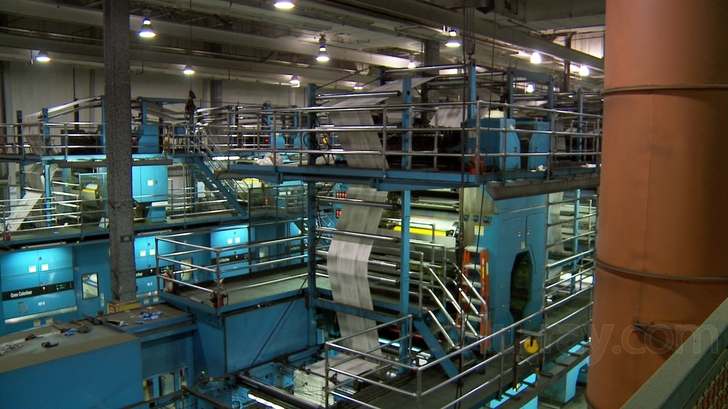
Old news or not, Page One: Inside the New York Times is a fascinating behind-the-scenes tour through the inner workings of the most venerated daily rag on the planet. And it starts, quite literally, with the clock-like inner workings—a montage of shots shows us the now almost archaic-looking analog conveyor belt that spits out perfectly creased copies of the paper every morning, primed for physical distribution to newsstands and convenience stores, vending machines, business lobbies, and home doorsteps. The implication doesn’t have to be spoken—doesn’t this expensive daily manufacturing and delivery effort seem woefully outdated when you can pull out your iPhone and check news stories from around the globe in less time than it takes to walk to the front porch?
Clearly, the times they are a-changin’, and The Times—led, when the doc was made, by executive editor Bill Keller—knows it needs to evolve to keep up. In 2008, The Times created a media desk to report on the changes within the news industry itself. Think of it as meta-journalism, reporting on the way other old and new media outlets report the news. Rather than trying to provide a comprehensive inside view of all the sections of The Times—the finance department, national news, foreign coverage—Page One hovers around this new media desk, which becomes a microcosm for the paper (and Old Media) as a whole.
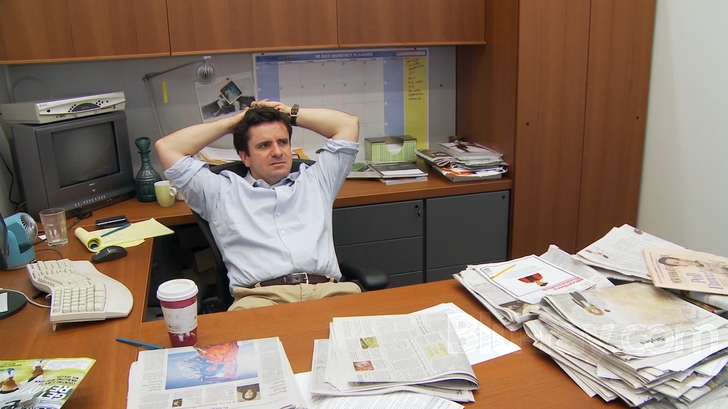
Several key figures emerge as the inner workings of the media desk are laid bare, starting with editor Bruce Headlam, an amiable old-school-meets- new-school taskmaster who presides over his department in an office appropriately adorned with an enormous Citizen Kane poster. He has a talented stable of writers. Over the course of the documentary, corporate media reporter Tim Arango goes from covering mergers and acquisitions to becoming the Times bureau chief in Baghdad. His colleague, Brian Stelter, is perhaps even more impressive—a journalistic wunderkind and New Media posterchild who started a popular blog in college and was hired by The Times immediately after graduating. If Stelter is the new blood, the old dog of the media desk is columnist David Carr, a curmudgeonly former crack addict turned crack reporter. Speaking of Stetser’s work ethic and grasp of media technology, Carr says, “I can’t get over the feeling that Brian Stelter was a robot assembled in the basement of The New York Times to come and destroy me.”
But it’s Carr who comes to personify The Times and its place within the larger media landscape—he’s excellent at what he does but slow to change. That said, while he’s an unrepentant apologist for print media and a champion of The Times, Carr recognizes the big problems facing both. Namely, that there’s no business model to sustain traditional journalism any longer—one of Page One’s most cogent points—and that many of the current papers are floundering under failed leadership. As an example, Carr writes a scathing expose on the mismanagement of The Tribune Company under investor Sam Zell.
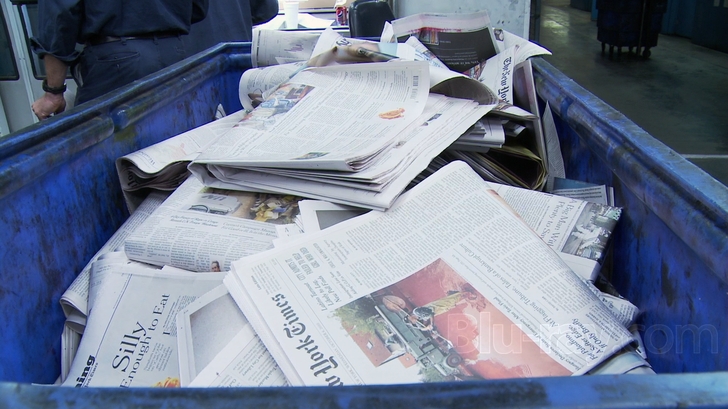
Director Andrew Rossi got access to film inside The Times for over a year, and since news changes so rapidly, it somewhat makes sense that Page One isn’t very focused, switching from one topic to the next faster than old newspapers end up in the recycling bin. Rossi shows us The Times’ reaction to WikiLeaks and, for historical reference, looks back at the publishing of the Watergate stories and the Pentagon Papers. He examines what the Jayson Blair plagiarism scandal did to tarnish the image of The Times and questions—in the words of Bill Keller—“the decades of organizational hubris about our own excellence.” But the documentary returns repeatedly to two basic questions: 1.) What does print journalism do that New Media cannot, and 2.) how can traditional reporting be sustained when ad revenues are down and papers are being forced to make serious cutbacks? The answer to the first can be summed up in one pundit’s response that “a thousand bloggers all talking to each other doesn’t get you reporting from a war zone,” but the latter is obviously much more complicated. The film touches on possible saviors like paywalls and the iPad, but rather than providing any real solutions, Page One simply documents an industry in a painful transition. What is clear is that The Times—and countless other traditional media outlets—are going to have to adapt or close up shop for good.
Page One: Inside the New York Times Blu-ray Movie, Video Quality
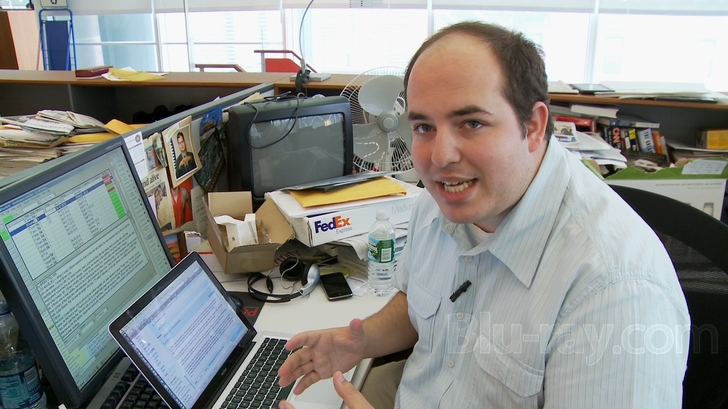
As you'd expect from this kind of documentary, Page One was shot digitally, and from the quality of the footage, I'm guessing the filmmakers used fairly small, quick and discreet cameras, maybe even "prosumer" models. The material just doesn't look like it was shot on more expensive gear. This isn't an issue in and of itself—you don't usually watch topical documentaries like this for the picture quality—but Page One could've definitely looked more polished. The main issue is that aliasing and moiré distortions are rampant. Close parallel lines inevitably turn into jagged stair- steps, and tight patterns—like the button-up shirts worn by most of the reporters—morph into a dizzying, almost hypnotizing shimmer. Other low- budget digital video characteristics crop up as well—highlights are often blown out thanks to a limited dynamic range, colors are realistic but never really vivid, contrast is limp, and noise spikes significantly during darker scenes. Clarity vacillates; some close-ups looks terrifically sharp and display expected levels of facial texture, while some segments were clearly shot in standard definition. (And I'm not just talking about the archival footage, most of which was also taken from standard definition sources.) Does any of this matter? I'd go so far as to say the PQ quirks are occasionally distracting, but they never spoiled my enjoyment of the film.
Page One: Inside the New York Times Blu-ray Movie, Audio Quality
Similarly, Page One's DTS-HD Master Audio 5.1 surround track suits the film well, even if the sound isn't as pristine as some other productions. Since most of the sound was captured on location, you can sometimes expect voices to sound a bit far away or slightly muffled. On the rare occasions when voices are too difficult to easily make out, there are forced subtitles to spell it out for us. The "talking head" style interviews, however—since they take place in a more controlled environment—are always clean and comprehensible. The rear channels are used every once in awhile for omni-directional ambience, but most often they're employed as bleeding room for Paul Brill's original music, which sounds wonderful. There's not much else to say here; the mix is decently balanced and does what it needs to do with little flair. The disc includes optional English SDH and Spanish subtitles.
Page One: Inside the New York Times Blu-ray Movie, Special Features and Extras
- Carl Bernstein on the Real Threat to Newspapers (1080i, 3:26): Watergate reporter Carl Bernstein defends the internet and asserts that the real death of newspapers began with the conglomerates that gobbled up community newspapers.
- Emily Bell on Keeping Journalism Relevant (1080i, 1:52): Bell says the real crisis is not about funding, it's about social relevance.
- Sarah Ellison on the Mind of Murdoch (1080i, 4:06): Ellison talks about Rupert Murdoch's "predatory" competition with the New York Times.
- Additional Scenes (1080p, 21:34): Five scenes that didn't make it into the film.
- Journalists React to Page One (1080i, 3:03): New media and "mainstream" voices weigh in on the film.
- Q&A Highlights with the Cast and Filmmakers (1080i, 16:52)
- Mini-feature: Tim Arango with Joao Silva in Iraq (1080i, 5:03): Excerpts from Iraq Bureau Chief Tim Arango's video diaries and a reflection on photographer Joao Silva, who lost both of his legs in Afghanistan.
- Also From Magnolia Home Entertainment Blu-ray (1080p, 6:05)
Page One: Inside the New York Times Blu-ray Movie, Overall Score and Recommendation
I really enjoyed Page One. Sure, it could've probably been more focused, but it has a great tour guide in the curmudgeonly David Carr, and it gives us a rare glimpse into the inner workings of one of the world's most respected media machines. This documentary should be shown in every journalism class. Replay value is probably limited, so I'd suggest a rental.
Similar titles
Similar titles you might also like
(Still not reliable for this title)

Life Itself
2014

Citizenfour
2014

Waiting for "Superman"
2010

The Amish
American Experience: The Amish
2012

Fahrenheit 9/11
2004

Catfish
2010

This Is Cinerama
Deluxe Edition
1952

Helvetica
2007

Fahrenheit 11/9
2018

Studio 54: The Documentary
2018

RBG
2018

King Cohen: The Wild World of Filmmaker Larry Cohen
2017

I Am Not Your Negro
2016

Where to Invade Next
2015

Drunk Stoned Brilliant Dead: The Story of the National Lampoon
2015

The Wolfpack
2015

The Dog
2013

Indie Game: The Movie
Special Edition - Limited Edition to 3000
2012

A Band Called Death
2012

The Central Park Five
2011