New Order: Movement Blu-ray Movie
HomeNew Order: Movement Blu-ray Movie 
Blu-ray AudioWarner Music | 1981 | 35 min | Not rated | Dec 05, 2025

Movie rating
7.3 | / 10 |
Blu-ray rating
| Users |  | 0.0 |
| Reviewer |  | 4.0 |
| Overall | | 4.0 |
Overview
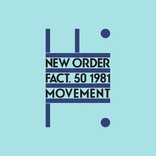
New Order: Movement (1981)
Movement is the debut studio album by the English rock band New Order, released on 13 November 1981 by Factory Records. Recorded in the wake of Joy Division frontman Ian Curtis' suicide the previous year, the album is a continuation of the dark post-punk sound of Joy Division's material, increasing the use of synthesizers while still being predominantly rooted in rock. At the time of its release, the album was not particularly well received by critics or audiences, only peaking at number thirty on the UK Albums Chart; the band would gradually shift to a more electronic sound over the course of the next year.
Starring: Stephen Morris| Music | 100% |
Specifications
Audio
English: Dolby Atmos
English: Dolby TrueHD 7.1 (48kHz, 24-bit)
English: DTS-HD Master Audio 5.1 (96kHz, 24-bit)
English: LPCM 2.0 (96kHz, 24-bit)
Music: LPCM 2.0 (96kHz, 24-bit)
Discs
Blu-ray Disc
Single disc (1 BD)
Playback
Region A (B, C untested)
Review
Rating summary
| Movie | | 4.0 |
| Video | | 0.0 |
| Audio |  | 5.0 |
| Extras | | 0.0 |
| Overall | | 4.0 |
New Order: Movement Blu-ray Movie Review
Reviewed by Jeffrey Kauffman January 15, 2026As was mentioned in our relatively recent Gary Numan: 1,000 - Live at the Electric Ballroom Blu-ray review, there can be some interesting "nationalism" afoot in
a
way when seeing how various artists do in various countries, especially if they are from other countries. Somewhat like Gary Numan,
New
Order never really had a huge impact on the albums chart on this side of the pond, and in fact of the three new audio Blu-rays being offered from
the
band's then nascent discography, only two out of the three,
New Order: Low-Life and New Order:
Brotherhood, managed to crack the U.S. Hot 200 chart. (Kind of curiously, the band's second album, Power, Corruption and Lies
is not included with this (hopefully?) first batch of audio Blu-rays, and the trio released represents the first, third and fourth albums.) Lack of
overly impressive U.S. charting aside, the band's chart performance in the UK was significantly more
successful,
and in fact all three of the albums now being offered in hi res audio made it to Number 1 on the UK Indie chart, which admittedly may not have
translated into huge sales but is still notable in its own regard.
This was New Order's first album and was of course recorded in the wake of the tragic suicide of Ian Curtis, an event Stephen Morris specifically
cites
as having inevitably colored the recording of the album. In that regard while it may admittedly come off as insensitive, it might be jokingly stated
that Movement might have been performed by a band called Morose Division.

The album's track list can be seen in screenshot 9 of the song menu on the disc.
New Order: Movement Blu-ray Movie, Video Quality

New Order: Movement is presented on Blu-ray courtesy of Warner Music's UK branch (speaking of nationalism and/or divisions, joyful or otherwise). There is a kind of minimally animated menu on this disc, though it's on a loop. All of what might be called the Mondrian adjacent lines and dots move around the frame during each song. Screenshot 10 shows the main menu the disc boots to.
New Order: Movement Blu-ray Movie, Audio Quality

New Order: Movement offers Dolby Atmos, DTS-HD Master Audio 5.1 and LPCM 2.0 options. Once again the venerable Steven Wilson has worked his considerable magic with the Atmos mix, which offers both simultaneous engagement of all the surround channels for things like the guitars in Dreams Never End while also providing discrete channelization for things like precussion (interestingly, percussion is imaged toward the rear in songs like Dreams Never End, but can erupt more frontward as in Truth. Vocals are intentionally buried at times, though in toggling to the instrumental versions (available in LPCM 2.0), it's obvious that that were kind of smartly mixed to be maybe just on the cusp of liminality or at least easy comprehension. The 5.1 track can be just a bit brighter at times than the Atmos track in what I'd term the upper midrange (i.e., not the very highest frequencies, but maybe the next stratum down). I'd rate the 2019 stereo remaster as even brighter overall than any of the 2024 mixes, and in fact a very slight (almost inaudible) high frequency whine can be made out at the very beginning of that version.
New Order: Movement Blu-ray Movie, Special Features and Extras

All three of the New Order audio Blu-ray come packaged in cardboard sleeves (no plastic trays, hence not Digipaks). An insert booklet is housed in the left pocket which includes an interesting interview with Stephen Morris, who admits he actually hated the album for a long time and especially resented what he felt were producer Martin Hannett's evidently unwanted contributions. Morris also offers a separate piece on Atmos audio which audiophiles should find fun.
New Order: Movement Blu-ray Movie, Overall Score and Recommendation
Albums often receive reassessment given the perspective of hindsight and context, but what's kind of fascinating about Movement is that it's been pretty drastically reassessed by Stephen Morris, as evidenced by the interview included in the insert booklet. This is a somewhat schizophrenic album that has a dour undertone even if it can exploit supposedly "joyful" musical ideas like major chords, but the new surround mixes in particular really help to illuminate how layered and evocative the recording is. Recommended.