National Geographic: Collapse Blu-ray Movie
HomeNational Geographic: Collapse Blu-ray Movie 
National Geographic | 2010 | 97 min | Not rated | Sep 21, 2010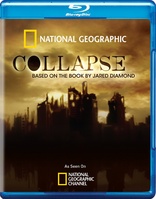

Movie rating
7.2 | / 10 |
Blu-ray rating
| Users |  | 0.0 |
| Reviewer |  | 4.0 |
| Overall | | 4.0 |
Overview
National Geographic: Collapse (2010)
National Geographic reveals a vivid look into the future to our descendants in the year 2310 as they set out on scientific expedition to find the single factor that tore modern society apart. Based on the book by Jared Diamond.
| Documentary | 100% |
Specifications
Video
Video codec: MPEG-4 AVC
Video resolution: 1080i
Aspect ratio: 1.78:1
Original aspect ratio: 1.78:1
Audio
English: Dolby Digital 5.1
Subtitles
English SDH
Discs
25GB Blu-ray Disc
Single disc (1 BD)
Playback
Region A (B, C untested)
Review
Rating summary
| Movie | | 4.0 |
| Video | | 4.0 |
| Audio |  | 3.5 |
| Extras | | 3.5 |
| Overall | | 4.0 |
National Geographic: Collapse Blu-ray Movie Review
It's the end of the world. Again.
Reviewed by Jeffrey Kauffman January 19, 2011Is apocalyptic fever contagious? The History Channel spends an inordinate amount of its programming day whipping up various doomsday scenarios in everything from its ubiquitous Nostradamus specials to, incredibly, Ice Road Truckers. Virtually any occasion to scare the pants off its collective viewership is not just taken at History, it’s embraced and exploited to often outrageous extremes. What is one to make, then, of Collapse, a similarly themed apocalyptic special from the usually more reasoned, kinder and gentler National Geographic channel? This piece, based on a book by Pulitzer Prize winner Jared Diamond, traverses much the same territory as History’s Life After People, though in this case people are still around. They’re just trying to figure out why there are deserts where once there was Phoenix, and other future conundrums. Diamond’s thesis in his book was that studying why great societies of the past had fallen might help us avoid the same fate, and this NatGeo special actually ends up spending as much time looking at the failures of several iconic cultures of long ago as it does in CGI spectaculars depicting the future end of society as we know it. Of course this immediately brings to mind Santayana’s famous line, “Those who cannot remember the past are condemned to repeat it,” and that quote might be considered as an apt epigraph for this interesting and sometimes thought provoking piece, one which eschews the usual histrionics found on the History Channel for a relatively less bombastic approach.

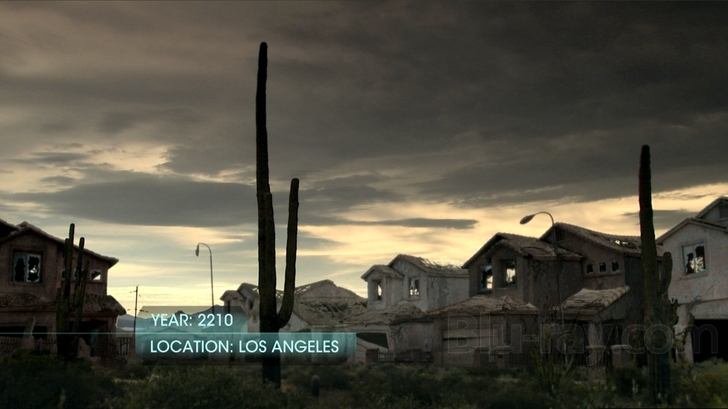
As might be expected, most of the doomsday prophesying in Collapse is linked to Man’s unwise marshalling of natural commodities like oil and water. The documentary does a fine job of exploring the often irrational exploits humans have undertaken as they’ve ravished the land and attempted to shape it to their own desires. Where Collapse sometimes falls into silliness is in its “future” segments, where a team of 2210 archeologists “uncovers” data from the supposedly distant past, in this case, our current time. While Collapse slowly reveals that not only did cities go the way of the dinosaur, so did data stored on hard drives, it still stretches credulity to have a future team deciding that backyard swimming pools were in fact water storage devices that kept a year’s worth of H2O on hand for individual families. It’s funny, of course, and intentionally ironic, but it keeps Collapse from the level of gravitas it’s aiming for through the bulk of the special.
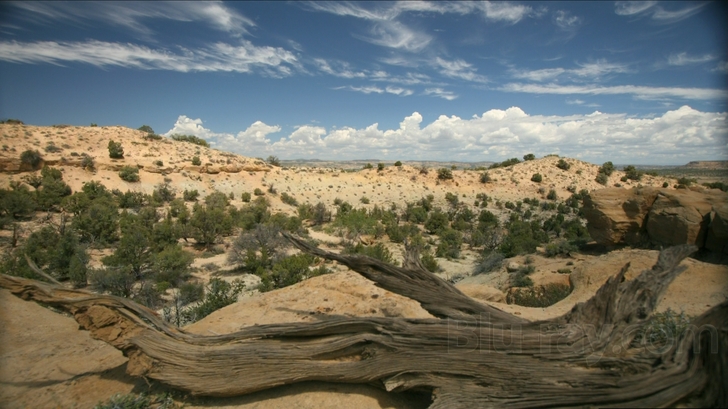
Where Collapse does much better is in drawing parallels to ancient cultures like the Anasazi of the American Southwest (and South America), as well as further flung cultures like Ancient Rome, and where we are right now. It’s fascinating to have an analogy drawn between our current world’s predicament vis a vis natural resources and Rome’s problem with a dearth of cheap slave labor once they had conquered everyone within reach and new slaves weren’t readily available anymore. There’s also the disturbing depiction of the Anasazi’s rapid decline after water became scarce, something that is shown to be happening around the world currently.
The best thing about Collapse is its relatively reasoned, level headed approach to current day problems, without the hyperbolic approach that often colors similar History Channel programming. In fact Jared Diamond himself is on hand throughout much of the documentary, and he and other talking heads make it at least potentially clear that if proper steps are taken right now, the future doesn’t have to be a grim nightmare scenario. That said, the experts also make it abundantly clear that current day energy waste has got to stop, and the future world will no doubt be a much different place than the current profligate one in which we find ourselves.
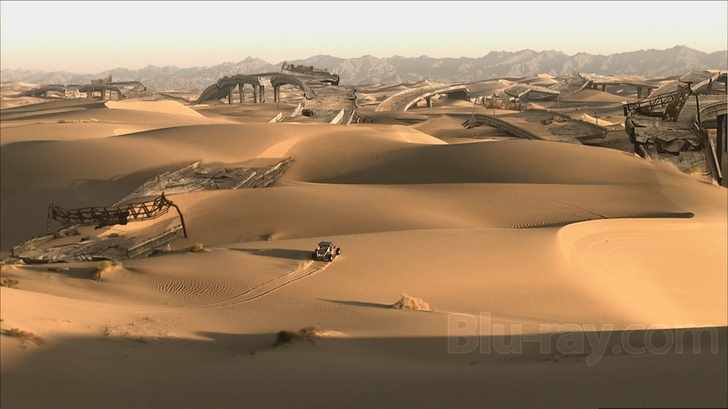
This is a sometimes depressing piece, with shots of abandoned oil refineries and CGI segments depicting an almost alien future world where Los Angeles is covered with sand dunes and suburban tract houses are in ruins. What is emotionally disturbing throughout Collapse is how mindless humans have been until even relatively recently. The oil refinery segment has an expert saying that even a mere few decades ago it was usual practice to waste around 75% of the energy the oil could have generated. Oil was seen as such an “infinite” commodity that people didn’t even think about the waste as anything to even pay attention to. How times have changed.
As a cautionary tale, Collapse is an extremely effective piece of documentary filmmaking. In fact if the "future" elements had been removed entirely, Collapse may have worked better in the long run. The issues discussed in Collapse are serious enough that they really don't need an "angle" to make them more compelling. The future may in fact be so bright that we'll all need sunglasses, but it's a brightness that may augur an underlying darkness if we're not more careful soon.
National Geographic: Collapse Blu-ray Movie, Video Quality

Collapse arrives on Blu-ray with a generally good looking transfer delivered via an AVC codec, in 1080i and 1.78:1. This documentary deals with a drab, dusty future and thus a lot of the segments depicting 2210 are desaturated, mostly offering ugly browns and beiges, with overblown contrast and very little fine detail (intentionally). The historical recreations are quite a bit more inviting, image wise, with well saturated color, good fine detail, and excellent contrast. The contemporary segments also look good, and the talking head segments (some of which are done on location) look sharp and clear.
National Geographic: Collapse Blu-ray Movie, Audio Quality
Collapse does not feature a lossless audio option, but its standard Dolby Digital 5.1 suffices well enough for the purposes of the documentary. Sound effects and ambient environmental sounds do fill the surrounds in a lot of the segments, both "future" and historical recreations, and narration and onscreen talking heads segments sound just fine. There's not overly impressive dynamic range on this track, but fidelity is excellent and there's enough channel utilization, albeit in dribs and drabs, to put this at least a minor cut above the standard documentary stereo soundtrack.
National Geographic: Collapse Blu-ray Movie, Special Features and Extras
Secrets of the Incas (SD; 52:04) is a fascinating longer form piece that explores two famous explorers who interacted with this culture, Hiram Bingham (who discovered Machu Picchu) and Toledo.
National Geographic: Collapse Blu-ray Movie, Overall Score and Recommendation
The "future" segments of Collapse are patently silly, but otherwise this is a compelling and fascinating piece of documentary filmmaking, with a lot of thought provoking information. Best of all, this National Geographic piece stays away from the over the top approach that a lot of History Channel apocalyptic outings seem to favor. Recommended.