Music from the Big House Blu-ray Movie
HomeMusic from the Big House Blu-ray Movie 
Momo Bay | 2010 | 88 min | Unrated | Aug 26, 2014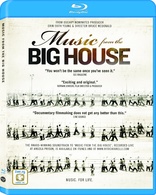

Movie rating
6.5 | / 10 |
Blu-ray rating
| Users |  | 0.0 |
| Reviewer |  | 3.0 |
| Overall | | 3.0 |
Overview
Music from the Big House (2010)
A pilgrimage to the birthplace of the blues... Louisiana State Maximum Security Penitentiary, a.k.a Angola Prison. Music has given these inmates something to live for behind the bars of what was once the bloodiest prison in America. It is their only escape. Steeped with hope, these remarkable voices guide us on a journey of men on a quest for forgiveness.
Starring: Rita ChiarelliDirector: Bruce McDonald
| Documentary | 100% |
| Music | 77% |
| Musical | 64% |
Specifications
Video
Video codec: MPEG-4 AVC
Video resolution: 1080p
Aspect ratio: 1.79:1
Original aspect ratio: 1.85:1
Audio
English: Dolby Digital 2.0
Subtitles
None
Discs
25GB Blu-ray Disc
Single disc (1 BD)
Playback
Region A (B, C untested)
Review
Rating summary
| Movie | | 3.0 |
| Video | | 3.0 |
| Audio | | 3.0 |
| Extras | | 3.0 |
| Overall | | 3.0 |
Music from the Big House Blu-ray Movie Review
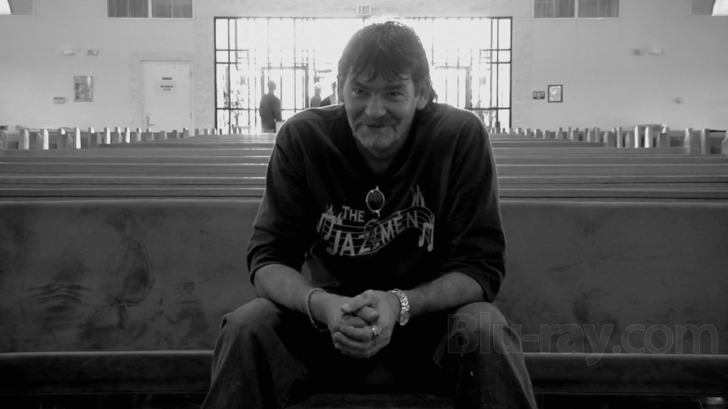
Reviewed by Brian Orndorf August 24, 2014Angola Prison, often called the “Alcatraz of the South,” has a history of violent inmates and chaotic rule. It’s not a place few intentionally decide to visit, but musician Rita Chiarelli has a special mission in mind. Armed with a wealth of musical interests and desire to fill a place of darkness with some sense of hope, Chiarelli decided to stage a concert, teaming up with three prison bands (The Jazzmen, Little Country, and Pure Heart Messenger) to share the blues and a little country with a captive audience.
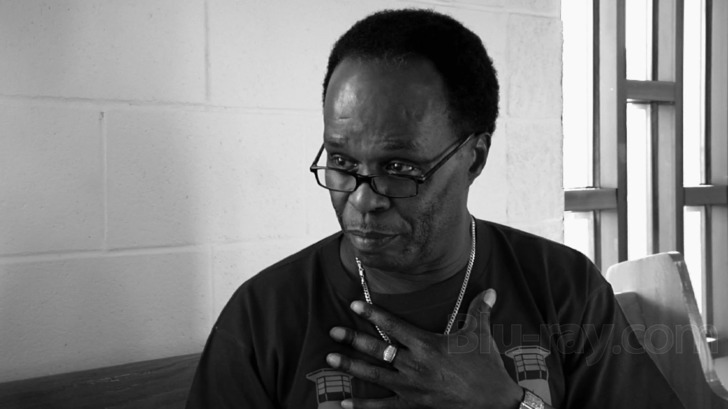
Director Bruce McDonald (“Hard Core Logo”) is allowed access into parts of Angola, but the documentary isn’t an overview of the complex. History is shared, but the focus remains a select group of inmates -- older men who’ve attempted to do something with their time behind bars, forming ragtag bands that provide personal focus and entertainment for the masses. Chiarelli adds her skills of blues-based improvisation and speedy country songwriting to the mix, hoping to encourage the men to rise up as a force for positivity in a prison that’s seen its fair share of famous musicians. Between performances, McDonald interviews band members, hearing tales of criminal guilt and stage bound therapy.
Music from the Big House Blu-ray Movie, Video Quality
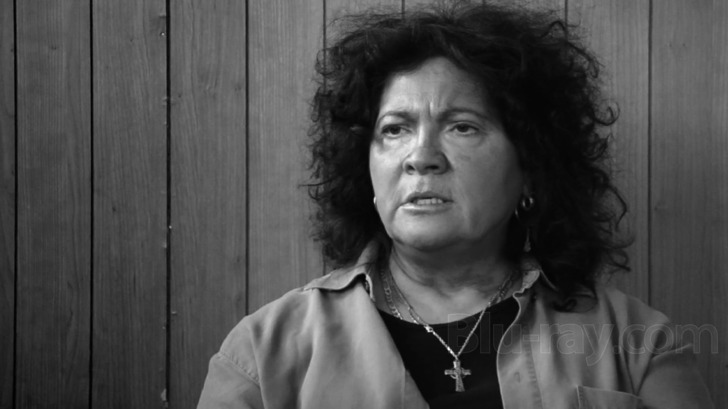
The AVC encoded image (1.79:1 aspect ratio) presentation on "Music from the Big House" suffers from a few noticeable artifacts, including moiré patterns, jagged edges, and mild ghosting during an introductory segment. It's not a visually explosive documentary to begin with (utilizing commercial grade camera equipment), but the basics are adequate, with stable contrast and passable blacks. Fine detail is accessible but never remarkable, with textures best served on the faces of the inmates.
Music from the Big House Blu-ray Movie, Audio Quality

The 2.0 Dolby Digital seems somewhat limited for such a musically minded movie, but the performances, the heart and soul of the effort, are reasonably detailed with distinct instrumentation. Bass drum activity does register more densely than necessary, causing slight discomfort, but it's a minor concern. Conversations are satisfactory, offering crisp voices and intended emotion, supported by prison-life atmospherics.
Music from the Big House Blu-ray Movie, Special Features and Extras
- Additional Performances (HD) offer "Harvest Time" (4:38), "Mississippi Boy" (4:27), "Mother Prays for Me" (6:51), and "Rain on Me" (5:15).
- Deleted Scenes (HD) contain "Warden Talk" (2:30), "Music for the Soul" (5:25), and "LSP TV" (3:24).
- "These Four Walls" (4:27, HD) is a music video from Rita Chiarelli, using stills and footage from Angola Prison.
- A Theatrical Trailer has not been included.
Music from the Big House Blu-ray Movie, Overall Score and Recommendation
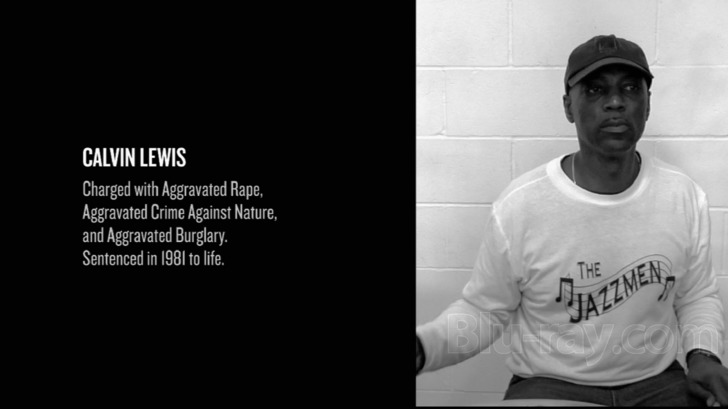
McDonald attempts to disturb storytelling expectations by sharing the actual crimes committed by the inmates during an epilogue, hoping to establish the men before revealing their evil. It's an interesting tactic to interrupt generalizations, but it also undermines the emotional value of the picture. After all, these aged and fatigued men committed horrible acts of violence, a few triggering life sentences, making McDonald's approach of humanization better in theory than in practice. The philosophical and therapeutic value of Chiarelli's mission remains intact, but the moment "Music from the Big House" reveals its manipulation, it immediately deflates.