Mother of George Blu-ray Movie
HomeMother of George Blu-ray Movie 
Oscilloscope Pictures | 2013 | 107 min | Rated R | Feb 04, 2014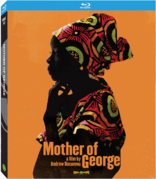
Price
List price:Listed on Amazon marketplace

Movie rating
6.3 | / 10 |
Blu-ray rating
| Users |  | 0.0 |
| Reviewer |  | 4.5 |
| Overall | | 4.5 |
Overview
Mother of George (2013)
When a newlywed Nigerian couple living in Brooklyn, Adenike and Ayodele, are unable to conceive a child, the wife, Adenike, faces almost unbearable pressure from her husband's family to "solve" the problem.
Starring: Danai Gurira, Isaach de Bankolé, Anthony Okungbowa, Yaya DaCosta, Bukky AjayiDirector: Andrew Dosunmu
| Drama | 100% |
Specifications
Video
Video codec: MPEG-4 AVC
Video resolution: 1080p
Aspect ratio: 2.34:1
Original aspect ratio: 2.39:1
Audio
English: DTS-HD Master Audio 5.1 (48kHz, 24-bit)
English: LPCM 2.0 (48kHz, 24-bit)
Portions in Yoruba with English subtitles
Subtitles
English, English SDH
Discs
50GB Blu-ray Disc
Single disc (1 BD)
Packaging
Slipcover in original pressing
Playback
Region A (B, C untested)
Review
Rating summary
| Movie | | 4.5 |
| Video | | 4.5 |
| Audio |  | 4.0 |
| Extras |  | 3.5 |
| Overall | | 4.5 |
Mother of George Blu-ray Movie Review
Secrets and Lies in Brooklyn
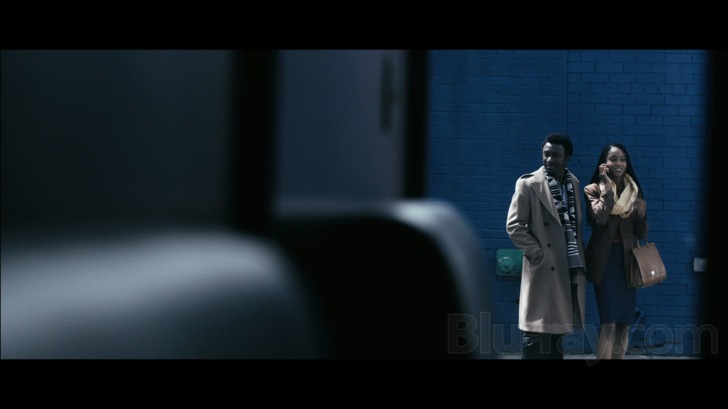
Reviewed by Michael Reuben February 17, 2014Mother of George is set entirely in contemporary Brooklyn, where it was shot on location, but nothing in the film looks familiar, even to people who have lived their entire lives in that much-photographed borough of New York City. The director, Andrew Dosunmu, is Nigerian by birth and splits his time between his homeland and the U.S., where he first gained attention as a still photographer and director of music videos for such artists as Isaac Hayes, Wyclef Jean, Common and Aaron Neville. Dosunmu doesn't construct images or scenes like other filmmakers. He sometimes frames characters in their midsection, cutting of their heads and focusing on their hands while they walk or gesture. In a conversation between two people, one of them may be left entirely out of the frame. Shots may be tightly focused on apparently irrelevant objects, while characters are left in an indistinct blur, or the entire frame may go out of focus, while the soundtrack carries the story. The central character in the drama may be pushed to the corner of the frame, or out of it altogether. Part of what allows Dosunmu to get away with these experiments is his bold use of color, which often lends his frame the beauty of an abstract painting. When Mother of George premiered at the Sundance Film Festival in 2013, its cinematographer, Bradford Young, won the dramatic award for his contrasting work in Dosunmu's film and Ain't Them Bodies Saints for the "expressive use of naturalistic lighting to evoke the state of mind of the characters and the sense of time and place in two very different films". The National Board of Review named Mother of George one of the year's top ten independent films. Although Mother of George is set in Brooklyn's Nigerian community, the script was written by a Caucasian American playwright, Darci Picoult, who also produced. The collaboration of two such disparate talents resulted in a unique and original work that pushes the boundaries of cinema. Alas, like most truly original work, the audience is limited, which is why Mother of George is being released by the indispensable arthouse label, Oscilloscope Laboratories.
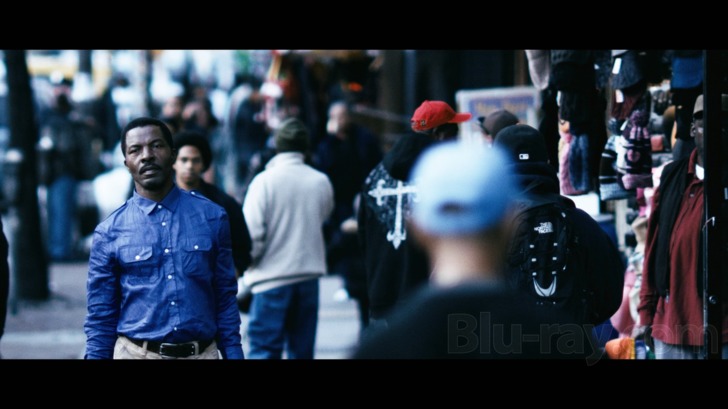
Mother of George has a relatively simple plot, but the story gains emotional density from its intense performances and the stylistic devices by which Dosunmu and his creative team draw the viewer inside its world. To avoid spoilers, only the barest sketch can be given. The film opens with a long and gorgeously colorful wedding attended by many family and friends. The groom is Ayodele Balogun or "Ayo", as he is generally known (Ivory Coast-born French actor Isaach De Bankolé), whose family owns and operates a successful Nigerian restaurant in Brooklyn. The bride is Adenike (Danai Gurira, American-born but raised in Zimbabwe, and currently best known as Michonne on The Walking Dead). The couple are deeply in love, and the wedding is joyous for all, including the groom's brother, Biyi (Tony Okungbowa), who works side by side with him in the restaurant. Their mother, known as "Ma Ayo" (Bukky Ajayi), joins with all the elders present in offering traditional prayers and benedictions for the happy couple's future children. But as the months pass and Adenike's pregnancy tests remain negative, she begins to feel the pressure of sidelong glances—and much more direct inquiries from Ma Ayo. Tribal tradition permits a man whose wife cannot bear him a child to seek her permission to reproduce with a mistress, but Adenike is enough of a modern woman to understand that infertility issues are complex. It isn't always the woman's problem. She begs Ayo to consult a doctor with her, but he refuses, partly out of pride and partly because of the expense. In a parallel subplot that throws an alternate light on the tension between the old ways and the new world, Biyi begins dating Adenike's best friend, Sade (Yaya Alafia, who played Mark Ruffalo's girlfriend in The Kids Are All Right). More assimilated than her friend, Sade has a job and dresses in business attire, as compared to Adenike's traditional outfits. She routinely has an iPhone in her hand. She's in no hurry to marry but can't understand why Biyi insists on keeping their relationship a secret from everyone, especially his family. For Biyi, though, Sade represents the one part of his life that is completely separate from the Family Balogun. Everything else is thoroughly saturated with obligation, tradition and ancestral commitment—the same forces bearing down more forcefully every day on Adenike, as her inability to conceive attracts greater notice and reproach. Screenwriter Darci Picoult began developing Mother of George after struggling with her own fertility issues. She wondered how women coped with such situations before modern medicine delivered the many options now available. Her research included interviews with immigrants from third-world countries with limited access to advanced medicine, and she gathered remarkable stories both from people who experienced such problems and from those who knew of others' experiences. Transplanting some of those stories to an insular community on the contemporary American scene gave Picoult the remainder of the story for Mother of George, which proceeds toward its surprising ending with an increasing urgency that Dosunmu and his team achieve by thoroughly novel means. Just to take one example, in a key confrontation between two characters, when voices are raised and recriminations are shouted, most filmmakers would let us hear every stinging word, but Dosunmu and his sound editors deliberately overdub the voices with a raw selection of basic blues. For Dosunmu, sight and sound take precedence over words. In the art of cinema, he's more poet than storyteller.
Mother of George Blu-ray Movie, Video Quality
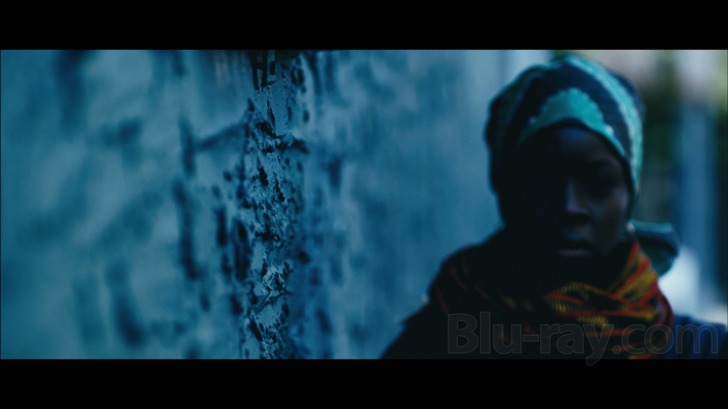
As previously noted, director of photography Bradford Young won the cinematography award in the dramatic category at the 2013 Sundance Film Festival for his work on Mother of George and Ain't Them Bodies Saints. Young shot Mother of George on the Red Epic, but Dosunmu says in his commentary that this was strictly a matter of budget. Given the choice, he would always opt for shooting on film. Once you've seen the tactile nature of his imagery, it's not difficult to understand his preference. The image on Oscilloscope's 1080p, AVC-encoded Blu-ray was presumably sourced from digital files, and to some extent one must accept on faith that the mastering and authoring was accurate, because the usual criteria for evaluating a Blu-ray image, especially one originated digitally, are hard to apply to Dosunmu's aesthetic. The Red system is famous for its ability to maintain focus and clarity across a vast expense and into a deep space, despite varying light levels, but the usual criteria of "sharpness" and "clarity" do not apply to Mother of George. Dosunmu and Bradford seem to have taken great pains to defocus large portions of the frame—and sometimes the entire frame—for an expressive effect. Even when objects and people are clearly seen, the view is often affected by some other element, such as flickering of source lights (e.g., in the opening wedding scenes), an unusual framing or a choice of focal points on a seemingly irrelevant object. Certainly no video noise or other interference intrudes, and there is nothing to indicate that the visual peculiarities on display are anything other than what the filmmakers intended. Dosunmu is deliberate in his choice of colors, and the Blu-ray's reproduction of the film's distinctive palette is stunning. The dominant color is indigo, which Dosunmu considers the principal color of Nigeria. Unlike blues that lean heavily toward gray, it's a warm blue that is frequently balanced by earth tones. Scenes within the Nigerian community are dominated by warmly contrasting colors, whereas those that venture into the greater New York community have cooler tones. Blacks in night scenes are solid, and Dosunmu and Bradford light the love scenes between Ayo and Adeniki (and between Biyi and Sade) to bring out skin textures in such a way that you can't always tell which body is which. (The subtext should be obvious.) Given the film's visual complexities, the high average bitrate of 31.95 Mbps seems appropriate. For a digitally acquired project, Mother of George has a notably analog feel, a tribute to the care with which is has been migrated to Blu-ray.
Mother of George Blu-ray Movie, Audio Quality
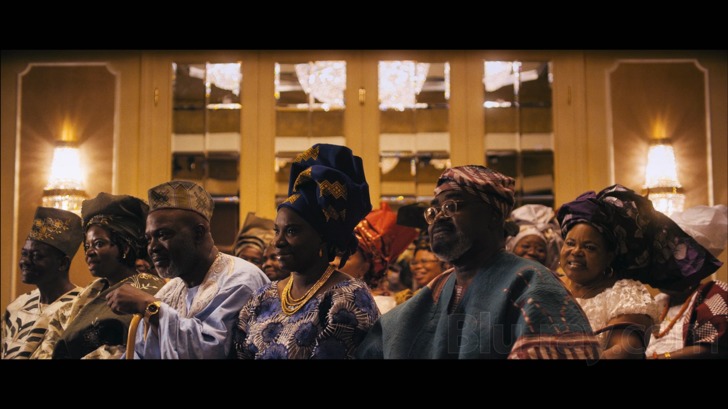
With a mixture of dialogue in English and subtitled Yoruba, and characters sometimes switching between the two in mid-speech, Mother of George's DTS-HD MA 5.1 soundtrack would already be exotic with just an ordinary score, but Dosunmu has assembled an eclectic soundtrack of African music, blues, original compositions by composer Philip Miller (Catch a Fire ) and several classical selections, notably Richard Strauss's Im Abendrot, which also featured prominently in David Lynch's Wild at Heart. Dosunmu's use of musical cues is as idiosyncratic and unexpected as his framing, with music sometimes replacing dialogue altogether as a form of expression. At other times, the track simply goes silent. The rear channels are used to generate a coherent soundfield for scenes where such an effect is appropriate (for example, the lengthy wedding sequence that opens the film), but Dosunmu appears to have no interest in surround effects for their own sake. Bass extension is deep and tight where the music demands it, but otherwise there is little occasion for the low end of the audio spectrum.
Mother of George Blu-ray Movie, Special Features and Extras
- Commentary with Director Andrew Dosunmu, Editor Oriana Soddu and Costume Designer Mobolaji Dawodu: The three collaborators worked together before Mother of George, and they have an easy rapport. They discuss the various choices for which they were responsible and the reasons behind them. As the director of the film, Dosunmu has the most to say, discussing his visual strategies, his approach to the material and his ambitions for the project. Soddu is especially interesting on her desire to find editing strategies that cut against expectations. Dawodu clearly enjoyed the challenge of finding authentic Nigerian attire that worked within the budget and the logistical challenges of filming.
- A Human Story: Featurette with Star Danai Gurira and Screenwriter/Producer Darci Picoult (1080p; 1.78:1; 19:12): In separate interviews, the film's writer and its lead actress discuss their involvement with Mother of George. Picoult's account of the film's lengthy development, which involved multiple Sundance workshops, is particularly informative.
- Deleted Scenes (1080p; 2:34 & 1.78:1; 8:36): All of these scenes are brief, and one can understand why they were omitted for pacing.
- Adenike and Sade
- Ayodele and Adenike
- Adenike
- Sade and Biyi
- Sade and Biyi
- Sade and Ma Ayo
- Sade and Ma Ayo
- Theatrical Trailer (1080p; 2.34:1; 2:00).
- Oscilloscope Releases: In addition to the trailers listed below, at startup the disc plays a general trailer for Oscilloscope Laboratories, which can be skipped with the chapter forward button and is not otherwise available once the disc loads.
- Youssou N'Dour: I Bring What I Love
- Meek's Cutoff
- We Need to Talk About Kevin
Mother of George Blu-ray Movie, Overall Score and Recommendation
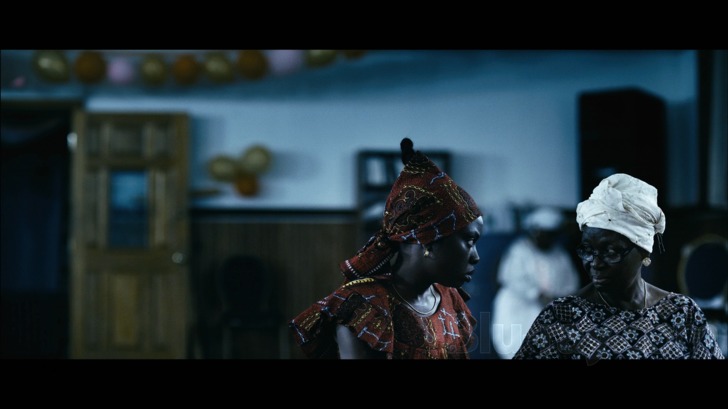
Mother of George is not the kind of film you can put on casually and watch distractedly. It demands the viewer's full attention and investment, but it rewards them with a rich aesthetic and emotional experience. People frequently complain that no original films are being made, but in fact there is plenty of original work being done if one is willing to surrender the comforts of the familiar. There is nothing at all familiar about Dosunmu's work. That's what makes it so exciting. Highly recommended.
Similar titles
Similar titles you might also like
(Still not reliable for this title)

Sparrows
1926

Sherlock Holmes
1922

The Children's Hour
1961

You Never Know Women
1926

Two Weeks in Another Town
2 Weeks in Another Town
1962

When Tomorrow Comes
1939

The Heiress
1949

The Story of Temple Drake
1933

The Cobweb
Warner Archive Collection
1955

Millie
1931

Hold Back the Dawn
Arrow Academy
1941

All I Desire
1953

History Is Made at Night
1937

Manhandled
1924

A Letter to Three Wives
Fox Studio Classics
1949

Safe in Hell
Warner Archive Collection
1931

A Tree Grows in Brooklyn
1945

The Mortal Storm
Warner Archive Collection
1940

Two for the Seesaw
1962

There's Always Tomorrow
1955