Misbehaviour Blu-ray Movie
HomeMisbehaviour Blu-ray Movie 
Shout Factory | 2020 | 106 min | Not rated | Nov 03, 2020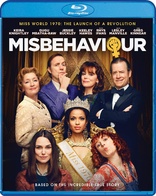

Movie rating
6.7 | / 10 |
Blu-ray rating
| Users |  | 0.0 |
| Reviewer |  | 3.5 |
| Overall | | 3.5 |
Overview
Misbehaviour (2020)
A group of women hatch a plan to disrupt the 1970 Miss World beauty competition in London.
Starring: Suki Waterhouse, John Heffernan (IV), Jessie Buckley, Keira Knightley, Gugu Mbatha-RawDirector: Philippa Lowthorpe
| Drama | Uncertain |
| History | Uncertain |
Specifications
Video
Video codec: MPEG-4 AVC
Video resolution: 1080p
Aspect ratio: 2.39:1
Original aspect ratio: 2.39:1
Audio
English: DTS-HD Master Audio 5.1
English: DTS-HD Master Audio 2.0
Subtitles
English SDH
Discs
Blu-ray Disc
Single disc (1 BD)
Packaging
Slipcover in original pressing
Playback
Region A (B, C untested)
Review
Rating summary
| Movie |  | 4.0 |
| Video |  | 4.5 |
| Audio | | 4.5 |
| Extras |  | 2.5 |
| Overall | | 3.5 |
Misbehaviour Blu-ray Movie Review
Reviewed by Brian Orndorf October 28, 2020The messy art of revolution and the origins of a movement are charted in “Misbehaviour,” which recounts the efforts of the Women’s Liberation Movement as they attempted to disrupt the Miss World 1970 beauty pageant. The screenplay by Rebecca Frayn and Gaby Chiappe is based on a true story from 50 years ago, but it plays into topics of equality and objectification that remain in play today, creating a fascinating look at attitudes and offenses. Director Philippa Lowthorpe (“Call the Midwife” and “The Crown”) maintains a period look and guides a number of strong performances, but the core experience of “Misbehaviour” is unrest, watching those who dream of a better, more just world setting their sights on a British television institution, and, wisely, the writing manages to understand both sides of the argument while still remaining supportive of a team of twentysomething women and their battle to bring equality to England.
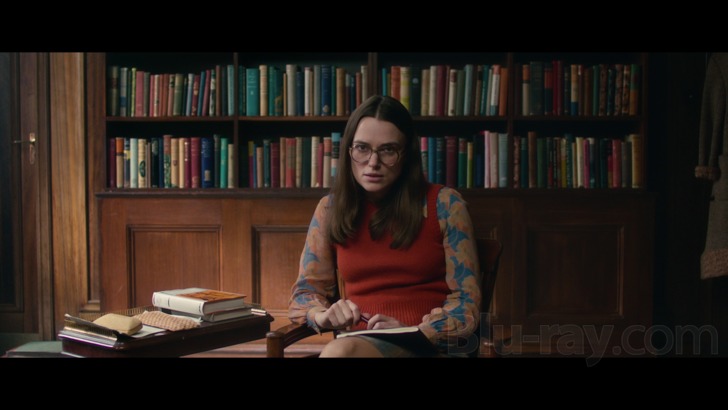
Sally (Keira Knightley) is a single mother with a loving partner trying to reach the next level of employment with a prestigious university. She struggles with patriarchal rule, facing hostility and doubt due to her life choices, and her mother, Evelyn (Phyllis Logan), isn’t supportive either. Sally is soon caught up in the plans of the Women’s Liberation Movement, meeting with the likes of Jo (Jessie Buckley) and her commune of fed-up females looking to make a change. However, the gang doesn’t have any media awareness, bringing in Sally to be the face of the movement on television. Disgusted with the upcoming Miss World beauty pageant, the commune attempts to organize an infiltration to disrupt the event, hosted by Bob Hope (Greg Kinnear). Inside the competition, Jennifer (Gugu Mbatha-Raw), confronts issues of skin color and self-worth as she prepares for the big show, while producer Eric (Rhys Ifans) scrambles to bring ogling entertainment to the masses.
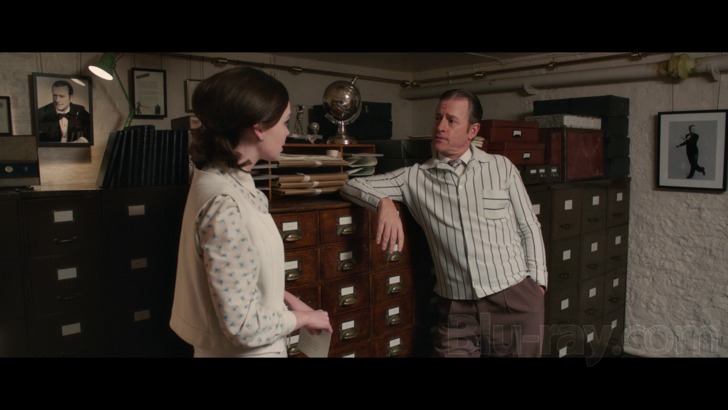
“Misbehaviour” returns viewers to the male-centric world of the late 1960s, but the screenplay makes a curious choice to highlight Bob Hope as the figure of misogyny, with the winner of the Miss World contest accompanying the comedian during his Vietnam tours, parading live flesh for rowdy male crowds. Hope is a major component of the story, following his experiences as a not so subtle womanizer, happy to sleep with young ladies he’s hired for odd jobs, leaving wife Dolores (Lesley Manville) to monitor his habits while remaining silent. Hope’s participation as the host of Miss World is a big boost to the program, bringing him to London for the show, allowing him to sample the contestants. “Misbehaviour” uses Hope as an example of male ugliness, assigning him the way-things-are position of power, while Sally experiences her own gender-related obstacles while looking for university employment, facing an interview panel of men who are more interested in her divorce and child-raising abilities than her educational achievements.
“Misbehaviour” eventually establishes two subplots to follow, with Sally connecting to the commune and their passion for the Women’s Liberation Movement, trying to disrupt London happenings with signs and vandalism. Sally is inspired by their message, but soon employed as their rep, which makes her a target for the establishment, also disturbing her mother, who was part of a docile generation, prevented from finding her voice. And there’s the competition, where women from all over the globe arrive to take the crown, with Jennifer, Ms. Grenada, a black woman in a white industry, soon making friends with Pearl (Loreece Harrison), another black contestant, offered by South Africa to help distract from apartheid concerns. “Misbehaviour” takes in the mayhem of the television production, with Eric madly dashing around to pull everything together (even rear- end displays for the viewers), but the screenplay explores motivations behind participation, with Jennifer aware that her presence on T.V. might inspire young girls to think bigger about race and potential.
Misbehaviour Blu-ray Movie, Video Quality
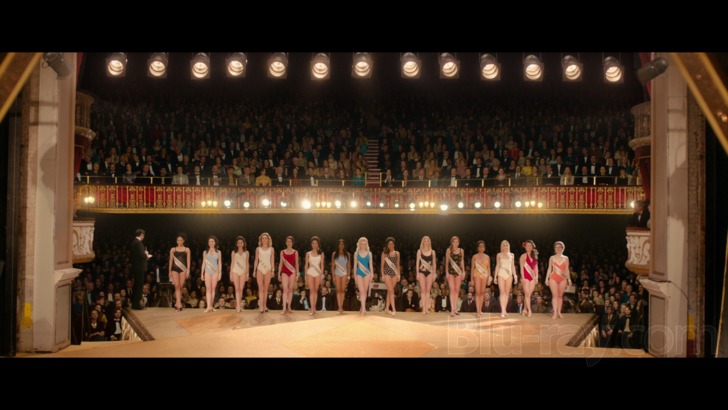
The AVC encoded image (2.39:1 aspect ratio) presentation provides compelling sharpness throughout, surveying facial surfaces with ease, including makeup work on Greg Kinnear to transform him into Bob Hope. Period clothing is fibrous, from average cold weather gear to fancier pageant outfits. Locations retain dimension, with cavernous interiors protected. Colors enjoy the look of 1970, favoring browns and oranges for everyday fashion, while Miss World costumes are more varied, offering bold reds and blues. The competition stage is also striking with its golden appearance. Delineation is satisfactory. Some very mild, brief banding is detected.
Misbehaviour Blu-ray Movie, Audio Quality
The 5.1 DTS-HD MA sound mix remains a largely frontal listening event, handling the dramatic needs of "Misbehaviour" with terrific clarity and nuance. Performances are defined, securing accents and dramatic intent. Scoring offers sharp instrumentation, with deep guitar sounds and crisp orchestral additions. Soundtrack selections are equally clean. Surrounds aren't excitable, but room tone in large auditoriums and lecture halls is immersive, and exteriors deliver compelling atmospherics. Audience reaction and group bustle is maintained, along with a few short panning effects. Low-end isn't challenged, but some weight is felt with flour bombings and bass lines.
Misbehaviour Blu-ray Movie, Special Features and Extras
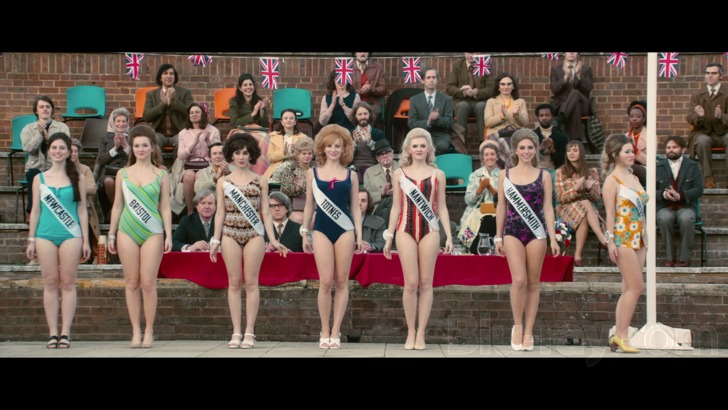
- "The Making of 'Misbehaviour'" (3:16, HD) is a brief overview of production intent, featuring interviews (conducted on-set) with actors Keira Knightley, Keely Hawes, Gugu Mbatha-Raw, Jessie Buckley, Greg Kinnear, Loreece Harrison, and Rhys Ifans, director Philippa Lowthrope, and producer Suzanne Mackie. The interviewees explore the story of "Misbehaviour," the time period of the film, hopes for an inspiring viewing experience, and casting achievements.
- "How Women's Liberation Took on Miss World" (2:39, HD) sits down with real-world "Misbehaviour" inspirations Jo Robinson, Jenny Fortune, Sue Finch, Jane Grant, and Sarah Wilson, who recall their time in the Women's Liberation Movement and share memoires of the Miss World infiltration. Casting choices are celebrated, and themes of empowerment are reinforced. Director Lowthrope also appears.
- "The Women Who Changed Miss World" (2:20, HD) greets the other side of the story, with contestants Jennifer Hosten and Pearl Jansen detailing their experience with the pageant, recalling their treatment and positions as possible inspiration to many young women. The pair (along with director Lowthrope) share the message of "Misbehaviour," focusing on themes of gender and racial equality.
- Interview (6:46, HD) features Gugu Mbatha-Raw (conducted on-set), with topics including "Hopes for the Film," "Meeting Jennifer Hosten," "Modern Relevance," and "The Story."
- Interview (5:13, HD) feature Greg Kinnear (conducted on-set), with topics including "Attraction to the Project," "Bob Hope," "How Did the Protests Affect Bob Hope," and "The Tone of the Film."
- T.V. Spots (:45, HD) offer two commercials for "Misbehaviour."
- And a Theatrical Trailer (1:59, HD) is included.
Misbehaviour Blu-ray Movie, Overall Score and Recommendation
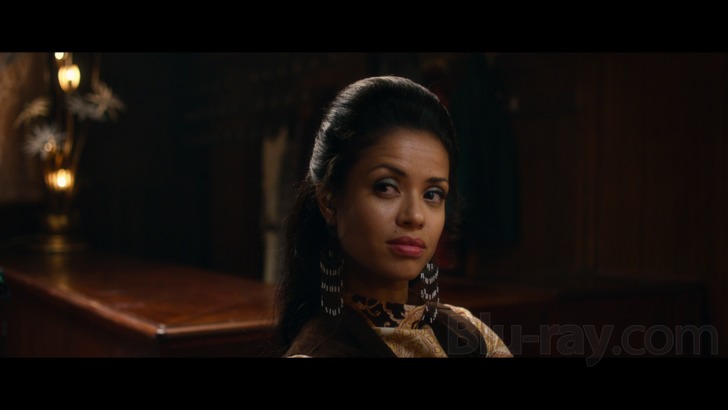
"Misbehaviour" details the Miss World infiltration during the third act, with the commune finding a way into the event, planning to ruin the big night. Such empowered activity is lively, but the screenplay is much better searching the corners of characterization, with Sally finally understanding her mother in a new way, and Pearl grasping her use as a distraction, representing a country that denies her rights. Having Bob Hope in the mix is bizarre, but "Misbehaviour" is driven to highlight the event as a moment that beamed an idea into households, helping the Women's Liberation Movement to launch, changing minds and lives in the process. The inspirational elements of the picture are potent, and the production's quest to comprehend instead of just condemn is inspired.
Similar titles
Similar titles you might also like

Philomena
2013

Evelyn
2002

Selma
2014

Game Change
2012

The Promise
2016

Light of My Life
2019

The Mustang
2019

Waiting for the Barbarians
2019

Arctic
2018

Skin
2018

Ben Is Back
2018

The Wife
2017

Leave No Trace
2018

The Wizard of Lies
2017

A United Kingdom
2016

The Family Fang
2015

A Hologram for the King
2016

The Sea of Trees
2015

Aloft
2014

Love Is Strange
2014