Martin Scorsese's World Cinema Project, No. 1 Blu-ray Movie
HomeMartin Scorsese's World Cinema Project, No. 1 Blu-ray Movie 
Blu-ray + DVDCriterion | 1936-1981 | 6 Movies | 603 min | Not rated | Dec 10, 2013



Movie rating
Movie has not been rated yetBlu-ray rating
| Users |  | 0.0 |
| Reviewer |  | 4.5 |
| Overall | | 4.5 |
Overview
Martin Scorsese's World Cinema Project, No. 1 (1936-1981)
See individual titles for their synopses.
| Foreign | 100% |
| Drama | 86% |
| Documentary | 14% |
| Music | 4% |
| Crime | 2% |
| Thriller | Insignificant |
Specifications
Video
Video codec: TBA
Video resolution: 1080p
Audio
See individual releases
Subtitles
None
Discs
50GB Blu-ray Disc
Nine-disc set (3 BDs, 6 DVDs)
DVD copy
Playback
Region A (locked)
Review
Rating summary
| Movie | | 4.5 |
| Video |  | 4.0 |
| Audio | | 4.0 |
| Extras | | 4.0 |
| Overall | | 4.5 |
Martin Scorsese's World Cinema Project, No. 1 Blu-ray Movie Review
Reviewed by Dr. Svet Atanasov January 9, 2014"Martin Scorsese's World Cinema Project No.1" brings together six films from countries around the world: Metin Erksan's 'Dry Summer" (1964), Ritwik Ghatak's "A River Called Titas" (1973), Djibril Diop Mambety's "Touki Bouki" (1973), Fred Zinnemann and Emilio Gomez Muriel's "Redes" (1936), Ahmed El Maanouni's "Trances" (1981), and Kim Ki-young's "The Housemaid " (1960) arrive on Blu-ray courtesy of Criterion. The supplemental features on this three-disc set include video introductions by director Martin Scorsese; exclusive video interviews with directors Kumar Shahani, Fatih Akin, Abderrahmane Sissako, Ahmed El Maanouni, musician Omar Sayed, producer Izza Genini, and Bong Joon-ho; visual essay by critic Kent Jones; and more. The release also arrives with a 64-page illustrated booklet featuring a foreword by Kent Jones and essays on the films by Richard Porton, Charles Ramirez Berg, Adrian Martin, Bilge Ebiri, Sally Shafto, and Kyung Hyun Kim. With optional English subtitles for each film. Region-A "locked".
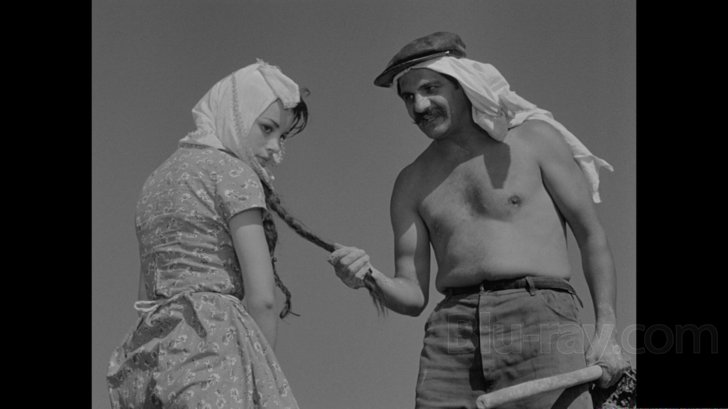
"Prove to us there's a woman in the house"
Dry Summer
The two brothers could not be any more different. The older one, Osman (Erol Tas), is loud and pushy. He demands respect even when he does not deserve it because he knows that he is entitled to it. The younger one, Hasan (Ulvi Dogan), is quiet and unselfish. He is also a hard worker.
Immediately after the opening credits it is revealed that Hasan is madly in love with Bahar (Hulya Kocyigit), a young girl from the nearby village, and can’t wait to marry her. Bahar is also in love with Hasan, but tells her lover that they have to wait because her mother won’t let her go until the harvest season is over. But Hasan is convinced that he has waited enough. He has already decided to steal Bahar and by doing so let her mother know that his intentions for her daughter are serious. Shortly after, Bahar officially enters Hasan and Osman’s home.
Osman is happy to see Hasan and Bahar together, but the fact that he is a widower makes him feel insecure and angry. Late at night he secretly watches Hasan and Bahar making love, while during the day he quietly observes Bahar’s beautiful white legs while she works next to Hasan.
Eventually, the feisty Osman clashes with his neighbors after they demand that he allows them to use the water that runs through his property (a few acres of dry land). When they try to sabotage his work he kills one of them, and then asks Hasan to go to prison instead of him so that the family property is protected by the right man. Hasan foolishly agrees and leaves Bahar in Osman’s hands.
The beauty of this classic Turkish film directed by Metin Erksan comes from its visual simplicity. In many ways it reminds of the works of the great Italian neorealists, but it has a lively spirit that effectively enhances the melodrama and gives it a truly unique identity. Indeed, for a Turkish film directed in 1964, Dry Summer looks remarkably modern.
The focus of attention is on the flexible morality of the main protagonists. Throughout the film, all three are presented with difficult dilemmas that force them to make difficult decisions. These decisions indirectly challenge and expose the flaws of traditional Turkish understandings about responsibility and respect.
The erotic overtones in the film are also enormously impressive. Just like during the Cold War era the directors from the ex-Soviet bloc would frequently send important messages to their audiences by showing something that would actually imply something entirely different, in Dry Summer there are various sequences where Erksan effectively outsmarts the Turkish censors. Arguably the best one comes in the middle of the film where the beautiful Bahar is bitten by a snake.
Cinematographer Ali Ugur’s unique treatment of light and shadow reminds of Kiyomi Kuroda's stylish work in Kaneto Shindo's Onibaba. There are a couple of sequences, in particular, where the sunlight comes through the moving reeds that look absolutely fantastic. Also, the visuals are frequently complimented by lovely traditional Turkish music.
Redes
An early and apparently difficult collaboration between the great Austrian director Fred Zinnemann (High Noon, From Here to Eternity) and Mexican helmer Emilio Gomez Muriel, Redes follows closely a group of very poor fishermen living in a small village on the Gulf coast of Mexico. Barely able to make ends meet, the fishermen are encouraged by a desperate young man (Silvio Hernandez) to unite and demand better wages from the area’s only businessman, Don Anselmo (David Valle Gonzalez), who resells their fish in Mexico City. Initially the fishermen agree to support the young rebel, but when the time comes to deliver their official demands to Don Anselmo a few back out, afraid that they would lose even the little money they earn to feed their families. Two camps emerge, one supporting the young rebel, the other the current working conditions. Eventually, a tragic event forces the fishermen to unite.
The film’s visual style and atmosphere remind of Luchino Visconti’s La terra trema: Episodio del mare. As it is the case with the legendary Italian film, Redes was shot entirely with non-professional actors (the only exception being Gonzales) and backed by a leftist government seeking support for its policies. The ‘passionate’ speeches that pop up here and there make select sequences look a bit awkward, but the rest of the film has virtually the same raw quality Visconti’s film does.
The film’s best feature is undoubtedly Mexican violinist and composer Silvestre Revueltas’s powerful orchestral score, which was clearly inspired by the works of the great Russian romantic composers.
Trances
The very first film to be restored by the World Cinema Foundation at Cineteca di Bologna/ L’Immagine Ritrovata is a favorite of director Martin Scorsese. It is titled El Hal a.k.a. Trances and was directed by Moroccan filmmaker Ahmed El Maanouni in 1981.
The film, which apparently inspired the construction and many of the designs in director Scorsese’s acclaimed The Last Temptation of Christ, follows closely the four members of the Moroccan band Nass El Ghiwane -- Abderrahman Kirouche (Paco), Allal Yaala, Omar Sayed, and Larbi Batma -- as they discuss their music and travel across Morocco and Tunisia to perform in front of their passionate fans. Between the concert footage and the discussions there is also rare archival footage highlighting important and controversial events from Morocco’s troubled past. (Interestingly, a portion of one such very intriguing archival clip is masked to hide the identities of some apparently divisive political figures).
Western viewers will likely need a bit of time to get used to the music’s rhythmic structure, but its intensity should immediately overwhelm even the most conservative amongst them. Indeed, during the concerts the energy and pure passion on display are quite remarkable. What is even more impressive, however, is the perfect coordination between the musicians who, like many of their fans, frequently seem to be on the verge of switching into a trance mode. (There is one intimate performance where an elderly woman actually enters the trance state of jadba).
The texts of the songs are equally powerful. Some are angry, targeting political subjects; others praise the beauty of Morocco and its ancient culture. As the camera frequently zooms over the crowds, it is easy to see that these are texts many people know by heart.
There are two types of discussions in the film. The more casual ones typically take place during practice sessions where the members of Nass El Ghiwane improvise or experiment with different traditional instruments. From time to time they would also recall their early days as struggling young troubadours. What these discussions reveal is that there is a great deal of respect between the men and a clear understanding that together they are indeed capable of creating special music. Occasionally, some of the musicians are also seen explaining to kids and young men how to play traditional songs.
The non-concert footage is primarily from the legendary city of Casablanca. But in Trances Casablanca isn’t the elegant and prosperous city one would discover in foreign travel guides and business brochures. It is a chaotic, polluted, and somewhat lonely city full of people struggling to make ends meet.
Much like D.A. Pennebaker's legendary Monterey Pop and Albert Maysles, David Maysles and Charlotte Zwerin's Gimme Shelter, Trances was shot on 16mm. Later on, it was blown up to 35mm. Unsurprisingly, the entire film has a distinctive raw look that feels most appropriate for the type of music Nass El Ghiwane perform.
Trances has been restored from the original 16mm camera and sound negatives, preserved by producer Izza Genini. The restoration has been supported by the World Cinema Foundation launched by director Scorsese at the Cannes Film Festival in 2007.
The Housemaid
Described by director Bong Joon-ho as “the Citizen Kane of Korean cinema”, Kim Ki-young’s Hanyo a.k.a. The Housemaid is a very dark and very intense thriller that plays with the viewer’s expectations literally until the final credits roll.
A happily-married man who teaches music in a factory receives a secret love letter from one of his students. Concerned that his reputation and position might be compromised, Mr. Kim immediately informs his superior, who in return sends the young woman home. Shortly after, her best friend, who is also one of Mr. Kim’s private students, offers to help him find a good maid to assist his pregnant wife with the house work. Mr. Kim immediately accepts. But when the new maid arrives, Mr. Kim becomes seriously concerned – the maid is young, elegant, and very beautiful, exactly the type of woman that can inspire a married man like him to question his priorities in life.
It is easy to understand why The Housemaid has been such an inspirational film for generations of young Korean filmmakers. It comes somewhere between Henri-Georges Clouzot’s Diabolique and Roman Polanski’s Repulsion, effectively proving that prior to Park Chung-hee's dictatorship Korean filmmakers were capable of directing films that were just as original, provocative and stylish as the latest European and American films.
The complete version of the The Housemaid was impossible to see for a number of years because even after the film’s original negative was discovered in 1982 two reels were still missing. In 1990, a rare complete print was discovered, but it had handwritten English subtitles which apparently covered a large portion of the image. In 2008, the film was finally fully restored and reconstructed with the support of the World Cinema Foundation.
Touki Bouki
A young boy (Magaye Niang) and his girlfriend (Mareme Niang) dream of reaching Paris in Senegalese director Djibril Diop Mambety’s indescribably vibrant film Touki Bouki a.k.a. The Hyena’s Journey. But to leave Dakar they need a lot of money and plenty of clothes, which they don’t have.
The lovers target a homosexual hotshot who lets the boy inside his lavish apartment assuming that the two can have a good time. While he showers, the boy steals his clothes and car and disappears together with his girlfriend. Soon after, the disguised lovers are forced to improvise because the fancy car attracts a lot of attention.
Infused with the pure energy and enthusiasm of the classic French New Wave films, Touki Bouki is like a beautiful dream that makes perfect sense only while it lasts. Indeed, at times the film is rather chaotic and confusing, but the journey is quite extraordinary. Mambety’s camera visits places that are both astonishingly beautiful (the lonely beach) and incredibly disturbing (the abattoir).
Behind the fascinating visuals, however, there is a sense of desperation mixed with a good dose of anger. For the young lovers France is an almost mythical place where they could begin living, but getting there seems impossible. So as bizarre as it may seem, they are much more optimistic about their lives while dreaming than when they actually do something meaningful to change them. As if to play with their emotions, throughout the film the great Josephine Baker is repeatedly heard singing Paris… Paris.
A River Called Titas
The film is set in the early 1930s and follows closely the members of a poor tribe living on the banks of the great Titas River in East Bengal. Initially, the central character is a young woman named Basanti (Rosy Samad) who is desired by two good friends, Kishore (Prabir Mitra) and Subol. To earn her affection, the men build a boat and then go on a fishing trip to a distant village. However, during the trip Kishore rescues a beautiful girl named Rajar Jhi (Kabari Choudhury) and marries her. On the way back, bandits attack the boat. Rajar Jhi escapes and is later on discovered by fishermen from a different village, but Kishore, convinced that she has died, goes mad. Basanti then marries Subol, but soon after the wedding he is swallowed by the mighty Titas River. Ten years later, Rajar Jhi reappears with Kishore’s son, but they cannot recognize each other. Eventually, Basanti, Rajar Jhi, and Kishore’s lives become closely intertwined, but as time passes by and life in the area becomes more and more difficult they are frequently forced to suffer.
Based on a autobiographical novel by Advaita Malla Barman, which was published in 1956, Ritwik Ghatak’s A River Called Titas is a beautifully lensed, very powerful film about a culture and a way of life that are slowly becoming obsolete. (The film was completed two years after Bangladesh, once East Bengal, where Ghatak was born, became an independent nation).
Western viewers will likely immediately compare the film’s visual style to that of the many great films directed by the Bengali master Satyjit Ray. Indeed, the fluid camera movement in the second half of the film and the tremendous panoramic shots provide A River Called Titas with a familiar sense of elegance, but its unique narrative structure makes for a very different viewing experience. The numerous characters in the film, played primarily by non-professional actors, are also men and women with less predictable emotions than those in Ray’s films. As result, more often than not A River Called Titas feels like a long and very personal documentary rather than a carefully scripted commercial epic.
Martin Scorsese's World Cinema Project, No. 1 Blu-ray Movie, Video Quality
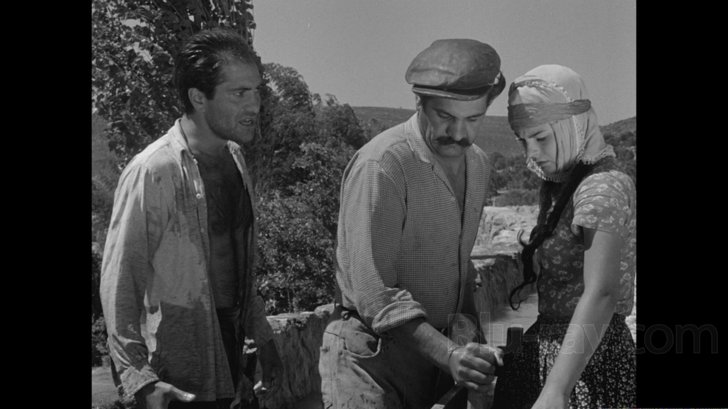
Metin Erksan's Dry Summer, Ritwik Ghatak's A River Called Titas, Djibril Diop Mambety's Touki Bouki, Fred Zinnemann and Emilio Gomez Muriel's Redes, Ahmed El Maanouni's Trances and Kim Ki-young's The Housemaid arrive on Blu-ray courtesy of Criterion.
The six films in Criterion's Martin Scorsese's World Cinema Project No. 1 box set are placed on three Region-A "locked" dual-layer Blu-ray discs. Each film has been granted a 1080p transfer.
The screenshots included with our review appear in the following order:
1. Screencaptures #1-12 are from Dry Summer (01.32.05).
2. Screencaptures #13-20 are from A River Called Titas (02.38.33).
3. Screencaptures #21-27 are from Touki Bouki (01.30.36).
4. Screencaptures #28-32 are from Redes (01.00.42).
5. Screencaptures #33-35 are from Trances (01.29.34).
6. Screencaptures #36-40 are from The Housemaid (01.51.39).
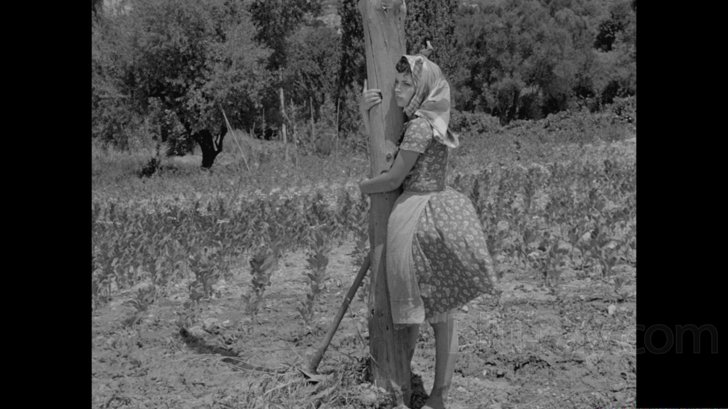
Dry Summer - there are traces of some extremely light noise corrections, but image depth and clarity are not compromised. (As noted in our review of Eureka Entertainment's release of Dry Summer, these corrections were likely introduced during the restoration process). The daylight footage, in particular, looks excellent, but the darker footage, and specifically the chase sequence, also impresses with very good clarity. Furthermore, from time to time traces of light fading around the edges of the frame are easy to spot, but detail is never seriously compromised. Overall image stability is also very good - there are no serious transition issues or problematic frame skips. Lastly, it is easy to see that large damage marks, debris, scratches, cuts, and stains have been removed as best as possible.
A River Called Titas - the restoration and reconstruction of this little seen film have produced marvelous results. While there are small vertical lines that occasionally pop up here and there as well as some extremely light scratches, clarity and image depth are indeed very good. Even when light is obviously restricted, there are numerous close-ups throughout the film that boast very pleasing depth (see screencapture #16). The best news, however, is that there are no traces of compromising degraining corrections. Sharpening adjustments also have not been applied. Predictably, the film has a solid organic look. Also, image stability is very good and there are no traces of serious fading. All in all, A River Called Titas looks as impressive as the recently restored and released by Criterion Satyajit Ray films. (See The Big City and Charulata).
Touki Bouki - the high-definition transfer is sourced from a new 2K restoration of the film for which the restorers accessed the original film negative. From start to finish image depth and clarity are excellent, while color reproduction is simply outstanding (see screencapture #26). Even the graphic footage from the slaughterhouse, where the camera constantly moves and light is frequently underexposed, looks great. There is a wide range of solid reds, blues, greens, yellows, and browns that never appear faded. Contrast and sharpness levels are not boosted. Furthermore, there are no traces of excessive degraining corrections. Sharpening adjustments also have not been applied. Unsurprisingly, the film has a strikingly rich organic look. Finally, there are no large damage marks, debris, cuts, stains, or warps to report in this review.
Redes - the high-definition transfer is arguably the most problematic one in the box set. Indeed, depth and clarity frequently fluctuate and there are various areas where fading and damage have seriously affected definition. But this should not be surprising because according to information provided by the World Cinema Foundation/Criterion the best surviving elements for this film are a 35mm safety duplicate negative and a positive print preserved at the Filmoteca de la UNAM in Mexico. In other words, there is only so much that can be done with modern equipment when only second and third generation elements are available for a new restoration/reconstruction. Still, the overall image stability is good. Contrast levels also remain stable. Despite the sporadic softness, very light grain is also present.
Trances - restored in 2007 with the participation of producer Izza Genini and director Ahmed El Maanouni, Trances looks lovely in high-definition. It is important to remember, however, that because the film was shot on 16mm (and later on blown up to 35mm) under different conditions, small density and clarity fluctuations remain. During the concert footage, where light is often restricted, image depth occasionally fluctuates as well. During the raw archival footage there are additional inherited source limitations, such as fading and weaker definition. However, colors are stable and natural. Early into the film, during the concert footage minor wear and damage marks are present (they usually appear in the upper left corner). A few very small warps also pop up. Overall image stability, however, is very good. All in all, this is a competent restoration of Trances that makes it very easy for the viewer to immerse in the fascinating world of Nass El Ghiwane.
The Housemaid - this classic Korean film was undoubtedly the most difficult one to restore. According to information provided by the World Cinema Foundation/Criterion, the restorers had access to the film's original negative, but because two reels were missing they had to fill the gaps using footage from a rare original print found in 1990. More importantly, handwritten English subtitles had to be digitally removed, which made the reconstruction of the film extremely difficult. Needless to say, there are various definition, clarity, and contrast fluctuations. Some traces of the digital work that was required to stabilize and repair the film and remove damage, debris, and dirt are also present. Still, the final result is a pleasing presentation of The Housemaid, which I am convinced will be appreciated by serious film aficionados.
Martin Scorsese's World Cinema Project, No. 1 Blu-ray Movie, Audio Quality
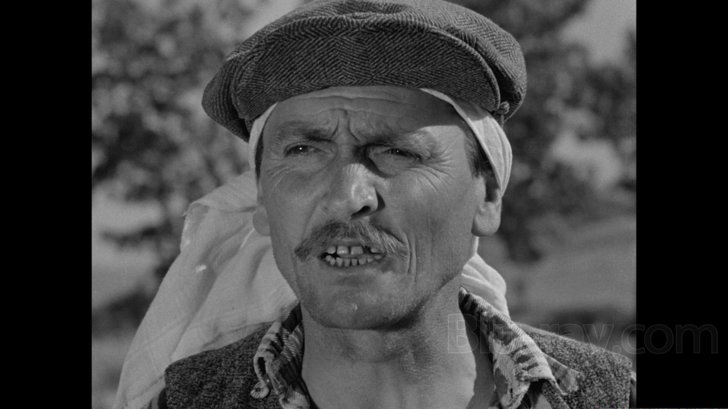
Each of the six films in Criterion's Martin Scorsese's World Cinema Project No. 1 box set arrives with a lossless LPCM 1.0 track. For the record, Criterion have also provided optional English subtitles for every film.
The only notable fluctuations in terms of dynamic intensity and clarity are present on Fred Zinnemann and Emilio Gomez Muriel's Redes and Kim Ki-young's The Housemaid. Some very light hiss is also present, though it never becomes overly distracting. However, this should not be surprising considering the fact that these two films were the most difficult ones to restore and reconstruct. On the remaining four films clarity and depth range from very good (Dry Summer) to excellent (Touki Bouki). Understandably, dynamic intensity is quite limited, but balance fluidity are rather impressive. On Touki Bouki, in particular, the music is exceptionally well balanced with the dialog, which is rather impressive because this is essentially a road film. The wedding ceremony and the shootouts on Dry Summer also have pleasing clarity and crispness. The English translation for each film is outstanding.
Martin Scorsese's World Cinema Project, No. 1 Blu-ray Movie, Special Features and Extras
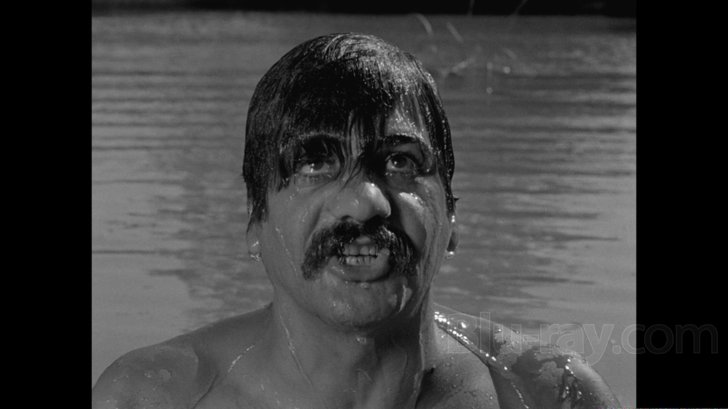
Disc One: A River Called Titas/Dry Summer
- Introduction - Martin Scorsese introduces Ritwik Ghatak's A River Called Titas. The introduction was recorded exclusively for Criterion in 2013. In English, not subtitled. (3 min, 1080p).
- Kumar Shahani on A River Called Titas - in this video interview, filmmaker Kumar Shahani (Khayal Gatha, Kasba), a student of director Ritwik Ghatak, discusses A River Called Titas and the life and legacy of his mentor. In English, not subtitled. (16 min, 1080p).
- Introduction - Martin Scorsese introduces Metin Erksan's Dry Summer and discusses its troubled history. The introduction was recorded exclusively for Criterion in 2013. In English, not subtitled. (2 min, 1080p).
- Metin Erksan and Fatih Akin on Dry Summer - in this video program, the late director Metin Erksan and German-Turkish director Fatih Akin (Head-On, The Edge of Heaven) discuss the socio-political climate in Turkey at the time when Dry Summer was made, its success at the Berlin International Film Festival, and the film's fascinating history with Turkish censors after it won the prestigious Golden Bear Award. The footage with Metin Erksan is from an archival interview conducted in 2008. The footage with Fatih Akin is from a new interview. The program was produced exclusively for Criterion in 2013. In Turkish and English, with optional English subtitles. (16 min, 1080i).
- Introduction - Martin Scorsese introduces Djibril Diop Mambety's Touki Bouki. The introduction was recorded for Criterion in 2013. In English, not subtitled. (3 min, 1080p).
- Abderrahmane Sissako on Touki Bouki - in this video interview, Mauritanian filmmaker Abderrahmane Sissako (Bamako, Waiting for Happiness) explains why Djibril Diop Mambety is one of Africa's most unique voices. The interview was conducted exclusively for Criterion in 2013. In French, with optional English subtitles. (12 min, 1080p).
- Introduction - Martin Scorsese introduces Fred Zinnemann and Emilio Gomez Muriel's Redes. The introduction was recorded for Criterion in 2013. In English, not subtitled. (2 min, 1080p).
- Visual Essay on Redes - this visual essay, which focuses on the history and preservation of Redes, was written by filmmaker and critic Kent Jones and produced by Criterion in 2013. In English, not subtitled. (8 min, 1080i).
- Introduction - Martin Scorsese introduces Ahmed El Maanouni's Trances and discusses the music of Nass El Ghiwane. The introduction was recorded for Criterion in 2013. In English, not subtitled. (2 min, 1080p).
- On Trances - Trances was the first film to be restored by the World Cinema Foundation. In this video program, director Martin Scorsese discusses his admiration for the film. Also included are excerpts from interviews with director Ahmed El Maanouni, musician Omar Sayed, and producer Izza Genini. The program was produced exclusively for Criterion in 2013. In English and French, with optional English subtitles where necessary.(19 min, 1080i).
- Introduction - Martin Scorsese introduces Kim Ki-young's The Housemaid and discusses the Korean helmer's unique directing style. The introduction was recorded for Criterion in 2013. In English, not subtitled. (3 min, 1080p).
- Bong Joon-ho on The Housemaid - in this video interview, Korean director Bong Joon-ho (Memories of Murder, Mother) discusses The Housemaid and its placement in the annals of Korean cinema. The interview was conducted exclusively for Criterion in 2013. In Korean, with optional English subtitles. (16 min, 1080p).
- Booklet - illustrated booklet featuring a foreword by Kent Jones and essays on the films by Richard Porton, Charles Ramirez Berg, Adrian Martin, Bilge Ebiri, Sally Shafto, and Kyung Hyun Kim
Martin Scorsese's World Cinema Project, No. 1 Blu-ray Movie, Overall Score and Recommendation
This collector's set contains six truly special films from around the world. I sincerely hope that it is the first of many to come because these films have a lot to say about cultures many of us are unfamiliar with. All six films have been recently restored and some also carefully reconstructed. Needless to say, they have never looked this good before. VERY HIGHLY RECOMMENDED.