Marlowe Blu-ray Movie
HomeMarlowe Blu-ray Movie 
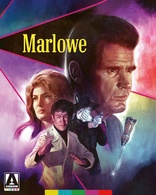
Limited EditionArrow | 1969 | 96 min | Rated PG | Jun 09, 2026

Movie rating
6.5 | / 10 |
Blu-ray rating
| Users |  | 0.0 |
| Reviewer |  | 3.5 |
| Overall | | 3.5 |
Overview
Marlowe (1969)
Five-hundred bucks doesn’t come easily for private eye Philip Marlowe. But when it comes by way of a bribe, it might as well be five cents. He rejects Winslow Wong and his offer of cash...and Wong promptly karates the detective’s office into a junkpile. A colorful whodunit based on Raymond Chandler’s The Little Sister, with the grim case of missing persons, blackmail and ice-pick murders in a sprawling ’60s L.A. so hard-boiled somebody’s got to crack. And when that happens, it's Marlowe’s job to put the pieces together.
Starring: James Garner, Carroll O'Connor, Gayle Hunnicutt, Bruce Lee, Rita MorenoDirector: Paul Bogart
| Film-Noir | Uncertain |
| Crime | Uncertain |
| Drama | Uncertain |
| Mystery | Uncertain |
Specifications
Video
Video codec: MPEG-4 AVC
Video resolution: 1080p
Aspect ratio: 1.85:1
Original aspect ratio: 1.85:1
Audio
English: LPCM Mono (48kHz, 24-bit)
Subtitles
English SDH
Discs
Blu-ray Disc
Single disc (1 BD)
Packaging
Slipcover in original pressing
Playback
Region A (B, C untested)
Review
Rating summary
| Movie | | 3.5 |
| Video |  | 4.5 |
| Audio |  | 4.0 |
| Extras |  | 2.0 |
| Overall | | 3.5 |
Marlowe Blu-ray Movie Review
Reviewed by Jeffrey Kauffman May 30, 2026Ask for an example of a literary "hard boiled private investigator", and chances are the first two names mentioned will be Sam Spade and/or Philip Marlowe. If the two seem to be somewhat interchangeable, that's probably due to the fact that one Humphrey Bogart portrayed Spade in 1941's The Maltese Falcon and Marlowe in 1946's The Big Sleep, and as even the nicely done appreciation by Howard S. Berger included on this disc as a supplement overtly mentions, many would probably be hard pressed to cite substantial differences between the two characterizations. Rather interestingly, though, at least within the contextual history of these two iconic private eyes, is the fact that Dashiell Hammett only wrote one Spade novel, along with a few short stories featuring Spade that have never been adapted for the screen. As fans of that singular legendary Spade novel and its Bogart film adaptation no doubt know, there are actually two other Warner Brothers adaptations of the same source, kind of hilariously released not that far distant from the Bogart property, namely 1931's eponymous The Maltese Falcon and 1936's Satan Met a Lady (where Spade is renamed Ted Shane, kind of funny given that there's another Michael Shayne property listed below based on a Chandler work). The pickin's were a bit more numerous in terms of Raymond Chandler's output featuring Philip Marlowe, with seven completed Marlowe properties and one incomplete one, which was finished some years after Chandler's death by Robert B. Parker. Here's where the vagaries of show business and a literary career deliver some unexpected irony: while all of Chandler's Marlowe novels have been adapted to film, Chandler's one original screenplay was for a property that went unproduced by Universal and which became Chandler's last Marlowe novel, Playback, which is the one "unadapted for film" work of Chandler's as of the writing of this review.
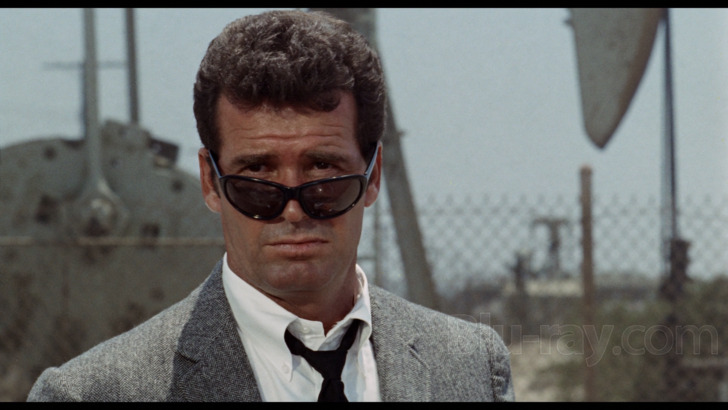
Marlowe's first screen appearance as Marlowe (more about that in a moment) was in 1944's Murder, My Sweet, with erstwhile song and dance man Dick Powell attempting to break free of any genre typecasting. The source novel was remade under its own title decades later as Farewell, My Lovely with Robert Mitchum. Mitchum became the only actor to portray Marlowe twice on the big screen with the 1978 follow up and remake of that above referenced Bogart and Bacall classic, The Big Sleep. Interestingly, the Bogie Big Sleep came out in 1946 and was followed rather quickly by the very interesting Lady in the Lake, with (supposedly) Robert Montgomery (Elizabeth's father) as Marlowe, though film fans will probably know that the bulk of the story is told from the "first person", with the camera itself becoming Marlowe. Shortly after that, and perhaps a little confusingly, another Montgomery, George, took on the part in The Brasher Doubloon. There were arguably two earlier Marlowe adaptations before Murder, My Sweet, albeit with the detectives renamed. Those include The Falcon Takes Over, a loose adaptation of Farewell, My Lovely, with George Sanders as The Falcon, and Time to Kill with Lloyd Nolan as Michael Shayne in a story based on High Window, the same source utilized for The Brasher Doubloon. On the other end of the time spectrum, shortly before Robert Mitchum took on the part for his two outings, Elliott Gould portrayed Marlowe in 1973's The Long Goodbye , and a few year before that James Garner threw his hat (and/or fist) into the ring with 1969's Marlowe.
All of this history is simply meant to indicate that even with "future" Marlowe films still in the offing, by 1969 the character had already had a significant impact on the big screen. That may end up not redounding especially well for this effort, one which has some great casting to its credit (including an absolutely gonzo turn by Bruce Lee), but which frankly may struggle to achieve either its own identity or one more tethered to what were probably admittedly preconceptions about the character of Philip Marlowe. Kind of ironically given the now infamous subtext of The Big Sleep (famously revisited in Chinatown, which screenwriter Robert Towne has overtly mentioned owes its very genesis to the writings of Chandler), Marlowe is based on Chandler's The Little Sister, and suffice it to say if there isn't exactly a "she's my sister, she's my daughter" moment, there is some subterfuge as to whom is related to whom.
Garner is okay as Marlowe, but that may not be enough. He's probably a bit too affable for the role, and this kind of seems like little more than a warm up at times for The Rockford Files (as with that aforementioned similarity between Bogart's characterizations of Spade and Marlowe, even diehard fans of Garner might be hard pressed to find any big differences between his Marlowe and Jim Rockford). Along with Lee, the supporting cast features Rita Moreno as an "exotic dancer" (near nude at the climax), Gayle Hunnicutt as the perceived femme fatale, Carroll O'Connor as an exasperated cop, and Sharon Farrell as a mousy Kansas woman who has hired Marlowe to find her missing brother, something that sets the entire plot into motion. Though evidently shot in 1968 and released in 1969, the film's depiction of "hippies" is arguably a bit more 1967, as in the Summer of Love, though one scene hilariously features a guy playing bongos outside (without any accompanying sound effects) in what might be a callback to the beatniks of the 1950s. Stirling Silliphant's adaptive screenplay somewhat surprisingly has very little (arguably none) of the grit and energy of In the Heat of the Night.
Marlowe Blu-ray Movie, Video Quality
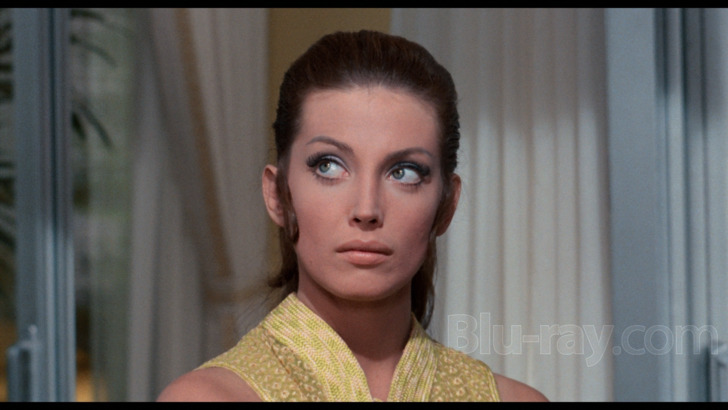
Marlowe is presented on Blu-ray courtesy of Arrow Video with an AVC encoded 1080p transfer in 1.85:1. Arrow's insert booklet contains the following information on the presentation:
Marlowe has been restored by Arrow Films and is presented in its original aspect ratio of 1.85:1 with original mono sound.This is very appealing looking presentation with an especially vibrant palette that at least occasionally gets out and about and exploits some of the sundrenched Los Angeles locations. A surplus of close-ups also delivers nice fine detail on facial features, and detailing on sets and costumes is also generally excellent. There are just a couple of brief passing moments where things look slightly pinkish or purplish, something that's probably most evident in flesh tones. Grain resolves naturally throughout.
The original 35mm camera negative was scanned at 4K / 16 bit resolution at Warner Brothers Motion Picture Imaging. The film was restored and graded in 2K resolution at Duplitech.
The mono soundtrack was restored by Bad Princess Productions.
All materials sourced for this new master were made available by Warner Bros.
Marlowe Blu-ray Movie, Audio Quality
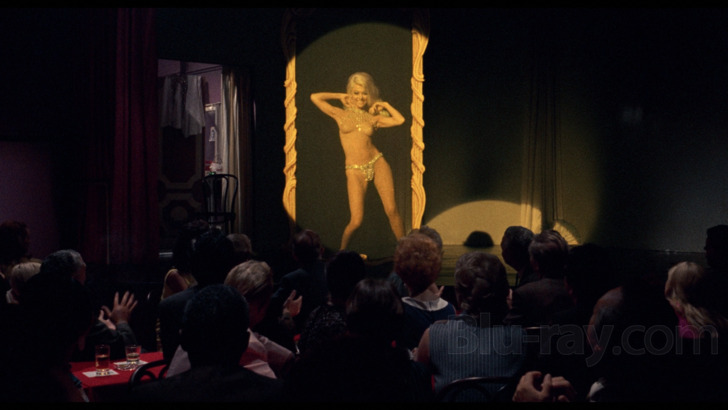
Marlowe features a nice sounding LPCM Mono track. The film's score is by Peter Matz, a name which may be less recognizable to film buffs due to the fact that he really didn't score that many features, but which should certainly be instantly easily identifiable as the fantastic orchestrator and arranger who helped make Barbra Streisand's early albums in particular so memorable (Matz also contributed absolutely stunning orchestrations to the little remembered 1967 musical Hallelujah, Baby! which won Leslie Uggams a Tony Award, albeit one shared with the late, great Patricia Routledge for another little remember musical called Darling of the Day). The score includes a kind of funny supposed rock number called "Little Sister" sung by a group called Orpheus. Otherwise, the track makes decent use of ambient sound effects (including two great scenes with Bruce Lee). Dialogue is delivered cleanly and clearly throughout. Optional English subtitles are available.
Marlowe Blu-ray Movie, Special Features and Extras
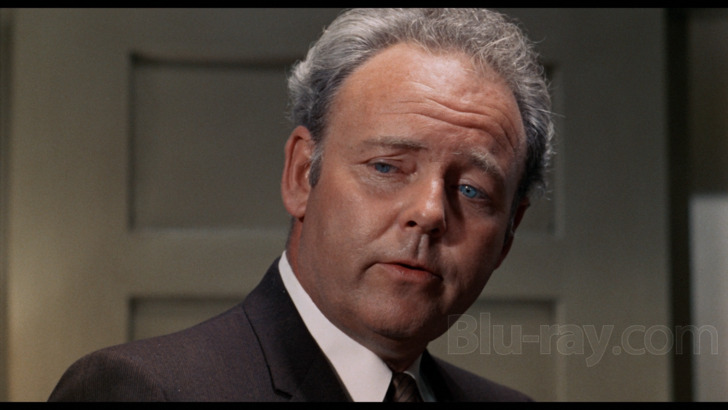
- $100 a Day (Plus Expenses) (HD; 51:23) is a fun overview by Howard S. Berger that offers some history of the Marlowe character.
- Theatrical Trailer (HD; 2:13)
- Image Galleries
- Posters (HD)
- Promotional Stills (HD)
Marlowe Blu-ray Movie, Overall Score and Recommendation
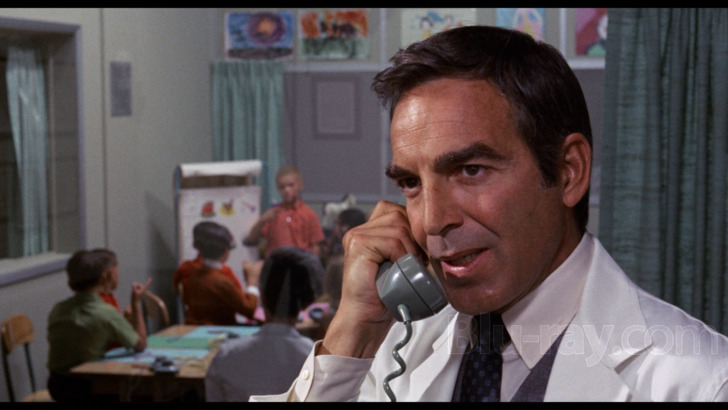
If it might be jokingly stated that this Marlowe offers a soft boiled private detective, fans of the, um, eclectic supporting cast should find this of some interest, even if this entire enterprise (including that supporting cast) may seem more like one of those late sixties "World Premiere Movies" churned out by Universal rather than a "real" feature released by the venerable Metro Goldwyn Mayer. In that regard it's maybe a little comical that this film comes with the imprimatur of a Bogart, albeit one not related to Humphrey, director Paul, who is probably better remembered for his television work (in the interconnectedness department, Elliott Gould was his son-in-law — twice). Technical merits are solid, and the appreciation by Howard S. Berger is very enjoyable. Recommended.
Similar titles
Similar titles you might also like

Murder, My Sweet
Warner Archive Collection
1944

Phantom Lady
1944

The Late Show
Warner Archive Collection
1977

The Killers
1946

Whirlpool
Limited Edition
1950

Black Angel
Arrow Academy
1946

The Long Goodbye
4K Restoration
1973

The Killers
1964

Kiss Me Deadly
1955

Who Killed Teddy Bear 4K
Standard Edition
1965

Twilight
1998
The Dark Corner
1946

The Woman in the Window
1944

The Snake Pit
Limited Edition to 3000
1948

The Big Sleep
Warner Archive Collection
1946

This Gun for Hire
1942

Pitfall
1948

Harper
1966

The Dark Mirror
1946

Fallen Angel
1945