Mahler: Symphony No. 8 Blu-ray Movie
HomeMahler: Symphony No. 8 Blu-ray Movie 
Blu-ray AudioNaxos | 2006 | 80 min | Not rated | Apr 26, 2011

Movie rating
Movie has not been rated yetBlu-ray rating
| Users |  | 0.0 |
| Reviewer |  | 3.5 |
| Overall | | 3.5 |
Overview
Mahler: Symphony No. 8 (2006)
Audio Disk
Starring: Antoni Wit| Music | 100% |
Specifications
Audio
Music: DTS-HD Master Audio 5.0 (96kHz, 24-bit)
Music: LPCM 2.0 (96kHz, 24-bit)
Discs
25GB Blu-ray Disc
Single disc (1 BD)
Playback
Region A (B, C untested)
Review
Rating summary
| Movie |  | 4.0 |
| Video | | 0.0 |
| Audio |  | 3.0 |
| Extras | | 0.0 |
| Overall | | 3.5 |
Mahler: Symphony No. 8 Blu-ray Movie Review
Reviewed by Jeffrey Kauffman December 31, 2011The Christian liturgical year is filled to bursting with various festivals, saint days and accompanying celebrations. Many devout believers know the “biggies” like Easter and Christmas, of course, but sometimes have to ponder for a moment or two when confronted with some of the lesser known observances that dot the Christian calendar. Years ago I was being interviewed for a Music Director position at a large Portland, Oregon church and one of the Board looked at me very intently and said ominously, “We do celebrate Maundy Thursday, you know,” which sent me into a momentary tailspin as I frantically tried to recall the ins and outs of that observance. (Like many ancient festival days, various attributions are given for Maundy Thursday’s existence, including the celebration of Jesus’ last Seder with the Apostles as well as the explanation Jesus gave as to why he wanted to wash the apostles’ feet). It turned out later (after I was hired and had worked there for a while) that this Board member had actually not meant to sound anything other than informative about their observance, as she was just making sure I knew I’d have a musical commitment for that evening, and we shared a hearty laugh about by momentary panic. But there are a number of other lesser known feast days and observances that can throw individual believers for a loop (at least for a moment or two), and one of those might be the somewhat oddly titled Whitsunday or Whitsuntide. This particular term is more endemic to the British Isles, with its sibling term Pentecost perhaps a bit more well known worldwide. Pentecost is (for those of you momentarily panicking right now) the celebration of the descent of the Holy Spirit upon the Apostles (as outlined in the Book of Acts), whereupon they started speaking in tongues. The “whit” of Whitsunday is an etymological allusion to the fact that the preferred apparel for this celebration is, of course, white, in remembrance of the Holy Spirit. There are a number of patently odd traditions associated with Whitsunday (my personal favorite being “cheese rolling,” though the antecedents of Morris Dancing are also evidently part of Whitsunday celebrations). There are also specific liturgical chants associated with the entire Whitsuntide Week, including the ninth century hymn written by Rabanus Maurus (according to legend, anyway) known as “Veni Creator Spiritus.” This invocation of the Holy Spirit has become one of the most iconic texts of the Christian tradition, especially in its original Catholic formulation, for it is the hymn sung to mark the entrance of the Cardinals as they seek to elect a new Pope, as well as a number of other “inaugural” celebrations, including consecrations, ordinations and even coronations.
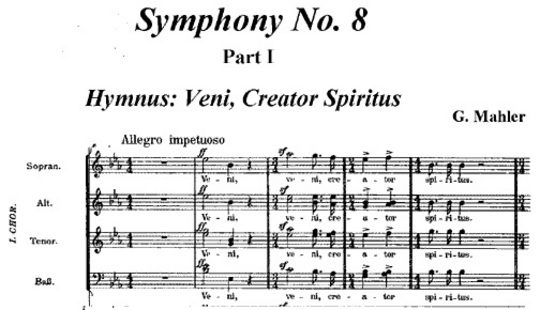
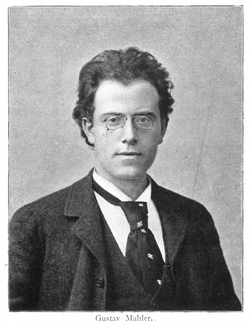
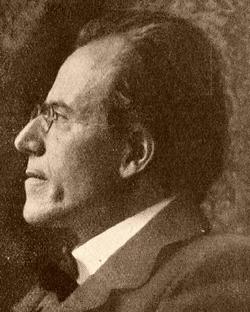
It’s fascinating to realize, then, that Mahler not only didn’t really seem to care all that much about the hymn’s tradition when he went about preparing to write his mammoth Eighth Symphony, he initially wasn’t even planning to set the text for chorus, he was simply going to use it as inspiration for a purely orchestral piece. It’s even more fascinating to realize that in the summer of 1906, when Mahler was ruminating over what would eventually become the Eighth, scholarship about the Dark Ages and “Veni Creator Spiritus” was considerably less, well, enlightened than it is in current times, and whatever background information Mahler might have gleaned about the history and tradition of the hymn might have been limited, at least compared to information that would be readily available today. But somehow, somewhere, Mahler must have come up with the rather brilliant idea that there was a natural evolution from “Veni Creator Spiritus,” one of the iconic “treatises” of the Dark Ages, to the final scene from Goethe’s Faust Part II, which Mahler saw as a philosophical exegesis of some of the ideas of the “real” Enlightenment, as well as a presentiment of what would later be labeled the Romantic Era. When infusing such a hyperintellectual meta-meaning into these innately religious texts, it’s little wonder that Mahler needed to invent one of his hugest sound canvases ever, certainly a major achievement, considering the already vast aural worlds of (just to give two examples) the Second and Sixth Symphonies.
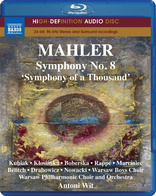
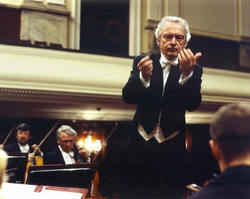
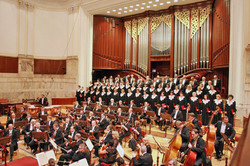
Mahler fans have had a banner year of high definition audio (and video) releases of the composer’s oeuvre and this audio-only disc offers yet another boisterous accounting of the Symphony No. 8, only slightly hyperbolically known as the “Symphony of a Thousand.” Antoni Wit is a well regarded Polish conductor, and while his interpretation of this gargantuan Mahler piece may not supplant the Chailly rendering that also came out over the past year, it is certainly a worthy contender in its own right. (Oddly, the Abbado Mahler cycle has yet to give us an Eighth, something that should be spectacular if and when it’s released, considering the orchestral brilliance of Abbado’s hand picked Lucerne Festival Orchestra). Bolstered by some fine work from the Warsaw Philharmonic Choir and Orchestra, this Eighth Symphony also features a coterie of Polish singers whose names may not be immediately familiar to a lot of listeners, but who turn in professional, if not overly showy, performances. Probably the best know in the bunch is the American (often misattributed as Hungarian) tenor Timothy Bentch. The other soloists include sopranos Barbara Kubiak, Izabela Klosínska, and Marta Boberska; altos Jadwiga Rappé and Ewa Marciniec; baritone Wojciech Drabowicz; and bass Piotr Nowacki.
Wit is a fairly conservative interpreter here, not really pushing the envelope in any major way, but delivering a solid and well articulated performance that is especially moving in the Symphony’s quieter movements. The singing here is excellent, if not overly florid, and the playing is often incredibly vigorous and precise, but it’s in the lyrical sequences that Wit really seems to find his best moments, and those moments are aided and abetted by some lovely soli by Mahler’s always evocative use of clarinet, oboe and flute. The choral opening here is incredibly majestic and well measured, though the Finale seems just a bit too reserved, at least for my own personal taste. I prefer those final moments of the Eighth to shatter any verbal capacity of my brain and to pierce into the inner most depths of my soul. Wit seems a bit removed from the proceedings here, delivering bombast but a certain lack of revelatory reverence.
Mahler: Symphony No. 8 Blu-ray Movie, Video Quality
As with all of these Naxos "audio only" releases, there is an on screen menu allowing those who want to to actually see what the track listings are and to make their choices that way. There's no actual need to do that, however; track choices can be made via the remote as with any regular CD. Also, toggling between the two audio options is possible either by using the Audio button on the remote, or the colored buttons (red for surround, green for stereo). The video component on this release does have the added benefit of listing which parts/sections are singing in the choral movements. Finally, there are subtitles available in Latin, German and English for the texts which accompany the singing on screen.
Mahler: Symphony No. 8 Blu-ray Movie, Audio Quality
Naxos has had some issues with these Wit upgrades, despite two healthy 96kHz 24-bit renderings of the score in DTS-HD Master Audio 5.0 and LPCM 2.0. While the 5.1 option streams at an impressive average of around 8.0mbps, with frequent surges pushing the 9.0 level, there's still the same murkiness in this recording that plagued the two Chopin Piano Concerto releases, which I reviewed here and here. I actually may have erred a bit on the side of forgiveness with those two reviews, or perhaps it's simply the difference in Chopin's relatively lighter orchestral approach, but most listeners are probably going to notice right off the bat the muddy, generally muddled sound that plagues at the very least the large choral elements of this humongous piece. I'm beginning to think this must either be the result of the ambient hall acoustics where these Warsaw Philharmonic recordings are made, or perhaps partly that and the engineering, specifically the microphone placement. A lot of this recording seems overly ambient, with a lot of reverb, which becomes problematic especially in the antiphonal sections, where great washes of sound don't decay before the next huge wave approaches. The biggest sonic drawback here is the curiously clipped quality of higher registers, which makes the choral sections (not to mention the Soprano solos) sound oddly muffled, as if the singing is emanating from underneath a fluffy down comforter. On the other hand, the orchestral passages here sound decidedly more clear and precise, especially with regard to the brass, which features both a great warmth and bombast. The 5.0 mix also is invitingly immersive, especially with regard to the antiphonal sections, which are clearly placed oppositionally and help to surround the listener with nicely discrete "call and echo" effects.
Mahler: Symphony No. 8 Blu-ray Movie, Special Features and Extras
No supplements per se are offered on the Blu-ray disc. The insert booklet has some background information on the Symphony and Mahler, as well as in-depth biographies of Wit and the featured soloists.
Mahler: Symphony No. 8 Blu-ray Movie, Overall Score and Recommendation
As odd as it might sound, having a visual component to the Eighth Symphony of Mahler can actually be a bit of a distraction. This "audio only" offering (with the video caveats noted above) at least presents the score without any other component attempting to intrude on a pure listening experience. Unfortunately there's still the quite odd phenomenon of somewhat murky sound on this high definition audio disc, which is kind of a head scratcher considering its 96/24 rendering. I personally didn't play around with equalizing in any major way, and perhaps boosting the treble on your surround system (if you have that capability) can help overcome some of the muffled sound that this recording presents. Generally, though, this is a solid, if not especially overwhelmingly inspired, performance that offers excellent playing and singing, and it has the added benefit of not costing an arm and a leg. While there are other Mahler Eights that are no doubt more brilliant (both sonically and interpretation wise) than this one, for budget conscious Mahler lovers, this might be a decent enough place holder for the time being until you win the lottery.