Mahler: Symphony No. 2 Blu-ray Movie
HomeMahler: Symphony No. 2 Blu-ray Movie 
EUROARTS | 2003 | 86 min | Not rated | Sep 28, 2010
Price
List price:Listed on Amazon marketplace

Movie rating
7.7 | / 10 |
Blu-ray rating
| Users |  | 3.2 |
| Reviewer |  | 4.0 |
| Overall | | 3.3 |
Overview
Mahler: Symphony No. 2 (2003)
Claudio Abbado has realised a dream with the Lucerne Festival Orchestra. The orchestra, an exclusive ensemble of handpicked musicial stars, opens up new dimensions in the interpretation of symphonic music with exceptional soloists. The line-up includes such luminaries as Ilya Gringolts and Sabine and Wolfgang Meyer, alongside members of the world's great orchestras. The cellos section alone boasts Natalia Gutman, Clemens Hagen and Valentin Erben.
Starring: Eteri Gvazava, Lucerne Festival Orchestra, Orfeón Donostiarra, Anna Larsson| Music | 100% |
Specifications
Video
Video codec: MPEG-4 AVC
Video resolution: 1080i
Aspect ratio: 1.78:1
Original aspect ratio: 1.78:1
Audio
Music: DTS-HD Master Audio 5.1
Music: LPCM 2.0
Subtitles
English, French, Spanish, German, Italian
Discs
25GB Blu-ray Disc
Single disc (1 BD)
Playback
Region A (B, C untested)
Review
Rating summary
| Movie | | 4.0 |
| Video | | 3.5 |
| Audio |  | 3.0 |
| Extras |  | 0.0 |
| Overall | | 4.0 |
Mahler: Symphony No. 2 Blu-ray Movie Review
Mahler's gargantuan "Resurrection" Symphony rises again.
Reviewed by Jeffrey Kauffman September 25, 2010Did Gustav Mahler feel odd, perhaps even guilty, espousing such a Christian concept as life after death in his gargantuan Second Symphony, subtitled “Resurrection”? Mahler was after all born a Jew and converted to Christianity in order to preserve his career. Though never an overly observant Jew, Mahler’s music is rife with cantorial tropes and has that peculiarly Jewish simultaneity of the comic and the tragic. Mahler’s huge orchestral canvasses segue seemingly effortlessly from the grandiose to the picayune, often within the breadth of a single measure. Mahler was perhaps the most death obsessed composer of his era, if not all time, with piece after piece questioning, either figuratively or literally, the individual’s demise. Though Otto Klemperer averred in his memoirs that Mahler was “irreligious,” the composer’s oeuvre certainly suggests otherwise. Piece after piece tackles huge philosophical, spiritual and even religious (in the most formalistic sense) questions, seeking answers where perhaps none are to be found. When Mahler converted to Catholicism in 1897, a prerequisite (as incredible as it may seem to us now) to obtain the post of Music Director of the Vienna Court Opera, it may seem in retrospect to be the crowning moment in a personal dialectic which had been brewing in Mahler’s psyche for years, and which found its most eloquent voice in the Second Symphony.
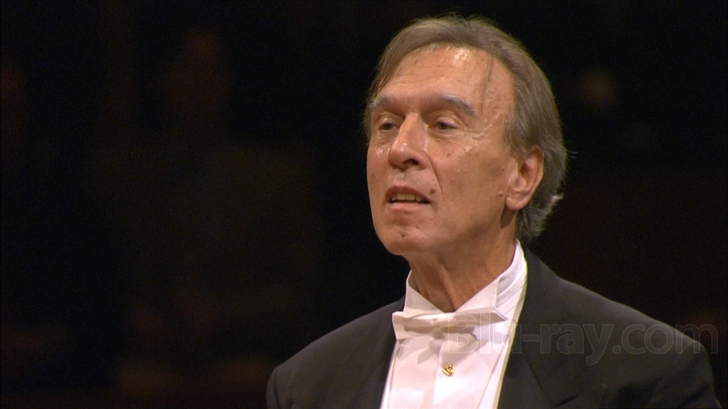
Claudio Abbado
Death obsession is part and parcel of the Resurrection Symphony not just in its final form, but also in its creative genesis. The thrilling and desperate tremolo which starts the massive first movement, dissolving into a playfully minor theme (again the juxtaposition of the comic and tragic) had its compositional roots in an 1888 single movement symphonic piece Mahler titles Totenfeier (Death Celebration). As has been famously recounted, when Mahler came under the influence of Hans von Bülow a few years later and played a piano reduction of Totenfeier for the man who would ultimately become his father-in-law, von Bülow responded by remarking that Mahler’s attempt made Tristan and Isolde sound like a Haydn symphony. In fact it was von Bülow’s death and funeral which got Mahler past his writer’s block, introducing the composer to the text which would provide the inspiration for the choral finale of the Resurrection, the aptly named Die Auferstehung (“resurrection” in German) by the poet Friedrich Gottlieb Klopstock.
This humongous five movement piece is a study in brilliantly conceived architecture, almost impossibly large and impossible to fully comprehend at the first (or even the tenth) listening. Conductor Claudio Abbado has long been linked to this piece, having made his debut at the Salzburg Festival with it some 40 years ago, and that long association with it means he conducts here sans score, able to devote his full attention to pacing and especially dynamics. From that tense opening, to the charming folk melody of the second movement’s Ländler, to the lightly lilting, if again minor-keyed, scherzo, Abbado brings out virtually every nuance of Mahler’s iconoclastic writing. But it’s in the final two sung movements that both the questioning of Mahler’s intrinsic questing soul, as well as some at least seeming answers, are finally offered up to the listener in an astoundnig array of glory and poignancy.
Anna Larsson appears almost out of nowhere to sing the Symphony’s achingly beautiful fourth movement, Ulricht (“Primeval Light”), a poem from Das Knaben Wunderhorn which provided Mahler with plentiful inspiration throughout his career. Here Larsson quietly seeks refuge as she sings:
O red rose!
Man lies in greatest need!
Man lies in greatest pain!
How I would rather be in heaven.
There came I upon a broad path
when came a little angel and wanted to turn me away.
Ah no! I would not let myself be turned away!
I am from God and shall return to God!
The loving God will grant me a little light,
Which will light me into that eternal blissful life!
And then almost as suddenly, the hushed tones of the full chorus invite us into one of the longest, and most spiritually astute, final movements in the entire symphonic repertoire. Maher builds his forces slowly here, like a master mason adding layer upon layer until finally the gates of heaven themselves seem to open at the slow, steady march toward the final, overwhelming cadence in Eb, replete with clanging bells and a full-stopped organ. Abbado pulls out all the stops himself, lending an absolute fury to these final few moments that is nothing less than revelatory.
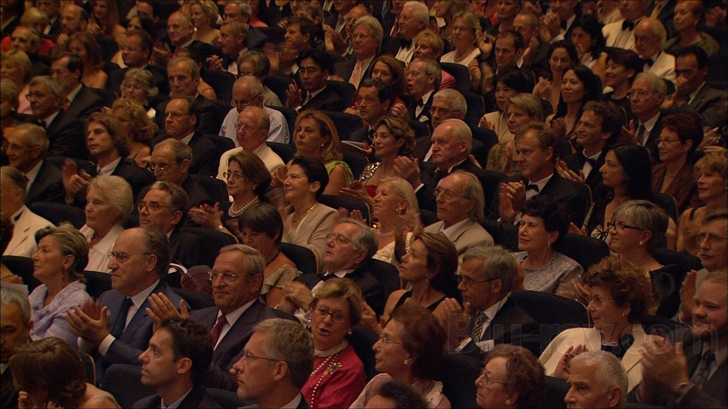
The Lucerne Festival Orchestra is made up of players from the continent’s finest ensembles, hand chosen by Abbado, and that level of expertise shines through in this performance. Each individual player seems invested with the importance of this score, often almost dancing in their chairs as they play through Mahler’s magnificently varied movements. It’s quite interesting to note the post-applause collegiality of this troupe. I don’t think I’ve ever seen so many hugs and kisses shared between a symphony orchestra as is on display here as the audience slowly begins to file out of the impressively sleek and modern Lucerne Culture and Convention Center. That level of camaraderie is needed for a piece this gargantuan, and luckily, it’s completely apparent and inherent in this impressive performance.
Mahler: Symphony No. 2 Blu-ray Movie, Video Quality
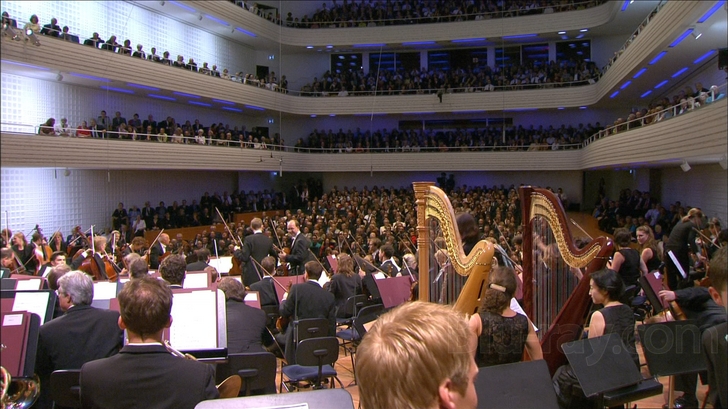
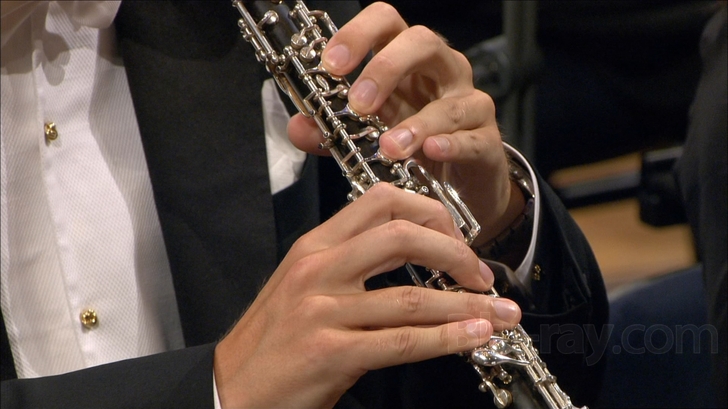
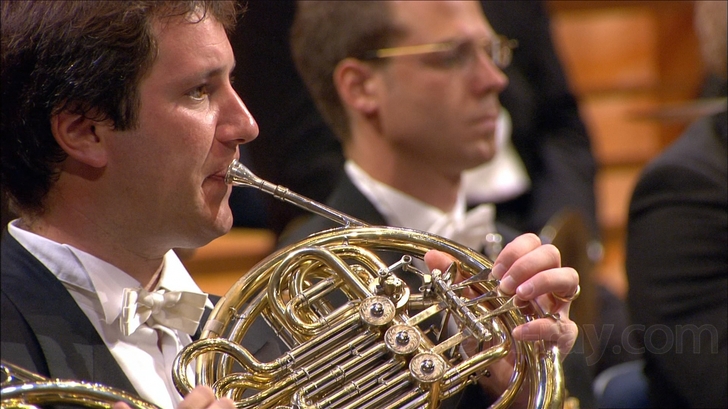
Euroarts provides a somewhat softer than usual MPEG-2 encoded 1080i image (in 1.78:1) on this concert taped in 2003. That said, colors are lifelike and well saturated and detail is very good to excellent, especially in the many close-ups. Best of all, there's little to no interlacing artifacting to disturb the image, all the more impressive in that the Lucerne Cultural and Convention Center is filled with parallel lines in the architecture which could have devolved into aliasing. Coverage of the orchestra is excellent here, with fine attention paid to various soli, and the detail in the midrange and close-up shots of the players and Abbado is often superb, to the point where fingerprints on instruments can be seen. The dresses of Larsson and soprano soloist Eteri Gvazava, one red and one peach, also pop very nicely here, as do the choir's white robes. But there isn't the overall precision that we've come to expect from these HD concert videos, perhaps due to the age of the concert (2003) and the MPEG-2 compression codec.
Mahler: Symphony No. 2 Blu-ray Movie, Audio Quality
I was frankly a little shocked to read one of the user reviews of this title and went back to double check my Blu-ray. I'm not sure if Euroarts went back to the drawing board for this US release, but all I can say is that the DTS-HD Master Audio 5.1 mix on my disc does indeed fill the surrounds, especially the rear channels. What I do notice is a certain lack of discrete channel separation, which perhaps argues toward the problem discussed in our user's review. I have also never heard the SD-DVD's 5.1 mix, and so obviously cannot offer thoughts on the comparison. That said, there is clear separation at times here, notably the winds versus the strings in the opening movement. Anna Larsson is also clearly only in the front and rear channels in her solo, with the side channels supporting some of the orchestral elements. I also had no issue with fidelity, at least as it was reproduced on my Onkyo 7.1 system. While dynamic range is a bit problematic, I don't think it rises to the "panic" level, at least not in my considered opinion. The quiet moments are precise and extremely spacious (especially the opening of the choral finale), while the many tuttis and huge crescendi bristle with sonic force and some excellent low end. If there is abundant limiting, it ultimately doesn't signficantly destroy the many full force moments of this symphony. There is a certain lack of hall ambience in this 5.1 mix, which again may argue toward a repurposed stereo mix. The LPCM 2.0 stereo fold down is also quite good from a fidelity standpoint, but the narrower soundfield does not do justice to the contrapuntal majesty of Mahler's writing here. I'll err on the side of caution and give this release a 3.0 rating until we hear from other US users; I'm actually very interested to see if there is perhaps a difference between the US and UK releases. My personal opinion is the excellence of the performance helps to alleviate at least some of the ostensible problems in the recording itself.
Mahler: Symphony No. 2 Blu-ray Movie, Special Features and Extras
There are no supplements on the Blu-ray (aside from trailers). The insert booklet's very brief essay deals more with Abbado than with Mahler.
Mahler: Symphony No. 2 Blu-ray Movie, Overall Score and Recommendation
This relatively early piece of Mahler's symphonic output harkens back to the playfully morose feeling of the First Symphony, while pointing all the way forward to the divine sung finale of the Ninth. This is a remarkable performance by Abbado and the Lucerne Festival Orchestra which I personally feel outweighs any recording issues. Recommended.