Mahler: Symphony Nº 2 Blu-ray Movie
HomeMahler: Symphony Nº 2 Blu-ray Movie 
Accentus | 2011 | 96 min | Not rated | Sep 27, 2011

Movie rating
7.1 | / 10 |
Blu-ray rating
| Users |  | 5.0 |
| Reviewer |  | 4.5 |
| Overall | | 4.5 |
Overview
Mahler: Symphony Nº 2 (2011)
Starring: Riccardo Chailly| Music | 100% |
Specifications
Video
Video codec: MPEG-4 AVC
Video resolution: 1080p
Aspect ratio: 1.78:1
Original aspect ratio: 1.78:1
Audio
German: DTS-HD Master Audio 5.1
German: LPCM 2.0
Subtitles
English, French, German
Discs
50GB Blu-ray Disc
Single disc (1 BD)
Playback
Region A (B, C untested)
Review
Rating summary
| Movie | | 4.5 |
| Video | | 4.5 |
| Audio | | 5.0 |
| Extras |  | 0.0 |
| Overall | | 4.5 |
Mahler: Symphony Nº 2 Blu-ray Movie Review
Symphony of 999.
Reviewed by Jeffrey Kauffman October 18, 2011There’s obviously no accounting for audience reaction or critical taste, as Gustav Mahler experienced throughout his composing life. Looking back from our vantage point now well into the 21st century, Mahler’s First Symphony, rolled out in two different versions between 1889 and 1893, is in many ways his most traditional symphonic piece, and also one of his most accessible (some might argue for the Fourth, and there are certainly compelling reasons to include that Symphony in the rather short list of Mahler compositions easily gleaned on the first listen). But critics and audiences didn’t quite know what to make of this (to them, anyway) bizarre hodgepodge of ideas and emotional content. One moment, grandiloquent, clearly following in the late 19th century symphonic-orchestral tradition of Wagner and Bruckner, the next weirdly (albeit charmingly) mordantly humorous, Mahler’s First fell largely on deaf ears. A mere two years after even the revised version of the First wasn’t exactly met with universal accolades, Mahler premiered his Second Symphony, a grandiose piece that ranks with his Eighth as one of the largest scale (no pun intended) orchestral pieces of his lifetime. Against considerable odds, the Second, while certainly not unanimously admired, was greeted with considerable critical rapture (again, no pun intended, considering the symphony’s soubriquet of “Resurrection”). Something about this overtly religiously themed piece spoke directly to the hearts of the public and professional musicians alike, and it remained one of the more frequently performed (relatively speaking) of Mahler’s symphonies during his lifetime. Mahler of course seemed almost passé shortly after his death with the rise of serialism and even more strident compositional techniques, and it wasn’t until the mid-20th century, with the efforts of such stalwarts as Bruno Walter and Walter’s protégé Leonard Bernstein, that Mahler returned to concert halls with a vengeance. The Second, despite its humongous structure and the forces required to bring it off, has routinely been one of the most popular of Mahler’s works and continues to be one of the most recorded in the composer’s oeuvre.
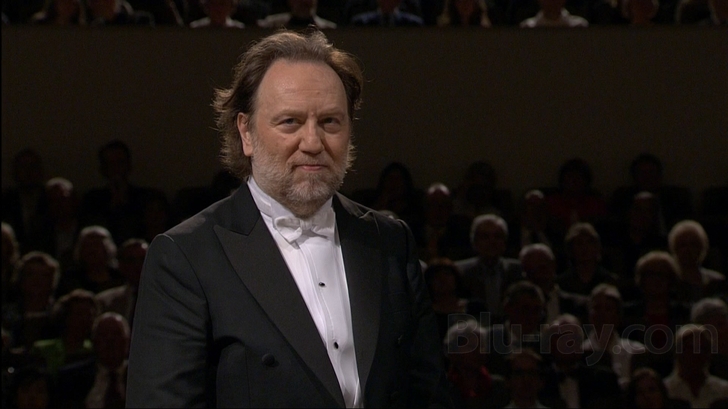
There’s a very good reason that Riccardo Chailly chose Mahler’s Eighth and Second Symphonies to bookend the first ever Mahler Festival in Leipzig, which Chailly himself instituted. The two behemoths of Mahler’s symphonic output are both so huge and overwhelming that they virtually define “show stopper,” and Chailly indeed pulls out all of the stops in this Second as he did in the Eighth, which I recently reviewed. It’s kind of interesting, if perhaps ultimately irrelevant, that we’ve had two Italian conductors step forward with bracing accounts of the Mahler symphonic oeuvre over the past year. Claudio Abbado did a nearly complete Mahler Symphonic cycle, lacking only the Eighth and Ninth (and the unfinished tenth, if you’re prone to include that). The fact that Abbado didn’t include the Eighth might have been an immediate selling point for Chailly’s Eighth, and so some may wonder whether this new Second should even be considered, especially when Abbado’s interpretations and the performances of his hand picked Lucerne Festival Orchestra were so highly praised (including here at Blu-ray.com).
The short answer is, this is a version that stands capably along not just Abbado’s, but any recent Second in memory. Chailly is in some ways the much more vigorous conductor, at least compared to Abbado’s somewhat more measured approach, and that vigor is perfectly in tune with Mahler’s hyperbolic sound world, which is so on display throughout this Symphony. But Chailly, perhaps surprisingly, also extracts an exceedingly lyrical performance from the Leipzig Gewaundhaus Orchestra in this outing, especially in the glorious second movement, certainly one of the most unexpectedly Haydnesque sequences in the composer’s output.
It’s fascinating to make a different contrast than the one between Abbado and Chailly, namely that between the emotional tenor of the Second and the Eighth. While the Eighth reaches out and virtually shakes the listener into compliance with that opening organ blast and the triumphant “Veni,” the Second begins ostensibly more quietly, with a fantastic string tremolo, but soon all Heaven breaks loose, albeit one that seems weirdly related to Mahler’s piquant minor key Bruder Martin from his first. Starting with the second movement, though, we move into a generally more placid environment where Mahler’s inquiring spirit shines through in one glorious moment after another.
Especially noteworthy (no pun intended) is the incredibly diverse and gorgeous final movement, which features everything from the burnished hushed tones of the huge chorus to an orchestral sound that might be likened to Mahler himself shaking the gates of heaven to demand entrance. Chailly's mastery (as well as the Gewandhaus-Orchester's) of these two dynamic extremes is a marvel to behold and stands as one of the aural highlights of this outstanding performance.
Of course this being Mahler, we don’t go gentle into that good night, and over and over again the composer upends our expectations with discordant moments of bombast and even humor, with a somewhat circuitous and unusual structure that defies easy analysis but like so much of the composer’s work, speaks directly to the heart. The opening lines of the text Mahler sets in his mammoth fifth movement are a fitting epitaph for the entire Second Symphony:
Rise again, yes, rise again
Will you my dust
After a brief rest.
Mahler: Symphony Nº 2 Blu-ray Movie, Video Quality
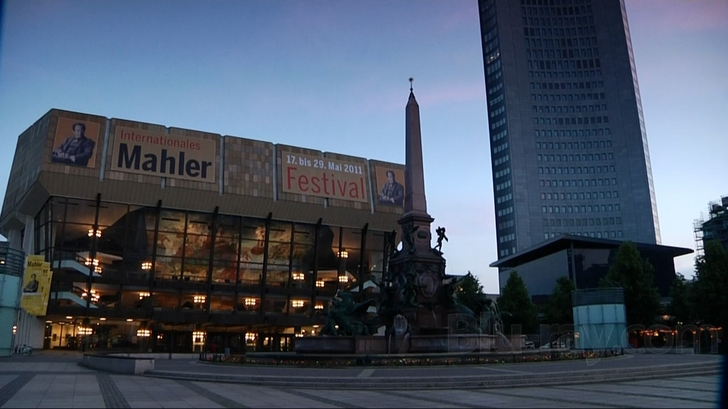
Mahler: Symphony No. 2 is presented on Blu-ray courtesy of Accentus with an AVC encoded 1080i transfer in 1.78:1. As with its sister release of Mahler's Eighth, part of the same Leipzig Mahler Festival in 2011, this release sports brilliant clarity and sharpness, with well saturated and lifelike colors and excellent contrast. The interlaced presentation offers few if any egregious artifacts other than perhaps some extremely minor combing when Chailly waves his baton quickly. Camera coverage in this outing is absolutely superb, and close-ups of many of the orchestral soloists are excellent with some marvelous fine detail. The chorus here is clad more in silvery gray than the omnipresent black of the Eighth and so the Eighth's minor issues of crush do not come into play in this high definition presentation.
Mahler: Symphony Nº 2 Blu-ray Movie, Audio Quality
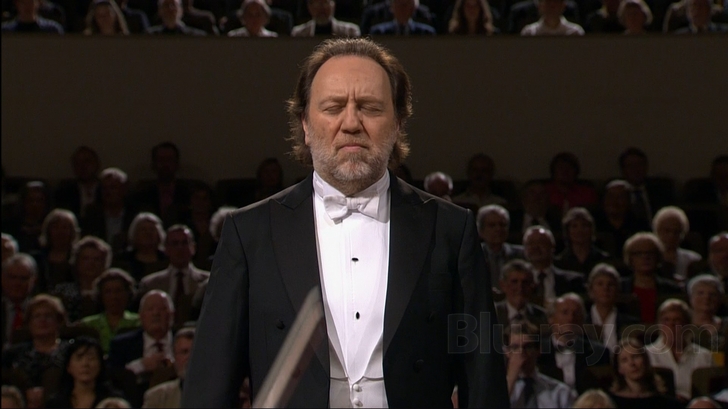
Mahler: Symphony No. 2 features two sterling lossless tracks, a DTS-HD Master Audio 5.1 surround mix and an uncompressed LPCM 2.0 stereo fold down. As with Accentus' recent sibling release of Mahler's Eighth on Blu-ray, both of these tracks are incredibly well rendered, with astoundingly brilliant fidelity and superb dynamic range. A great example is about 3 minutes and 30 seconds into the first movement, when we get our first simultaneous clap of the cymbals and tympani. The lows and highs soar together effortlessly with absolutely no distortion, rumbling or brittleness. Again and again, as Chailly coaxes everything from the hushed whispers of the chorus to the bombastic tutti of of the orchestra, the DTS track is there every step of the way, and the LCPM track, while not as spacious, is virtually as fine. The strings sound especially lustrous in this recording, but both the brass and reeds also sound magnificent and are artfully presented on the DTS track. Both soloists also are in fantastic voice, and the DTS track does an especially fine job of providing clear separation between them and the chorus, allowing the listener to really enter into the music.
Mahler: Symphony Nº 2 Blu-ray Movie, Special Features and Extras
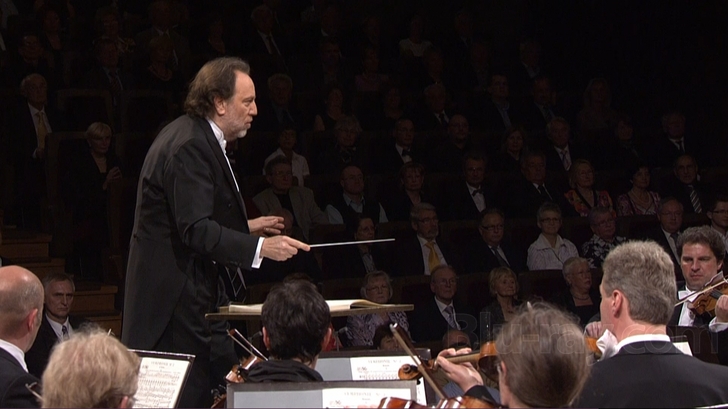
As with Accentus' release of the Eighth, there are no supplements per se on the Blu-ray disc (other than trailers for other Accentus releases, which I never include in an official score). This release, like the Eighth, sports an original painting illustrating the trifold cover by Leipzig artist Neo Rauch.
Mahler: Symphony Nº 2 Blu-ray Movie, Overall Score and Recommendation
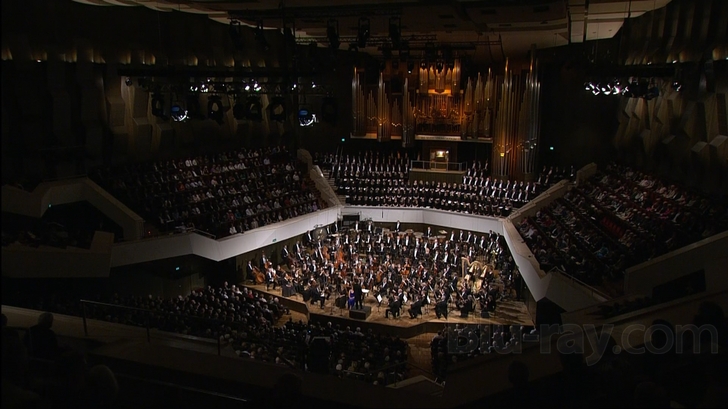
With both the Abbado boxed set comprised of Mahler 1-7, and now the two Chailly outings with the Leipzig Gewaundhaus- Orchester arriving on Blu-ray, Mahlerians have had a lot to celebrate over the past year. Abbado takes a somewhat more measured approach with the Second than does Chailly, but, really, both interpretations and performances are superb and for those who can afford them, both versions offer manifold pleasures. The Chailly performance is notable for its athletic energy and the languid singing of soloists Christiane Oelze and Sarah Connolly. The audio on this release is absolutely incredible, and the video isn't far behind. Highly recommended.
Other editions
Mahler: Symphonie No. 2 in C minor 'Resurrection': Other Editions

Mahler: Symphonie No. 2 in C minor 'Resurrection'
Music Experience in 3-Dimensional Sound Reality
2011