Magnificent Italia Blu-ray Movie
HomeMagnificent Italia Blu-ray Movie 
Image Entertainment | 2006 | 652 min | Not rated | Feb 08, 2011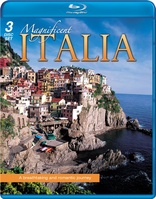
Price
List price:Listed on Amazon marketplace

Movie rating
7.4 | / 10 |
Blu-ray rating
| Users |  | 0.0 |
| Reviewer |  | 3.0 |
| Overall | | 3.0 |
Overview
Magnificent Italia (2006)
The Italian state is a comparatively youthful entity—but the lands it encompasses are ancient indeed. Celebrated for its natural beauty and cultural riches, every inch of the peninsula is worth exploring, and this 12-part series does exactly that—from the Alps to the Adriatic. Shot in glorious High Definition, and particularly acclaimed for its aerial cinematography, MAGNIFICENT ITALIA is the next best thing to being there. Whether you’re planning a new trip, nostalgic for an old one or simply in the mood for a mental scene change, this breathtaking travelogue contains hours of sun kissed food for thought. Episodes: Basilicata, Toscana, Friuli Venezia Giulia, Sicilia, Marche, Puglia, Campania, Valle D’Aosta, Lazio, Liguria, Umbria, Trentino
Narrator: Daniel Richards| Documentary | 100% |
| Other | 26% |
Specifications
Video
Video codec: MPEG-4 AVC
Video resolution: 1080i
Aspect ratio: 1.78:1
Original aspect ratio: 1.78:1
Audio
English: Dolby Digital 2.0
Subtitles
None
Discs
Blu-ray Disc
Three-disc set (3 BDs)
Playback
Region A, B (C untested)
Review
Rating summary
| Movie |  | 3.5 |
| Video | | 3.5 |
| Audio |  | 2.5 |
| Extras | | 0.0 |
| Overall | | 3.0 |
Magnificent Italia Blu-ray Movie Review
Reviewed by Jeffrey Kauffman May 17, 2017Italy, perhaps more than some other European countries, is a nation of two different tourist experiences. Many folks, especially “first timers”, tend to travel only to urban centers like Rome, Venice, Florence and perhaps even Pisa. But those who have taken the time to explore some of the lesser known areas of a rather diverse nation (in terms of both culture and topography) know that Italy is full of wonders once you get off the beaten track. For those who are understandably overwhelmed with the sheer volume of choices available when considering traveling to Italy, this enjoyable if kind of surface deep three disc set will at least whet the appetite, if not provide the full nourishment of an actual visit. Produced in part by the Touring Club Italiano, this set focuses on a number of out of the way locaitons, including many villages that even devoted Italophiles may not have heard of.

Each of the discs in this set offers sections devoted to various regions, with two episodes per region. I’ve therefore divided this review into those regional divisions.
Disc One
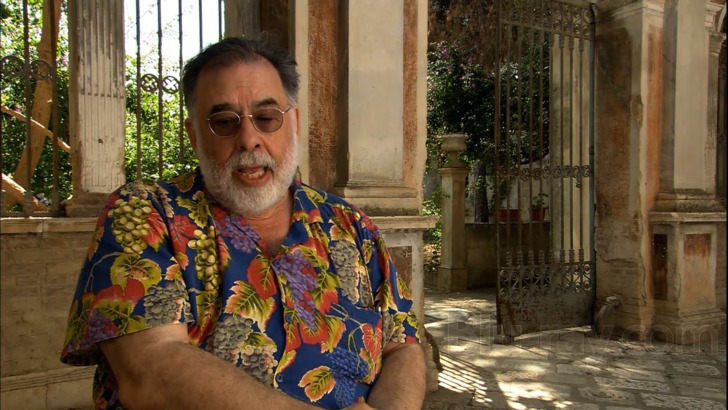
Basilicata. This southern area of Italy is first up on the tour, and it provides ample opportunity for what is this series’ stock in trade— namely gorgeous flyovers of some ancient Italian villages. Basilicata is full of old villages built on hilltops, typically hunkered around a fortress or castle. Kind of interestingly, the first episode doesn’t even get down inside any buildings until probably two thirds of the way through, instead offering a number of sumptuous aerial shots. There’s also a bit of star power in this first outing, with Francis Ford Coppola, whose family hails from a little town in Basilicata, on hand to offer his hopes that the region can enjoy more prosperity without its history being badly impacted.
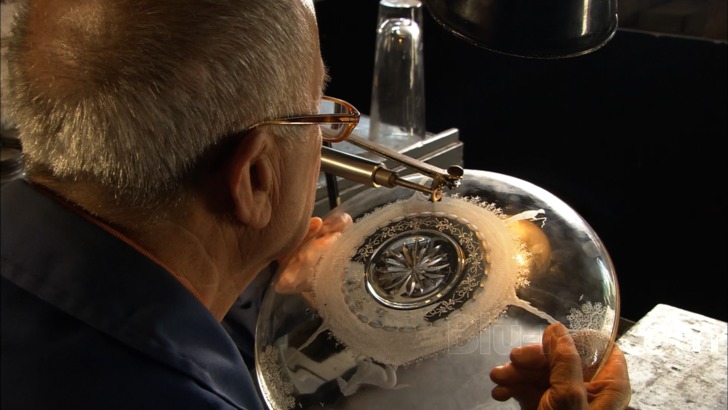
Toscana. Fans of Under the Tuscan Sun will no doubt love the tour through this region, which includes everything from some isolated islands to this series’ first flirtation with an urban center, in this particular case, Florence. There are some cool historical tidbits scattered throughout the two episodes, including a look at a medieval village whose walls and towers are still much as they were when they were built hundreds of years ago since the town never came under attack. There’s a cool vignette showing the art of glass engravers, as well as some visits to some of Florence’s more unusual museums.
Friuli Venezia Giulia. One of Magnificent Italy’s less successful aspects is that it never really properly defines how some of the regions it covers differ in terms of their political structure, and that’s probably the case with this trifecta, an autonomous area that’s tucked in the very top northeasternmost section of the country. The latitude of this area makes it one of the better regions for wine production, and that is shown in a couple of different sequences. There has evidently been some historical conflict with neighboring Slovenia, and one vignette documents the attempts of international musicians to bridge any divides and bring people together to sing (in harmony, of course). There are some interesting references to Napoleon’s incursions into the region, and a kind of fun cooking lesson given at one point. What might be thought of as Italy’s version of the Blue Angels is also featured.
Sicilia. I was frankly a little confused at times with this set of episodes, since it ventures outside of Sicily itself, at least tangentially, visiting some other islands. Due to the location of the islands, there’s a more marked Greek influence in some of the architecture on display, and in fact there are some gorgeous scenes of old temples, including one whose lack of a roof is explained in a perhaps unexpected way. The Greek influence extends to legend, with one island supposedly having been home to Ulysses at one point during his perilous travels. There’s really quite a variety of subject touched on, however briefly, including Phoenician boat building and the perhaps surprising prevalence of windmills.
Disc Two
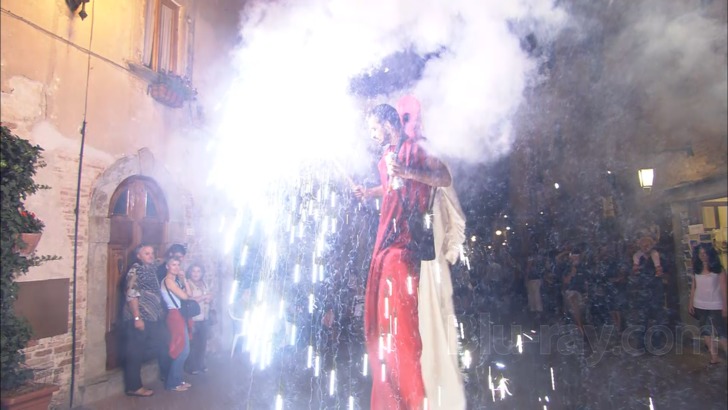
Umbria. This landlocked area is the only region of Italy without a coastline or border with another country, but it has a number of longstanding craft traditions which are covered in both episodes, including (in what is a bit of a recurring motif) ceramics wares. St. Francis’ history plays into some of the vignettes, and one especially amusing sequence features what might be thought of as a kind of combo horse race jousting match. One other fascinating tradition, one which is almost unbelievable to see (especially from the air), is a weird race of sorts where teams carry huge wooden pillar like structures that hold statues. That in an of itself is weird enough, but the surrounding throngs of people, which seem to number in the tens of thousands, make this as much of an obstacle course as it is a race.
Trentino. There’s quite a bit of talk of mountains in these episodes, including the Dolomites, which makes it all the more interesting that this is one of the few regions depicted in Magnificent Italy that actually gets to some ground level information at an early stage, taking a tour through a really cool mountaintop shrine that has five chapels built on top of each other. A brief look at river rafting gets into some of the mineral deposits of the region, which in turn have led to a thriving industry in wrought iron. More mountain vignettes return, including a neat look at free climbing (with what appears to be archival video), which then leads to a pretty rugged looking mountain bike race, one that puts the emphasis on the mountain. An all year ski jump training facility is profiled, followed by a rather interesting look at violin makers.
Marche. This region kind of plays like a greatest hits compilation of some elements that have been seen before in previous regions’ episodes. While the expected flyovers of medieval towns and villages are once again on display in abundance, this set of episodes all shows some sheer cliff climbing experts (right next to the Adriatic Sea, so at least they have water to fall into). One of the more interesting vignettes focuses on the seaport of Ancona, a city steeped in history and a long tradition of ship building, something that has been updated in the 21st century to a number of evidently famous luxury yacht builders. In what some curmudgeons may consider a massive step down from the violin makers of Trentino, Marche is evidently home to some of the longest standing accordion making traditions in the world, and there’s some frankly cool footage showing what goes into crafting these often maligned instruments. Lovers of the outré Italian composer Pergolesi will also enjoy a visit to a theater named in his honor.
Puglia. This region is what might be thought of as the “heel” of Italy’s boot, and as such it features a lot of beaches on the Adriatic coast. Quite a bit of the first episode deals with various fishing traditions, and some time is spent with fishermen who have devoted their whole lives to the “catch”. An oven that dates way back to the 1400s is shown in a bread baking sequence, one where a baker says they’ve invented a bread that actually tastes better some ten days after it’s been baked (one assumes it’s a hard crust). Verdant farming areas support such diverse crops as olives, almonds and carob. There’s some really gorgeous overhead photography of some of the islands in this region which are surrounded by truly incredible looking aquamarine waters.
Disc Three
Campania. If Puglia might be considered the “heel” of Italy’s boot, Campania might be thought of as the place where the laces are. This region is home to a number of iconic sites, including Naples, Vesuvius and (of course) Pompeii. While all of those locales are visited and feature quite a bit of information, some of these episodes’ most charming content comes from some frankly tangential tidbits, like a look at some of the islands, including Ischia, and a rather sweet reminiscence of noted (sorry) British composer William Walton by his (Italian) widow. Walton lived for much of his life in Campania. Music also plays a part in a nice vignette focusing on the Naples Conservatory, as well as a look at luthiers manufacturing mandolins.
Valle d’Aosta. Once again Italy’s impressive mountain ranges are part of this region’s stories, and there are once again sequences devoted to mountain guides, some of whom have attained heroic status in isolated hilltop villages. As with several previous regions, cheese making gets its due, but in one of the more unexpected “crafts” explored in Magnificent Italia, clogs (of all things) are shown being created. Some evocative footage of hot air ballooning and lace creation also makes this one of the more visually impressive sets of episodes in this collection.
Lazio. It’s perhaps indicative of this set of specials’ emphasis on out of the way (or at least lesser known) destinations that it isn’t until this set of episodes that the viewer gets to vicariously visit the “big Kahuna” of Italian tourist activity, Rome. While the first episode cheekily mentions “all roads lead to Rome” before heading off to Tivoli and environs, toward the end of the first episode Rome finally appears, in some stunning sunset footage that is really beautiful. All of the major sights are at least glanced over, and there’s some interesting footage of the Swiss Guard at work in Vatican Square.
Liguria. This final set of episodes is somewhat repetitive in terms of sights seen, which include cliffs and a number of towns built virtually vertically into the hillsides. There’s some interesting underwater footage, including a look at an old sculpture of Jesus which is now covered in barnacles, and, later, a visit to what might be thought of as an Italian counterpart to Sea World. A sweet look at a really precarious cliffside path joining together two ancient villages mentions that for untold years lovers have carved their names into the rocks the path passes under. A neat sequence showing loom work and beautiful creations in silk, velvet and damask is also beautiful. Huge regattas featuring gorgeous sailboats close out the tour.
Magnificent Italia Blu-ray Movie, Video Quality
Magnificent Italia is presented on Blu-ray courtesy of Image Entertainment's Madacy Entertainment line, with an AVC encoded 1080i transfer in 1.78:1. While a lot of this footage is undeniably gorgeous, there are recurrent if admittedly often pretty minor issues with anomalies like aliasing (the famous Italian tile roofs present regular problems in this regard), as well as other slight imperfections, including a couple of moments that look like digital cameras may have been malfunctioning (one especially weird moment in a church features a shot of a crucifix where the sides of the frame keep jumping inward, in what I'm hoping is not a supernatural occurrence). The palette is very natural looking throughout the presentation, with a huge gamut of tones that is frequently very inviting looking. Fine detail is often commendable in close-ups, but with some elements like shimmer at least slightly masking some aerial shots, the flyovers are a little less detailed at times.
Magnificent Italia Blu-ray Movie, Audio Quality

Magnificent Italia features a lossy Dolby Digital 2.0 mix which gets the job done okay, but which certainly doesn't provide much lower end. The features are all heavily narrated, and those voices come through loud and clear. Each episode also features a nonstop underscore, which offers a lot of synthesized strings and New Age-y piano music, all of which sounds clear if not especially forceful. While a lossless track would have been preferable, there's not much to the sound design here, and so a lossy track, while not optimal, suffices well enough for the undemanding.
Magnificent Italia Blu-ray Movie, Special Features and Extras
There is no supplemental material on any of the three discs in this set.
Magnificent Italia Blu-ray Movie, Overall Score and Recommendation
There is a ton of fantastic information scattered throughout Magnificent Italia, and my hunch is anyone considering a trip to Italy (especially those who have already hit the main sites and are looking for new adventures) will find something to admire in this collection. A lot of the episodes are surface deep, but there are enough ideas presented for prospective tourists that this could be a rather useful "tour guide" of sorts. Technical merits are a little spotty in both video and audio departments, but with that caveat noted, Magnificent Italia comes Recommended.
Similar titles
Similar titles you might also like
(Still not reliable for this title)

Best of Travel: Australia & New Zealand

Mysteries of the Unseen World 3D
2013

Rhino Rescue
2009

Flying Monsters 3D
2011

Kingdom of the Blue Whale
2009

Sir David Attenborough - Celebrating 60 Of Broadcasting [Limited Edition Box Set]
2012

Space Junk 3D
IMAX
2013

Arabia 3D
IMAX
2010

Flight of the Butterflies
IMAX
2012

NOVA: The Planets
2019

How the Universe Works
2010

Wonders of the Sea 4K
2017

Turtle Odyssey 4K
IMAX Enhanced
2018
Galápagos 3D
IMAX
1999

A Place at the Table
2012

Rescue 3D
IMAX
2011

Pandas 4K
2018

Ice Road Truckers: The Complete Season Three
2009

Magic of Flight
IMAX
1996

NOVA: The Fabric of the Cosmos
2011