Love Unto Death / Life Is a Bed of Roses Blu-ray Movie
HomeLove Unto Death / Life Is a Bed of Roses Blu-ray Movie 
Cohen Media Group | 1983-1984 | 2 Movies | 192 min | Not rated | Jul 21, 2015
Price
List price:Listed on Amazon marketplace

Movie rating
Movie has not been rated yetBlu-ray rating
| Users |  | 0.0 |
| Reviewer |  | 3.5 |
| Overall | | 3.5 |
Overview
Love Unto Death / Life Is a Bed of Roses (1983-1984)
| Foreign | 100% |
| Drama | 53% |
| Romance | 25% |
| Comedy | Insignificant |
Specifications
Video
Video codec: MPEG-4 AVC
Video resolution: 1080p
Aspect ratio: 2.35:1, 1.67:1
Original aspect ratio: 2.35:1
Audio
French: LPCM 2.0
Subtitles
English
Discs
25GB Blu-ray Disc
Two-disc set (2 BDs)
Playback
Region A (C untested)
Review
Rating summary
| Movie | | 3.5 |
| Video | | 3.5 |
| Audio |  | 4.0 |
| Extras |  | 1.5 |
| Overall | | 3.5 |
Love Unto Death / Life Is a Bed of Roses Blu-ray Movie Review
Reviewed by Jeffrey Kauffman July 20, 2015Film Theory and/or Film History classes at the college level often introduce students to Alain Resnais with his iconic films Hiroshima mon amour and Last Year at Marienbad, sometimes attempting to pigeonhole the noted auteur into the French New Wave, a categorization that doesn’t always “fit”. Even Resnais himself shied away from being lumped in with the likes of Jean-Luc Godard and François Truffaut, not because of any animus or other dislike, but merely because Resnais’ own deconstructionist tendencies were distinctly his own, ones not shaped by any so-called “movement.” As is mentioned in one of the commentaries included in the new Cohen Film Collection of two of Resnais’ 1980s outings (filmed back to back, in fact, and with many of the same cast members participating), Resnais had come up through the French film industry for decades before really making his mark with Hiroshima mon amour in 1959 (dramatically speaking, after Resnais made waves in 1955 for his chilling documentary Night and Fog), and that history made him as aware of tradition as any of the nouvelle vague theorists and (ultimately) filmmakers. Resnais, like the iconoclasts who would come to be identified with the French New Wave, definitely wanted to react to that tradition, but his techniques, while at times dovetailing into some of the New Wave’s strategies, could be markedly different and almost maddeningly metaphysical. Resnais can therefore be a very tough nut to crack at times, as evidenced by the commentary on Love Unto Death where regular Cohen commentators Wade Major and Andy Klein rather sheepishly state they have only ephemeral ideas about what various things “mean” in the film. Neither Love Unto Death nor Life is a Bed of Roses present some of the thornier issues and concepts that Hiroshima mon amour and Last Year at Marienbad do, but each is a fascinating film in its own way, and both rather strangely forsake the somewhat surreal ambience of Resnais’ earlier films for something that approaches a fairy tale ethos at times.
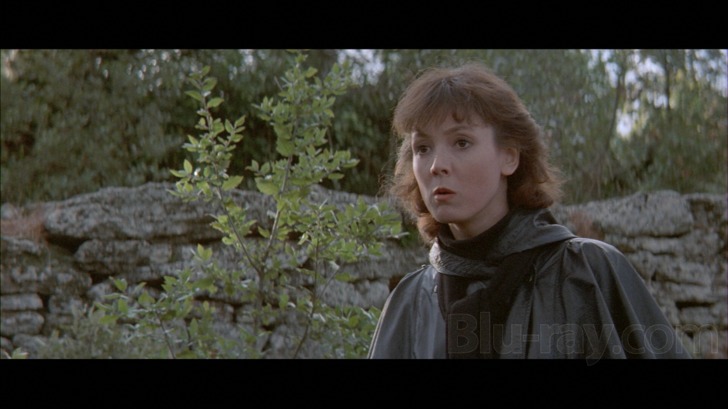
Reviews for the two films included in this release can be accessed by clicking on the following links:
Life Is a Bed of Roses Blu-ray review
Love Unto Death Blu-ray review
Love Unto Death / Life Is a Bed of Roses Blu-ray Movie, Video Quality
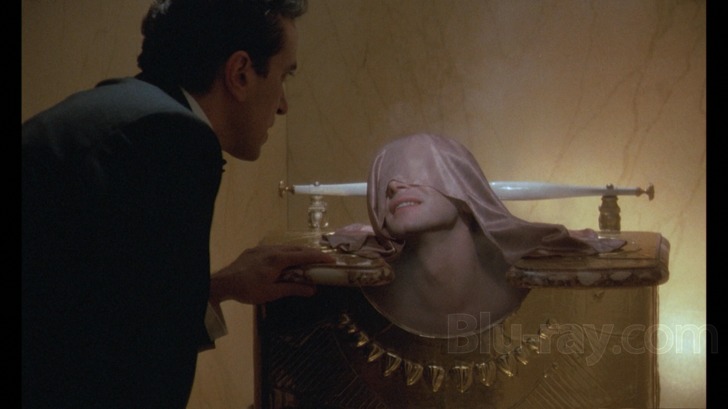
Video quality of each film is discussed in the above linked reviews.
Love Unto Death / Life Is a Bed of Roses Blu-ray Movie, Audio Quality
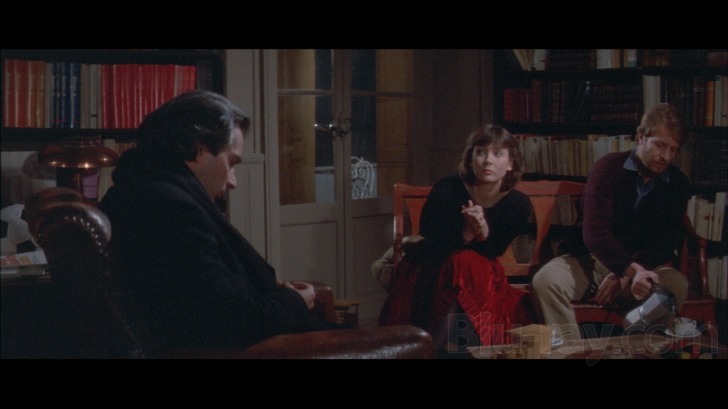
Audio quality of each film is discussed in the above linked reviews.
Love Unto Death / Life Is a Bed of Roses Blu-ray Movie, Special Features and Extras
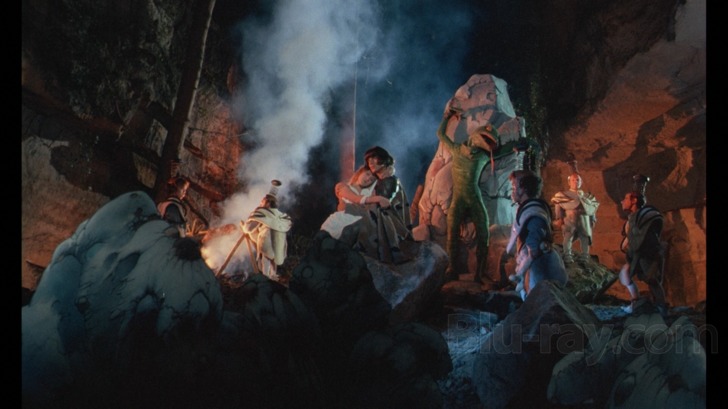
Supplementary material for each film is detailed in the above linked reviews.
Love Unto Death / Life Is a Bed of Roses Blu-ray Movie, Overall Score and Recommendation
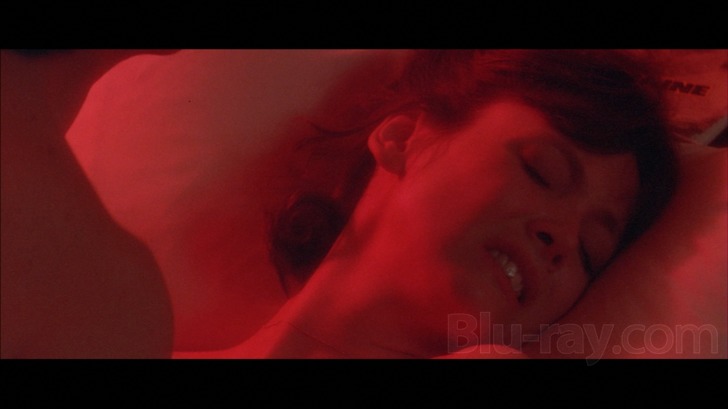
"Unpacking" any given Alain Resnais film can be a study in frustration, for the director often seemed to take a certain amount of gleeful pride in his obfuscatory powers. Many Resnais films play like waking dreams, and that's certainly the case with both Life is a Bed of Roses and Love Unto Death. The former, while extremely enjoyable and unusually playful, is still an example of the parts being greater than the whole. The latter, while almost off puttingly opaque, is weirdly compelling and, ultimately, kind of disturbing in that particular Resnaisian manner. Those who have experienced only Resnais' late fifties and early sixties masterpieces may be surprised at how different certain elements of Resnais' filmmaking techniques were by the 1980s, and this double feature comes Recommended.