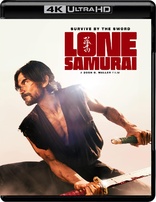
Lone Samurai 4K Blu-ray Movie
HomeLone Samurai 4K Blu-ray Movie 
4K Ultra HD + Blu-rayWell Go USA | 2025 | 95 min | Rated R | Mar 17, 2026


Movie rating
7.3 | / 10 |
Blu-ray rating
| Users |  | 0.0 |
| Reviewer |  | 3.0 |
| Overall | | 3.0 |
Overview
Lone Samurai 4K (2025)
A shipwrecked 13th century samurai considers ritual suicide until captured by cannibals on a seemingly deserted island. His will to live awakens.
Starring: Shogen, Yayan Ruhian, Sumire AshinaDirector: Josh C. Waller
| Foreign | Uncertain |
| Thriller | Uncertain |
| Period | Uncertain |
| Fantasy | Uncertain |
| Action | Uncertain |
| Mystery | Uncertain |
Specifications
Video
Video codec: HEVC / H.265
Video resolution: 4K (2160p)
Aspect ratio: 2.39:1
Original aspect ratio: 2.39:1
Audio
Japanese: Dolby Atmos
Japanese: Dolby TrueHD 7.1 (48kHz, 24-bit)
Japanese: DTS-HD Master Audio 5.1
English: DTS-HD Master Audio 5.1
Subtitles
English, French
Discs
Blu-ray Disc
Single disc (1 BD)
4K Ultra HD
Playback
Region A (B, C untested)
Review
Rating summary
| Movie | | 3.0 |
| Video | | 0.0 |
| Audio |  | 5.0 |
| Extras |  | 2.0 |
| Overall | | 3.0 |
Lone Samurai 4K Blu-ray Movie Review
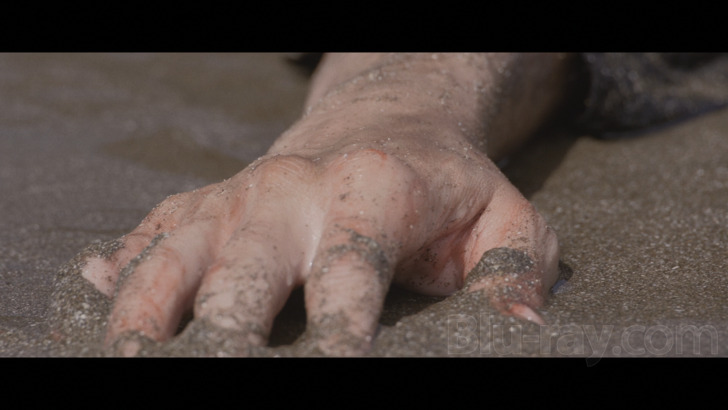
Reviewed by Jeffrey Kauffman March 14, 2026Before there's even a glint of imagery in Lone Samurai, a slow roar of ambient environmental sounds washes over the soundtrack as both text and voiceover offer a perhaps unexpected tour through the etymology of the word kamikaze. In the "IYKYK" category, those ambient environmental sounds then become at least somewhat explicable in terms of the word origin being explored, a word that is rather directly tied to attempted Mongol invasions of Japan in the 13th century being foiled by some kind of Divine Providence, or at least Bad Weather (capitalization optional). That pre-imagery prelude, along with what amount to "chapter headings" for various sections of the film, perhaps hint at a somewhat compartmentalized structure, and in fact it could be argued pretty strongly that Lone Samurai is kind of two films in one. After the explanation of the history of the term kamikaze, and a brief and maybe frankly a bit confusing opening vignette documenting some kind of mayhem on an assumed Mongol ship, the film then segues without any real illumination to find focal character Riku (Shogen), seemingly the one who committed the slicing and dicing aboard the ship, washed ashore on a beach with a large block of wood protruding through his leg.
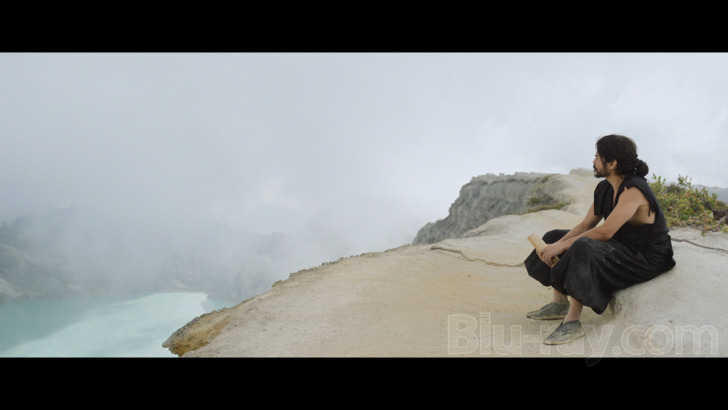
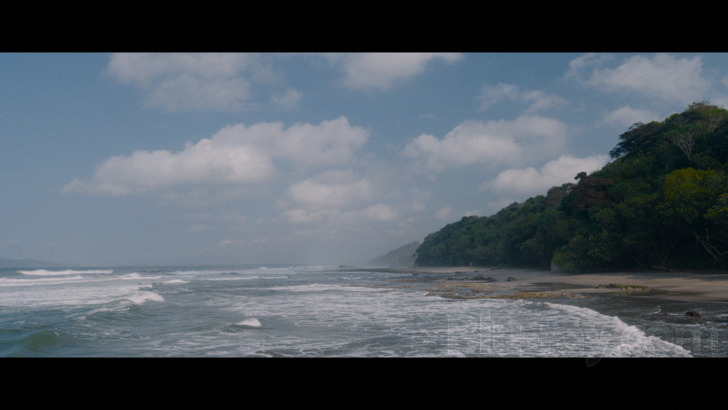
That then sets up what is in essence the first half, or more accurately at least first part, of this story, a fascinating and basically wordless stretch of narrative that sees Riku adjusting to being, well, Cast Away on an apparently deserted island with a pretty devastating injury. Suffice it to say Riku is able to extract the "sliver" (yeah, right) from his leg and begins hobbling about in a variety of exotic locations that may bring scenes from The Mission to mind, with lushly forested locations and things like stunning waterfalls on display. Ironically, then, it turns out Riku's "tour" is simply to take enough time to heal and find supplies to build a makeshift Shinto shrine in order to "properly" commit seppuku. This first section of Lone Samurai takes just a bit over a half hour of running time, and it is a fairly astoundingly audacious 30 minutes of almost wordless cinema, perhaps leading some to think that this film is going to reinvent the samurai genre in a distinctive new way.
While that may be the case, it turns out that this is not going to be another "solo" enterprise a la Tom Hanks in that above referenced film featuring a hapless survivor on a tropical island, this fact even aside and apart from flashback material featuring Riku's former life as a husband and father. Instead rather abruptly at slightly past that 30 minute mark, a tribe of cannibals enters the fray and takes Riku prisoner, for what is evidently going to be an upcoming meal (or several). This part of the film is so kind of inherently gonzo that it is undeniably compelling, but it's also near cartoonish at times, with grimacing "natives" threatening Riku in their native tongue and Riku of course deciding that before he can commit suicide he obviously has to commit murder. Repeatedly.
These two sections are so willfully at odds with each other that intentionality can't be questioned, even if the upshot can be. This is both an examination and deconstruction of what might be called a traditional bushido code, and it's rather incisive in its own peculiar way in exploring a kind of built in dialectic to the ronin life (and/or death) style. Still, the tonal disjunction here is almost palpable, and the over the top luancy of the tribal material may dissipate some of the disturbing wonder the first section of the film rather potently supplies.
Lone Samurai 4K Blu-ray Movie, Video Quality
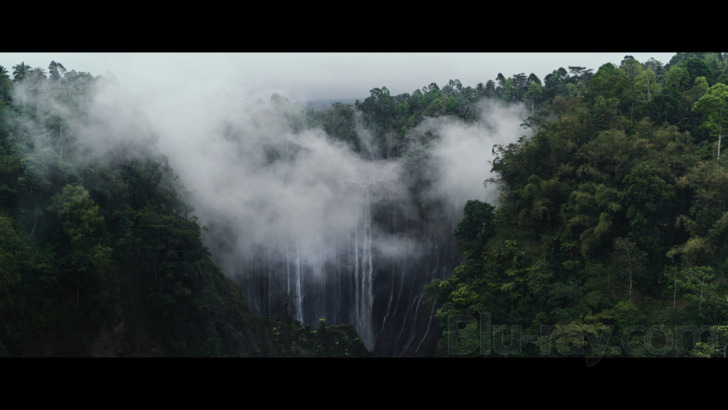
Note: While this is a standalone 4K release without a 1080 disc, I am offering screenshots from Well Go USA's standalone 1080 release of
Lone Samuraias I think it actually provides a better
representation of the look of the palette in particular, rather than offering screenshots from the 4K disc which are by necessity downscaled to 1080
and in SDR. Because this release does not include a 1080 disc, the 2K video score above has been intentionally left blank. This review also contains
two screenshots from this disc's 1080 black and white presentation of the film. I'd caution that even though this supplement is in 1080 and SDR, the
screenshots off of the 4K UHD disc may not be completely accurate.
Lone Samurai is presented in 4K UHD courtesy of Well Go USA with an HEVC / H.265 encoded 2160p transfer in 2.39:1. Information on
this
shoot is frustratingly sparse as of the writing of this review, and the IMDb offers no real technical information. This is a very impressive digital
capture
that I have to believe had a 4K DI based on the detail levels seen in this 4K UHD version, especially when compared to already excellent detail levels
in
Well Go USA's standalone 1080 release. As with the 1080 release, the real precision of fine detail probably isn't evident until the brightly lit island
material takes over (which really isn't that long into the narrative), but improvements in everything from clarity of individual grains of sand to
droplets
of water on fern leaves is really outstanding. The HDR / Dolby Vision grades do manage to add a bit of shadow detail in vignettes like the opening
shadowy scene in the ship hull, but kind of interestingly what may be more instantly apparent than increased shadow definition is the highlights on
the
almost orange steps in the background leading down to the hull. HDR grading adds a whole host of highlights throughout the island material,
including
some almost cobalt blue nighttime scenes and, later, robustly (if slightly sickly looking) yellows throughout a lot of the cannibal material, especially in
the little cave they like to call home. Digital grain is most evident in the outdoor material against bright skies.
Rather interestingly, and for what may be the first time in my reviewing tenure, Well Go USA offers a black and white version of the film in 1080 as a
bonus item on this disc. The monochrome version still boasts really impressive detail levels and the presentation can't help but evoke some of the
redolent samurai films from the 1950s and 1960s. Still, this is at best a curio.
Lone Samurai 4K Blu-ray Movie, Audio Quality
Lone Samurai features a Dolby Atmos mix in the original Japanese. As mentioned above, large swaths of at least the pre-cannibal material are virtually wordless, aside from some interstitial flashbacks and occasional (very brief) moments of voiceover. But that is not to suggest that this Atmos track doesn't have a lot to "play with", as from the pre-imagery soundtrack assault, the sound design here is really evocative and makes the most of the island setting. Ambient environmental effects are near constant throughout, and the Atmos track delivers some noticeable height in several scenes, as in some aerial work over a waterfall. But the side and rear channels are really nicely engaged throughout the presentation. The cannibals do speak, for better or worse, and whatever language they're speaking features forced English subtitles. Optional English and French subtitles are available for the rest of the presentation.
Lone Samurai 4K Blu-ray Movie, Special Features and Extras
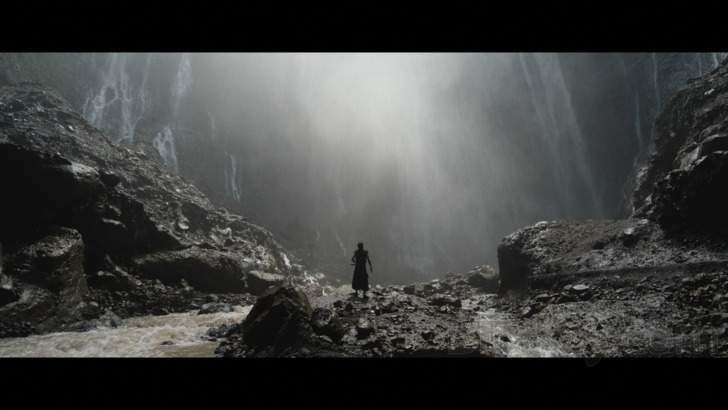
- Lone Samurai in B & W (HD; 1:35:23) offers a 1080 presentation in black and white. See screenshots 6 and 7.
Lone Samurai 4K Blu-ray Movie, Overall Score and Recommendation
The production LLC for this enterprise is named Samurai vs. Cannibals, which may suggest this project began with more of an exploitation flair imagined. That aspect is certainly part of the cannibal side of things, but I personally found the samurai side to be the much more interesting element. This is both visually and aurally audacious a lot of the time, and the film is presented with solid technical merits, for anyone who is considering making a purchase.
