Living Landscapes: Bali Blu-ray Movie
HomeLiving Landscapes: Bali Blu-ray Movie 
Digital Environments | 2007 | 60 min | Not rated | Jan 13, 2009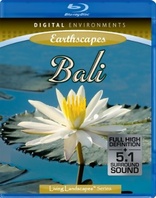
Price
List price:Listed on Amazon marketplace

Movie rating
Movie has not been rated yetBlu-ray rating
| Users |  | 0.0 |
| Reviewer |  | 3.5 |
| Overall | | 3.5 |
Overview
Living Landscapes: Bali (2007)
Bring the exotic sights and sounds of Bali's island paradise into your home with the sounds of nature and beautiful Balinese Music. Experience the magical water temples of Bali as sacred springs feed 10,000 gallons a minute through ancient pools adorned with intricate fountains, carvings, and statues. See dragonflies, birds, butterflies and frogs amid beautiful tropical flowers. High Definition close-ups reveal Bali's wildlife and the intricate beauty of nature's most beautiful living jewels. Visit the mother temple of Besakih. Absorb the serenity of Tanah Lot's ocean temple. Share in the sacred rituals that make Bali one of the most vibrant places on earth.
| Documentary | Uncertain |
| Nature | Uncertain |
Specifications
Video
Video codec: MPEG-2
Video resolution: 1080i
Aspect ratio: 1.78:1
Audio
English: Dolby Digital 5.1
Subtitles
None
Discs
25GB Blu-ray Disc
Single disc (1 BD)
Playback
Region A (B, C untested)
Review
Rating summary
| Movie | | 3.5 |
| Video | | 3.5 |
| Audio | | 3.5 |
| Extras | | 0.0 |
| Overall | | 3.5 |
Living Landscapes: Bali Blu-ray Movie Review
This early release in the Living Landscapes series is interesting, though it lacks some of the polish of later releases.
Reviewed by Jeffrey Kauffman June 23, 2010Remember the old disaster movie Krakatoa, East of Java? Perhaps you’re old enough to remember that after the film had been released some geography bee winner informed the film’s makers that Krakatoa was actually west of Java, leading to a hilarious Dick Cavett punchline during his latenight monologue one evening: “They’ve decided to rename the film Krakatoa, Way, Way, Way East of Java.” This map-challenged uncertainty perhaps helps to point out how exotic this general region of the world was even just a few decades ago, and probably still is today, even in our current Travel Channel luxury where cable television takes us to locations many have never even heard of, let alone visited. Had someone at Cinerama back in the 1960’s actually looked at a map, they might have seen that Bali is east of Java, one of a chain of Indonesian islands and perhaps the chief tourist attraction outside of Australia in the southern Atlantic. This older Living Landscapes release from 2006 gives a nice overview of the island, including its iconic “twisty neck” singers, as well as its glorious temples and ancient terraced farming communities. What it’s notably lacking, at least for the first few minutes, is Bali’s equally iconic music, that of the gong-filled gamelan.
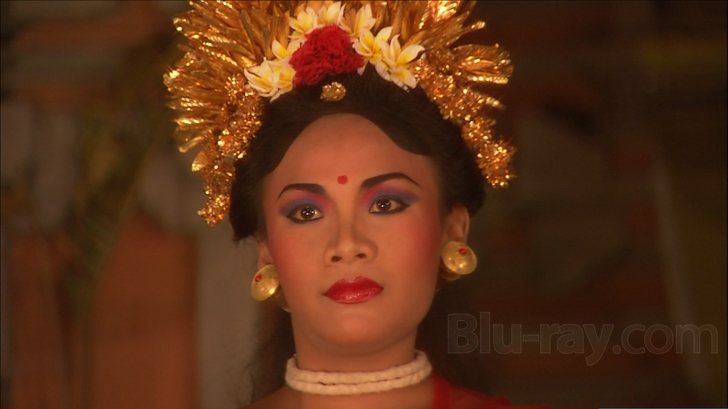
A traditional Balinese dancer.
If you do indeed remember Krakatoa, East of Java, you probably also remember that old medium of recorded music, the LP. Back in the late 1960’s and early 1970’s the niche label Nonesuch had an “Explorer” imprint that released a wealth of ethnic musics from around the world, including at least one from Bali featuring a gamelan orchestra, which is where I first encountered a gamelan (I later had the fun and challenge of playing in one). If you’ve never experienced the weirdly trance inducing music of the gamelan, you owe it to yourself to check some out at your earliest convenience. Though some of the bells and gongs can be quite brash at times, especially if played overly percussively, after a while a wash of tone envelops the listener and a near-Beta state of meditative bliss can often ensue. It’s not “melodic” or even strictly structured like Western music is, and indeed some mid- to late-20th century Western composers like Terry Riley lifted the gamelan ethos of short, repeated phrases played at will for pieces like Riley’s “In C,” where individual instruments in an orchestra have short “riffs” they move through as they see fit, creating a slowly evolving network of interlocking ideas that might be thought of as proto-minimalism. Gamelan music might therefore be thought of as proto-proto-minimalism, but you have to wait a good five minutes into Bali before you get a taste of it. It makes Bali’s opening scenes featuring the island’s famous traditional female dancers rather anachronistic as they dance to interpolated generic New Age synth music.
If you can overlook that odd if not overly glaring misstep, Bali presents a whirlwind 47 minute trip through some really lovely scenery. Iconic Balinese dancers start our journey, women with elaborate headdresses and exotic head movements that almost make it look like their skulls are going to separate from their necks. We then move on to a beautiful estate garden with a lovely pool, and then a longer segment with some of the oddest looking insects and birds you’ve ever seen, creatures so fanciful they almost seem like the creation of some Pixar animation guru. Interestingly, we’re also shown some moss strewn forests where the draping algae looks like it could have come out of some gothic horror novel set in New Orleans.
Also on tap are some great images of the famous Balinese temples, enormous structures with multiple roofs and some lovely courtyards and open spaces. These include the iconic Mother Temple of Besakih, and the fascinating ocean temple at Tanah Lot. We get out of strictly man made structures and back into nature with some great shots of Balinese farmers plying their tiered, terraced gardens, utilizing ancient methods like cows pulling plows. In fact, while Bali does include some passing shots of modern metropolises, this Living Landscapes travelogue has a more timeless, ancient feel than many other outings in this series.
You can argue about the merits of these “digital wallpaper” releases, but presentations like Bali at least offer an unfiltered look at the peoples and culture of far off lands without narrative commentary to tell the viewer what to think about what they’re seeing. While Bali is perhaps a little less inviting than some of the later Living Landscapes releases, it nonetheless opens the window onto a unique and very exotic land, offering a rare glimpse at some of its customs and traditions, many of which to this day remain clouded in mystery to the average westerner.
Living Landscapes: Bali Blu-ray Movie, Video Quality
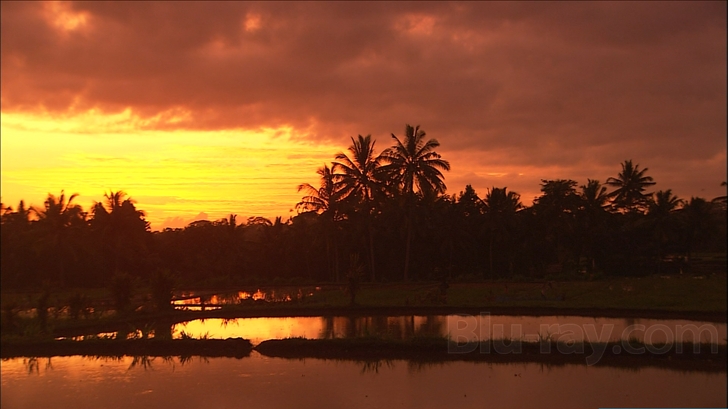
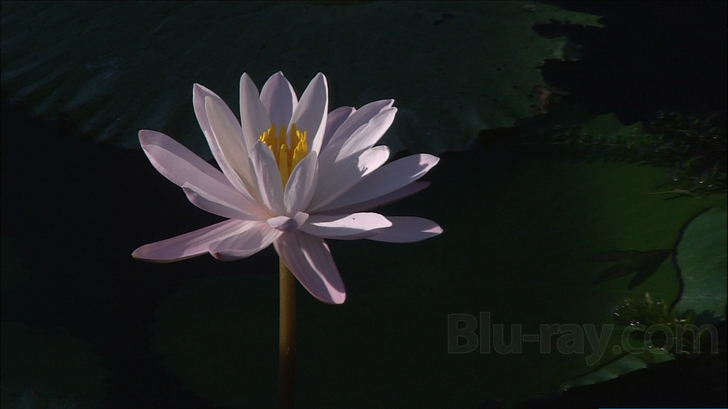
This older release from Living Landscapes and Digital Environments is delivered via an MPEG-2 codec, with a 1080i "live" image in a 1.78:1 aspect ratio. This is one of the softer looking Living Landscapes releases, probably due to its early origin in the Blu-ray format. Colors can be quite inviting and well saturated (note for instance the really beautifully, if oddly, colored insects and birds as well as the costumes of the dancers), but there's a gauzy look to some of the imagery here that makes at least some of what we see seem like it was filmed in soft focus. There's also noticeable shimmer and some aliasing on "usual suspects" like busy leafwork and some of the geometric patterns on the temples. Brightly lit outdoor scenes away from forests do best here, when the sunlight dapples off of water or we see a gorgeous lotus opening to the daylight. Black levels are quite good and contrast is excellent throughout Bali.
Living Landscapes: Bali Blu-ray Movie, Audio Quality

Living Landscapes has just started utilizing DTS soundtracks, so as with all the early releases in this series, there's a standard Dolby Digital 5.1 mix. Unlike some of the later releases using lossy Dolby tracks, however, there's no choice between ambient sounds and ambient sounds mixed with music; only a music-ambient offering is presented here. The ambient noises are quite effective, filling the surrounds nicely quite a bit of the time. Some of them are extremely well mixed as well. One forest scene was especially impressive where the weird cooing call of an insect or bird blended incredibly well with the music, to the point where I couldn't tell where one started and the other ended. Most if not all of the ambient noise seems to be scene specific in Bali, something not always the case with this series. I found the music choices themselves a bit more problematic. Purist that I am, it really bothered me to see Balinese dancers performinig a traditional religious dance set to generic New Age synth music. The ethnic gamelan orchestral choices here are much, much more effective, and, more importantly, evocative of the scenes they underscore. There is some very impressive low end on a lot of the musical selections, and the entire track is free of any distortion or other defects.
Living Landscapes: Bali Blu-ray Movie, Special Features and Extras
No supplements are offered on this budget priced disc.
Living Landscapes: Bali Blu-ray Movie, Overall Score and Recommendation

Bali has some very evocative imagery, the hallmark of these Living Landscapes releases, but it's hobbled by some offputting choices in the soundtrack. An island with a musical heritage as rich as Bali's is should have presented manifold opportunities to record and even exploit these exotic sounds as the equally exotic images fly by. Instead, aside from the intelligent, albeit too brief, use of gamelan, we're treated to some fairly bland New Age blathering. If you want to check out this iteration in the genre I've nicknamed "ambient television," my advice is keep the soundtrack turned off and get a good CD of gamelan music to play along with these very inviting images.