Liszt: Now Blu-ray Movie
HomeLiszt: Now Blu-ray Movie 
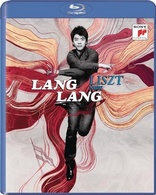
Lang LangSony Music | 2011 | 63 min | Not rated | Dec 20, 2011

Movie rating
7.1 | / 10 |
Blu-ray rating
| Users |  | 0.0 |
| Reviewer |  | 4.0 |
| Overall | | 4.0 |
Overview
Liszt: Now (2011)
Lang Lang performs a concert of Liszt's piano music at London's Roundhouse.
Starring: Lang Lang| Music | 100% |
Specifications
Video
Video codec: MPEG-4 AVC
Video resolution: 1080i
Aspect ratio: 1.78:1
Original aspect ratio: 1.78:1
Audio
English: LPCM 2.0
Subtitles
English, French, German
Discs
25GB Blu-ray Disc
Single disc (1 BD)
Playback
Region A (B, C untested)
Review
Rating summary
| Movie | | 4.0 |
| Video | | 4.0 |
| Audio |  | 4.5 |
| Extras |  | 3.5 |
| Overall | | 4.0 |
Liszt: Now Blu-ray Movie Review
Lang Lang goes the rock star route.
Reviewed by Jeffrey Kauffman December 23, 2011Franz Liszt was about the closest thing the nineteenth century had to a bona fide rock star. Twentieth century pop and rock music aficionados are certainly aware of the Beatlemania that swept the world in the early to mid-sixties, but over a century earlier there was similar, perhaps even more amazing, phenomenon known as Lisztomania. Why “more amazing?” Because this was obviously in a world that didn’t have wall to wall communications, an international media (or at least an international media such as there was in the mid twentieth century and beyond), or even a similar fan base for the music of the day. And yet Liszt’s personal appearances led to such alarming demonstrations of hysteria and near rioting that they became fodder for numerous press accounts to the point where even those without the slightest interest in classical music in general or Liszt in particular knew about the Hungarian piano virtuoso. The classical music “industry” (for want of a better term), even back in the relatively unsophisticated mid-nineteenth century, certainly had seen nothing like Liszt or Lisztomania before. Classical music was the refuge of the staid, the reserved, the very polite. Someone with Liszt's fiery temperament and personal magnetism was like a wildfire burning through the dry, conservative world of concretizing, and in fact Liszt was the harbinger of a whole new, ultra- emotional style that would soon sweep the music world, finding its culmination in everything from the opera of Wagner and Puccini to the symphonic exuberance of Mahler. Despite the upswing of the then nascent Romantic idiom, the world of classical musicians, as opposed to classical music, still was more often than not the world of the elegant, the refined, the reserved, a tradition that continued well into the twentieth century. In fact that very elegance was one of the major differences between classical artists and those in the rock or pop idioms. There was a certain class system at work which may not have been overt but which was there for anyone who cared to notice it. In today’s nomenclature, the classical artists were “the 1 percent,” while those in the rock and pop worlds were “the 99 percent.” How times have changed.
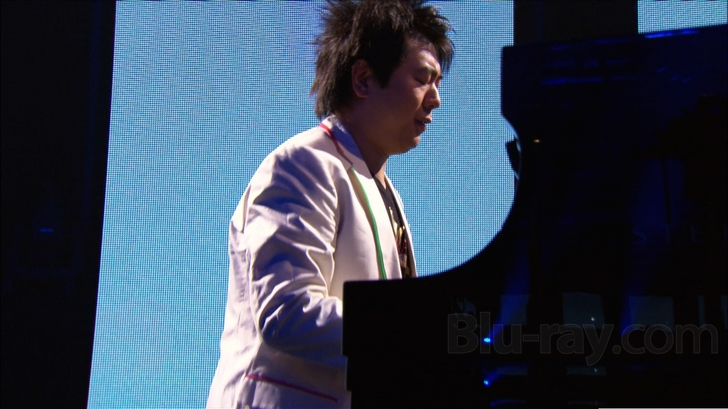
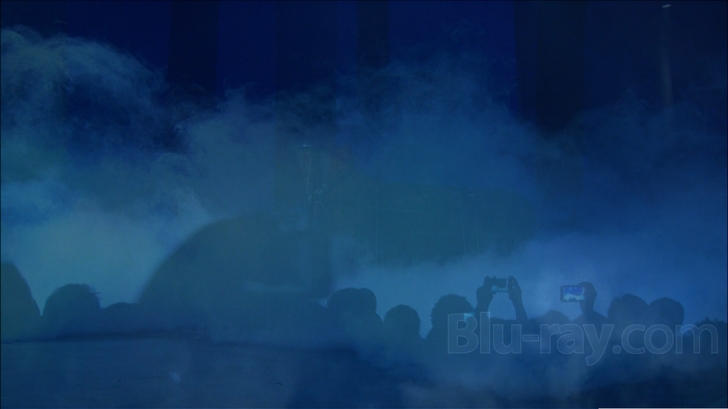
Lang Lang is a still young Chinese pianist who has rewritten what a classical music artist can (and some would argue “should”) be. That revisionism is perhaps nowhere on better display than in this new concert offering entitled Liszt Now, filmed at London’s Roundhouse auditorium. This is not a staid, uptight group of elderly people in evening clothes awaiting a similarly tuxedo clad “artiste.” Instead the interior of the Roundhouse resembles nothing more than a rock concert. Video screens tick down the seconds until Lang Lang’s arrival, the final ten seconds of which find the audience screaming along as if it were a New Year’s Eve celebration. Lang Lang himself arrives in relatively casual attire, to an even greater assortment of screams and yells, and then sits at a piano which is almost entirely surrounded by that great standby of rock concerts, smoke from a dry ice machine. As wisps of mist encircle the young virtuoso, Lang Lang launches into “La campanella” and the audience is immediately hushed, transported to a sonic world of glittering repeated ostinati and brilliant spans of octaves which erects a gossamer like structure of pianistic effulgence.
This rock star ambience may strike old fuddy-duddies (and you know who you are) as an unconscionable break with classical concert tradition, but it’s good news for those who have feared that classical music is going the way of the dinosaur. Lang Lang seems to be on the cutting edge of a new generation of artist whose technical facility is unquestionable, but who has the marketing savvy to reach out and ensnare younger listeners, inviting them into a world that isn’t comprised solely of head banging guitars and kick drums. What’s especially encouraging here is the rapt attention these younger audience members afford Lang Lang. The pianist is also extremely appealing and self effacing in a number of brief introductory comments which are sprinkled throughout the performance.
While there are at least a few “bells and whistles” to this outing, notably the dry ice fog and especially the nonstop projections which play out upstage of Lang Lang and his grand piano, of course it’s the music that matters most, and Lang Lang’s incredible dexterity and nuance makes these Liszt performances viscerally exciting and musically cogent. Liszt was certainly one of the more “athletic” composers of his day, kind of like Chopin on steroids at times, and the good news is that Lang Lang sacrifices none of the delicacy of Liszt’s lines and rhythms in his pursuit of the more challenging physical demands the scores require.
Lang Lang’s playlist includes:
- “La Campanella” from Grandes Études de Paganini
- “Un Sospiro” from Trois Études de Concert
- Theme and Variations from Grandes Études de Paganini
- Romance “O pourquoi donc”
- Standchen (Schubert)
- Hungarian Rhapsody No. 15
- “Rákóczy March”
- Consolation No. 2
- Hungarian Rhapsody No. 6
- Widmung (Schumann)
- Ave Maria (Schubert)
Liszt: Now Blu-ray Movie, Video Quality
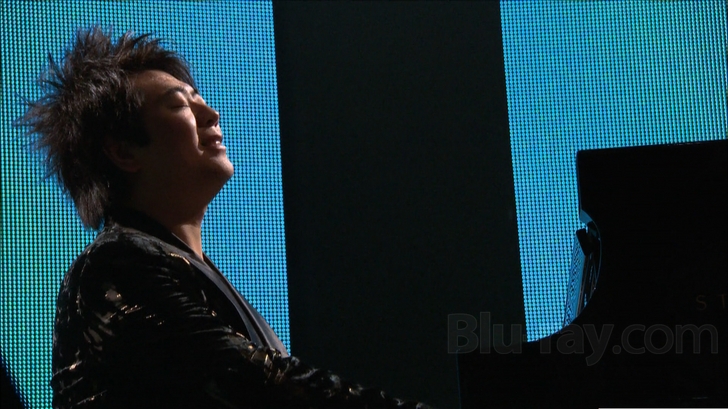
Lang Lang: Liszt Now is presented on Blu-ray courtesy of Sony Classical with an AVC encoded 1080i transfer in 1.78:1. The biggest complaint most viewers are going to have with the concert section of this Blu-ray is how dark (as in dimly lit) it all is, leading to rampant crush and virtually nonexistent shadow detail for a lot of the concert. When Lang Lang is clad in black (as he is for the first part of the concert), his body (and in fact his dark black hair) regularly disappear into the shadowy background, and if not for the brightly lit projections which pop up ubiquitously behind him, he might in fact disappear altogether, save for his face and hands. With that caveat aside, the rest of this presentation is exceptionally sharp and clear, with no interlacing artifacts to worry about, something especially impressive considering the busy light work that dots the background of several of the projections. Similarly, the nonstop dry ice fog has no trouble resolving correctly throughout the presentation. Close-ups of Lang Lang's face and hands reveal abundant fine detail. The two supplemental video features offer really sharp and appealing imagery and they do not suffer from the omnipresent darkness the concert itself does.
Liszt: Now Blu-ray Movie, Audio Quality

Lang Lang: Liszt Now features a lossless LPCM 2.0 stereo track that suffices quite well for the limited surround opportunities a piano concert affords. Some might wish for a lossless 5.1 mix simply for the immersion it would provide, but this stereo track ably separates treble from bass and it also offers sterling fidelity, with absolutely no brittleness or tinny sounding sonics. Audience noise is thankfully kept to a bare minimum after just a little spillover from Lang Lang's entrance, acclaim which continues very briefly into his first offering. Dynamic range is really exceptional in this track, especially since Lang Lang goes for broke in exploiting Liszt's penchant for strong contrasts between pianissimo and fortissimo sequences.
Liszt: Now Blu-ray Movie, Special Features and Extras
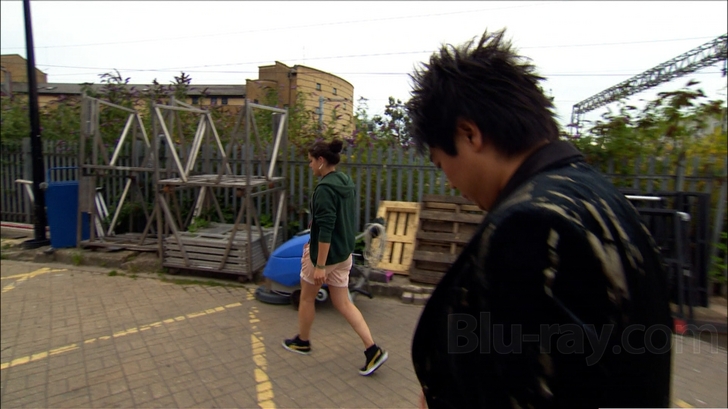
- The Art of Being a Virtuoso (1080i; 1:11:29). This is an intriguing documentary that charts (no pun intended) Lang Lang's life and career. With some very insightful interviews with both the artist and his very involved parents, the filmmakers follow Lang Lang on his international touring and recording duties while looking into his background (his parents had purchased a piano and music for him before he was even born—talk about planning ahead!). Perhaps unusually confessional and introspective for this kind of affair, this will certainly be appreciated by Lang Lang's coterie of fans.
- A Visual Journey With Franz Liszt (1080i; 54:35) . This is another very smart supplement, and one that may appeal to fans of the genre I have coined "ambient television." This supplement recreates Lang Lang's concert but sets it to the projections that appear upstage of him in the actual Roundhouse footage. What the viewer is treated to, then, is a wonderful assemblage of imagery as Lang Lang's incredible interpretations of Liszt play out on the soundtrack.
Liszt: Now Blu-ray Movie, Overall Score and Recommendation
It's probably no mere coincidence that this Blu-ray has the word "now" in its title, for Lang Lang is among the must current of today's classical artists, forging a new path ahead by mixing elements some would associate more with today's rock stars than with someone supposedly confined to the staid, uptight world of classical music. Aside from the sheer excellence and elegance of Lang Lang's playing on this Blu-ray, the release is especially appealing due to its two incredibly smart supplemental featurettes, both of which are long enough and thoughtful enough they really shouldn't even have that "ette" suffixing their description. Lang Lang: Liszt Now is a standout release in virtually every way, and while, yes, there are some minor quibbles to be had with the darkness of the concert elements, those are easily overcome by the general excellence of everything else. Highly recommended.