Liebestraum Blu-ray Movie
HomeLiebestraum Blu-ray Movie 
Limited EditionCinématographe | 1991 | 113 min | Not rated | Apr 28, 2026

Price
Movie rating
7 | / 10 |
Blu-ray rating
| Users |  | 0.0 |
| Reviewer |  | 4.5 |
| Overall | | 4.5 |
Overview
Liebestraum (1991)
The successful writer and professor of architecture Nick Kaminsky returns from New York to Elderstown to visit his biological mother Lillian Anderson Munnsen that is terminal. Nick does not know Lilian since he was adopted when he was a child but he pays the bill for her to stay in a private room in the hospital. While walking on the street, Nick stumbles upon his former college friend Paul Kessler, who is demolishing with his team an old department store building where a murder and a suicide happened many years ago. While talking to Paul, there is an accident and Nick saves his life. Paul invites Nick to go to the birthday party of his wife Jane Kessler. Nick feels attracted by the building that is built in cast iron and asks Paul to visit it. Meanwhile Jane, who is a photographer, decides to take photos of the same building. They get close to each other and Nick learns that Jane was also adopted. Along the following days, Jane and Nick have a love affair and Nick discloses hidden secrets from their past.
Starring: Kevin Anderson (I), Pamela Gidley, Kim Novak, Bill Pullman, Graham BeckelDirector: Mike Figgis
| Mystery | Uncertain |
| Thriller | Uncertain |
Specifications
Video
Video codec: MPEG-4 AVC
Video resolution: 1080p
Aspect ratio: 1.85:1
Original aspect ratio: 1.85:1
Audio
English: DTS-HD Master Audio 2.0
Subtitles
English SDH
Discs
Blu-ray Disc
Single disc (1 BD)
Playback
Region A (C untested)
Review
Rating summary
| Movie |  | 2.0 |
| Video | | 4.5 |
| Audio |  | 4.0 |
| Extras |  | 5.0 |
| Overall | | 4.5 |
Liebestraum Blu-ray Movie Review
Reviewed by Brian Orndorf May 16, 2026In 1990, writer/director Mike Figgis had something he would only encounter one other time during his lengthy career: a hit film. “Internal Affairs” was a creepy, sinister thriller starring Richard Gere and Andy Garcia, dumped into theaters with a January release date. And yet, something about the endeavor tempted a decent number of ticket-buyers, giving Figgis a chance to sample success with a major studio release. He elected to follow up the picture with 1991’s “Liebestraum,” which didn’t offer major stars, and largely pursued film noir influences, mixed with plenty of dream logic. Figgis visits David Lynch country with the movie, huffing “Twin Peaks” fumes with this attempt to deliver a mystery with touches of eroticism and emotional ruin. “Liebestraum” isn’t a riveting feature, but Figgis is working hard to turn a lot of nothing into something stylish and powerful.
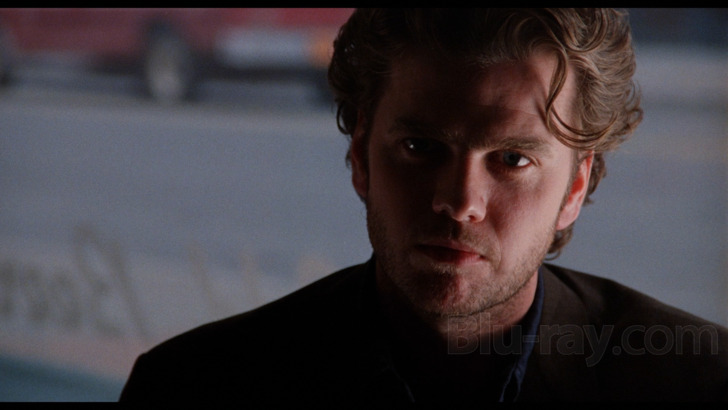
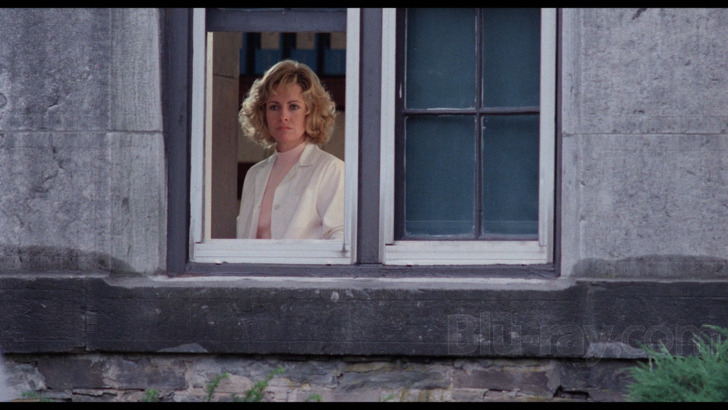
Nick (Kevin Anderson) is a New York architecture professor arriving in Elderstown, Illinois to deal with illness, finding his birth mother, Lillian (Kim Novak), near-death at a local hospital. Nick also runs into his old college pal, Paul (Bill Pullman), a construction boss looking to tear down a special cast iron building that was the site of a murder. Nick saves Paul from a falling sign, repaid with access to his life, meeting his spouse, photographer Jane (Pamela Gidley), also provided with time inside the building. Nick is attracted to Jane, sharing a mutual interest in architecture, and as the days pass, the pair get closer, helping to blur Nick’s mind while he deals with Lillian’s suffering. Exploring the surroundings, Nick is pulled into the details of the murder, out to understand what exactly happened in Elderstown.
Figgis isn’t making a straightforward thriller with “Liebestraum.” He’s pursuing a more surreal tone, keeping Nick in a state of confusion as he attempts to connect with Lillian during her final days of life. He’s also taken with Jane, meeting the photographer at her birthday party, with Paul somewhat aware of the chemistry between them. Other films would play up attraction and mystery, but Figgis keeps his endeavor elusive, and not in a compelling way. The helmer enjoys visiting Nick’s dreamscapes, inspecting confusion and desire, while the character’s focus on the building is razor sharp, playing to his love of unusual architecture. “Liebestraum” doesn’t have to provide answers, but it should be more interesting, with Figgis playing a game of distance while offering elements of sex and violence that barely register here, largely due to the grand miscasting of Anderson as Nick, who doesn’t possess any screen presence to make a complicated character come to life.
Strangeness is also a major part of “Liebestraum,” and Figgis is clearly inspired by the red-hot success of “Twin Peaks.” His film almost plays like a spin-off, placing Nick in the middle of a small town with plenty of secrets and corrupt people, putting the outsider in the company of Sherrif Pete (Graham Beckel), a drunken lawman who loves lengthy urination and pawing women. Nick also visits a local brothel, where the women poke at his awkwardness, while one rubs vaginal fluid on his lips. There’s no commitment to unreality, but Figgis stays Lynchian with the feature, supplying cooler moods, staring locals, and pregnant pauses.
Liebestraum Blu-ray Movie, Video Quality
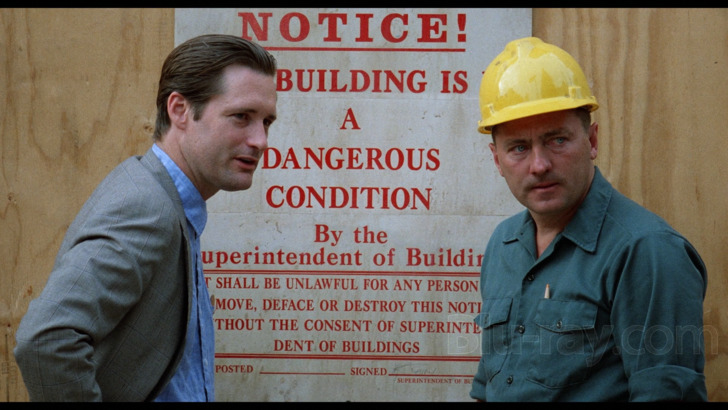
The image presentation (1.85:1 aspect ratio) for "Liebestraum" is listed as a "new 4K restoration from the original 35mm camera negatives, approved by director Mike Figgis and presented completely uncut." This is an intensely stylish film, and original cinematographic choices are preserved throughout the viewing experience. Detail is strong, with textures skin particulars on the cast, and clothing remains fibrous. Department store tours also deliver touchable surfaces and depth, joined by hospital visits and hotel room activity. Exteriors offer dimension, taking in the bigness of buildings and town visits. Color is alert, following style with big washes of reds and blues. Lighting is distinct, along with costuming choices. Skin tones are natural. Delineation is strong, with frame information intact during many dark stretches of the picture. Grain is fine and film-like. Source is in good condition, with a few noticeable scratches.
Liebestraum Blu-ray Movie, Audio Quality
The 2.0 DTS-HD MA mix is a little strange. Figgis is trying to do something with this track, playing with the softness of dialogue exchanges and the loudness of industrial and mystery activity. The listening event can be a little uneven, which may be intentional, requiring some volume riding along the way. Nothing is unintelligible, with performance choices understood, and dreamy reverb effects register as intended. Music supports with decent instrumentation, setting synth-y moods and jazzier moments. Atmospherics are involving, understanding group and street activity. Sound effects are appreciable.
Liebestraum Blu-ray Movie, Special Features and Extras
- Booklet contains essays by Travis Woods, Neil Young, and Nadine Whitney, and an interview with cinematographer Juan Ruiz Anchia.
- Commentary #1 features writer/director Mike Figgis.
- Commentary #2 features film historians Alain Silver and Christopher Coppola.
- "Passion Project" (15:27, HD) is an interview with writer/director Mike Figgis, who tracks the development of his "Liebestraum" screenplay, chipping away at the project for quite some time. More creative inspirations are identified, dipping into music appreciation, helping Figgis to manage the frustrations of the business. Casting is analyzed, with the moviemaker nearly hiring Robert Downey Jr and Nicolas Cage for the leading part. The architectural influence of "Liebestraum" is identified, and locations are recalled, including time inside a mental hospital. Coming off the success of 1990's "Internal Affairs," Figgs was handed creative control of the film, only to face physical pain when he assembled it in the editing room, and such discomfort was multiplied during its initial release, dividing audiences and critics. The interviewee is immensely proud of "Liebestraum," listing the picture's unsung influence on the other directors, especially in sound design, and he remains especially delighted with a scene of extended urination.
- "I'll Be the Judge of That" (15:10, HD) is an interview with editor Martin Hunter, who was initially called in to meet with director Mike Figgis, tasked with navigating enigmatic information concerning his hiring. "Liebestraum" was Hunter's fourth endeavor, working his way from Stanley Kubrick's "Full Metal Jacket," sharing a few memories of being around the legendary helmer and his control issues, eventually earning his trust. Talk turns to "Liebestraum," putting the interviewee to work on a "dreamy" endeavor, handling an easier schedule and more surreal material.
- "Every Frame is a Picture" (16:32, HD) is an interview with production designer Waldemar Kalinowski, who was extremely impressed with 1988's "Stormy Monday," excited to be called in to work with director Mike Figgis on "Internal Affairs," eventually escalating the creative relationship for "Liebestraum." Reflections on Figgis's personality and artistic vision are offered, following the helmer's interest in unusual locations and imagery, taking the production to New York. The interviewee analyzes creative choices and recalls production challenges, and he articulates his vision for design, which is inspired by a love of photography.
- "Liebestraum: Memories of the Past" (11:51, HD) is a video essay by Alexandra Heller-Nicholas.
- Deleted Scenes (8:26) are provided.
- And a Theatrical Trailer (1:44, SD) is included.
Liebestraum Blu-ray Movie, Overall Score and Recommendation
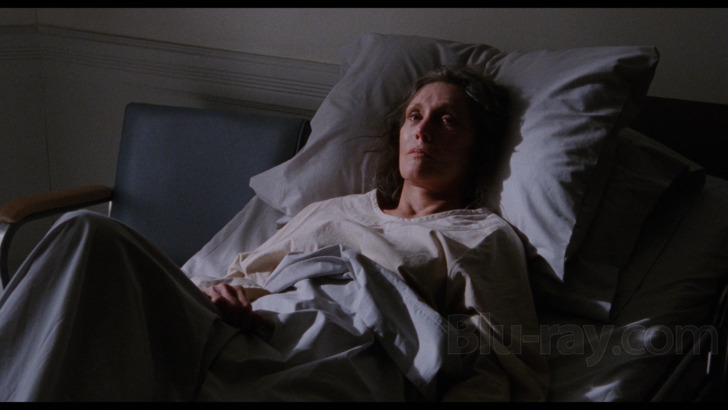
"Liebestraum" is gorgeously shot by cinematographer Juan Ruiz Anchia, and when all else fails the picture, it remains an intricately lit and vivid looking endeavor. The power of the movie is found in its visual appearance, which is far more involving than its central study of a troubled man getting in deep with darkness and lust. Figgis gets lost in his own creation, trusting the vagueness of it all will be fascinating to follow. Instead of conjuring temptation, or even the pressure of pain, "Liebestraum" mostly remains lifeless, missing a more critical sense of danger and a hypnotic display of confusion.

Similar titles
Similar titles you might also like

Looking Glass
2018

Cold Creek Manor
2003

What Have They Done to Your Daughters?
La polizia chiede aiuto
1974

The Fifth Cord
Giornata nera per l'ariete
1971

Knife of Ice
Il coltello di ghiaccio
1972

The Case of the Bloody Iris 4K
Perché quelle strane gocce di sangue sul corpo di Jennifer?
1972

Five Dolls for an August Moon
5 bambole per la luna d'agosto
1970

Born for Hell
Naked Massacre / Die Hinrichtung
1976

Four Flies on Grey Velvet 4K
4 mosche di velluto grigio
1971

Delirium
Slipcover in Original Pressing
1972

A Dragonfly for Each Corpse
Una libélula para cada muerto
1975

Last Embrace
1979

Plot of Fear
E tanta paura
1976

The Pyjama Girl Case
La ragazza dal pigiama giallo / The Pajama Girl Case
1977

Trans-Europ Express
1967

The Killer Must Kill Again
L'assassino è costretto ad uccidere ancora
1975

The Fourth Victim
La última señora Anderson
1971

Footprints
Primal Impulse / Le orme
1975

Absolution
1978

The Weapon, the Hour, the Motive
1972