Learning to See: The World of Insects Blu-ray Movie
HomeLearning to See: The World of Insects Blu-ray Movie 
Special EditionFilmRise | 2016 | 69 min | Not rated | Nov 13, 2018

Movie rating
Movie has not been rated yetBlu-ray rating
| Users |  | 0.0 |
| Reviewer |  | 4.0 |
| Overall | | 4.0 |
Overview
Learning to See: The World of Insects (2016)
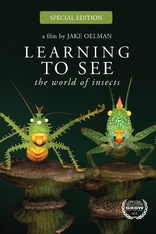
Follow one man’s transformational journey to find the Amazon's strangest creatures. In the early 90s, Robert Oelman left his career in psychology to pursue photography. On his journeys through the Amazon Basin, he began taking striking photographs of undiscovered insects. After twenty years of traveling, searching and photographing, his quest culminated with a New York City gallery showing.
Director: Jake Oelman| Documentary | 100% |
| Nature | 28% |
Specifications
Video
Video codec: MPEG-4 AVC
Video resolution: 1080p
Aspect ratio: 1.78:1
Original aspect ratio: 1.85:1
Audio
English: Dolby Digital 5.1
English: Dolby Digital 2.0
Subtitles
English SDH
Discs
Blu-ray Disc
Single disc (1 BD)
Playback
Region A (B, C untested)
Review
Rating summary
| Movie | | 4.0 |
| Video |  | 4.5 |
| Audio |  | 3.5 |
| Extras |  | 2.0 |
| Overall | | 4.0 |
Learning to See: The World of Insects Blu-ray Movie Review
Is your life bugging you?
Reviewed by Jeffrey Kauffman November 29, 2018Even if you’re a little freaked out by this documentary’s emphasis on “the world of insects”, you may well want to check it out anyway because it actually also manages to tell the story of a rather remarkable American family, and one member of that family in particular. While some of the information about the Oelmans is doled out in some of the supplemental features included on this Blu-ray as extras, the bottom line is that filmmaker Jake Oelman’s grandfather was CEO of the venerable National Cash Register during the 1960s and early 1970s, and was a friend and confidant of several United States Presidents. Jake’s father Robert evidently was the prodigal son in a way, not wanting anything to do with his own father’s line of business, and he instead became a very successful psychoanalyst. But somewhere along the line he started feeling both emotional turmoil due to having to deal with so many other peoples’ problems, as well as a certain wanderlust, including a spark of inspiration provided by Gabriel Garcia Marquez’s Love in the Time of Cholera. That led to Robert reinventing himself as a nature photographer in the wilds of Colombia. It's an intrinsically fascinating story, and there's an undeniably heartfelt aspect that Jake's sensibility as a son honoring his father brings to it.

Learning to See operates on a number of levels, which is one of the main reasons why it’s so consistently engaging. There’s absolutely riveting footage of any number of totally exotic species that Oelman photographs in and around his mini-estate in Colombia, but there’s also the personal story of the photographer himself and his own “inner journey” to discover himself. There’s also the undeniable feeling of Jake providing something close to an elegy honoring the man his father is still in the process of becoming. The “science” here may appeal to some (and in fact is sometimes mind blowing), but it’s the human element instead of the “little critters” that makes Learning to See so memorable.
Learning to See: The World of Insects Blu-ray Movie, Video Quality
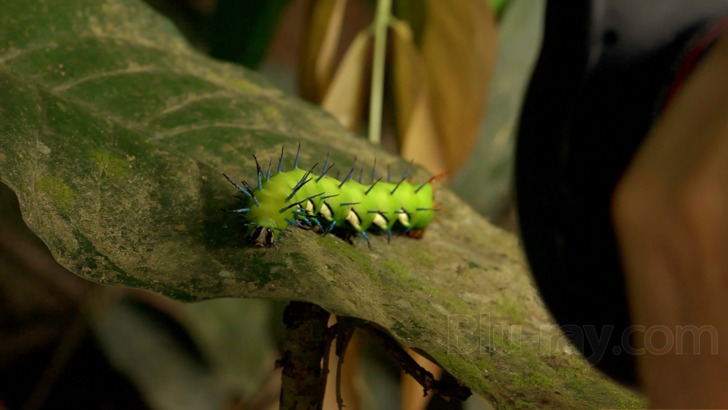
Learning to See is presented on Blu-ray courtesy of FilmRise and MVD Visual with an AVC encoded 1080p transfer in 1.78:1. The IMDb lists the Panasonic AF-100 as having digitally captured the imagery, but I'd be curious discover if some perhaps lower-res technologies might have been used on a couple of occasions to capture "on the fly" (no insect pun intended) footage, since there are just a couple of sequences where detail levels falter a bit and there be a slight dusting of noise. Otherwise, though, this is a wonderfully sharp and well detailed presentation, one that offers extremely up close and personal looks at a variety of almost alien-esque bugs, but which also supports fine detail levels on more mundane items like the stubbly hair across the top of Oelman's mostly bald pate. The palette looks warms and in nicely suffused throughout. There are a couple of brief hints of banding in sudden light changes, but otherwise this is a problem free presentation.
Learning to See: The World of Insects Blu-ray Movie, Audio Quality
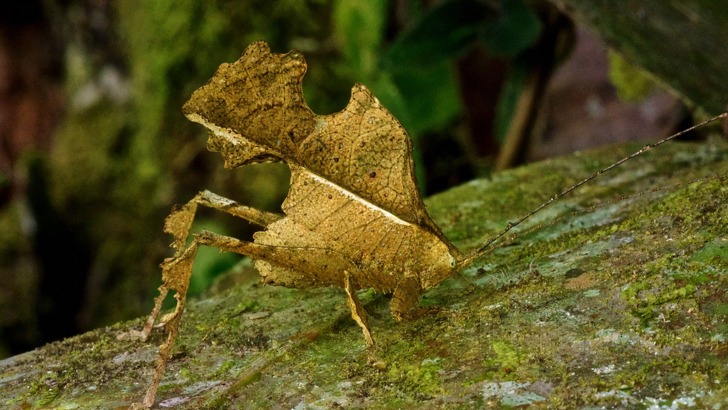
FilmRise is another label which tends to offer lossy audio on their Blu-ray releases, and Learning to See features Dolby Digital 5.1 and 2.0 tracks. While obviously not optimal so some audiophiles, the Dolby surround track does provide ample immersion courtesy of a glut of ambient environmental noises. Talking head sequences are also rendered clearly and cleanly. Lossless audio would have been preferable, but in and of itself the Dolby tracks don't have any major problems.
Learning to See: The World of Insects Blu-ray Movie, Special Features and Extras
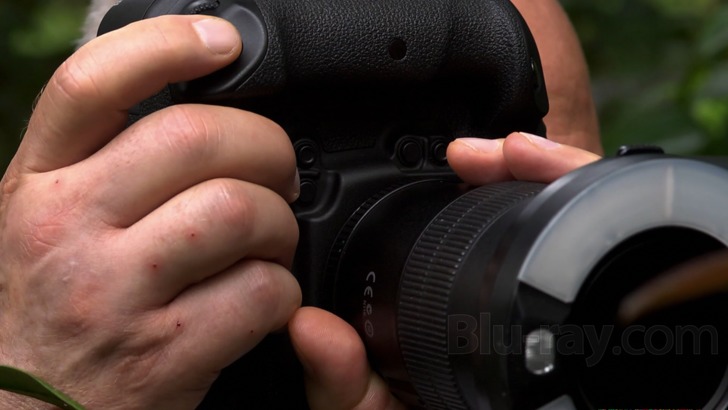
- The Making of Learning to See (1080p; 9:15) has some enjoyable behind the scenes footage and more information about the interesting Oelman family.
- "All of It" Music Video (1080p; 4:06)
- Extra Scenes
- Butterfly (1080p; 1:02)
- Caiman (1080p; 2:08)
- Hummingbirds (1080p; 4:11)
- Indigo (1080p; 2:48)
- Ocelot (1080p; 1:59)
- Panoramics (1080p; 6:30) looks at what might be thought of as extreme widescreen photography.
- Slides (1080p; 7:34)
- Trailer (1080p; 2:04)
Learning to See: The World of Insects Blu-ray Movie, Overall Score and Recommendation
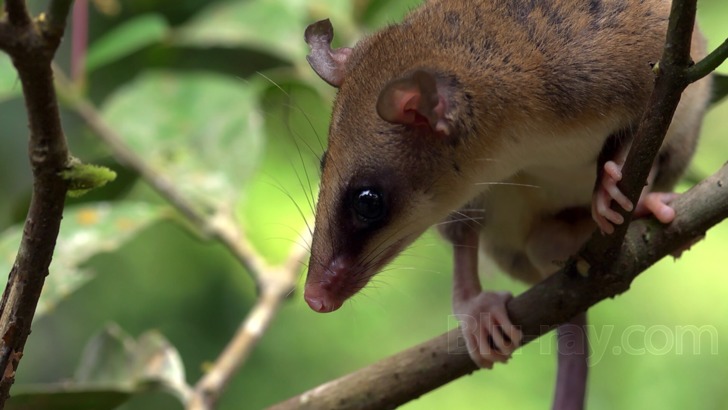
I kind of half expected Learning to See to traffic in some of the same material as the "faux" documentary The Hellstrom Chronicle, and while that may be true in a certain way, Learning to See is much more than simply a "bug" film. This sweet ode to a man's father is really touching, even if you may not want to touch some of the insects it depicts. Technical merits are great (video) to merely okay (lossy audio), but with caveats noted, Learning to See comes Recommended.
