La Bohème Blu-ray Movie
HomeLa Bohème Blu-ray Movie 
Kultur | 2008 | 100 min | Not rated | Dec 15, 2009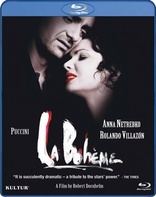

Movie rating
7.2 | / 10 |
Blu-ray rating
| Users |  | 3.7 |
| Reviewer |  | 4.5 |
| Overall |  | 3.9 |
Overview
La Bohème (2008)
In 19th century Paris, a poor poet struggles to break up with his ill lover suffering from tuberculosis so that she can find someone who takes better care of her.
Starring: Anna Netrebko, Rolando Villazón, Vitalij Kowaljow, Adrian Eröd, Luigi IllicaDirector: Robert Dornhelm
| Music | Uncertain |
| Romance | Uncertain |
| Foreign | Uncertain |
Specifications
Video
Video codec: VC-1
Video resolution: 1080i
Aspect ratio: 2.35:1
Original aspect ratio: 2.39:1
Audio
Italian: Dolby Digital 5.1
Italian: Dolby Digital 2.0
Subtitles
English
Discs
50GB Blu-ray Disc
Single disc (1 BD)
Playback
Region A (locked)
Review
Rating summary
| Movie | | 4.5 |
| Video | | 4.5 |
| Audio | | 3.5 |
| Extras |  | 2.5 |
| Overall | | 4.5 |
La Bohème Blu-ray Movie Review
A fairly traditional, though very moving, production of 'La Bohème' offers a big budget production and star turns by Anna Netrebko and Rolando Villazón.
Reviewed by Jeffrey Kauffman December 3, 2009La Bohème is, of course, one of the undisputed masterpieces of opera, and one which has remained perhaps unusually popular due to its modern reincarnation, more or less, as Broadway’s smash hit Rent (not to mention Baz Luhrman’s Moulin Rouge which “borrows” heavily from both the Murger novel which inspired Puccini’s version, as well as the Italian master’s own take on the material). Watching the film version of Rent may give some indication of how hard it is to capture both the intimacy and grandeur of this sprawling story (truth be told, the “live performance” Blu-ray of Rent is, in my opinion anyway, vastly superior to the theatrical film version). Therefore, kudos are in order for director Robert Dornhelm for not shying away from what is actually a rather audacious enterprise. I mean, just think of it—how many actual film versions of opera have you seen, as opposed to filmed live performances? Not many, at least if you’re like me. Dornhelm had actually evidently been offered a live staging opportunity to do Mussorgsky’s Boris Gudonov, which for various reasons he declined (Dornhelm has a quasi-Russian connection, with an Academy Award nomination under his belt for his 1977 documentary about the Kirov School of Ballet, The Children of Theater Street). Dornhelm does also evidently have at least a tangential operatic gene, as he relates in an extra that his cousin was Director of the Vienna Opera during Dornhelm’s childhood. Still, the obstacles are massive in trying to adapt one of the best known of all operas, and one which probably sits atop more peoples’ all time favorites list than any others. Walking the tightrope between reimagining the piece for a different medium while simultaneously staying true to the source material is an arduous task. There will no doubt be nitpickers on both sides of the aisle vis a vis this Bohème; some will claim it veers too far from Puccini’s original, at least in presentation if not in actual tone, while others may find it simply a tarted up though essentially conservative mounting that brings nothing new to the proceedings other than a propensity for close-ups and cutaways. I personally found this an unusually effective film, with two knockout lead performances by Anna Netrebko as the tragically tubercular Mimi and Rolando Villazón as her erstwhile lover Rodolfo.
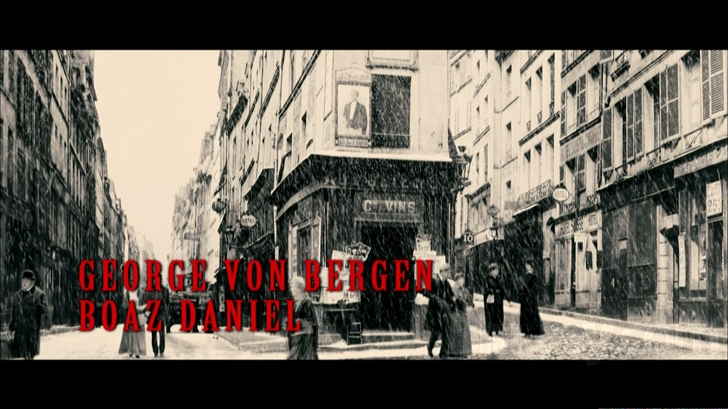
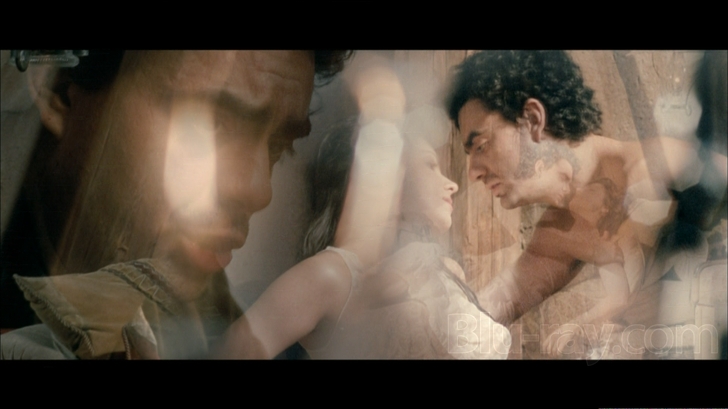
Evocative black and white tableaux like these play under the credits and throughout the film at various moments.
Even if you’re not overly familiar with La Bohème, chances are you know the broad outlines of its famous story, especially if you’re acquainted with Rent or the Luhrman Moulin Rouge. It’s 1830 and a group of Parisian artists are weathering the frigid temperatures on Christmas Eve. Rodolfo, a playwright, burns his latest opus in order to stay warm, but soon heat of another nature springs up when he meets his downstairs neighbor, Mimi. Playing out against this nascent love affair are various other subplots, including the aftermath of a tempestuous affair between Rodolfo’s roommate Marcello (George von Bergen) and Musetta (Nicole Cabell), a woman of perhaps questionable character. And of course there’s the underlying issue of Mimi’s health, which deteriorates quickly and provides the emotional turmoil of the second half of the opera.
Dornhelm brings a fair amount of visual flair to these proceedings, with quite a few interesting black and white interstitial segments bridging the longer color sequences. This alternating palette works quite effectively most of the time, especially in establishing shots, as in the opening of the piece, where the wintry weather is made almost palpable by being rendered in two tones. Much later in the opera, during Mimi and Rodolfo’s heartbreaking duet “Sono andati?”, while it’s obvious Dornhelm is using the technique to differentiate Mimi’s memories of happier times from her diseased present, I found the switch from black and white to color too distracting, robbing the scene of some of the tragic intimacy it requires.
On the whole, though, Dornhelm exploits the filmic opportunities working in this medium allows. In the opening duet scene between Rodolfo and Marcello, for example, Dornhelm cuts to Mimi awakening below them, obviously listening in on their despair over being so cold and poor. Several times throughout the film, Dornhelm utilizes a sort of split screen approach, with one half of the image featuring a close up of any given singer, and the other half offering a medium shot taking in at least part of the environment. Where this Bohème really excels, though, is in its copious use of close ups and reaction coverage, something that filming a traditional live performance doesn’t offer, at least in this amount. Dornhelm also does some nice tracking and dollying shots, which whisk the viewer literally into the action.
On the down side, all of the actors are obviously lip synching to prerecords (and evidently some of the supporting actors are not even lipsynching to their own voices). While Netrebko and Villazón are obviously singers of the first order, they haven’t quite mastered the art of matching their lip movements to their prerecorded voices, bringing an Italian cinema feel to the enterprise (Cinecitta, for example, traditionally filmed everything without sound and looped dialogue in post-production, something I’ve always felt helped add to the surreality of, say, Fellini’s output there). On the plus side, these two lead performers are titans in their roles. Netrebko is especially effective in somewhat mitigating the hyperbolic aspects of Mimi’s role, from both acting and singing standpoints, for the more intimate, up close and personal, medium of film. I was actually also a little surprised at the almost buffa nature of Cabell’s Musetta. Musetta is usually portrayed as a coquette, of course, but Cabell brings a more patent comedic touch to the role, which, while unusual, wasn’t inappropriate.
I’ll go into more detail with one fairly major failing of the film below, and that’s in its soundtrack options. Aside from the issues of lossy versus lossless mixes, which I’ll discuss below, I was a little appalled at times with the lackluster balance between the singers and the orchestra. While the orchestral playing was magnificent and perfectly colorful, it often overpowered the singers, even those in extreme close up, where one would think a masterful sound engineer or mixer would pump up the soloist to aurally approximate the image intimacy. This may in fact be the biggest hindrance to some longtime Puccini fans wanting to invest in this version.
These issues aside, over all this is a compelling and often ravishing production of the venerable classic. Dornhelm has opened up the proceedings just enough to give it a “real” film flavor, while also maintaining (and perhaps even exploiting) the intimacy of the original story. Netrebko and Villazón are near perfection in their roles, and the production as a whole is colorful and exciting. If it’s not especially revolutionary, this La Bohème is a garden of tragic delights and one which I think most Puccini lovers will enjoy immensely.
La Bohème Blu-ray Movie, Video Quality
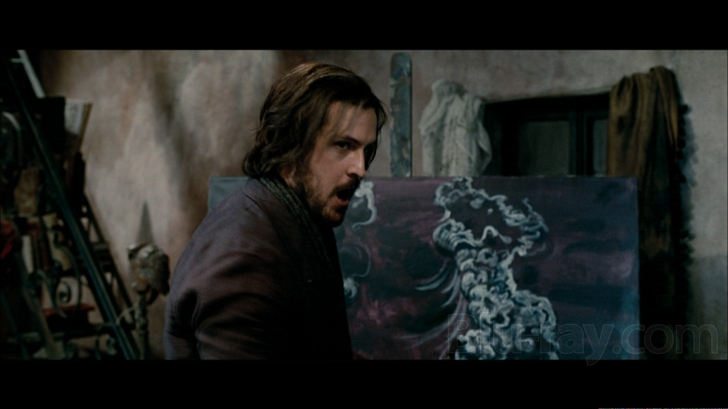
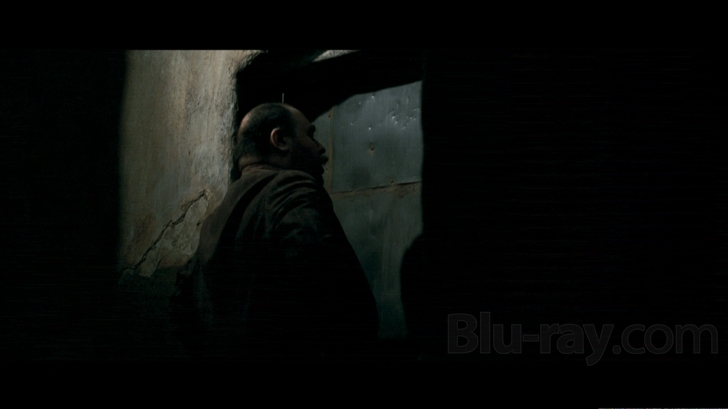
La Bohème arrives from Kultur with a sterling 1080i VC-1 encoded transfer. This is one glorious looking film in both its black and white and color sequences. The black and white segments offer superb contrast, probably pumped a bit in post production, with icy whites and deep, inky blacks. The color sequences are quite remarkable, however. While some of the fleshtones are a bit pale (I'm assuming Mimi is made up that way), there is excellent saturation of a really bold palette throughout this piece. Mimi parades around the Parisian streets in a deep crimson gown where the individual strands of the dress' weave can easily be seen. On the other hand, Musetta is clad in a brilliantly bright purple getup which virtually pops off the screen. Depth of field, such as it is in a film this rife with close ups and medium close ups, is excellent, with some splendid detail available in the exterior shots. The Blu-ray does betray the fake snow scenes, especially toward the second half of the film where the superior resolution shows quite clearly this is a soundstage and not a wintry exterior location shot. But such artifice is to be expected, and this is overall an excellent looking film.
La Bohème Blu-ray Movie, Audio Quality
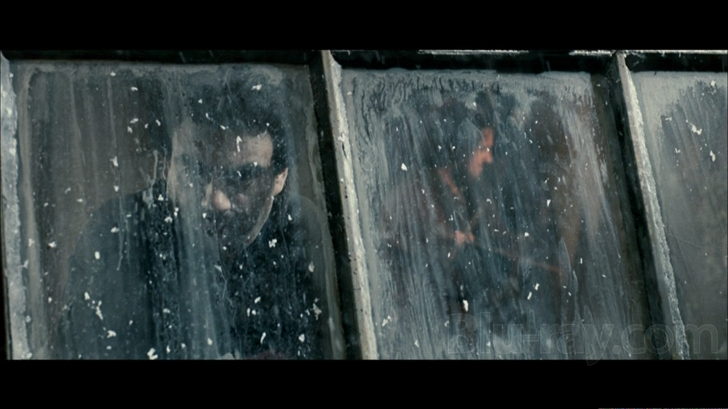
Unfortunately the same can't be said for the BD's audio options. I completely understand some niche labels releasing Blu's without lossless audio, but it kind of boggles the mind when the release is music-centric. But put aside that audiophile bugaboo for a moment and there's a more immediate problem with the Dolby Digital 5.1 mix (also apparent, but less so, on its 2.0 sibling, due to the narrower soundfield). The mix here is really awful at times. The orchestra, while brilliant and flawlessly reproduced, albeit in a lossy environment, completely overpowers the singers often enough that I actually thought it might be the fault of the settings on my surround system. Repeated tweaking didn't help much, and I finally opted for the 2.0 choice, where the lack of surround channels actually helped narrow the sonic focus and restored at least a little balance between the singers and the orchestra. All of this said, this is obviously glorious music, and even the lossy DD 5.1 and/or 2.0 mixes provide sterling fidelity, with the stratospheric highs of the sopranos matched equally by both the bluster of the low end orchestral instruments and the singing basses. Puccini of course delighted in pushing the vocal envellope, one of the reasons his operas are still such a challenge for even the best singers. This is certainly an OK soundtrack. But OK doesn't cut it in the new high-definition world of Blu-ray and I fear that most potential customers for this title are going to be turned off first by no lossless tracks, and then even more by the slipshod lossy mixes included here.
La Bohème Blu-ray Movie, Special Features and Extras
An array of SD interviews with all the major cast and director of La Bohème kicks off the supplements. Only the Dornhelm interview really amounts to anything of any depth, but the stars offer their takes on their characters as well as the challenges of working in the film medium. Here is a list with the timings of each interview:
- Director Robert Dornhelm (23:09)
- Star Anna Netrebko (Mimi) (6:07)
- Star Rolando Villazón (Rodolfo) (5:06)
- Co-star Nicole Cabell (Musetta) (2:48)
- Co-star George von Bergen (Marcello) (3:22)
La Bohème Blu-ray Movie, Overall Score and Recommendation
Dornhelm's approach to this hoary classic treads lightly between being faithful to time honored stage productions (read: too boring for modernists) and attempting to make the most of the film medium's opportunities (read: too revolutionary for purists). Those on the extreme edges of either camp are probably going to find something to quibble with in this Bohème, but it can't be argued that this is a magnificently sung and often very excitingly staged production. Netrebko is a wonderfully moving Mimi, and Villazón a heroic, wounded Rodolfo. The star power of this duo should really woo over all but the most hardened Puccini fanatic.
Similar titles
Similar titles you might also like
(Still not reliable for this title)

Cadillac Records
2008

Rock Around the Clock
1956

A Star Is Born 4K
2018

Cool as Ice
1991

Tous les Matins du Monde
All the Mornings of the World
1991

How to Talk to Girls at Parties
2017

Pink Floyd: Wish You Were Here
Blu-ray Audio | 50th Anniversary Edition
1975

David Gilmour - Live at the Circus Maximus
2024

Prince and the Revolution: Purple Rain
Blu-ray Audio
1984

Fleetwood Mac: Rumours
Atmos Blu-ray Audio
1977

The Beatles: Let It Be
Super Deluxe Edition | Blu-ray Audio
1970

David Bowie: The Rise and Fall of Ziggy Stardust and the Spiders from Mars
Dolby Atmos Blu-ray Audio
1972
Depeche Mode: Strange Too
1990
Depeche Mode: Strange
1988

Pink Floyd: The Dark Side of the Moon
50th Anniversary Atmos Remix / Blu-ray Audio
1973

Roy Orbison: Black & White Night 30
1987-2017

Prince and the Revolution: Live
1985

John Williams: The Berlin Concert
Limited Deluxe Edition
2021

Pink Floyd: Pulse
1995

Pink Floyd: Animals
Atmos Remix / Blu-ray Audio
1977