Koyaanisqatsi / Powaqqatsi Blu-ray Movie
HomeKoyaanisqatsi / Powaqqatsi Blu-ray Movie 
Arrow AcademyArrow | 1982-1988 | 2 Movies | 185 min | Rated BBFC: PG | May 12, 2014

Price
List price:Listed on Amazon marketplace

Movie rating
Movie has not been rated yetBlu-ray rating
| Users |  | 0.0 |
| Reviewer |  | 4.0 |
| Overall | | 4.0 |
Overview
Koyaanisqatsi / Powaqqatsi (1982-1988)
Koyaanisqatsi is a documentary (of sorts). It is also a visual concert of images set to the haunting music of 'Phillip Glass' . While there is no plot in the traditional sense, there is a definate scenario. The film opens on ancient native American cave drawings, while the soundtrack chants "Koyaanisqatsi" which is a Hopi indian term for "life out of balance". The film uses extensive time lapse photography (which speeds images up) and slow motion photography to make comparisons between different types of physical motion.
| Documentary | 100% |
| Music | 67% |
Specifications
Video
Video codec: MPEG-4 AVC
Video resolution: 1080p
Aspect ratio: 1.85:1
Original aspect ratio: 1.85:1
Audio
Music: DTS-HD Master Audio 5.1
Music: DTS-HD Master Audio 5.1
Music: LPCM 2.0
Music: LPCM 2.0
Subtitles
None
Discs
50GB Blu-ray Disc
Two-disc set (2 BDs)
Playback
Region B (locked)
Review
Rating summary
| Movie |  | 5.0 |
| Video |  | 4.5 |
| Audio | | 4.5 |
| Extras |  | 3.5 |
| Overall | | 4.0 |
Koyaanisqatsi / Powaqqatsi Blu-ray Movie Review
Reviewed by Dr. Svet Atanasov April 25, 2014Godfrey Reggio's "Koyaanisqatsi" (1982) and "Powaqqatsi" (1988) arrives on Blu-ray courtesy of British distributors Arrow Video. The supplemental features included with this release are: video introduction to "Koyaanisqatsi" by filmmaker and composer Gary Tarn; original trailers; interviews with Godfrey Reggio and composer Philip Glass; and Godfrey Reggio's short film "Anima Mundi" (1992). The release also arrives with illustrated collector’s booklet featuring new writing on the films by Anton Bitel, Michael Brooke, Peter Cowie and Jean-Baptiste Gouyon. Region-B "locked".
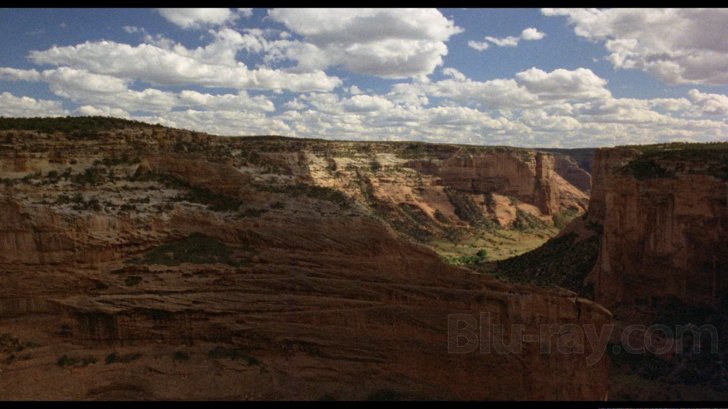
Note: The following review was first published for Criterion's release of The Qatsi Trilogy. Arrow's upcoming release features only the first two films, Koyaanisqatsi and Powaqqatsi.
Light. Darkness. Movement. Color. These are the four key elements in Koyaanisqatsi, the first installment in Godfrey Reggio’s The Qatsi Trilogy. In the Hopi language Koyaanisqatsi refers to life in turmoil, life out of balance.
The camera slowly moves from landscape to landscape, observing a process, capturing life as it happens on earth. Massive plants, industrial buildings, roads and planes appear. In a desert somewhere, someone detonates a bomb. A rocket is dispatched in outer space. War planes drop bombs. The landscapes, the visuals suggest, are changing.
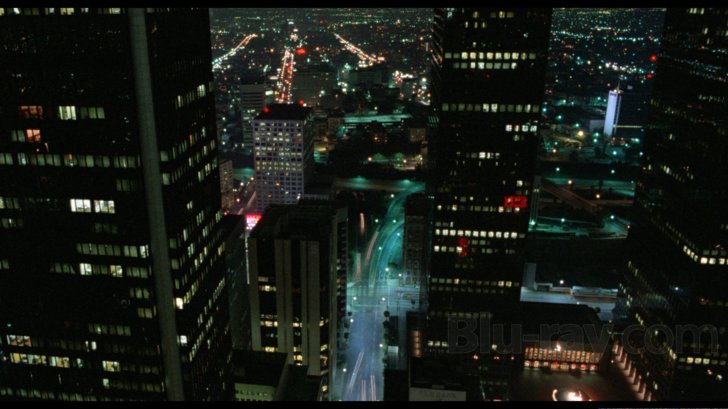
Elsewhere a giant city has come alive. Its streets are jammed with cars. Its clean new buildings are greeted by the sun. Some of its people, however, have been abandoned. Now the camera turns to the projects where they live, where lonely buildings are waiting to be destroyed. One after another they begin to fall. But the sun rises again and men continue to build giant highways, airports, train stations, stadiums, and billboards. The process is different now, altered by technology, a lot faster and at times looking frustratingly chaotic.
The second installment in The Qatsi Trilogy is Powaqqatsi. In the Hopi language Powaqqatsi refers to an entity, a way of life, which consumes the life forces of other beings in order to further its own life.
The key elements in this film are rhythm and tradition. Reggio turns his camera towards the nations in the Southern Hemisphere where life seems to have a constant rhythm. Men and nature seem to coexist in perfect harmony here. Life is simple, beautiful, often difficult.
Then the landscapes begin to change again. It is technology that is bringing the change. Scattered images then show very large and very busy cities, highways, tunnels, commercials eroding traditions, a way of life people have cherished for centuries. Unknown faces come and go, all of them looking busy, few of them smiling. It is the era of technological progress, the time of the Metropolis.
The third and final installment in the The Qatsi Trilogy is Naqoyqatsi. In the Hopi language Naqoyqatsi refers to a life of killing each other, civilized violence.
The key elements in this film are chaos, identity, speed and numbers. Neon lights, ancient symbols, stars, powerful waves and the faces of important political and social figures constantly overlap. The computer has come alive and changed the world. Now people in different continents are capable of instantly talking to each other; the world is at their fingertips. But they are lonely, stuck on the information highway, looking for something, fascinated by violence.
Once again there is a lot of movement. But unlike that observed in Koyaanisqatsi and Naqoyqatsi, the movement here looks forced, unnatural, even dangerous. The colors are also strange, as if borrowed from a cheap video game. Everything looks possible, yet nothing is real, nothing has a real value. This is the digital era. The time of the Disposable.
The goal of these films is not to take the viewer to exotic places and fascinate him during the journey. The images are too detached from one another to deliver such an experience and there isn’t a simple plot to be followed. The idea behind them is to provoke reactions, bring sensations, raise awareness. They are open for interpretation. They are one giant road experience, a mesmerizing look at our planet.
The three films were shot over a period of twenty years (1982-2002). Each features an atmospheric score by acclaimed contemporary composer Philip Glass, with the final film also containing beautiful solos by acclaimed cellist Yo-Yo Ma. Koyaanisqatsi was lensed by cinematographer Ron Fricke (Baraka, Samsara). Powaqqatsi was lensed by cinematographers Graham Berry (camera, The Princess and the Warrior) and Leonidas Zourdoumis, while Naqoyqatsi was lensed by Russell Lee Fine (TV’s The Wire).
Koyaanisqatsi / Powaqqatsi Blu-ray Movie, Video Quality
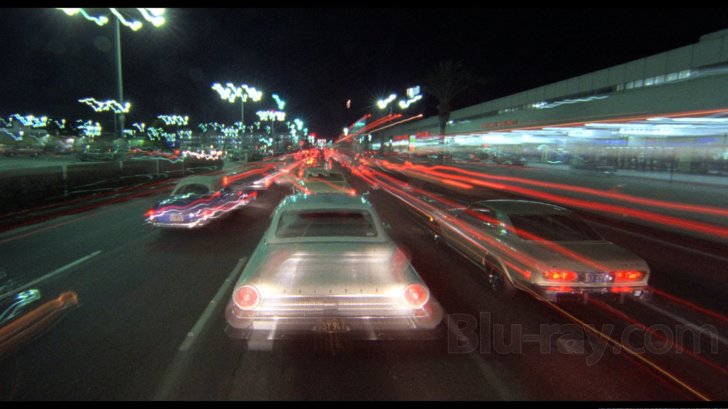
Presented in their original aspect ratios of 1.85:1, encoded with MPEG-4 AVC and granted 1080p transfers, Godfrey Reggio's Koyaanisqatsi and Powaqqatsi arrive on Blu-ray courtesy of British distributors Arrow Video.
Koyaanisqatsi. The basic characteristics of the high-definition transfer are virtually identical to those of the high-definition transfer Criterion used for their release of the film in 2012. Indeed, detail, clarity, sharpness, and contrast levels are basically the same. Color saturation, balance and stability are also virtually identical. (Compare screencapture #8 with screencapture #4 from our review of the Criterion release). Furthermore, there are no traces of problematic degraining and sharpening corrections. Predictably, the film has a very solid and very pleasing organic appearance. There are no serious stability issues. When projected, the film boasts excellent depth and remains tight around the edges. Finally, there are no large debris, scratches, cuts, stains, or warps.
Powaqqatsi. I could not see any major discrepancies in the contrast, clarity, and brightness settings between the two high-definition transfers used by Arrow Video and Criterion. Indeed, detail and image depth are virtually identical. (Compare screencapture #26 with screencapture #16 from our review of the Criterion release). Additionally, I did not see any traces of problematic degraining or denoising corrections. However, there are a few tiny specks that pop up here and there which appear to have been removed on the Criterion release. Lastly, overall image stability is very good. (Note: The two releases are Region-B "locked". Therefore, you must have a native Region-B or Region-Free PS3 or SA in order to access their content).
Koyaanisqatsi / Powaqqatsi Blu-ray Movie, Audio Quality
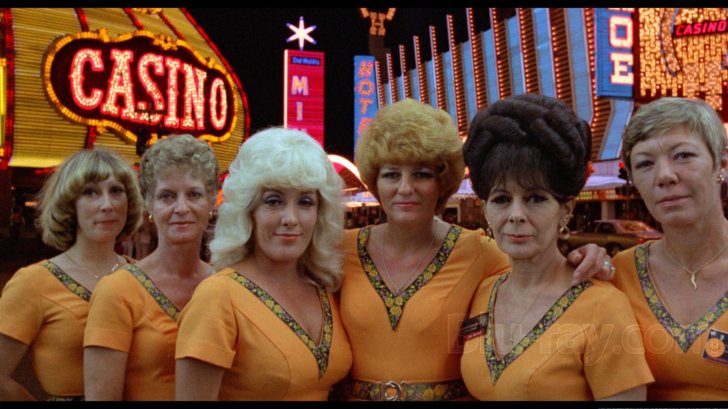
Koyaanisqatsi and Powaqqatsi arrive with two standard audio tracks (for each release): Music DTS-HD Master Audio 5.1 and Music LPCM 2.0. Optional English subtitles are not provided because each film is complimented only by a music score composed by Philip Glass.
The music is lush and vibrant, but you should not expect the 5.1 track to test the muscles of your audio system. Glass' scores are not used to enhance specific episodes; they serve as foundations for the entire films. In other words, dynamic movement is balanced and carefully directed. For the record, there are no pops, cracks, audio dropouts or distortions to report in this review.
Koyaanisqatsi / Powaqqatsi Blu-ray Movie, Special Features and Extras
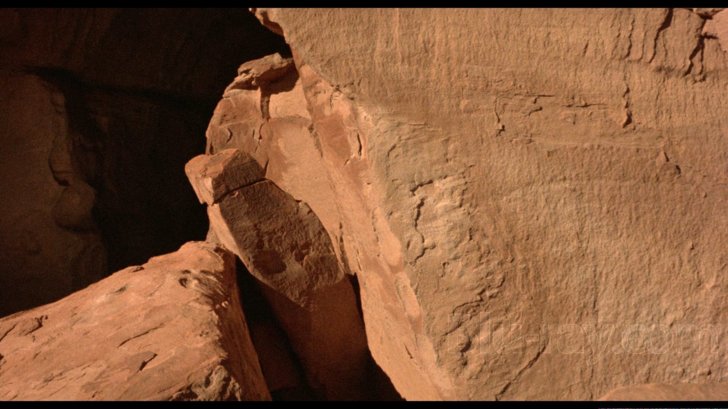
Koyaanisqatsi
- Introduction by Gary Tarn - filmmaker and composer Gary Tarn (Black Sun, The Prophet) quickly explains what makes Godfrey Reggio's Koyaanisqatsi a special film. In English, not subtitled. (4 min).
- Essence of Life - director Godfrey Reggio and composer Philip Glass discuss the production history of The Qatsi Trilogy as well as the concepts and ideas behind it. The two gentleman also address the different interpretations the films could inspire. The program was filmed in 2002. The same featurette also appears on Criterion's release of Koyaanisqatsi. In English, not subtitled. (26 min).
- Trailer - original theatrical trailer for Koyaanisqatsi. In English, not subtitled. (3 min).
- Impact of Progress - director Godfrey Reggio and composer Philip Glass discuss their collaboration on Powaqqatsi and how they allowed their ideas to grow together, the relationship between the language of images and the language of music, the other two films in The Qatsi Trilogy, etc. The program was recorded in 2002. The same featurette also appears on Criterion's release of Powaqqatsi. In English, not subtitled. (20 min).
- Anima Mundi - a short film directed by Godfrey Reggio and scored by Philip Glass in 1992. The film focuses on different groups of animals.It was restored by MIR Cinematographica and Cineteca di Bologna in September 2010. Music only. (30 min).
- Trailer - original Cannon theatrical trailer for Powaqqatsi. In English, not subtitled. (3 min).
- Booklet - illustrated collector's booklet featuring new writing on the films by Anton Bitel, Michael Brooke, Peter Cowie and Jean-Baptiste Gouyon.
Koyaanisqatsi / Powaqqatsi Blu-ray Movie, Overall Score and Recommendation
Godfrey Reggio's groundbreaking films Koyaanisqatsi and Powaqqatsi arrive rather late on Blu-ray in the United Kingdom, but I think that their fans will be very pleased with the way they look and sound. Arrow Video have also included some of the great supplemental features that appeared on Criterion's The Qatsi Trilogy box set. If you have already seen Baraka and Samsara and enjoyed them, do not miss these releases. HIGHLY RECOMMENDED.