Kiju Yoshida: Love + Anarchism Blu-ray Movie
HomeKiju Yoshida: Love + Anarchism Blu-ray Movie 
Eros + Massacre / Heroic Purgatory / Coup d’état | Limited Edition of 3000 / Blu-ray + DVDArrow | 1969-1973 | 3 Movies, 4 Cuts | 617 min | Not rated | May 09, 2017


Movie rating
Movie has not been rated yetBlu-ray rating
| Users |  | 0.0 |
| Reviewer |  | 4.0 |
| Overall | | 4.0 |
Overview
Kiju Yoshida: Love + Anarchism (1969-1973)
See individual titles for their synopses.
| Foreign | 100% |
| Drama | 65% |
| Biography | 1% |
| History | 1% |
Specifications
Video
Video codec: MPEG-4 AVC
Video resolution: 1080p
Aspect ratio: 2.35:1
Original aspect ratio: 2.35:1
Audio
Japanese: LPCM Mono
Subtitles
English
Discs
Blu-ray Disc
Seven-disc set (3 BDs, 4 DVDs)
DVD copy
Playback
Region free
Review
Rating summary
| Movie | | 4.0 |
| Video | | 4.0 |
| Audio |  | 3.5 |
| Extras | | 4.0 |
| Overall | | 4.0 |
Kiju Yoshida: Love + Anarchism Blu-ray Movie Review
Reviewed by Jeffrey Kauffman May 10, 2017Note: The scores above are averages for the three films (four, when including both versions of Eros + Massacre) in this set. See the
individual reviews, linked below, for scores on each release.
A lot of the forum activity on this site as well as others devoted to home theater aficionados tends to be filled with complaints about this or that
release, or even the state of physical media in general. I’d like to “accentuate the positive” for a moment, by acknowledging the fact that without
a
bevy of so-called “niche” labels like Criterion, Kino Lorber, Olive Films and, yes, Arrow (and its Arrow Academy imprint), those of us who love all
sorts
of different films would be much less significantly blessed with releases than we actually are, despite whatever technical issues arise from time to
time with any given release. Consider for a moment the name of Kiju Yoshida, an
arugably lesser remembered Japanese director whose name may not be recognized by many and which in fact was not even in our database here
at
Blu-ray.com until I added it for the purposes of this review and the reviews of the films in this set. It’s almost astounding in a way that any label
would devote its resources to releasing films by someone whose name doesn’t rise to traditional “marquee” levels, and for the efforts of labels like
Arrow who do offer sets like this one, I for one would just like to take a moment to offer some sincere appreciation. Yoshida, whose given name
was
Yoshishige, was born in 1933 and is still among the living (at the age of 84) as these reviews are being written. While Yoshida may not be as well
known in the United States as some of his Japanese contemporaries, in France he’s lionized as one of the most important directors of the post-
World
War II era, and that recognition may be especially understandable when placed within the context of what is kind of humorously referred to as the
Shōchiku Nouvelle Vague, or in more common vernacular, the Japanese New Wave (with a reference to the specific studio where Yoshida
and
some of his cohorts worked). The structural (or deconstructural, as the case
may be) proclivities of the French New Wave are shared by Yoshida, at least in the three films presented in this set, all of which defy traditional
narrative methods and which employ typical Nouvelle Vague approaches like quasi-montage and disjunctive editing techniques. The three
films in this set span a few years bridging the late sixties to the early seventies, and all three of them are considered part of a kind of loose trilogy
which offers a somewhat subversive political perspective with a similarly anarchic style.
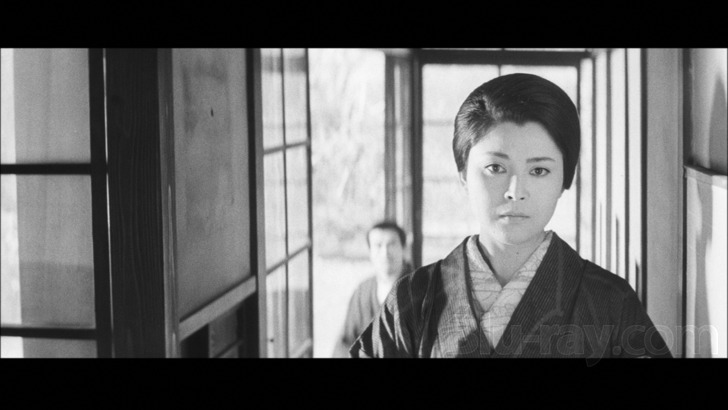
For reviews of the three films in this set, please click on the following links:
Eros + Massacre Blu-ray review
Heroic Purgatory Blu-ray review
Coup d’état Blu-ray review
Kiju Yoshida: Love + Anarchism Blu-ray Movie, Video Quality

Video quality of each release is assessed in the above linked reviews.
Kiju Yoshida: Love + Anarchism Blu-ray Movie, Audio Quality

Audio quality of each release is assessed in the above linked reviews.
Kiju Yoshida: Love + Anarchism Blu-ray Movie, Special Features and Extras

Supplementary material on each disc is detailed in the above linked reviews. Additionally, Arrow has packaged this quite handsomely in a nice looking pink slipbox that also includes the typically informative Arrow booklet, which in this case features essays by David Desser, Isolde Standish and Dick Stegewerns.
Kiju Yoshida: Love + Anarchism Blu-ray Movie, Overall Score and Recommendation

Despite the narrative challenges that the first two films in this set present, this is a knockout package for cineastes, and not just those interested in relatively recent Japanese cinema. Arrow continues to offer really fascinating releases, and lovers of the avant-garde should be especially interested in this excellent compilation. Technical merits are generally strong and as usual with Arrow, the supplementary package is great. Highly recommended.