Keeping Score: Mahler Blu-ray Movie
HomeKeeping Score: Mahler Blu-ray Movie 
San Francisco Symphony | 2010 | 224 min | Not rated | May 10, 2011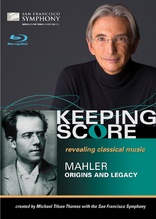
Price
List price:Amazon: $25.91 (Save 1%)
Third party: $25.91 (Save 1%)
Only 1 left in stock (more on the way).

Movie rating
6.6 | / 10 |
Blu-ray rating
| Users |  | 0.0 |
| Reviewer |  | 4.5 |
| Overall | | 4.5 |
Overview
Keeping Score: Mahler (2010)
Michael Tilson Thomas performs several pieces by Mahler with the San Francisco Symphony as well as exploring the life and work of the composer in an accompanying documentary.
| Music | Uncertain |
| Foreign | Uncertain |
Specifications
Video
Video codec: MPEG-4 AVC
Video resolution: 1080i
Aspect ratio: 1.78:1
Original aspect ratio: 1.78:1
Audio
English: Dolby TrueHD 7.1
English: Dolby TrueHD 5.1
English: Dolby TrueHD 2.0
Subtitles
English, French, Spanish, German, Cantonese, Korean, Mandarin (Traditional)
Discs
50GB Blu-ray Disc
Two-disc set (2 BDs)
Playback
Region A (B, C untested)
Review
Rating summary
| Movie | | 4.5 |
| Video |  | 3.5 |
| Audio | | 4.5 |
| Extras | | 4.5 |
| Overall | | 4.5 |
Keeping Score: Mahler Blu-ray Movie Review
His time has come.
Reviewed by Jeffrey Kauffman June 19, 2011Gustav Mahler is one of those composers whose sound worlds are so completely distinctive, so entirely unique, that just a few bars of his music instantly identifies virtually any of his pieces as being his. While you can make that statement generally for any number of major (and even minor) composers, probably no one quite reaches the individualistic heights that Mahler regularly did, either in terms of content or style, and especially with regard to orchestration. It’s fascinating, therefore, to hear host Michael Tilson Thomas, as well as a slew of guest commentators including everyone from Yo Yo Ma to Patrick Stewart, talk about their still fresh memories of the first time they heard a piece by Mahler. So strong and powerful were the emotions evoked by those debut listening experiences that they still remain fresh with the listeners now many decades after their occurrence. I also strongly recall my first “real” listening experience with regard to Mahler. I can’t say for sure, but I had probably been exposed previously to his First Symphony, but sometime when I was still a kid a friend of my elder sister who had a used record (as in LP) shop took one look at me and said, “Here, you need to listen to this,” and handed me an old circa 1960’s box set of several LPs that included Bruno Walter conducting Mahler’s Ninth and Das Lied von der Erde. I started with Das Lied, and from the first moment, I can say quite resolutely my life as a musician and as a listener changed. Mahler crafts tones so exquisitely, making them simultaneously heart wrenching, morbidly humorous and langorously lyrical, that he is immediately and eternally unforgettable, and I certainly understood the accolades the many talking heads in this Keeping Score outing offered as they recalled their own histories with the iconic composer. Tilson Thomas seems poised to follow in a rather direct line which traces from Walter, Mahler’s own protégé, to Bernstein, Walter’s protégé, and now on to Tilson Thomas, in terms of conductors working largely in the United States who have a special affinity for the composer. Watching Tilson Thomas conduct several Mahler pieces over both of the Blu-rays included on this set is an exercise in watching a noted musician with a long history with one composer still being winged away on flights of inexorable fancy as the music plays out. It’s all the more thrilling when Tilson Thomas steps away from the podium to give us incredible insight into both the music and the man who made it.
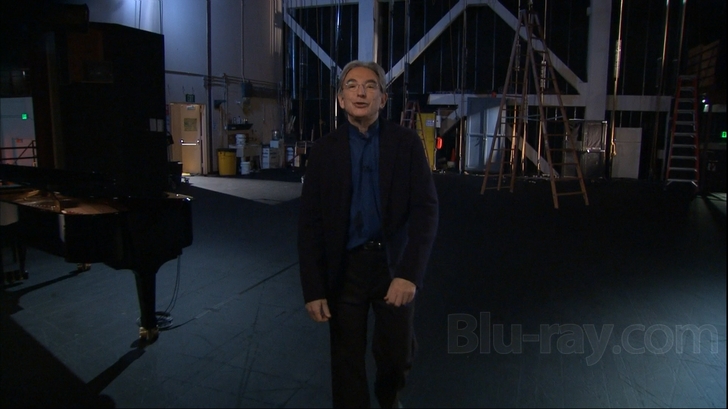
Tilson Thomas spends a great deal analyzing in depth Mahler’s First Symphony, and he almost instantly debunks the notion that Mahler is incessantly morose. Though the First starts in an amorphous, questioning spirit, the main theme, which Mahler also utilized in Songs of a Wayfarer, is a boisterous, cheerful folksong tinged with sounds of nature. Tilson Thomas does a nice job balancing technical aspects—such as Mahler’s repeated use of a descending perfect fourth—with more everyday verbiage that helps to capture the emotional tenor of the piece.
The influence of Mahler’s hometown Iglau is also explored in some detail by Tilson Thomas. The town was a hotbed of musical activity where the young composer to be was exposed to everything from raucous tavern music emanating up from Mahler’s father’s bar, to the military marches that would waft in the window from the nearby town square. The Mahlers were also observant Jews and of course a melancholy Hebrew influence informs much of Mahler’s music. (A funny anecdote related by Tilson Thomas involves a very young Mahler bringing services to a screeching halt one day by screaming that the traditional cantorial tropes were “horrible,” at which point the young toddler launched into a children’s song).
The oft-quoted Mahlerian preoccupation with death is also explored by Tilson Thomas, as the Third Movement of the First Symphony, with its famously minor Frere Jacques opening theme. Eight of Mahler’s thirteen siblings died at a young age, something that no doubt colored his early emotional life. Of course Mahler’s own adult life was rife with emotional turmoil and death, and these feelings only seem to magnify as he grew older, so that large swaths of his music are filled with intimations of mortality and a quest for the Big Answers that such ruminations typically bring.
But as musicologically and theoretically informative as much of this outing is, it is just as much a biography, and Tilson Thomas delves into everything from Mahler’s literally Freudian experience with a hurdy-gurdy musician just as his parents were having a violent argument (something Mahler confided to Freud himself), to his teenage infatuation with Wagner’s music in Vienna, to his burgeoning career as a conductor and music director. Mahler’s quest for isolation and a sequestered place where he could compose amidst the sounds of nature, away from the hurly-burly of his professional (i.e., conducting) life is a wonderful excuse for some incredibly picturesque footage as Tilson Thomas shows us several of these “composing huts” which are still in existence in such gorgeous locales as the Swiss Alps.
Though the bulk of the analysis of the main documentary is given over to the First Symphony, Tilson Thomas touches on a wide variety of other pieces, including the Third and Seventh Symphonies, as well as large sequences from Songs of a Wayfarer, which includes some performance snippets by American baritone Thomas Hampson. The increasingly tragic emotional state of Mahler takes up the final sequence of the documentary, as the death of Mahler’s young daughter, his increasing conflict with the New York Philharmonic, his failing health, and the realization that his wife Alma was unfaithful all seemed to conspire to rob the composer of peace of mind. And yet he kept composing, writing his elegiac Ninth Symphony and beginning work on the Tenth.
The Tenth Symphony is fraught with tortured pronouncements Mahler scrawled across the manuscript, as he attempted to come to grips with the growing realization that he was soon to die. Tilson Thomas does a glorious job revealing the correspondences between the First and the (unfinished) Tenth, and then closes the documentary with a heartfelt visit to Mahler’s grave outside of Vienna. The emotional tether between composer and conductor has rarely seemed as visceral as it does in these closing moments.
Keeping Score: Mahler Blu-ray Movie, Video Quality
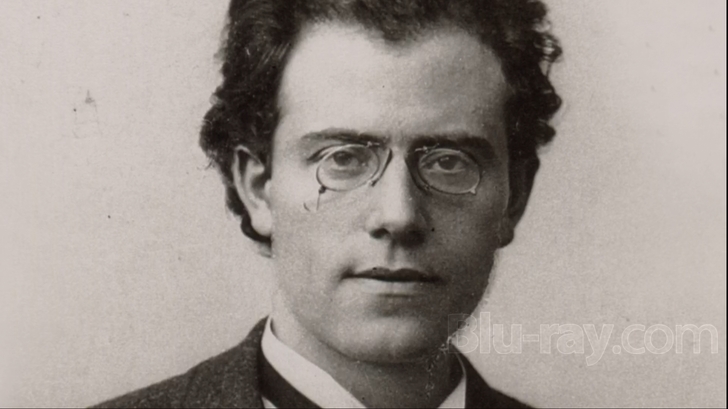
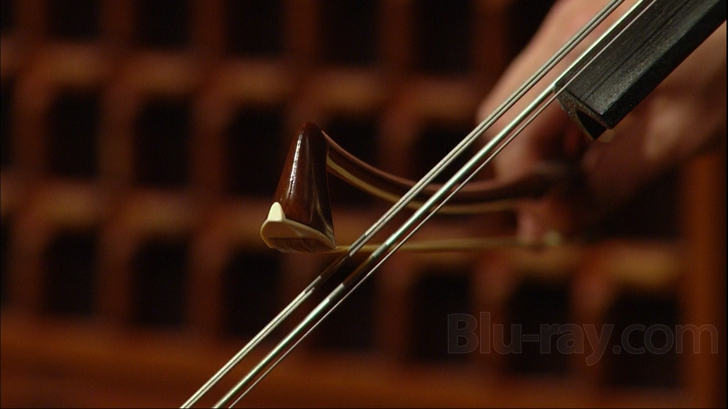
Keeping Score: Mahler is presented on Blu-ray with an AVC encoded 1080i transfer in 1.78:1. Like some other Keeping Score releases, this is a tad on the soft side quite a bit of the time, something not aided by the copious shots of Tilson Thomas wandering around backstage in Davies Hall in San Francisco with little or no light. The historical recreations are also occasionally filtered and diffused, giving them even more softness. That said, some of the close-ups of the orchestra offer abundant fine detail, and some of the extreme close-ups of instruments are really amazing, so much so that you can see individual horsehairs on some of the string bows. Overall color is very good and while the image may not be the sharpest and best detailed, it has a fair degree of pop and sizzle and is certainly well above average.
Keeping Score: Mahler Blu-ray Movie, Audio Quality
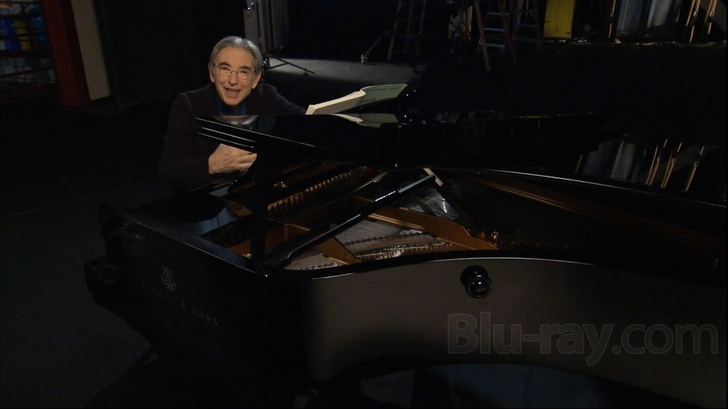
Audiophiles take note (no pun intended): it's possible to have three (count 'em) lossless audio options on Blu-ray releases. In this particular case, the main documentary feature is presented in either Dolby TrueHD 5.1 and Dolby TrueHD 2.0, while the concert is offered in Dolby TrueHD 7.1, 5.1 and 2.0. What a glut of choices, and all of them excellent. The main documentary offers extremely robust audio, with appealing low end and brilliant separation in the performance sections. My one complaint, as minor as it may be, is in the mix of the 7.1 offering on the concert itself. It's just a tad too bass-heavy for my personal liking, with a slightly overwhelming amount of low frequency that made me not want to turn the volume up past a certain level. That said, fidelity is outstanding, and Mahler's penchant for sudden crescendos and sforzandos provides all of these lossless tracks with amazing dynamic range. Tilson Thomas' commentary is always very well mixed and clearly presented, as are all of the talking heads, and overall, despite my very small qualms about the bass heaviness of the concert (which is slight), this is most definitely reference quality audio.
Keeping Score: Mahler Blu-ray Movie, Special Features and Extras
- On Location with Keeping Score: Mahler (1080i; 8:41). Tilson Thomas talks about how visiting Mahler's hometown changed his whole approach to framing the documentary.
- Keeping Score: The Big Picture (1080i; 8:05) is a quasi-promotional video featuring snippets from several Keeping Score episodes.
- About Michael Tilson Thomas is a text only supplement offering the conductor's bio.
- About The San Francisco Symphony does similar service for the orchestra Tilson Thomas conducts.
- A Mahler Journey (1080i; 56:40), another incredibly fine survey of Mahler's life interspersed with several elegant performances of iconic pieces like Songs of a Wayfarer (with Thomas Hampson) and the Adagietto from the Fifth Symphony. If you're unfamiliar with Mahler and don't feel like biting off the two hour or so main documentary, this is an exemplary way to be introduced to the composer.
Keeping Score: Mahler Blu-ray Movie, Overall Score and Recommendation

Tilson Thomas quotes Mahler as stating, "My time has come," and Tilson Thomas answers that with a resounding, "It certainly has." As recently as the 1970's, when Tilson Thomas tried to find Mahler's grave outside of Vienna, Mahler's reputation as a composer (as opposed to as a conductor) was still pretty spotty, as unbelievable as that may seem. Tilson Thomas has been at the vanguard of a newer generation's attempts to rightly place Mahler as one of the supreme symphonists of all time, and the love and admiration Tilson Thomas feels for Mahler shines through virtually every moment on these two Blu-rays, both in the documentaries as well as the performances. I've loved all of the Keeping Score releases, but this one instantly jumps to the head of the pack, and I can state without the slightest reservation that it comes Highly recommended.