Karloff at Columbia Blu-ray Movie
HomeKarloff at Columbia Blu-ray Movie 
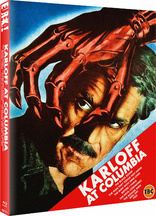
The Black Room / The Man They Could Not Hang / The Man with Nine Lives / Before I Hang / The Devil Commands / The Boogie Man Will Get You | Eureka Classics | Limited EditionEureka Entertainment | 1935-1942 | 6 Movies | 400 min | Not rated | May 03, 2021
Price
List price:Listed on Amazon marketplace

Movie rating
Movie has not been rated yetBlu-ray rating
| Users |  | 0.0 |
| Reviewer |  | 3.0 |
| Overall | | 3.0 |
Overview
Karloff at Columbia (1935-1942)
One of the most recognisable faces in horror, Boris Karloff (or simply ‘KARLOFF’, as he was often billed) has been described as “to the horror movie what Fred Astaire was to the musical”. Presented here are the six films he made for Columbia Pictures, a collaboration which produced some of Karloff’s finest acting roles
| Horror | 100% |
| Mystery | 13% |
| Dark humor | Insignificant |
| Sci-Fi | Insignificant |
| Crime | Insignificant |
Specifications
Video
Video codec: MPEG-4 AVC
Video resolution: 1080p
Aspect ratio: 1.33:1
Original aspect ratio: 1.37:1
Audio
English: LPCM 2.0 Mono (48kHz, 24-bit)
Subtitles
English SDH
Discs
Blu-ray Disc
Two-disc set (2 BDs)
Packaging
Slipcover in original pressing
Playback
Region B (A, C untested)
Review
Rating summary
| Movie | | 3.0 |
| Video | | 3.0 |
| Audio |  | 3.5 |
| Extras |  | 2.0 |
| Overall | | 3.0 |
Karloff at Columbia Blu-ray Movie Review
Reviewed by Jeffrey Kauffman May 7, 2021Boris Karloff has one of the more amazing filmographies in the annals of show business history, with the IMDb listing over 200 (!) acting credits for the venerable performer. One of the kind of interesting if at times kind of weirdly unstated aspects of that success is the fact that Karloff managed his career in at least some of the 1930s and 1940s without the traditional “seven year contract” that was regularly doled by the major Hollywood studios in the Golden Age of filmmaking. In fact, many online biographies of Karloff don’t even mention any contracts, though the fact that a 1931 contract Karloff signed with Universal fetched over eleven thousand dollars in an auction is certainly more than enough evidence that (of course) some kind of contract was signed for various appearances. That said, Karloff at Columbia provides clear separate evidence that Karloff, unlike many other major stars of that same general period, was never officially tied down to one particular studio (many film fans almost automatically associate Karloff with Universal during this period), at least for any extended period of time. The fact that Karloff was also a guiding light behind the then nascent Screen Actors Guild may give credence to the hunch that Karloff was eerily prescient in being able to see that a studio’s contractual “hold” over a performer was something to be avoided, not chased, in an awareness that arguably came years before such heavyweights (and, notably, women) as Olivia de Havilland and Bette Davis started actual legal proceedings to chip away at the “seven year indentured servitude” that studios often required of their stars. Eureka Entertainment has now assembled six of Karloff's Columbia features made between 1935 and 1942 (the same period when Karloff was also appearing in films bearing the studio imprimaturs of everyone from Universal to Monogram to RKO) in an appealing set that may not include any outright masterpieces, but which show quite clearly just how versatile an actor Karloff was.
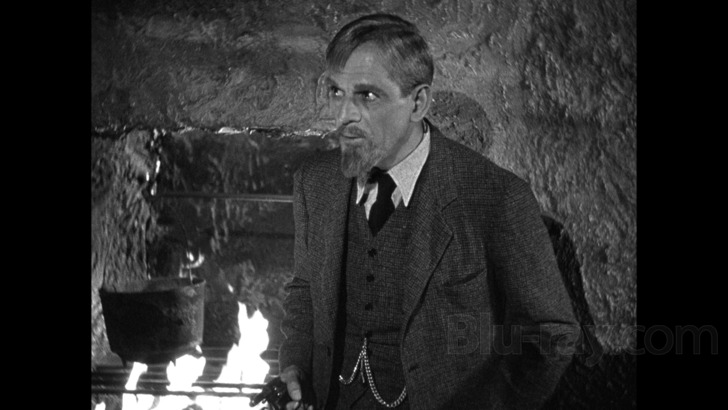
For reviews of the six films in this set, please click on the following links:
The Black Room Blu-ray review
The Man They Could Not Hang Blu-ray review
The Man with Nine Lives Blu-ray review
Before I Hang Blu-ray review
The Devil Commands Blu-ray review
The Boogie Man Will Get You Blu-ray review
Karloff at Columbia Blu-ray Movie, Video Quality
Video quality of each film is assessed in the above linked reviews.
Karloff at Columbia Blu-ray Movie, Audio Quality
Audio quality of each film is assessed in the above linked reviews.
Karloff at Columbia Blu-ray Movie, Special Features and Extras
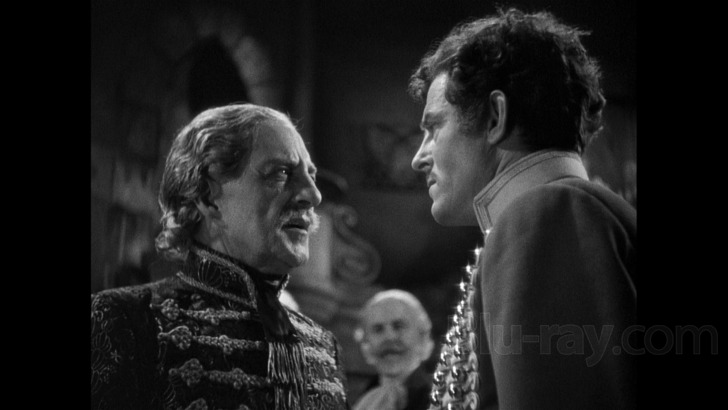
Supplements associated with each individual film are detailed in the above linked reviews. Eureka has packaged this release on two discs (three
films
per disc), with the following additional bonus content:
Disc One
- Karloff on the Radio features two audio supplements that play to stills of Karloff:
- The Corridor of Doom 23rd October 1945 (HD; 29:15)
- The Wailing Wall 6th November 1945 (HD; 29:18)
- Karloff on the Radio features two audio supplements that play to stills of Karloff:
- Birdsong for a Murderer 22nd June 1952 (HD; 21:40)
- Death for Sale 13th July 1952 (HD; 24:51)
Karloff at Columbia Blu-ray Movie, Overall Score and Recommendation
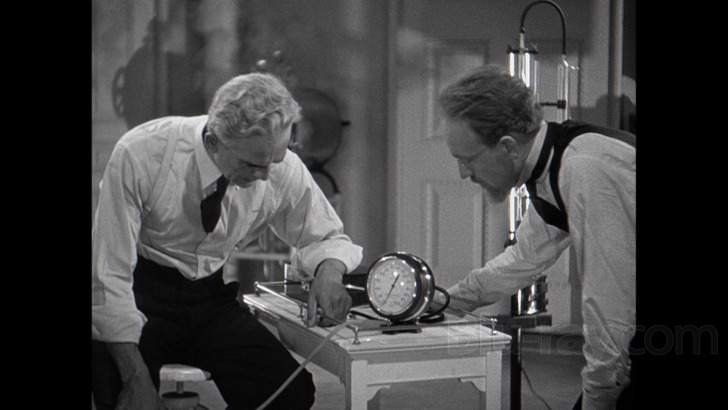
It's fun to have the five "Mad Doctor" films assembled in one set, and The Black Room has its own appeal as well. This set has understandably variable technical merits, but the accompanying commentaries are all a lot of fun, and though none of these films is an undiscovered masterpiece, in aggregate Karloff at Columbia comes Recommended.