James Dean Blu-ray Movie
HomeJames Dean Blu-ray Movie 
Ultimate Collector’s Edition / With Book / Rebel Without a Cause / East of Eden / Giant / Blu-ray + DVDWarner Bros. | 1955-1956 | 3 Movies | 430 min | Rated PG-13 | Nov 05, 2013

Movie rating
Movie has not been rated yetBlu-ray rating
| Users |  | 0.0 |
| Reviewer |  | 4.5 |
| Overall | | 4.5 |
Overview
James Dean (1955-1956)
See individual titles for synopses.
| Drama | 100% |
| Romance | 42% |
| Period | 21% |
| Western | 17% |
| Coming of age | 11% |
| Teen | Insignificant |
Specifications
Video
Video codec: MPEG-4 AVC
Video resolution: 1080p
Aspect ratio: 2.55:1
Original aspect ratio: 2.55:1
Audio
See individual releases
Subtitles
None
Discs
50GB Blu-ray Disc
Seven-disc set (3 BDs, 4 DVDs)
DVD copy
Playback
Region A, B (C untested)
Review
Rating summary
| Movie | | 4.5 |
| Video | | 4.5 |
| Audio |  | 4.0 |
| Extras | | 4.5 |
| Overall | | 4.5 |
James Dean Blu-ray Movie Review
Jimmy x 3
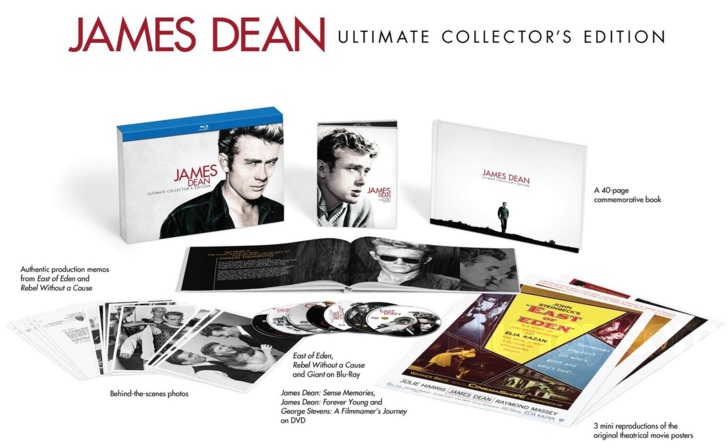
Reviewed by Michael Reuben November 10, 2013The three films that James Dean made before his career ended in a car wreck on September 30, 1955, could all stand on their own as landmarks of American cinema even without the extra value of being items in a rare collection. Each of them was made by a major director, featured talented casts, was a box office hit (especially Giant) and has stood the test of time. In East of Eden and Rebel Without a Cause, Dean proved that he had the rare and ineffable quality known as star power, and in Giant he demonstrated his skills at creating a character different from himself, using the training he'd received at the Actors Studio in New York. Given the unexpected twists and turns that affect every life, especially in show business, no one can say where Dean's career might have gone next. Elia Kazan, his director in East of Eden, thought that Dean would burn out quickly, but even if he did, show business is full of comeback stories. The combination of Dean's untimely death and the troubled character he played in Rebel made him a cultural icon whose status transcended the films themselves. So it's fortunate that Warner Home Video has provided all three of Dean's films in these impressively restored Blu-ray versions. Both long-time fans and the merely curious can now experience the full range of Dean's work in a form as close as possible to their original release. Each of the films is available in a separate digibook, with substantial extras. In addition, all three are available in an Ultimate Collector's Edition (or "UCE") with further extras, including two documentaries. The individual films have been reviewed separately. This review deals only with the supplemental materials specific to the UCE.
For discussion of East of Eden, please see the East of Eden Blu-ray review. For discussion of Rebel Without a Cause, please see the Rebel Without a Cause Blu-ray review. For discussion of Giant, please see the Giant Blu-ray review.
James Dean Blu-ray Movie, Video Quality
East of Eden 4.5/5 (screenshots are available here) Director Elia Kazan requested Warner cinematographer Ted McCord, whose versatility extended from The Treasure of the Sierra Madre to The Sound of Music, to shoot East of Eden in the format then known as "Cinemascope". McCord's widescreen vistas of the Salinas Valley, as well as the streets of Monterey (and portions of Mendocino, standing in for Monterey), are essential to the sense of place and time that give East of Eden its feel of authenticity. Warner's 1080p, AVC-encoded Blu-ray, created from a 4k scan of the original camera negative restored by MPI, Warner's on-site post house, reveals depth, detail and luster that haven't been seen in East of Eden probably since the original release prints. The subtleties of the colors, especially the predominant green of Salinas, but also the earth tones of the Trask household and the bright lights of the carnival visited by Cal, Aron and Abra, are noteworthy, but so too are the blacks and dark shadows of Kate's establishment, either deserted in daylight or in full swing at night. (Kate herself prefers solitude in her office.) The sequence of townspeople marching in celebration after the U.S. declares war on Germany pops with patriotic hues, but darker tones prevail when the citizens turn on one of their own who emigrated from Germany and is now treated as a symbol of the enemy. The only flaw in the presentation is a slight and occasional hiccup at dissolves between scenes, presumably as a result of MPI's efforts to maintain image quality while simulating electronically an effect that, in 1955, would have been achieved optically. It's a minor flaw that many viewers will not notice. A fine but unobtrusive grain pattern is visible throughout. MPI is one of the top facilities in film restoration. One would not expect to encounter noise reduction, high frequency filtering or artificial sharpening, and I saw none. Nor did I encounter any compression-related issues. This is a gorgeous, film-like image. Rebel Without a Cause 4.5/5 (screenshots are available here) The cinematographer of Rebel Without a Cause was Ernest Haller, an Oscar winner for Gone with the Wind. Director Nicholas Ray found the film challenging, because it was his first time working with the wide frame of Cinemascope, but it turned out to be the ideal shape for settings like the Hayden Planetarium. As with East of Eden, Warner's 1080p, AVC- encoded Blu-ray of Rebel is based on a 4k scan of the original camera negative, restored and color-corrected in the digital domain by MPI, Warner's on-site post house. The results for Rebel are of similar quality in terms of sharpness, rich texture and detail, which is to say that the image is excellent. Rebel's color palette is less diverse, however, which may be a holdover from its origins as a black-and-white film. A few colors, notably red, play a critical symbolic role in Ray's visual design, and these are well-represented without being overly emphasized. Accurate blacks are essential for the famous "chickie-run" scene, the planetarium sequences and the scenes in the abandoned mansion, and the Blu-ray shines in this regard, with gradations of black allowing for fine detail even in shadows. Appropriate contrast allows visibility without blowing out detail. The average bitrate of 24.94 Mbps falls within the standard Warner range, and it's more than adequate here, where the wide Cinemascope frame leaves significant black space and the image is smooth and fine-grained. Giant 4.0/5 (screenshots are available here) For Giant, director George Stevens reunited with his cinematographer from A Place in the Sun, William C. Mellor, who had shot the earlier film with diffusion and soft-focus lenses. Bucking the trend of the day, Stevens refused to shoot in the currently fashionable widescreen format of Cinemascope, partly because he believed that height was critical to Giant's imagery, and partly because he was dissatisfied with the visual distortions created by Cinemascope's anamorphic lenses, which remained a work in progress. (These distortions, sometimes known as "mumps syndrome", are the reason why still frames from East of Eden and Rebel Without a Cause strike some viewers as "stretched".) Having recently been through the experience with Paramount of having Shane matted for 1.85:1 projection, although it was framed and shot for the standard Academy ratio of 1.37:1, Stevens was well aware of how Giant would be shown. Nevertheless, he and Mellor apparently shot the film at 1.66:1, which is the aspect ratio on Warner's 1080p, AVC-encoded Blu-ray. For an American film, 1.66:1 is a problematic ratio, because it can never be the "original aspect ratio" if one goes by projection standards of which the typical theater is capable. With rare exceptions, theaters in the U.S. have never been equipped to project such images, and in practice they are masked to 1.85:1. Nevertheless, Warner and MPI have elected to present Giant on Blu-ray at 1.66:1. Since no image appears to have been lost and none of the compositions appear (to my eye) to have been compromised, I am unconcerned by this decision and have not taken it into account in scoring the video. Others are free to disagree. Like the other two films in the James Dean collection, Giant was taken from a 4k scan of the negative, restored and color-corrected by MPI. Given MPI's general reputation and their performance on East of Eden and Rebel Without a Cause, one must assume that they have extracted the best image from Giant that the source could possibly yield. Still, there will be many complaints that the image is "soft", "blurry" or indistinct. Certainly, as compared to something like East of Eden, Giant lacks the same level of sharpness. I am advised that certain shots were beyond repair and had to be taken from dupes; these are, for obvious reasons, among the softest and blurriest in the film. In addition, the film is filled with optical effects, primarily dissolves, that further reduce the quality of the source. Giant does not, however, lack for detail or vivid color. The former is readily visible in innumerable scenes, including, for example, the adobe slum where Leslie Benedict hops out of the jeep in which she is riding to look in on a sick Mexican mother and her equally sick baby, or the elaborate banquet thrown by Jett Rink in his own honor at his swanky new hotel. The colors show up in the women's wardrobes, then again in the hues that begin to brighten the Benedict mansion at Reata as oil money raises their standard of living. Fine detail is not the only measure of a high-quality image. Stevens used color in Giant as much as (or more than) any other visual element to compose the frame and direct the eye. As Stevens, Jr. relates in the commentary, because Giant did not use Technicolor but "Eastmancolor" (his term; the credits say "Warnercolor"), considerable care had to be taken to get certain shades to Stevens' liking, especially the greens. MPI has, of course, repaired any damage or wear-and-tear wherever possible, and the film's natural grain has been preserved without filtering, sharpening or other unnatural tampering. The average bitrate of 21.95 Mbps is on the low side, but Giant is a long film. Fortunately, there are enough scenes of stillness and conversation to allow conservation of bits for the more demanding sequences.
James Dean Blu-ray Movie, Audio Quality
East of Eden 4.0/5 East of Eden was released in both mono (optical) and four-track stereo (magnetic) formats. The Blu-ray features a 5.1 remix prepared for Warner's 2005 special edition DVD, presented in lossless DTS-HD MA. Although the multi-channel format allows for a full-bodied presence, the mix remains largely front-oriented, which is to be expected for a film of this era. The sophisticated sound editing registers with genuine impact, e.g., the racket caused by the ice blocks that Cal impulsively dumps from an ice house in a rage over witnessing his brother and Abra in a romantic moment, or the din in the bar at Kate's establishment. The dialogue is always clear, even with Dean deliberately muttering many of Cal's lines. The film score by Leonard Rosenman, his first after his friend James Dean recommended him to Kazan, is the ideal complement to Dean's performance; it's direct and unsubtle, but there's nothing trite about it. The Blu-ray track's presentation has good fidelity and remarkably broad dynamic range for a 1955 recording. (Rosenman would later win Oscars for Barry Lyndon and Bound for Glory.) Rebel Without a Cause 4.0/5 As with East of Eden, Rebel Without a Cause was released in both mono (optical) and four-track stereo (magnetic) formats. The sound was remixed for 5.1 on the 2005 DVD, and that mix is presented on Blu-ray in lossless DTS-HD MA. Rebel's sound mix is front-oriented and functional but not otherwise noteworthy. The cars in the "chickie-run" scenes create the needed sounds of engines gunning and tires squealing, but no one who has watched a Fast and Furious movie will be impressed. Police sirens and a few gunshots register with sufficient force to tell the story, but they won't disturb the neighbors. The planetarium presentation (by veteran character actor Ian Wolfe) has a sense of detached sonority and unearthly echo, but that is about as sophisticated as this mix gets. Continuing his association with James Dean's film career, Leonard Rosenman scored Rebel with an energetic, jazzy score that no doubt sounded contemporary at the time but now has acquired a distinctively period quality that works just as well. The dialogue is clear throughout, even that of the gang members. Giant 4.0/5 Giant's original mono soundtrack is presented as two-channel lossless DTS-HD MA, with identical left and right front channels, and it sounds quite good. Scattered throughout the extras are references to specific examples of the care with which the sound was mixed: volume raised on an actor's lines to make him dominate the scene, or the blows of one participant in a fight amplified to convey the impression that he was winning. The Blu-ray's track captures such subtle, often subliminal effects and also more overtly narrative sounds like horses galloping, cattle being herded, the relentless machinery of Jett Rink's oil rigs, etc. The dialogue is always clear, which is an important point for a George Stevens film. The majestic, often thundering score by Dmitri Tiomkin, a crucial component of Giant's epic sweep, is conveyed with decent fidelity and good dynamic range. Barring a stereo remix from original stems, I doubt that it could sound better.
James Dean Blu-ray Movie, Special Features and Extras
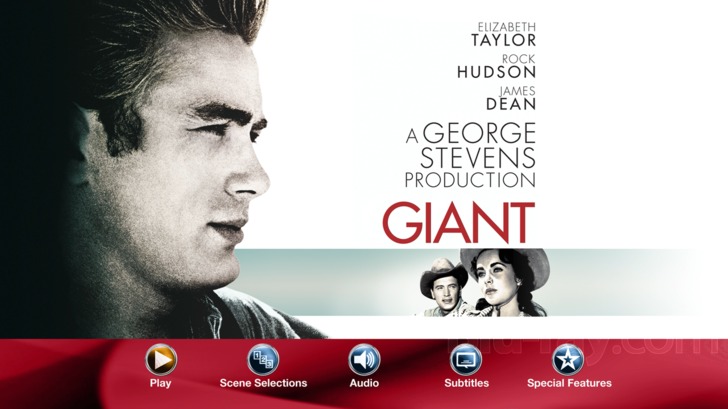
For extras specific to East of Eden, please see the East of Eden Blu-ray review. For extras specific to Rebel Without a Cause, please see the Rebel Without a Cause Blu-ray review. For extras specific to Giant, please see the Giant Blu-ray review. The following extras are unique to the UCE box set:
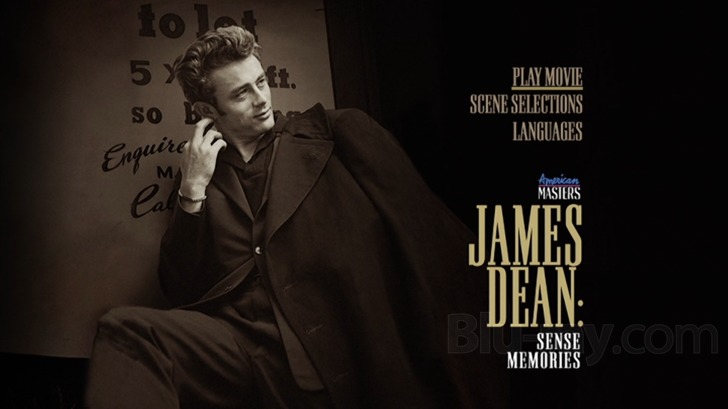
- James Dean: Sense Memories (1.78:1; 53:33): This 2005 episode of the PBS series American Masters focuses on Dean's years in New York City studying at the Actors Studio, which eventually led to his role in the Broadway production of The Immoralist, where he was seen by Elia Kazan. It was during this time that Dean became acquainted with a diverse circle that included Martin Landau, Eartha Kitt, Mark Rydell and Eli Wallach, all of whom present their individual recollections of the young man they knew for what turned out to be a relatively brief time. Also appearing is Lois Smith, who only knew Dean during their weeks of filming together in East of Eden; writer Budd Schulberg; William Bast, Dean's closest friend in the last years of his life; Corey Allen and Frank Mazzola, his co-stars in Rebel Without a Cause; Dennis Stock, whose photographs of Dean are some of the most famous images of the actor; screenwriter Stewart Stern; and George Stevens, Jr.
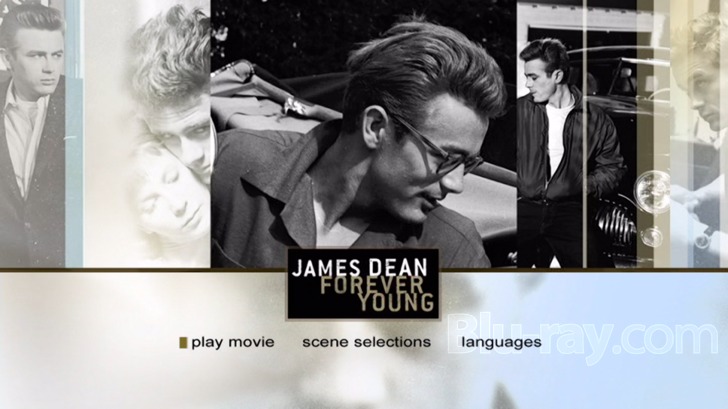
- James Dean: Forever Young (1.33:1; 1:27:42): Narrated by Martin Sheen, this detailed review of Dean's career is significant for the attention it devotes to the years preceding the three films for which he is primarily known. Over half an hour is devoted to early film appearances and his extensive TV work, both before and after the release of East of Eden. Dean's early work brought him into contact, however briefly, with such notables as Humphrey Bogart, John Forsythe and Rod Steiger. Some of the TV performances were not preserved, as was the case with many live broadcasts in the early days of television. Director, producer and co-writer Michael Sheridan also chronicles many of Dean's friendships and the various romantic relationships that became hot items in the gossip columns of the day, notably with actress Pier Angeli (who married singer Vic Damone, supposedly at her mother's insistence) and actress Ursula Andress (who would become the first Bond girl). Still, Sheridan's account isn't complete. Entirely missing is Dean's close friend and early biographer William Bast, who appears in almost every other documentary included with this set.
- Commemorative Book: This 40-page book contains brief discussions of all three films and of Dean's career in general. It has a satisfying heft, compared to the typical digibook.
- Photos, Memos, Posters: This substantial collection of memorabilia includes reproductions of posters for all three movies; behind-the-scenes photos for all three films; and production memos for East of Eden and Rebel (memos for Giant are included on the disc). Although I do not have the individual digibooks for comparison, I suspect that much of this material was incorporated into them, but in miniature.
James Dean Blu-ray Movie, Overall Score and Recommendation
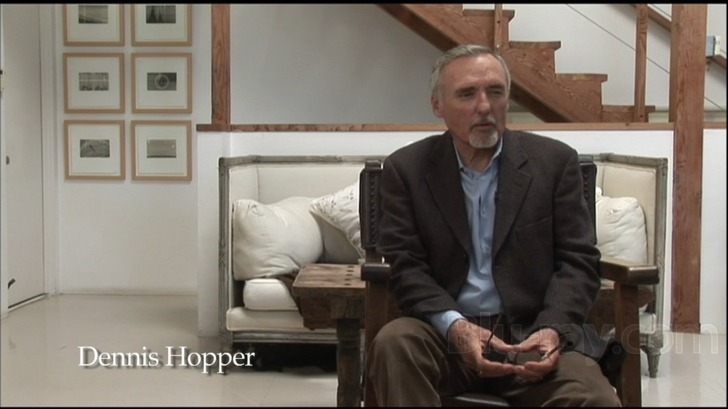
Whether separately or in the UCE, the three films in the James Dean collection represent a major effort by Warner Home Video that further disprove the recurrent internet assertions that Warner isn't committed to releasing its catalog on Blu-ray. Highly recommended.