Ivory Tower Blu-ray Movie
HomeIvory Tower Blu-ray Movie 
Paramount Pictures | 2014 | 91 min | Rated PG-13 | Sep 30, 2014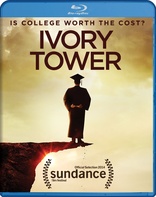

Movie rating
6.9 | / 10 |
Blu-ray rating
| Users |  | 0.0 |
| Reviewer |  | 3.0 |
| Overall | | 3.0 |
Overview
Ivory Tower (2014)
A documentary that questions the cost -- and value -- of higher education in the United States.
Director: Andrew Rossi| Documentary | 100% |
Specifications
Video
Video codec: MPEG-4 AVC
Video resolution: 1080p
Aspect ratio: 1.78:1
Original aspect ratio: 1.85:1
Audio
English: DTS-HD Master Audio 5.1
Spanish: Dolby Digital 5.1 (640 kbps)
Portuguese: Dolby Digital 5.1
Subtitles
English, English SDH, French, Spanish, Portuguese
Discs
25GB Blu-ray Disc
Single disc (1 BD)
Playback
Region A (B, C untested)
Review
Rating summary
| Movie |  | 4.5 |
| Video | | 3.0 |
| Audio |  | 3.5 |
| Extras |  | 1.0 |
| Overall | | 3.0 |
Ivory Tower Blu-ray Movie Review
Collapse.
Reviewed by Martin Liebman September 30, 2014They say youth is wasted on the young. Is college also wasted on the young, or better said, is college a waste, period? What was once a mark of distinction, something that wasn't accessible to everyone -- for whatever reason, including cost, yes, but also race and gender and other considerations -- has, more or less, become accessible to all, certainly for the better in a broad social context but arguably for the worse in a more narrow but not less important area of concern: the financial burden of a college education. Ivory Tower takes a look at the evolution of the college experience and performs its own brand of cost-benefit analysis, weighing on one hand the raw benefits of a college education versus the high cost of attending university -- which isn't always simply monetary -- which for many is the equivalent, or more, of a mortgage. It's both an eye-opening film -- even for people who, like this reviewer, are only years, not decades, removed from the college experience -- and one of the most frightening films of the year, a truly dour, nearly hopeless examination of the rapid downward spiral of an education's benefit to a modern society saturated with graduates and ever diminishing job markets closing to automation, downsizing due to rising taxes, shrinking under the burden of regulation, and eschewing those caught in the middle with too much education and not enough specialization.
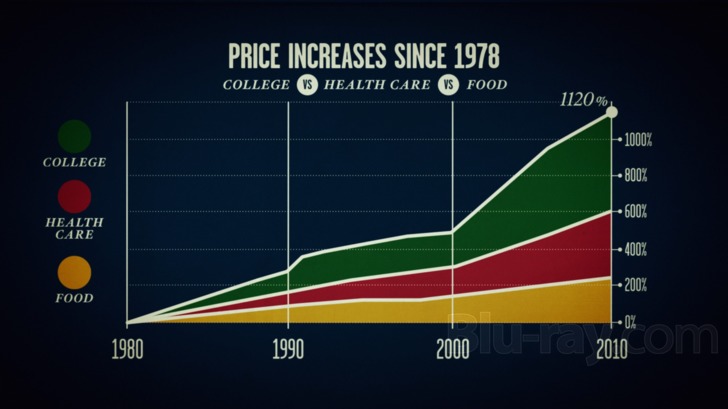
Ouch.
One area of concern that the film address, but not in great detail, is the growing saturation of the college graduate marketplace. Even with low graduation rates, the job market appears flooded with more applicants than there are openings, creating a further diminishing return on the investment. One graduate interviewed in the film, for example, says she cannot find employment scrubbing toilets even with a Master's degree under her belt. The workplace seems to have lost its appreciation for "liberal arts" graduates who are academically overqualified for low paying, labor intensive positions yet who lack the specialization for more specific openings that often require experience that seems impossible to earn, in part because nobody is hiring, nobody is taking a chance. Not only does college cost a fortune, but if a student makes the wrong choice when choosing his or field of study, the window for finding meaningful, prosperous, and steady employment seems to diminish a great deal further. Catch-all liberal arts degrees certainly have a benefit in terms of pure life enrichment, but since people don't live in a Star Trek-like utopia where everyone exists on an equal scale and simultaneously works towards the betterment of both oneself and humanity, it seems there's no more room for "life enrichment" for the younger generation struggling to keep food on the table and gas in the car, never mind explore areas of interest that may drive the mind forward but frequently lead to a career dead end.
Certainly, there are plenty of examples, on both ends, where a college education has been worth every dime and where a college education has cost far more than a gargantuan pile of debt, siphoning off the drive to pursue interests and find a place and calling in life in exchange for maintaining a basic living standard for which the weight of debt has further crushed legitimate life hopes and dreams. It seems college has become such a proverbial rat race that everything but one's true, priceless education has taken center stage. The college application process -- on which the film never focuses but should have taken a long, hard look -- seems less about the individual and more about statistics and numbers, less about what a person wants from life and what they can get from the institution -- and what that institution can gain from educating that person -- and more about their participation in some activity (frequently something for which they hold no interest beyond checking it on a college application) or their performance on an athletic field that happens to pique the interest of admissions personnel or an athletic coach. College entrance seems more about reshaping oneself into the "ideal applicant" rather than the beginning of the journey to become the "ideal individual," whatever that "ideal" may be to the person in question. Colleges, and high schools, too, teach to the test, to the grade, to the standardized test score, and not to the individual, forcing upon them a number rather than fostering within them a name for themselves.
At the end of the film, one of the students on whom it focuses -- a struggling Harvard student who has escaped a difficult inner-city life in Cleveland -- says college is about bettering himself, but is that really what college does in the 21st century? Surely on some level it's up to the individual to find themselves inside of college or outside of it, to take it upon themselves to seize the opportunity and make the most of it, but does academia really foster that sense of self-exploration and growth, or does it merely count each student as a commodity that pays a tuition and, hopefully some day, will add to the school's already massive endowment? Ivory Tower takes a look at the burgeoning business of college education, where it seems like campus renovation, expansion, and beautification take precedence over truly educating an individual, where constructing a multi-million dollar football facility is more important than constructing multi-million dollar earners for whom there is a place and purpose in the workforce and the greater world in which he or she exists. It's about building around, not pushing up. It's about rankings in a book and raking in money, not about building character and broadening horizons. It also looks at the other end of the spectrum, where college, on the student level, has become less about self-encrichment and more about self-destruction, about a party scene that is perhaps a defense mechanism in light of the growing evidence of the absence of real opportunity or, perhaps, simply an outgrowth of the popular notions reinforced in movies like Animal House.
Indeed, the film's primary focus is on two dueling sides of the same coin: the "mission to educate" versus the "competition for prestige." Director Andrew Rossi's film is compelling and convincing. It takes a hard look at all sides and explores many avenues of concern in great detail even under the crunch that is the film's 90-minute runtime. It's a fascinating analysis of the modern college landscape that plays alongside a history of higher education that dates back to the colonial period and moves on through to the Civil War and the passage of the Morrill Act and that further moves forward another century to the passage of the Higher Education Act of 1965. The film offers perspectives from several unique sources including the free, all-male work/learn Deep Springs College, the once free but now paid Cooper Union experience and the conflict that arose from the administration's vote to levy tuition on incoming students for the first time in the school's history, the Harvard experience, and the growth of online learning with emphasis on freely accessible courses. It's a thorough, well-paced, and captivating journey that's not easy to watch considering its rather dour present and future outlooks but that's nevertheless a must-see for all audiences, whether emerging college-age students, parents, or anyone interested in the societal consequences of increased student debt and a university experience that seems to emphasize everything but the true student-centered learning experience.
Ivory Tower Blu-ray Movie, Video Quality
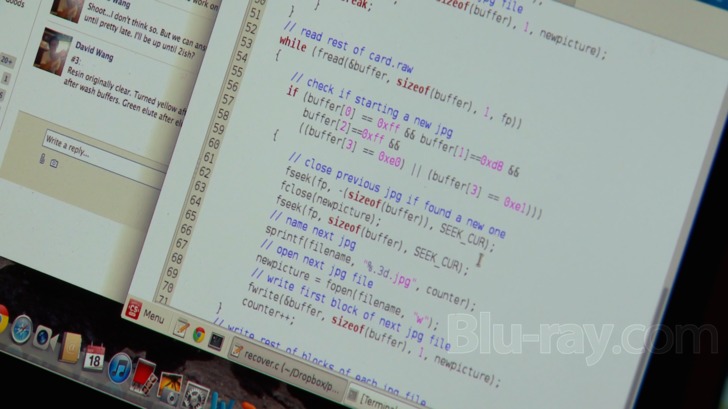
Ivory Tower's 1080p transfer looks great at-a-glance but suffers from a number of issues upon closer inspection. Generally, the image is bright and cheery, with satisfyingly bold and accurate colors, whether campus bricks and vegetation, attire, handmade signs, or other evidence of the college life. Likewise, image clarity is strong, with good, intricate detailing evident both in close-ups of human skin, clothes, campus textures, and overhead shots that reveal every nuance down below with pinpoint accuracy. However, there are quite a few bugaboos throughout. Black levels are uneven and frequently noisy. Skin tones often appear rather flat and pasty. Moderately heavy aliasing is a frequent guest, and a few jagged lines and occurrences of banding are also regular eyesores. In short, this is a solid effort but one that's more deeply flawed than meets the screenshot eye.
Ivory Tower Blu-ray Movie, Audio Quality

Ivory Tower's DTS-HD Master Audio 5.1 lossless soundtrack conveys the basics well enough. This is a dialogue-heavy film and the spoken word enjoys regular and consistent placement in the center channel, delivered with good, precise clarity and room-filling presence. There are a couple of lecture hall shots that present the spoken word with a wider sense of space around the listening area. Light din sometimes help define an environment, but this is mostly a straightforward affair. Music features solid frontside spacing and good, dependable clarity throughout, including a tight, satisfying low end. There's not much asked of this track, and it handles all challenges that come its way with relative ease.
Ivory Tower Blu-ray Movie, Special Features and Extras
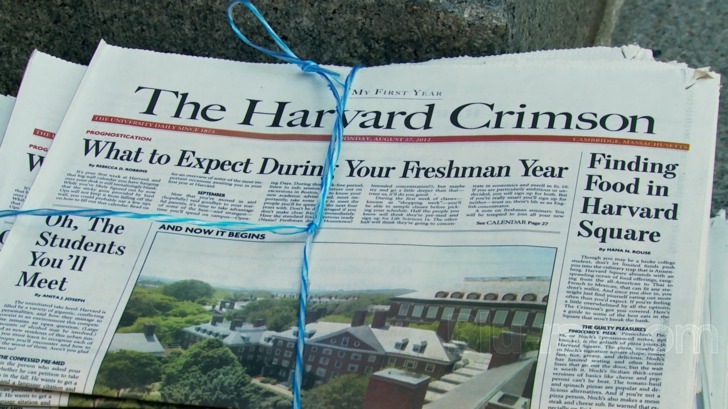
Ivory Tower contains a couple of brief supplements.
- Q&A's on Opening Weekend (1080p, 15:55): Writer/Director Andrew Rossi and Cooper Union student Victoria Sobel field a number of questions from a post-screening audience. From the Angelika Film Center in New York, New York.
- Deleted Scenes (1080i): Clayton Christensen & Andrew Delbanco Debate Disruption in Higher Education (2:56) and Anthony Carnevale Discusses College and Social Inequality (4:09).
Ivory Tower Blu-ray Movie, Overall Score and Recommendation
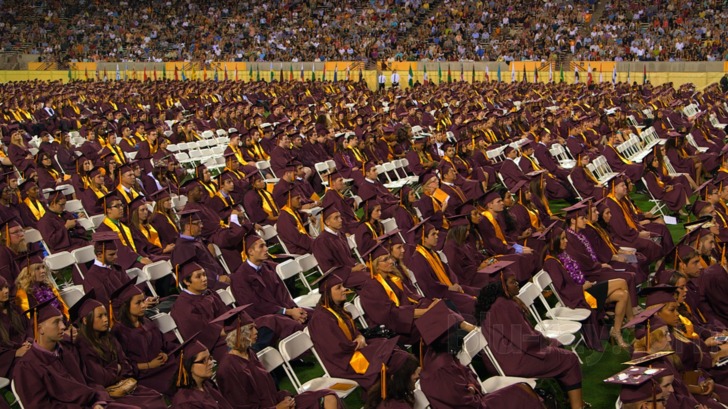
Ivory Tower won't sit well with some. It takes a hard, honest look at modern education, and even through its various examples on both ends of the spectrum, there still exists a middle ground of students and educators who seek that classic college experience but who are caught in the middle of the gross excesses of the educational landscape. For every good example there are ten bad, for every bad example there are ten good. But it's the trend that counts, not individual blips on the radar or points on the graph that more broadly shows a decidedly declining value for higher education. It will be interesting to see where it all goes in the next decade-plus, and here's hoping that Andrew Rossi follows up with another film later on down the line. Paramount's Blu-ray release of Ivory Tower features generally fair but often troubled video, decent audio, and a couple of extras. Highly recommended on the value of the film.
Similar titles
Similar titles you might also like
(Still not reliable for this title)

Waiting for "Superman"
2010

On the Basis of Sex
2018

Where to Invade Next
2015

Shock and Awe
2017

The Company You Keep
2012

The Front Runner
2018

Fahrenheit 11/9
2018

RBG
2018

Three Identical Strangers
2018

America: Imagine the World Without Her
2014

The Tillman Story
2010

Life Itself
2014

The Visitor
2007

Richard Jewell
2019

Our Kind of Traitor
2016

Citizenfour
2014

I Am Not Your Negro
2016

Drunk Stoned Brilliant Dead: The Story of the National Lampoon
2015

Truth
2015

Best of Enemies
2015