Imagine & Gimme Some Truth Blu-ray Movie
HomeImagine & Gimme Some Truth Blu-ray Movie 
John LennonEagle Vision Media | 1972-2000 | 132 min | Not rated | Oct 05, 2018
Price
List price:Listed on Amazon marketplace

Movie rating
Movie has not been rated yetBlu-ray rating
| Users |  | 0.0 |
| Reviewer |  | 4.0 |
| Overall | | 4.0 |
Overview
Imagine & Gimme Some Truth (1972-2000)
See individual titles for their synopses.
| Music | 100% |
| Documentary | 57% |
Specifications
Video
Video codec: MPEG-4 AVC
Video resolution: 1080i
Aspect ratio: 1.39:1
Original aspect ratio: 1.37:1
Audio
English: LPCM 2.0
English: DTS-HD Master Audio 5.1
Subtitles
English, French, German, Portuguese, Spanish
Discs
Blu-ray Disc
Single disc (1 BD)
Playback
Region A (B, C untested)
Review
Rating summary
| Movie | | 4.0 |
| Video | | 4.0 |
| Audio |  | 4.5 |
| Extras |  | 1.5 |
| Overall | | 4.0 |
Imagine & Gimme Some Truth Blu-ray Movie Review
Reviewed by Jeffrey Kauffman October 1, 2018Don McLean’s lyric for his totemic anthem American Pie contained the following memorable lines:
I can't remember if I criedAs has been discussed pretty much ad infinitum since that song’s release, McLean is probably referencing the deaths of Buddy Holly, Richie Valens and The Big Bopper in a chartered plane crash in 1959. For those born after this tragedy, there’s another “day the music died” which is most likely indelibly imprinted in many memories, namely December 8, 1980, when assailant Mark David Chapman lay in wait for John Lennon and Yoko Ono at the couple’s iconic condo The Dakota, where Chapman gunned down Lennon at close range and in cold blood. I don’t think I had a television back in those days, and so didn’t hear about the tragedy until the morning of December 9, when I showed up at work and an assistant of mine asked how I was feeling, to which I mumbled a kind of confused “okay” before he told me what had happened the night before. I remember literally leaving my office to run down to the street to buy a paper, which was of course emblazoned with the news in a huge font across the front page.
When I read about his widowed bride
Something touched me deep inside
The day the music died.
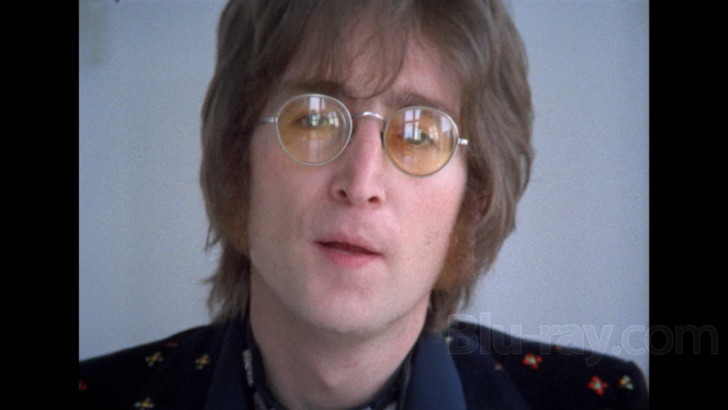
It may be hard for younger music fans to realize the waves of shock that had swept over seemingly the entire globe when Lennon (at first privately) announced his partnership with The Beatles was at an end, followed by Paul McCartney publically announcing the end of the group. The Beatles had been a cultural force for close to a decade at that time, and in some ways had helped the entire globe weather a number of epochal storms, from the political assassinations that dotted the sixties (some may recall that the February 1964 arrival of The Beatles in the United States was felt as a kind of palliative to the then recent assassination of President Kennedy) to Vietnam to racial unrest. While “glass half full” types might have been excited at the thought of at least three of the four Beatles being able to release solo material, there was definitely a feeling of loss and perhaps even betrayal. Betrayal seemed to be the operative word in terms of the relationship between Lennon and McCartney, and there are some really interesting little jabs at Paul from John that are caught on celluloid in this fascinating “two fer” from Eagle Rock, part of a huge retrospective for the Imagine album, which is being released in a variety of formats as part of what would have been John’s 78th birthday celebration on October 9.
Imagine is a somewhat psychedelic aggregation of what amount to music videos, with a lot of mugging on the part of both John and Yoko at various moments. While the promotional material UMG and Eagle Rock sent out with this release mention Imagine is “widely regarded as one of the first ‘video albums’, since it features a different visual treatment for every song on the record,” there is perhaps wisely no mention made of the fact that a few Yoko “music videos” are included as well. (For a complete listing of the songs included, see screenshot 21 accompanying this review.) Yoko’s material, from her album Fly, is typically provocative and just outright weird at times, not necessarily melding all that well with John’s more rock and pop oriented musings. One way or the other, John and Yoko are shown as a veritable unit throughout the film, which also features a ton of sometimes funny cameos from the likes of George Harrison, Dick Cavett, and Fred Astaire.
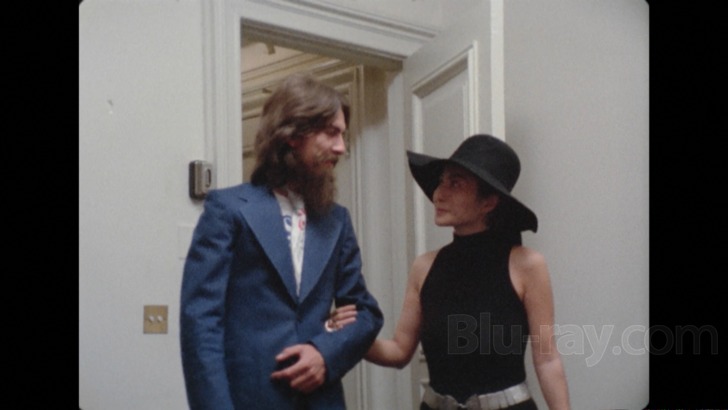
Gimme Some Truth recycles quite a bit of the footage in Imagine, along with what look like alternate takes or snippets from sequences perhaps planned for Imagine that didn’t make the final cut, along with what (for me, anyway) was the piece’s most compelling footage — a lot of studio and rehearsal scenes documenting the actual construction of the Imagine album. There is some really fascinating stuff here, including John taking potshots at Paul for not printing lyric sheets with his solo albums (this with George sitting right there, looking slightly bemused), as well as some rather fascinating interplay with Phil Spector. John is occasionally a bit on the crass side, and even loses his temper a couple of times, but he’s also typically charming and spry at other moments.
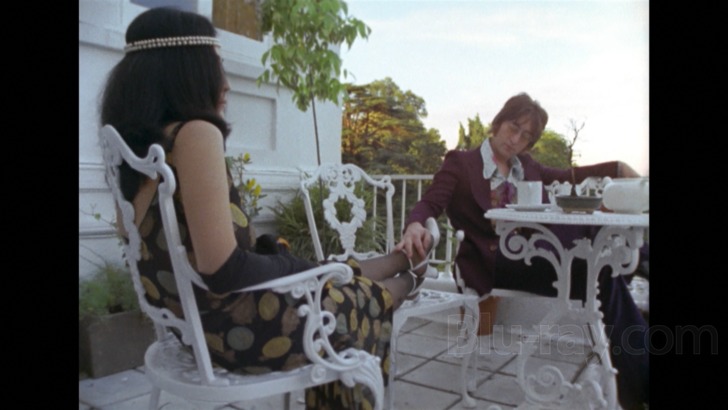
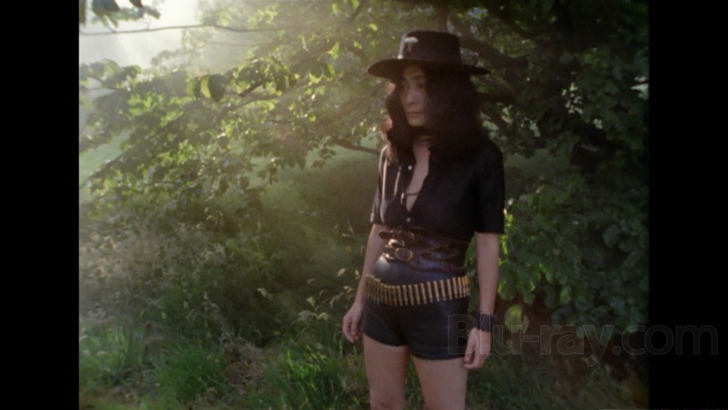
While there’s an undeniably playful quality to Imagine and the parts of Imagine that are ported over to Gimme Some Truth (including those aforementioned slightly different takes and the like), there’s also a kind of pretentious quality to some of the proceedings that may rankle those who want their rock stars in jeans and t-shirts, shorn of any signs of wealth and pomposity. Some of the vignettes in Imagine are just flat out gonzo, including Yoko traipsing through the woods in a weird kind of bolero getup, while other vignettes, including what looks like a game of “telephone” involving both Jack Palance and Dick Cavett, are arguably a bit too precious for their own good.
Still, it’s incredibly moving to see John and Yoko at this stage of their lives, and it’s evident that the two were very much focused on each other. As much as Yoko has been blamed for “destroying” The Beatles, it’s obvious from both of the films included in this set that she was totally devoted to John, and in fact can be heard on a couple of occasions here struggling to keep him calm through a sometimes frustrating recording process. (To be fair, at other times she offers unsolicited advice about arrangements and playing that may have contributed to the frustration.)
While those of us who were at the “right age” to feel the music dying on that awful December day decades ago, this new release is a Second Coming of sorts (a deliberately cheeky comment on my part, considering John’s infamous comment about The Beatles being bigger than Jesus). A lone madman may have thought he had erased John Lennon from all of our lives, but this stunning release proves quite admirably that John’s music will continue to live on, for as long as people continue to imagine.
Imagine & Gimme Some Truth Blu-ray Movie, Video Quality

Imagine and Gimme Some Truth are presented on Blu-ray courtesy of Eagle Vision, an imprint of Eagle Rock Entertainment, and
Universal Music Group, with AVC encoded 1080i transfers in 1.39:1. Both of the films feature rather involved restoration credits at the end which
document a seemingly ungainly time period spanning from 2010 to 2018 to complete the process. Why that's the case is unknown to me
(and the documentation provided with this release doesn't offer any clues), but considering some of the variances on display, especially in
Imagine, I'm wondering if completed versions might have needed to be cobbled together from different sources. The interesting interviews
included in the insert booklet suggest that at least Gimme Some Truth was sourced largely from 16mm, but both films on this release have
an at times grainy and fuzzy appearance that suggest smaller formats. That said, footage like the interstitial scenes featuring Jack Palance look
decidedly rougher than the at times already pretty soft bulk of footage, and I wonder if perhaps a few 8mm home movies might have been included
(see screenshot 29 for an example of what the Palance footage can look like when compared to most of the rest of Imagine). The palette is
a bit more suffused on Imagine than Gimme Some Truth (and it looks like some duplicate elements of Imagine footage
may have been used for Gimme Some Truth), though both features retain a generally accurate accounting of the colors. Fine detail tends
to vary based on lighting sources and proximity to the camera. While it evidently took eight years to restore these features, whatever corrective
gauntlet the elements were put through missed a number of things like hairs in the gate, some of which stick around for quite long periods of time.
Screenshots 23 - 26 show some of these hairs (look both at the tops and bottoms of the frames), while screenshots 27 - 29 document some of the
rougher looking moments.
Screenshots 1 - 10 are from Imagine and screenshots 11 - 19 are from Gimme Some Truth. For those wanting a few more
examples from each film, I've uploaded additional screenshots to our "placeholder" standalone entries for Imagine and Gimme Some Truth - The Making of John Lennon's Imagine Album. Also, for
those curious, Imagine runs 1:07:59 while Gimme Some Truth runs 1:03:41.
Imagine & Gimme Some Truth Blu-ray Movie, Audio Quality
Both films in this set feature LPCM 2.0 and DTS-HD Master Audio 5.1 tracks, though the disc has been authored to default to the stereo version. My recommendation is to opt for the surround track on Imagine, since it significantly ups amplitude and reproduction of the mid- and lower ranges, while preserving excellent clarity and breathing room for Lennon's sometimes rather sparse arrangements. While there are a few moments of "dialogue" (or "telephone" whispering), the bulk of Imagine is the music, and the surround track is a much more energetic accounting of the album (and Yoko's sometimes kind of weird caterwauling). The difference is less pronounced on Gimme Some Truth, since so much of that piece is made up of John and others talking about the music (though this piece does feature quite a few snippets of either rehearsals or actual recording sessions).
Imagine & Gimme Some Truth Blu-ray Movie, Special Features and Extras
- Raw Studio Outtakes (1080i; 12:44) are authored as a unit, but each of the following is accessible separately, at least as a starting
point (the supplement will continue to go on to other material if available). These all offer some really cool if occasionally questionable moments with
Lennon during the recording process, often with side by side frames showing Lennon in the vocal booth and Phil Spector at the main board. The songs
included are:
- Jealous Guy
- How?
- Gimme Some Truth
- David Bailey Photo Shoot (1080i; 7:02) offers some candid and often wacky footage.
Imagine & Gimme Some Truth Blu-ray Movie, Overall Score and Recommendation
Is there an overly pretentious quality to Imagine? Yeah, probably — but, ultimately, who cares? It's amazing to see this "home movie" in all its glory, and even if there are some (like this reviewer) who aren't huge Yoko fans, there's something rather heartwarming about seeing John and Yoko having fun with each other. Gimme Some Truth is really kind of revelatory in its own way, with John coming off as a sometimes tempestuous sort who might have been a bit prickly to work with. Technical merits are solid, and Imagine and Gimme Some Truth come Recommended.