Hollywood in Vienna: The World of James Horner Blu-ray Movie
HomeHollywood in Vienna: The World of James Horner Blu-ray Movie 
Varèse Sarabande Video | 2013 | 93 min | Not rated | Jun 24, 2016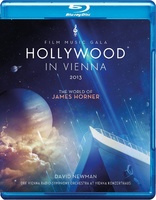

Movie rating
6.7 | / 10 |
Blu-ray rating
| Users |  | 3.5 |
| Reviewer |  | 4.0 |
| Overall | | 3.5 |
Overview
Hollywood in Vienna: The World of James Horner (2013)
Starring: James Horner| Music | 100% |
Specifications
Video
Video codec: MPEG-4 AVC
Video resolution: 1080i
Aspect ratio: 1.78:1
Original aspect ratio: 1.78:1
Audio
English: DTS-HD Master Audio 5.1
English: LPCM 2.0
Subtitles
None
Discs
Blu-ray Disc
Single disc (1 BD)
Playback
Region A (B, C untested)
Review
Rating summary
| Movie | | 4.0 |
| Video |  | 3.0 |
| Audio |  | 4.5 |
| Extras | | 3.0 |
| Overall | | 4.0 |
Hollywood in Vienna: The World of James Horner Blu-ray Movie Review
His heart will go on.
Reviewed by Jeffrey Kauffman June 29, 2016Scoring films is not for the faint of heart. Putting aside the technical requirements involved, merely navigating the often treacherous waters of Hollywood personalities might be enough to make even the strongest man (or woman) blanch. One of my favorite anecdotes (one I've shared previously, but it's instructive and therefore repeatable) about an iconic composer came courtesy of lyricist Gene Lees, who was actually writing a remembrance of Percy Faith, a favorite composer and arranger of mine who never really had a major film profile (despite an Academy Award nomination for Love Me or Leave Me, and having provided one of the best scores for one of the worst movies of all time, The Oscar). In discussing Percy's relative lack of a film scoring career, Lees recounted that Percy’s son Peter was a well respected agent for a number of high profile composers, including Dave Grusin (another huge favorite of mine). Peter had relayed to Gene a funny story that involved Grusin having been hired by some cigar chewing producing impresario who had already fired another composer on a film he was managing (or at least attempting to manage). Grusin was hired under duress and the hard driving producer evidently hovered over the gifted writer as he was starting to come up with themes at his piano, repeatedly interrupting Grusin to the point of distraction. Somehow Grusin finished writing at least a few cues and proceeded to the recording process. With the producer there, still hovering, Grusin conducted the first four bars of the main theme, stopped the orchestra dead in its tracks (no pun intended) and turned toward the producer, asking, “OK so far?” The shocked producer still had enough attitude to nod without realizing what was coming next. Over and over again Grusin would stop after a couple of bars and demand the producer’s approval before continuing. Lees' hilarious anecdote didn't reveal if Grusin's score survived (my hunch is it didn't), but it's one of the more salient examples of what the best film composers have to deal with, and what those with less tolerance simply can't deal with. James Horner evidently had much closer relationships with a number of major producers and/or directors than Dave Grusin had with this particular producer, and it didn't take him very long to establish himself as one of the more respected compositional voices of his generation, repeatedly working with the likes of Ron Howard and James Cameron. The film world was shocked when Horner died last year in the crash of a plane he himself was piloting, silencing (at least in terms of future works) one of the major film scoring voices of a generation.
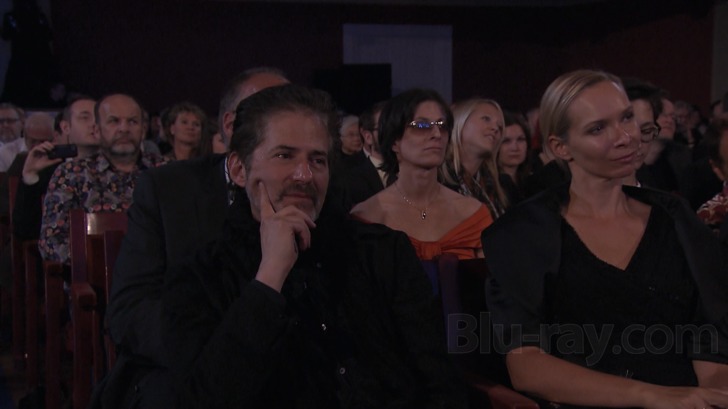
This 2013 concert featuring the ORF Vienna Radio Symphony Orchestra may have been branded, or at least subtitled, as The World of James Horner, but in fact its total reach envelops scores (or at least cues like fanfares) of other notable Hollywood heavyweights like Max Steiner, Bruce Broughton, Jerry Goldsmith, Michael Nyman and John Williams. In fact the first half hour or so of the concert is totally devoid of Horner’s work, something that may seem at least a little odd given a Star Trek suite. That said, the bulk of the concert does provide a generous overview of Horner’s work, including both instrumental and vocal pieces.
Horner seems slightly bemused by all the attention he’s getting throughout the concert and delivers some understated and self-deprecating remarks when he’s feted with the Max Steiner Film Music Achievement Award late in the concert. Interestingly, there’s some family subtext at play in the locale, as is discussed briefly in the Q&A session appended to this release as a supplement. Horner’s father was Academy Award winning art director Harry Horner (The Heiress, The Hustler), a man who got his start in Vienna working for Max Reinhardt. The Q&A session itself is named after Reinhardt, and Horner fils seems to sense that the entire event was a bit of a homecoming, if only metaphorically. It’s a bittersweet realization that this concert turned out to be something of an elegy.
The concert is broken into two segments:
On to New Worlds
- Hollywood in Vienna Fanfare
- Metropolis Prelude
- Space Mountain
- Star Trek Suite
- Gattaca: The Departure
- A.I. - Artificial Intelligence: Where Dreams are Made
- Independence Day Suite
- Universal Fanfare
- Star Trek II: The Wrath of Khan
- Braveheart: End Titles
- Horner Medley: Willow, A Beautiful Mind, Apollo 13, Aliens, The Mask of Zorro, The Rocketeer
- An American Tail: Somewhere Out There
- Avatar Suite
- Legends of the Fall: The Ludlows
- Titanic Suite
- Max Steiner Film Music Achievement Award
- The Amazing Spider-Man: End Titles
- The Land Before Time: If We Hold On Together
Hollywood in Vienna: The World of James Horner Blu-ray Movie, Video Quality
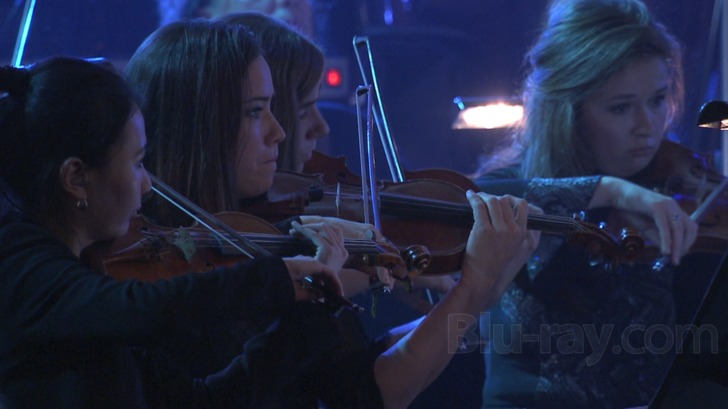
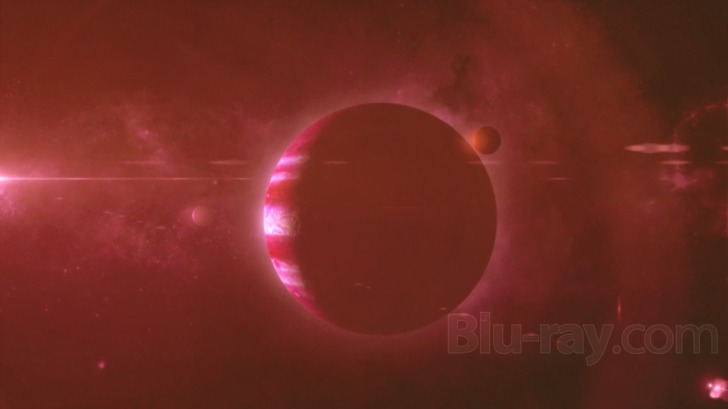
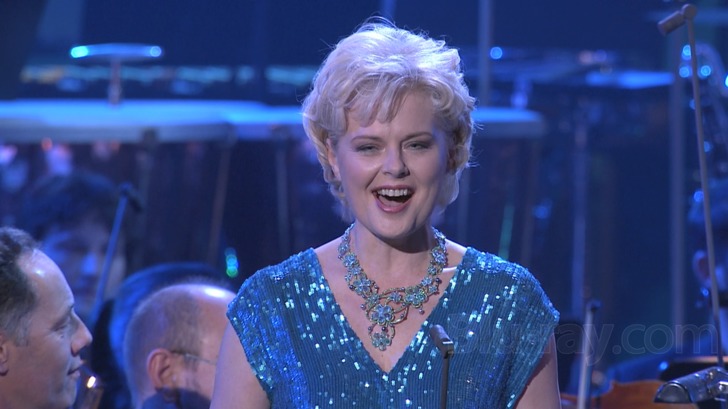
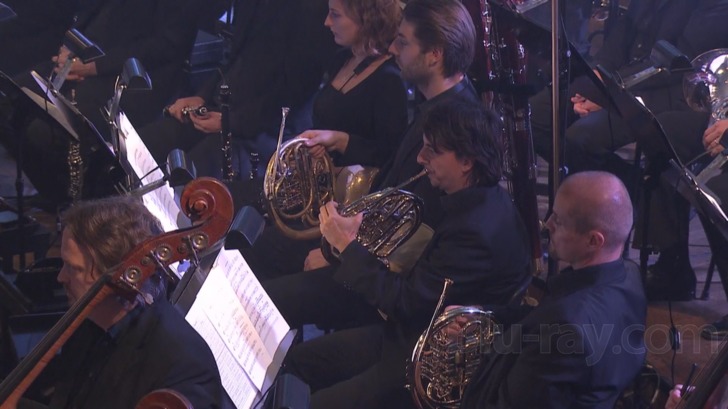
Hollywood in Vienna: The World of James Horner is presented on Blu-ray courtesy of Varèse Sarabande Video with an AVC encoded 1080i transfer in 1.78:1. To my knowledge, this is the first Blu-ray release by Varèse Sarabande, long a destination label for lovers of original soundtrack recordings. The closing credits of the concert list Unitel Classica, one of the many Blu-ray labels Naxos distributes, and so perhaps this was licensed from them, though I have no independent knowledge of the provenance of the release. One way or the other, there are some fairly significant hurdles this video presentation struggles to overcome, not always successfully. Whether these stem from deficiencies in the original filming, later compression or authoring, is unknown, though my hunch is it's a combination. Part of the problem is the really odd decision to mask the stage in what looks like dry ice "smoke", and then to further exacerbate things with blue lighting. With attendant anemic contrast, a lot of the imagery is fairly poorly defined, as can be seen in some of the screenshots accompanying this review. There is also video noise quite apparent, as well as macroblocking (especially notable in shots of conductor David Newman) and other compression issues. When there are close-ups in sufficient lighting, detail pops quite well (see screenshot 4), at least in comparison to some of the rest of the offering. There are also some kind of odd quasi-aliasing issues that make me wonder if this was perhaps captured at a lesser resolution and then upscaled.
Hollywood in Vienna: The World of James Horner Blu-ray Movie, Audio Quality
Luckily, no similar problems afflict either the DTS-HD Master Audio 5.1 or LPCM 2.0 mixes included on this Blu-ray. The ORF Vienna Radio Symphony Orchestra is conducted by David Newman, himself the scion of an iconic Hollywood family, and both tracks deliver sterling reproduction and some especially brilliant clarity in massed brass groupings. The surround track quite noticeably ups the lower ranges, delivering some forceful extra nuance in elements like tympani rolls. The vocal offerings are well prioritized, with soloists mixed smartly on top of even huge orchestral swells. Fidelity is top notch and there are no problems of any kind to report.
Hollywood in Vienna: The World of James Horner Blu-ray Movie, Special Features and Extras
- International Film Music Symposium (1080i; 1:16:18) features Horner with Varèse Sarabande's Robert Townson in a 2013 chat from the Max Reinhardt Seminar in Vienna a couple of days before the concert was held. This was reportedly Horner's last talk about his music prior to his death. The feature comes with a warning about inadequacies in the audio, but there's nothing that problematic.
- James Horner - In Memoriam (1080i; 7:59) is a bit unnecessary in that it (in part at least) recycles some of the footage already in the concert, including the bestowing of the Max Steiner Prize on Horner.
- Photo Gallery (1080i; 4:39)
Hollywood in Vienna: The World of James Horner Blu-ray Movie, Overall Score and Recommendation
Horner comes across as a very quiet, understated and interior presence during both the Steiner Prize moment in the concert as well as the Q&A session included as a supplement. That hermitic quality may have sparked his compositional proclivities, but it didn't define them, as evidenced by the huge outreach Horner's scores attained. This concert provides some wonderful music beautifully performed, though videophiles will probably have a few issues with the video presentation. With that caveat noted, Hollywood in Vienna: The World of James Horner comes Recommended.
Similar titles
Similar titles you might also like
(Still not reliable for this title)

The Blu-ray Experience: Opera & Ballet Highlights
2008

The Doors: Feast of Friends
1968

Dave Matthews and Tim Reynolds: Live at Radio City
2007
Eagles - Hell Freezes Over
1994

Mozart: Die Zauberflöte
The Magic Flute / Royal Opera, Covent Garden
2003

Roy Orbison: Black & White Night
1987

Chris Botti in Boston
2008

Bruce Springsteen with the Sessions Band: Live in Dublin
2006

Beethoven: Symphonies 7-9
Christian Thielemann / Wiener Philharmoniker
2008-2010

Andrea Bocelli: Vivere, Live in Tuscany
2007

John Mayer: Where the Light Is
2008

Celine Dion: A New Day
2003

Chris Botti: Live with Orchestra & Special Guests
2006

Streisand: Live in Concert 2006
2006

Hit Man: David Foster & Friends
2008

Shakira: Oral Fixation Tour
2007

Eric Clapton: The Lady in the Balcony - Lockdown Sessions 4K
2021

John Williams - Live in Vienna
2020

Fleetwood Mac: Rumours
Atmos Blu-ray Audio
1977
Hit Man Returns: David Foster & Friends
2010