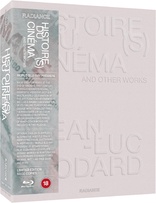
Histoire(s) du cinéma and Other Works Blu-ray Movie
HomeHistoire(s) du cinéma and Other Works Blu-ray Movie 
Limited EditionRadiance Films | 1988-2004 | 8 Seasons, 9 Cuts | 527 min | Rated BBFC: 18 | Sep 07, 2026

Movie rating
7.5 | / 10 |
Blu-ray rating
| Users |  | 0.0 |
| Reviewer |  | 5.0 |
| Overall | | 5.0 |
Overview
Histoire(s) du cinéma and Other Works (1988-2004)
All 8 episodes of Jean-Luc Godard's Histoire(s) du cinéma, viewable with two optional English subtitle tracks: a narration translation, and annotated subtitles by Felicity Chaplin identifying clips and images: • Chapter 1(a) : Toutes les histoires - All the (Hi)stories • Chapter 1(b) : Une Histoire seule - A Single (Hi)story • Chapter 2(a) : Seul le cinéma - Only Cinema • Chapter 2(b) : Fatale beauté - Deadly Beauty • Chapter 3(a) : La Monnaie de l’absolu - The Coin of the Absolute • Chapter 3(b) : Une Vague Nouvelle - A New Wave • Chapter 4(a) : Le Contrôle de l’univers - The Control of the Universe • Chapter 4(b) : Les Signes parmi nous - The Signs Among Us Moments choisis des histoire(s) du cinéma - Godard’s re-edit of Histoire(s) du cinéma on 35mm film reorganises footage and includes unique material (2004) Lettre à Freddy Buache short - Godard's anti-film commissioned for the 500th anniversary of the Swiss city of Lausanne (1982) Scenarios short - Godard’s final work (2024) Plus more documentaries.
Starring: Jean-Luc GodardDirector: Jean-Luc Godard
| Documentary | 100% |
Specifications
Video
Video codec: MPEG-4 AVC
Video resolution: 1080i (upconverted)/1080p
Aspect ratio: 1.33:1
Original aspect ratio: 1.33:1
Audio
French: LPCM 2.0 Mono
French: DTS-HD Master Audio 5.1
Subtitles
English
Discs
Blu-ray Disc
Three-disc set (3 BDs)
Playback
Region B (A, C untested)
Review
Rating summary
| Movie | | 5.0 |
| Video |  | 4.5 |
| Audio | | 4.5 |
| Extras | | 5.0 |
| Overall | | 5.0 |
Histoire(s) du cinéma and Other Works Blu-ray Movie Review
Reviewed by Jeffrey Kauffman July 7, 2026The inimitable Yvonne De Carlo made Broadway history with her rendition of Stephen Sondheim's anthem to resilience, I'm Still Here, one of the highlights of the 1971 musical Follies, wherein De Carlo's character of Carlotta (hmmm. . .) detailed her "career", one which of course reflected De Carlo's own experiences in show business. One of the more meaningful couplets in the song (at least for those who followed De Carlo's work from, say, Salome Where She Danced to The Munsters), went as follows:
First you're another sloe-eyed vampIf one were to imagine Jean-Luc Godard, who also survived the travails of a long show business career, undertaking his own rendition of that memorable song (hey, a guy can dream, can't he?), he might have opted for:
Then someone's mother, then you're camp
First you're a young provocateurJoking and/or questionably refashioning a classic Sondheim lyric aside, Histoire(s) du cinéma and Other Works provides a really fascinating compendium of Godard outings arguably made during that "sir" era and somewhat after another fascinating compendium that is inarguably part of Godard's "political" output, Jean-Luc Godard + Jean-Pierre Gorin: Five Films, 1968-1971, released by Criterion a few years ago. Speaking of "criterion", language nerds, er, buffs will no doubt know that is a singular, with "criteria" being its associated plural, and another similar duo, albeit a pair culled from Latin rather than Greek, might be relevant in that Godard arguably remade a certain famous quote by Marshall McLuhan into "the media are the message(s)" (I'm co-opting Godard's own parenthetical "s") with Histoire(s) du cinéma in particular. As is relayed in some of the supplements in this set, Godard managed to acquire his own telecine circa 1980, a technology that, along with the then nascent boom in VHS and VCRs, allowed Godard to basically (and kind of ironically) exploit one of the hallmarks of nouvelle vague, namely montage, as the master filmmaker "Frankensteined" all sorts of recorded material (not just features, but stills and other non-narrative video) into weird "collages" (both visual and aural). In that regard, it's salient to note that along with "traditional" subtitles, this release also offers an intermittent "index" of sorts that identifies the often transitory snippets of both visual and aural information Godard utilizes, at times superimposing images and sounds on top of each other. The result can definitely be a sensory overload, but it should easily captivate any "discerning cineaste".
Then you're a Marxist, then you're "sir"
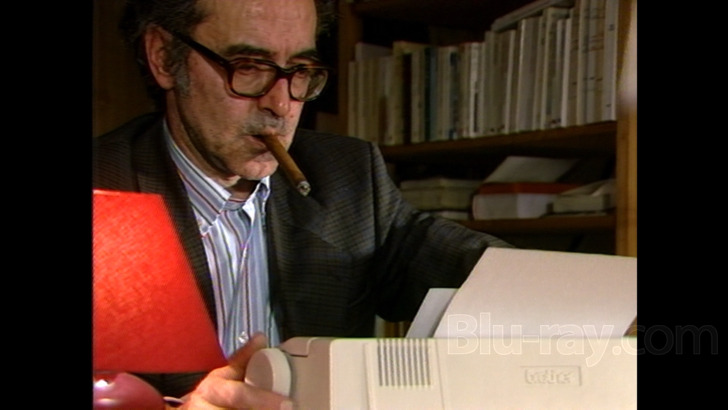
Lest one think that Histoire(s) du cinéma is only an assault on the senses, rest assured Godard's typically trenchant intellect is hard at work just beneath the multilayered surface here, with a basically apocalyptic view of history, both generally and within the confines of cinema itself. There's almost an Odets-ian dialectic offered between cinema as Art and the moviemaking business, and Godard is not exactly shy about more or less hitting the viewer over the head with quick cuts of "data" that suggest he had little tolerance for what he perceived as the relentless pursuit of the almighty dollar in the film industry. Perhaps surprisingly among his allusive targets is none other than Steven Spielberg and Schindler's List in Chapter 3A of the eight part documentary, provocatively titled La monnaie de l'absolu (The Coin of the Absolute).
Histoire(s) du cinéma and Other Works Blu-ray Movie, Video Quality
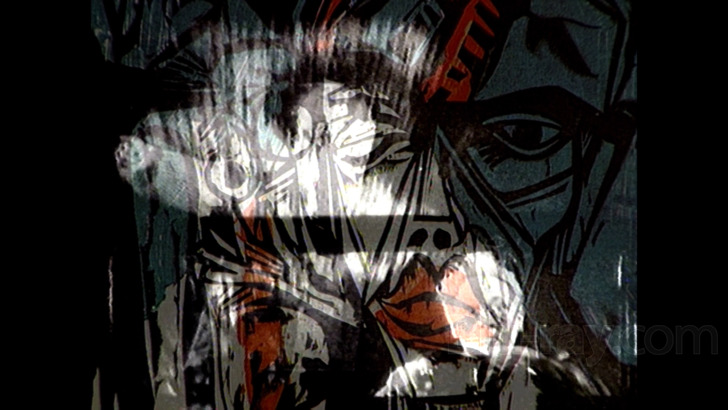
Histoire(s) du cinéma and Other Works is (are?) presented on Blu-ray courtesy of Radiance Films. Radiance sent check discs for purposes of
this review, and so I'm not privy to any verbiage their insert booklet may contain, and even their website doesn't really offer any technical information
on the release. The main Histoire(s) du cinéma
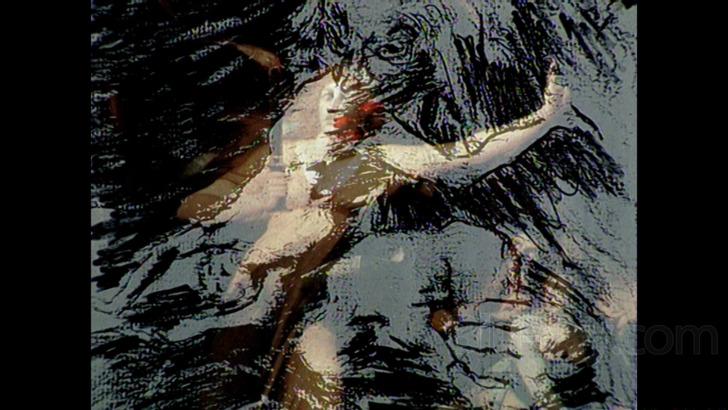
documentary is given its standard definition video source unsurprisingly in upscaled 1080i via an AVC codec in 1.33:1. Considering the now "quaint"
technologies Godard utilized to assemble
this piece, the baked in deficiencies simply have to be accepted for what they are, and in fact may be an essential part of that above referenced "media
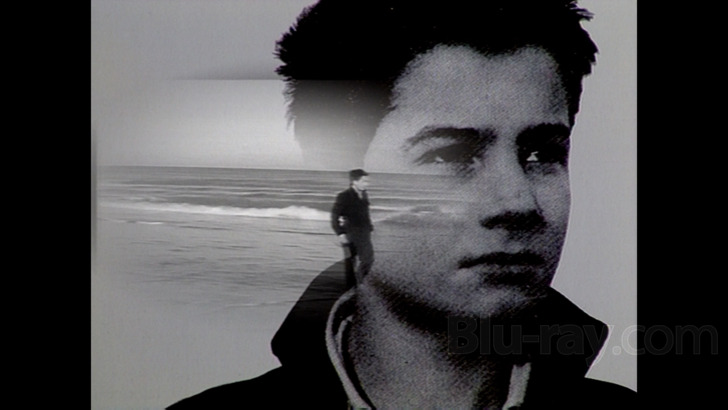
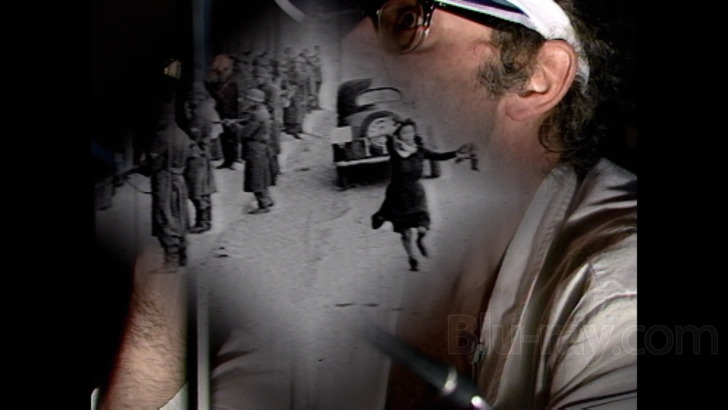
are the message(s)" aspect of the documentary. To get even more picayune about the term "media", as can be seen in some of the screenshots I've
uploaded to accompany this review, Godard also interpolates on screen verbiage which he frequently "dissects" visually in various ways, but which
probably adds even more compositing issues to image deficiencies. And those deficiencies are recurrent and undeniable, with everything from aliasing
to persistent
ghosting to (maybe appropriate, given Godard's "politics") radical variances in contrast and clarity throughout. And yet it hardly matters in the long
run, as the pure visceral overdose of visual and aural information Godard throws at the audience is often so overwhelming that mere "quality" almost
becomes an afterthought. This is a case where "how does it look" (pretty shoddy at times) may chafe against "how accurate to its source is
it" (pretty good).
That said, from a purely qualitative standpoint, the rest of the shorts offered here are considerably better looking, with most of them in 1080p (both the
Godard interview and Lettre à Freddy Buache on the second disc are in 720p). All of those transfers can show a bit of age related wear at
times, but are in generally great condition.
Histoire(s) du cinéma and Other Works Blu-ray Movie, Audio Quality
Everything but the two items on Disc Three feature LPCM 2.0 Mono tracks (more about the exceptions in a moment). Of all of the pieces offered on the
first two discs, Histoire(s) du cinéma is probably the most "baroque" from a sound design perspective, with as many overlapping aural
elements as are offered on the visual side of things. Prioritization inherently (and evidently intentionally) ebbs and flows, but Godard acts as a perhaps
misdirecting "tour guide" with opaque narration that references all sorts of extracurricular material. Both Histoire(s) du cinéma and
JLG/JLG, autoportrait de décembre utilize a number of interesting tracks from the venerable and esteemed ECM catalog*, but most of the rest of
the soundtracks are basically vérité outings with narration and/or dialogue and ambient environmental sounds.
Both of the offerings on Disc Three feature DTS-HD Master Audio 5.1 tracks. Scénarios rather interestingly "deconstructs" Shostakovich in at
least somewhat the same way that, say, Max Richter has "reimagined" composers like Vivaldi (Shostakovich is among the many audio
snippets in the main documentary as well). That aspect gives the 5.1 track some spaciousness,
though frankly a surround track was probably not necessary for the much more conversational Exposé du film annonce du film "Scénario" .
*I was gobsmacked in my own musical life a little while ago to find out a cast member in a show I was music directing was the child of iconic ECM artist
Paul Hillier, whose Hilliard Ensemble is one of many contributors to the soundtrack. She didn't think anyone would recognize her father's name!
Histoire(s) du cinéma and Other Works Blu-ray Movie, Special Features and Extras
Disc One: Histoire(s) du cinéma
- Michael Witt (HD; 25:45) is a 2025 piece featuring the Godard expert helping to contextualize Histoire(s) du cinéma.
- Bernard Eisenschitz (HD; 12:53) is a 2025 piece with a Godard collaborator.
- Introduction by Michael Witt (HD; 8:31) is accessible under the Play Menu.
- Image Track is a series of explanatory subtitles by Felicity Chaplin.
- Short Features
- Lettre à Freddy Buache (HD; 10:34) is a so-called "anti film" created by Godard in 1982 for the 500th anniversary of the city of Lausanne, Switzerland.
- Soft and Hard (HD; 50:41) offers Godard and co-director Anne-Marie Miéville discussing weighty subjects while puttering about their home.
- JLG/JLG, autoportrait de décembre (HD; 55:44) is an elegiac piece from 1995 that finds Godard questioning his place in history.
- 2 x 50 Years of French Cinema (HD; 52:09) kind of hilariously almost seems to answer the questions of the immediately above self portrait in this rather funny celebration of cinema's 100th anniversary.
- Moments choisis des histoire(s) du cinéma (HD; 1:23:18) is Godard's own 35mm redaction of the longer eight part production. Video here may be more pleasing to some.
- Special Features
- Jean Luc Godard (HD; 55:48) is a fascinating companion piece with Godard in a 1993 television appearance.
- Scénarios (HD; 18:24) is Godard's final film which according to the description on the disc was purposely left unfinished at the time of his "self death" (Godard chose assisted suicide at the age of 91).
- Exposé du film annonce du film "Scénario" (HD; 37:55) is a sweet 1991 piece with an aged Godard proposing a six part series "halfway between seeing and reading".
Histoire(s) du cinéma and Other Works Blu-ray Movie, Overall Score and Recommendation
It's probably a good thing that Radiance didn't author the main feature with a Play All button, as it would be understandable if folks need to take a break after each chapter. This is a remarkable set that is thought provoking and maybe more historically relevant than ever. With an understanding of the lo fi source for the main documentary, technical merits are solid and the supplements outstanding. Highly recommended.
Similar titles
Similar titles you might also like

Lightning Over Water
Nick's Film / Nicks Movie
1980
Welfare
1975
God's Angry Man
1981
The Last of the Unjust
Le dernier des injustes / Masters of Cinema
2013

Grey Gardens
1975
British Sounds
See You at Mao
1969

The Story of Film: An Odyssey
2011

The Soviet Influence: From Turksib to Night Mail
Турксиб / Night Mail
1929-1936
The Five Obstructions
2003

The Great White Silence
1924

Around the World with Orson Welles
1955

Tongues Untied
1989

The Story of Film: A New Generation
2021

La Soufrière
1977
Juvenile Court
1973
Symbiopsychotaxiplasm: Take One
1968
Symbiopsychotaxiplasm: Take 2½
2005

Lynch/Oz
2022
No Home Movie
2015
Titicut Follies
1967