Hiromi Kanda: Hiromi in Love Blu-ray Movie
HomeHiromi Kanda: Hiromi in Love Blu-ray Movie 
Alternative Distribution Alliance | 120 min | May 25, 2010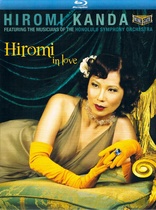
Price
List price:Listed on Amazon marketplace

Movie rating
Movie has not been rated yetBlu-ray rating
| Users |  | 0.0 |
| Reviewer |  | 3.0 |
| Overall | | 3.0 |
Overview
Hiromi Kanda: Hiromi in Love ()
Hiromi Kanda. Honolulu Symphony Orchestra.
| Music | 100% |
Specifications
Video
Video codec: MPEG-2
Video resolution: 1080p
Aspect ratio: 1.99:1
Audio
English: LPCM 2.0
Subtitles
None
Discs
25GB Blu-ray Disc
Single disc (1 BD)
Playback
Region A (B, C untested)
Review
Rating summary
| Movie | | 3.0 |
| Video |  | 4.5 |
| Audio | | 4.5 |
| Extras |  | 2.5 |
| Overall | | 3.0 |
Hiromi Kanda: Hiromi in Love Blu-ray Movie Review
Exceptional orchestrations by Matt Catingub and the exquisite playing of the Honolulu Symphony Orchestra are the real calling cards here.
Reviewed by Jeffrey Kauffman April 18, 2010There has been a longstanding love affair between Japan and the United States as far as popular music goes. Japanese audiences were first exposed to American pop tunes in a big way in the post-War boom years. Later, in the 1960’s groups like The Nippon Girls regularly mined the sounds of United States rock and pop for their chart hits. Conversely, often artists who had passed at least the first peak of their American popularity found second careers in Japan. Such was the case with Bossa Nova master Sergio Mendes, who in the 1970’s wasn’t exactly burning up the charts stateside, but became a phenomenon in Japan, something that helped keep his career alive until he hit gold again in the U.S. in 1983 with “Never Gonna Let You Go.” Strangely, Sergio’s success in Japan led to that nation becoming one of the most popular exporters of latin inflected music, with such artists as Japanese singer and guitarist Lisa Ono working the Bossa Nova songbook (alongside such stars as Joao Donato) to great acclaim. And so it really shouldn’t be that much of a surprise to see and hear another Japanese singer, Hiromi Kanda, reach a bit further back into American chart success and attempt to recreate the great pop singer era of the late 1940’s through the 1950’s. Kanda’s slight but appealing alto wafts through a nice selection of standards that will be familiar to any lover of Frank Sinatra, Nat King Cole or even Johnny Ray, as well as a couple of her own originals. As charming, if lightweight, as her own voice may be, the real appeal of this Blu-ray and its simultaneously released CD for music fans may well be the for the most part outstanding arrangements and always sumptuous orchestrations of Matt Catingub, as well as the luscious playing of the Honolulu Symphony Orchestra.
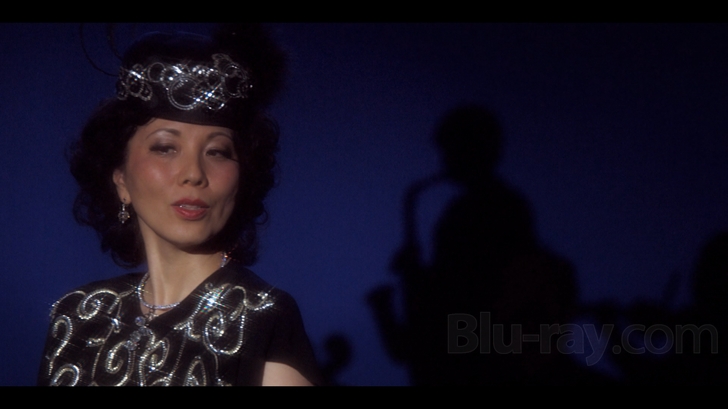
Hiromi Kanda recreates the glamour of the pop singer era.
The fraternal twin arts of arranging and orchestration too often get short shrift in the world of pop music. What exactly is the difference? It's a fine line, and one often smudged by artisans who perform both chores, but in a nutshell the arranger decides exactly how the song goes, including "feel," chord voicings (including substitute chords) and the actual structure of the chart (in terms of verse-chorus and the like). The orchestrator then takes those ideas and translates them into the colors of the various instruments, often adding a whole new layer of musical language to the songs. Too often these arts get buried in the liner notes of any given release, and instead audiences pay attention only to the headliner, rightly or wrongly. And yet where really would Nat King Cole be, as brilliant a singer an pianist as he was, without those swingin’ Nelson Riddle arrangements and orchestrations, especially on such fantastic charts as “Ballerina”? Riddle (along with Gordon Jenkins) also pioneered Sinatra’s concept albums of the 1950’s, when the Chairman of the Board was trying to segue from being a Bobby-sox idol to a more mature interpreter of popular song. And the vastly ignored and underrated genius of Percy Faith worked all kinds of magic for the many singers assigned to his baton during his long, long tenure at Columbia. Faith shepherded so many great singers to their first chart successes that it’s almost ridiculous. Everyone from Guy Mitchell to Johnny Mathis to Rosemary Clooney had their first taste of Top Ten stardom due largely to the orchestral brilliance Faith weaved behind the vocals. And yet who really aside from music biz professionals ever really knew or cared?
The great Rosemary Clooney herself actually performed her last concert with Hiromi’s arranger and orchestrator on this album, Matt Catingub. Catingub is one of the reigning stars of the Hawaii music scene, but if you’ve seen Good Night and Good Luck, you’ve actually both seen and heard him in his jazz persona, as he both appears on screen and provided the music for that acclaimed film. He's also the son of celebrated jazz chanteuse Mavis Rivers, whose influence on him must have been quite profound in his formative years. Here, working with Kanda, he offers one exquisite arrangement and especially orchestration after another, playing piano on all of them and sax on several, nicely recreating the dense yet often ethereal orchestral textures that are so redolent of the pop singer era. The string writing here is especially exceptional, certainly nearly as evocative as Faith’s own great work with that section, which is about the highest compliment I can pay. Winds and brass are subtly interwoven throughout, lending a perfect “old school” feeling to all of Kanda’s selections. Arrangement wise, Catingub also provides some nice surprises, including an inventive jazz waltz reworking of “My Funny Valentine,” and a quasi-Bossa Nova on “Unforgettable.” In fact my only real qualm with Catingub's arranging here is the fact that the tunes tend to fall invariably into a verse-chorus-bridge-instrumental solo-verse out structure which gets repetitive. Also, perhaps because of Kanda's vocal preferences, we never even get a half step modulation to help keep any given selection's momentum going.
Hiromi herself always sings in tune and has a nice, breathy quality, but never really lets loose and belts, even on the uptempo pieces. Some listeners may be put off by her quite thick accent, which makes her English a bit hard to decipher at times. Musically, she has good control and just the hint of vibrato here, but throughout the selections, she rarely if ever sustains a note, tending instead toward phrasing consisting of short bursts of a few syllables at a time. Of course the great American singers of this era were largely “crooners,” that intimate style of close mic singing that elevated the emotion of a lyric above any musical bombast. And yet these very same singers could let loose and pulverize a song when needed, something that Hiromi simply never even attempts here.
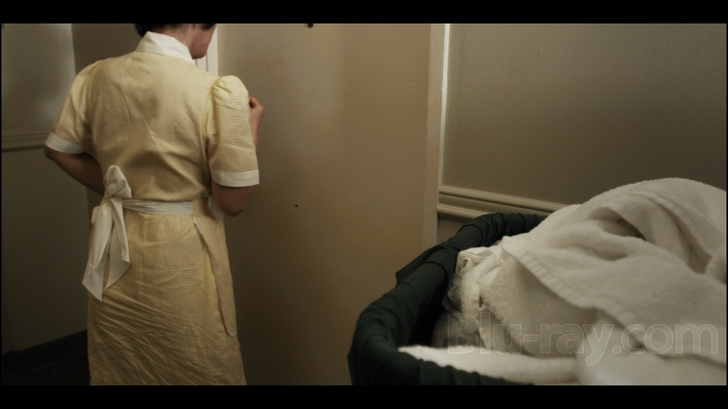
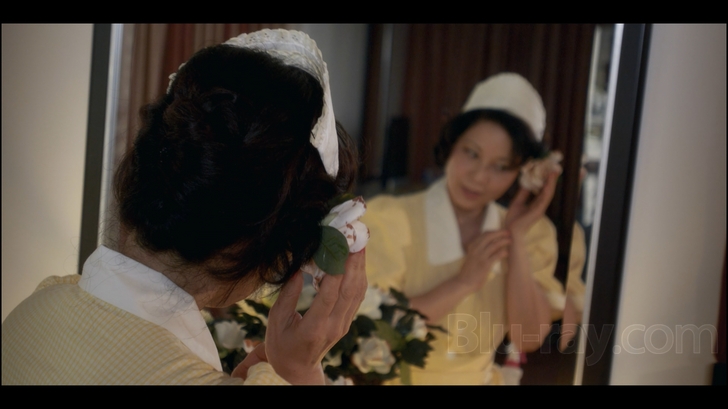
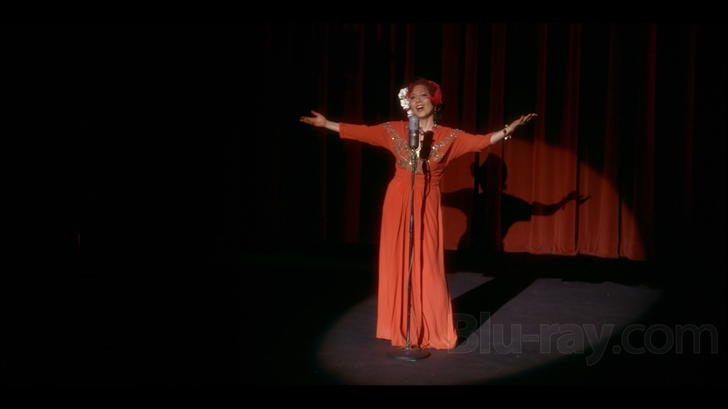
The production values for the music videos accompanying all of the songs are uniformly high, with Hiromi looking lovely and quite exotic in a variety of getups and makeup. Unfortunately, there’s just the faint whiff of narcissism here, though, as she’s front and center in every video, including appearing as more than one character in several of them. That is at least partially offset by Hiromi's willingness to appear as "regular" women in several of these videos, worker types like waitresses and maids, without the glamorous makeup that accompanies her chanteuse persona. However, there is often too much Hiromi too much of the time throughout these videos. Even “Unforgettable,” which has an appealing setup of “memories” as she looks out on a childhood scene of a young boy and young girl, supposedly a memory of herself and a boyfriend, never gets to the payoff at the final cadence, which logically would have been the boy all grown up appearing with the grown up Hiromi. Instead we simply get more solo Hiromi, frozen, statue-like in front of the window she's been gazing out of. A little more variety and more featured supporting players would have made this a more diverse experience, at least when one takes the entire Blu-ray in on one sitting.
Hiromi evidently won Japan’s version of American Idol, A Star is Born, some years ago when she was 19, but then gave up her singing career to concentrate on her lyric writing skills. Choosing this kind of project to reappear might seem an odd choice, but the fact is as decried an idiom as “easy listening” is, there’s an undeniable technique and even genius that it takes to pull it off successfully. If this fledgling effort could have used a little more vocal gymnastics to make it more immediately visceral, it does offer some of the most evocative orchestrations in recent memory, orchestrations which ably recreate the lush sounds that routinely accompanied the great American singers of yore.
Hiromi Kanda: Hiromi in Love Blu-ray Movie, Video Quality
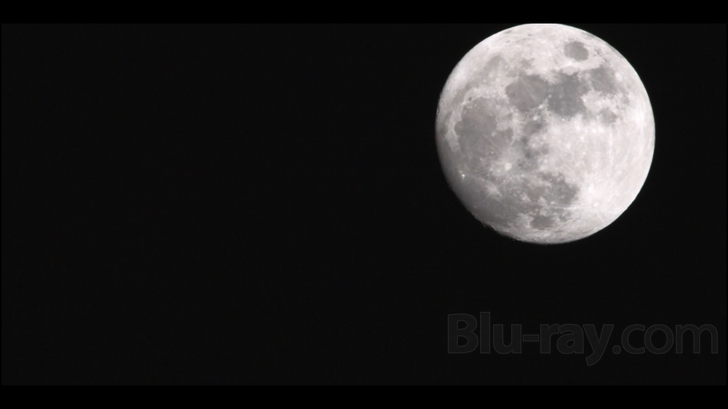
Despite being encoded via the relatively old school MPEG-2 codec, Hiromi in Love looks quite exceptionally sharp and well detailed. It's offered in full 1080p with a 1.99:1 aspect ratio (which displayed as standard 1.78:1 with my PS3 and Samsung widescreen). Hiromi herself appears in a variety of brightly colored costumes, with reds, blues and golds popping nicely off the screen. A couple of the videos feature silhouetted "players" (I doubt they really are playing, it's far too dark for that) set against a nice blue backdrop, which offers both great, inky black levels and a beautifully rich cobalt color. Almost all of these videos are studio bound, and while production values are extremely high, there's not a wealth of sets that this Blu-ray can exploit. The occasional outdoor footage all looks extremely natural, with a variegated palette offering an unusually colorful array to augment the music itself.
Hiromi Kanda: Hiromi in Love Blu-ray Movie, Audio Quality
I was a little surprised to find only a 2.0 mix on this Blu-ray, albeit a nice, uncompressed LPCM track. Even with this being a stereo mix, discrete channel usage is really rather minimal. Hiromi's voice is always centrally located, as it should be, and while the orchestra is clear as a bell and beautifully recorded, you're not going to be blown away by any overtly directional moments. That said, this is exquisitely performed music, orchestrally speaking, and the LPCM track offers a sturdy and nuanced reproduction that captures the lovely close harmonies of Catingub's orchestrations while presenting a remarkably clear delineation between instruments at the same time. There is one rather jolting use of LFE, with a clap of thunder that starts out Hiromi's version of "Cry."
Hiromi Kanda: Hiromi in Love Blu-ray Movie, Special Features and Extras
Two additional audio only tracks, which actually play over the unbelievably long credits roll as well, are offered as supplements.
Hiromi Kanda: Hiromi in Love Blu-ray Movie, Overall Score and Recommendation
Hiromi in Love may be a vanity project, but Hiromi at least had the good sense to hire an exceptional arranger and orchestrator in the person of Matt Catingub. His work elevates this whole project into something immensely listenable and at the same time a bit nostalgic, especially for those who grew up with this kind of music.