Helen Blu-ray Movie
HomeHelen Blu-ray Movie 
Entertainment One | 2009 | 119 min | Rated R | Aug 10, 2010

Movie rating
7.5 | / 10 |
Blu-ray rating
| Users |  | 5.0 |
| Reviewer |  | 3.5 |
| Overall | | 3.7 |
Overview
Helen (2009)
Helen has it all—a beautiful daughter, a loving husband, a fullfilling career and a close circle of adoring friends. But when her world is broken down by depression, the very center of her being no longer seems to hold. Helen's profound love for her family which once kept them all so close together now seems to tear them apart. Amid the desperate battle for her life, her love and her sanity, Helen finds herself pulling away from her husband and seeking comfort in the company of a fierce yet fragile, enigmatic and troubled young woman—whose extraordinary spirit and devotion shines a flickering light into Helen's darkness.
Starring: Ashley Judd, Goran Visnjic, Lauren Lee Smith, Alexia Fast, Alberta WatsonDirector: Sandra Nettelbeck
| Drama | 100% |
Specifications
Video
Video codec: MPEG-4 AVC
Video resolution: 1080p
Aspect ratio: 2.35:1
Original aspect ratio: 2.39:1
Audio
English: Dolby Digital 5.1 (448 kbps)
English: Dolby Digital 2.0 (192 kbps)
Subtitles
English SDH
Discs
25GB Blu-ray Disc
Single disc (1 BD)
Playback
Region free
Review
Rating summary
| Movie | | 3.5 |
| Video |  | 4.0 |
| Audio | | 3.5 |
| Extras |  | 2.5 |
| Overall | | 3.5 |
Helen Blu-ray Movie Review
Ashley Judd is quietly impressive as a music teacher suffering from clinical depression.
Reviewed by Jeffrey Kauffman January 25, 2011What causes mental illness? That has been one of the most unsettling questions in the entire history of medicine, even before the sciences (and/or arts, depending on your point of view) of psychiatry and psychology came along. I’ve wrestled with this question myself in my decades’ long research into what is still probably the most famous case of mental illness to visit Hollywood, the sad, semi-triumphant story of Frances Farmer. Frances was high strung, outspoken, incredibly intelligent and did not suffer the fools of La-la land easily or in fact willingly. But what led to her devastating mental breakdown? Too much drink? Too much Benzedrine, the speed of that era? A series of failed romantic encounters, including with her ex-husband Leif Erickson and lovers Clifford Odets and Harold Clurman? Or was it something genetic, a ticking bomb of insecurity and instability which finally exploded under the pressures of the star system and Frances’ own difficult temperament? Who knows what ultimately led Frances over the edge into an abyss of madness, institutionalization and a life that never really fully recovered, despite her valiant efforts to maintain emotional equilibrium after her release from Western State Hospital in Washington. There are no easy answers, but those questions kept springing up in my mind again as I watched Helen, a film starring Ashley Judd as the titular heroine, a music professor who finds herself in the grip of a chronic depressive disorder. Helen, the character, is a woman seemingly with everything. She’s beautiful, she has a successful career, a semi-well adjusted teen daughter from a previous marriage, and a current marriage that seems to be running on all cylinders. And yet she finds herself alone, dissociative and almost hysterical, an hysteria which ultimately devolves into a semi-catatonic state which results in her hospitalization. What possibly could cause something this devastating? As in the case of Frances Farmer, Helen (to its credit) doesn’t offer any Dr. Phil-esque rubrics to explain what its main character is going through.
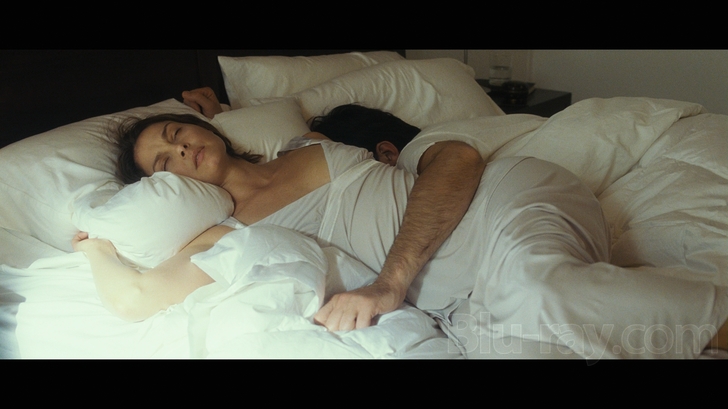
There has been a longstanding Hollywood tradition to treat mental illness with an almost Grand Guignol aspect, even when a particular film, as in the critically revered The Snake Pit, attempts an authoritative, even clinical, tone. Probably the worst example of this excess is the fictionalized and over the top Lange feature about Farmer herself, Frances, a film that invents so many aspects about the actress’ illness (including the shocking lobotomy scene, something that never happened in real life) that it’s hard after a while to take anything in the film very seriously, despite its relentlessly depressing narrative arc. Helen takes almost an opposite tack, in fact seeming to suffer almost from clinical depression itself. There’s nothing overtly showy here, other than perhaps the occasionally over-dramatic supporting turn by Lauren Lee Smith as Mathilda, a student of Helen’s who suffers from bipolar disorder. Instead, this is a slow slog through the shadowy world of an emotionally defeated heroine. For some this may make Helen too slow and laborious to ever generate much interest. For others, however, this may be Helen’s actual saving grace. Helen is a film that doesn’t play mental illness to the filmic rafters, as it were. It’s quiet, unassuming and often, in the hands of director Sandra Nettelbeck and leading actress Ashley Judd, gently devastating.
This is not to say Helen isn’t without its flaws, because it is certainly a problematic film on several levels. Its resolute refusal to really delve into what’s going on with its titular character—despite a passing reference or two to her failed first marriage and emotional problems after the birth of her daughter—ultimately casts the film as a sort of “travelogue” of madness without any tour guide to help us understand what exactly we’re seeing. The mirroring of Helen’s predicament with Mathilda’s is on it surface shallow and self-serving, providing Helen with the only anchor she’s able to hold on to despite being surrounded by a coterie of people who are attempting to help her. Goran Visnjic portrays David, Helen’s understanding second husband, but the character is not fully drawn or in fact explored enough within the context of what he sees happening to his wife to ever fully bring the dramatic interplay between the married couple alive. Instead, like the audience itself, David seems to be an impotent, passive observer.
Helen also in its sort of quietly subversive way plays with the fringes of Hollywood’s Grand Guignol tradition by having Helen resort to electroshock therapy, long the bugaboo of films about mental illness. As shocking (sorry, pun intended) as it may be to realize, electroshock therapy has been proven to be effective in at least some cases, though like so many “treatments” from the mid-20th century on, it has probably been over prescribed and used without regard to the needs of individual patients. Helen thankfully doesn’t go the Frances or One Flew Over the Cuckoo’s Nest route here, with a patient strapped down against their will and electrocuted into mental oblivion. But still the distasteful scent of hyperbole wafts over these scenes, despite the best efforts of Nettelbeck not to sensationalize them, something which may in fact be as much a function of how this therapy has been portrayed for so long as it is about how this film handles the subject.
Ultimately Helen rises and falls on the quality of its performances, and for the most part there’s exceptional work to be seen, if not exactly enjoyed, here. Ashley Judd manages to portray the devolution of Helen’s competency without any actorly tics or tricks, and that very naturalness is by far the best thing about the film. The entire supporting cast does well, though the writing does venture into a few too many cliché-ridden alleys, such as Mathilda’s fetal positions and sudden outbursts, that there’s really only so much they can do without betraying the artifice of the screenplay. Two aspects of this film are truly extraordinary, though they may not be instantly noticeable to casual viewers. The cinematography by German DP Michael Bertl is unapologetically gorgeous, filled with a lush, backlit beauty that perfectly depicts Helen’s shadowy internal world. And the score by Tim Despic and James Barker is moody and quite effective, aided by some judicious uses of classical source cues.
Helen Blu-ray Movie, Video Quality
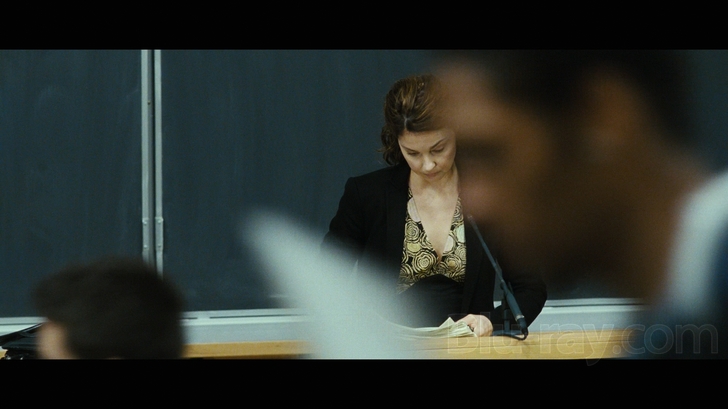
Helen is an uncommonly scenic film for something dealing with such a dark and depressing subject matter. This Blu-ray's AVC encoded 1080p image, in 2.35:1, is generally very good, with excellent sharpness and clarity, and abundant fine detail. What keeps the Blu-ray from getting a higher score is a penchant toward just slightly milky blacks at times, with a tendency toward crushing in the darkest scenes. Normally it wouldn't be a major issue, but the fact is so much of Helen is minimally lit and cast in shadowy hues that it gets to be a problem after a while. In the brighter lit scenes, we have nice contrast, good saturation and nice clarity of image. Some of the location footage is quite gorgeous, including a lovely closing segment at the beach.
Helen Blu-ray Movie, Audio Quality
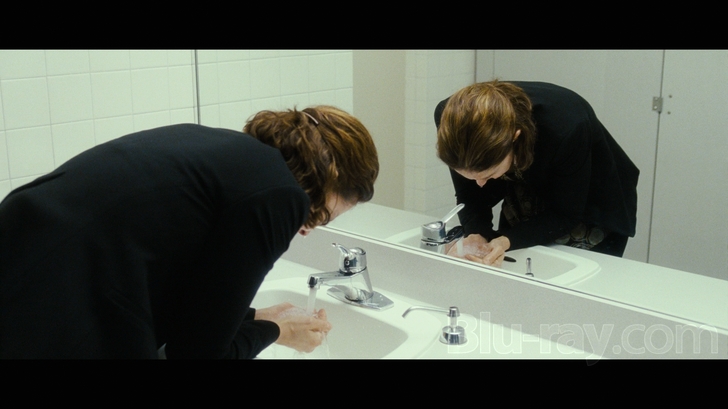
Despite the insert and the press sheet which accompanied my copy both touting a DTS-HD Master Audio 5.1 mix, there was none to be found on this Blu-ray. Instead there were two standard Dolby offerings, a 5.1 and a 2.0, both of which suffice as far as they go. The 5.1 mix offers some nicely immersive moments, with some great ambient environmental sounds mixed throughout the soundfield, and the excellent source cues nicely utilized and spread throughout the surrounds. Dialogue is clear and the soundtrack offers substantial dynamic range. All of that said, I couldn't help but wonder how much better the score and source cues would have sounded in a lossless environment.
Helen Blu-ray Movie, Special Features and Extras
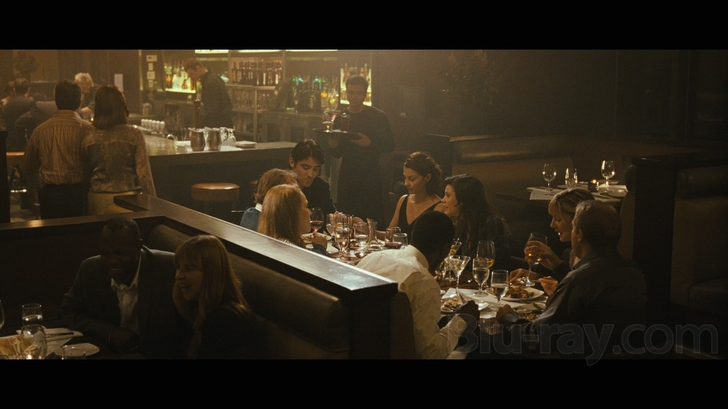
Interviews (SD; 42:37) feature Judd, Visnjic and supporting players Smith and Alexia Fast, who portrays Helen's daughter. The interviews have an interesting feature: you can either play them by subject matter, which includes snippets from various participants, or play each interviewee's segments as a separate entity.
Helen Blu-ray Movie, Overall Score and Recommendation
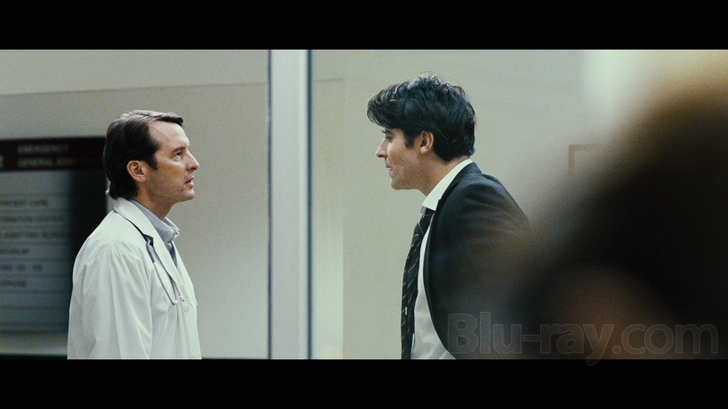
I wouldn't exactly say Helen is a film you'll enjoy. It's dour, slow and sometimes as depressing as its subject matter. But there's a fine lead performance here from Ashley Judd, and the film is to be commended for not going the Grand Guignol route, at least most of the time. Recommended.
Similar titles
Similar titles you might also like
(Still not reliable for this title)

Prozac Nation
2001

Welcome to Me
2014

Reign Over Me
2007

Silver Linings Playbook
2012

The Four Seasons
1981

The Children's Hour
1961

Great Expectations
2011

A Bill of Divorcement
1932

The Hours
2002

Collateral Beauty
2016

Ask Me Anything
Manufacture on Demand
2014

Cake
2014

Inside Daisy Clover
Warner Archive Collection
1965
The Client List: The Complete Series
2012-2014

Ordinary People
1980

Adore
Perfect Mothers
2013

Personal Effects
2009

The Cobweb
Warner Archive Collection
1955
Crimes of the Heart
1986

The Private Lives of Pippa Lee
2009