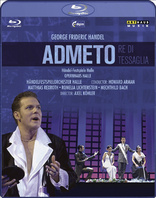
Handel: Admeto Blu-ray Movie
HomeHandel: Admeto Blu-ray Movie 
Live Recording from the Opernhaus HalleOpus Arte | 2006 | 196 min | Not rated | Mar 31, 2009

Movie rating
6.5 | / 10 |
Blu-ray rating
| Users |  | 0.0 |
| Reviewer |  | 4.0 |
| Overall | | 4.0 |
Overview
Handel: Admeto (2006)
George Frideric Handel‘s ‚Admeto‘ is considered one of the most successful operas produced in the first half of the 18th century.
Starring: Mechthild Bach, Romelia Lichtenstein, Matthias RexrothDirector: Axel Köhler
| Music | 100% |
Specifications
Video
Video codec: MPEG-4 AVC
Video resolution: 1080i
Aspect ratio: 1.78:1
Original aspect ratio: 1.78:1
Audio
Italian: DTS-HD Master Audio 7.1
Italian: LPCM 2.0
Subtitles
English, French, German, Italian, Spanish
Discs
50GB Blu-ray Disc
Single disc (1 BD)
Playback
Region free
Review
Rating summary
| Movie | | 4.0 |
| Video |  | 4.5 |
| Audio | | 4.5 |
| Extras | | 0.0 |
| Overall | | 4.0 |
Handel: Admeto Blu-ray Movie Review
If you gave your life in place of a loved one, would you expect anything in return?
Reviewed by Jeffrey Kauffman August 27, 2009Sometimes knowing a bit about original productions of operas can clarify why certain things within them happen. I’ve written about this before with regard to the prevalence of women singing lead (male) roles in Handel’s many pieces, something that has become a tradition since castrati aren’t so readily available anymore (Handel was especially fond of writing for the famous castrato Senesino). But people new to one of Handel’s lesser known pieces, Admeto, King of Thessaly (despite its having been one of his most popular works during his lifetime), may have a different question (the male role is indeed sung by a countertenor, and I wouldn’t presume to know if—ahem—surgery was involved to get him to those high notes). Opera lovers are used to love triangles, or even quartets, with sets of mismatched lovers ultimately finding their soul mates by the final curtain. But what are we to make of the patently strange phenomenon in Admeto of the King (Matthias Rexroth) not just falling in love with two women, Alceste (Romelia Lichtenstein) and Antigona (Mechtild Bach)—that, after all, is a well worn operatic trope—but then never really forcefully deciding between the two by the opera’s end? Yes, there are intimations that Alceste comes out on top, so to speak, but it is one of the most strangely ambiguous endings in operatic literature, and astute audience members really should be asking themselves why.
The answer, as in the case of Senesino, is casting. Two of the biggest prima donas in history, Faustino Bordoni and Francesca Cuzzoni, nicknamed “The Rival Queens” after the Lee tragedy, were the female leads in the original Admeto, and one can only imagine the emotional fireworks as Handel navigated between them. I can almost imagine one of the women complaining that the other had more notes in her part, so it becomes perhaps a bit easier to see that Handel, basing his libretto on work by Aurelio Aureli and Ortensio Mauro, hedged his bets, letting both characters end the work without one of them being the obvious “winner.”
To get to that rather ambiguous ending, one needs to wend through over three hours of some fairly typical operatic plot machinations. As Admeto opens, the King is on his deathbed and his wife Alceste is praying to Apollo for relief. She is told, via Olympian message service, that the only way to save her husband is to sacrifice someone else in his place, and she willingly gives herself up in that role.
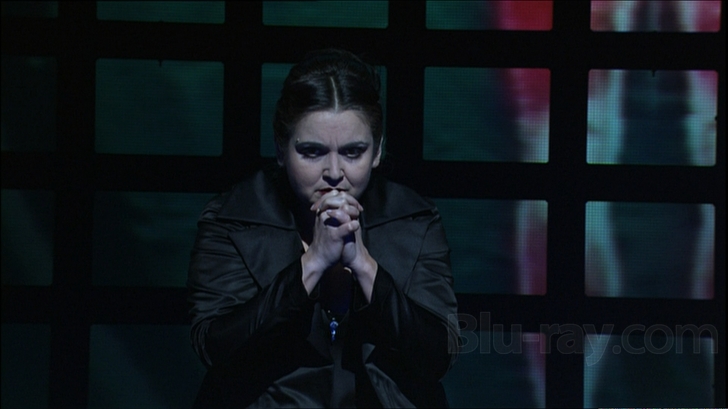
Alceste prays to the Gods that Admeto might be spared.
Meanwhile, Trojan princess Antigona (AKA Antigone) is holed up in the nearby woods with her tutor Meraspe (Gerd Vogel), after Troy’s sack by Hercules (Raimund Nolte). Because nothing, least of all love, is ever simple in opera, it turns out that Antigona was once betrothed to Admeto and is eager to finally consummate the relationship. But wait, you also get—Admeto’s brother Trasimede (Tim Mead) has been pining after Antigona himself for years and was instrumental in keeping his brother and the princess from rightfully marrying.
And so you have a typically obfuscated setup, with mismatched characters, some in disguise (something that only increases once Hercules rescues Alceste from Hades and brings her back to the land of the living to hopefully rejoin her husband). Things only get more complicated when Admeto is led to believe, through various nefarious plotting, that Hercules has failed to rescue Alceste, and that Antigona has been dead for years. Ultimately Admeto and Antigona meet, fall in love, and decide to marry, but an insanely jealous Alceste is waiting in the wings, fuming. I won’t spoil what ultimately happens, but, again, it’s strangely dichotomous and may leave a lot of viewers scratching their heads and wondering if this is really the end of the opera, or if there’s a missing reel (or something similar) from this live presentation.
Though Admeto was well received and became one of Handel’s more popular “London” operas (at least in its day), it seems to have fallen by the wayside in the intervening centuries and hasn’t risen to the heights of some of the composer’s other works. That’s a shame, really, because it is full of some exceptionally glorious music, not the least of which is the stunningly orchestrated accompaniment. The vocal music is a little weirdly tilted toward higher voices (it does seem rather strange at times to hear both Admeto and Trasimede singing in the dulcet tones of a countertenor). But the Handel Festival Orchestra Halle, under the direction of Howard Arman, playing on historical instruments, brings a depth and passion to this music that is wonderful to hear. I was especially impressed by the wind playing, notably the bassoons, English horn and oboe, but the strings were also marvelous, with none of the overly dry, almost sul ponticello sound that can hamper period instruments. The brass, as might be expected on less technologically advanced instruments, have a bit of intonation trouble on some of the fleeter passages, but overall sound magnificent.
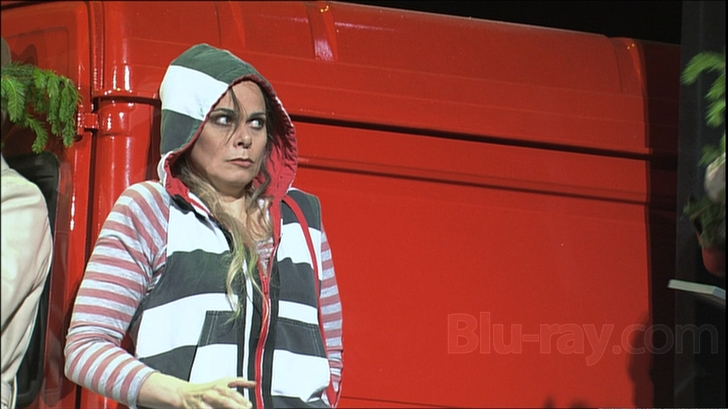
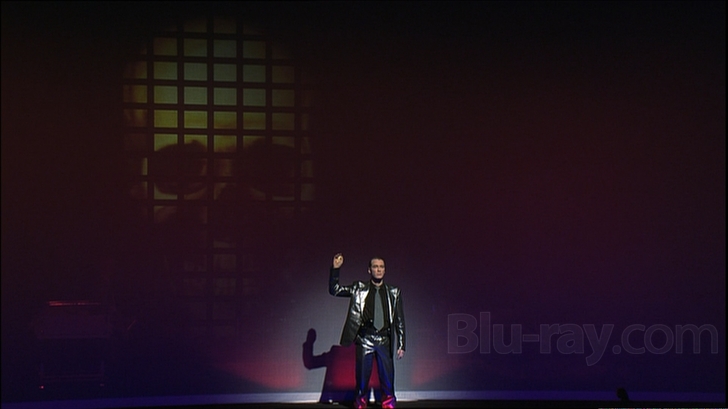
This is an interesting staging, modernized somewhat but not rethought to the point that it enters the pantheon of what friends of mine call “Eurotrash opera.” The set is a very interesting amalgamation of squares which are backlit in a variety of colors and onto which images are often projected. These can be things like CAT scans of Admeto’s head or, in the Hades scene, a very ghastly looking skull. Costumes are contemporary, removing the opera from its historical basis, but perhaps helping to make its themes of hope and forgiveness more universal. Some of the makeup is also quite inventive, especially in the Hades segment. The singing and performances are uniformly excellent, with Lichtenstein especially bringing a lot of nuance and actual touching emotion to a role that in lesser hands could be overwrought and hysterical.
Handel: Admeto Blu-ray Movie, Video Quality
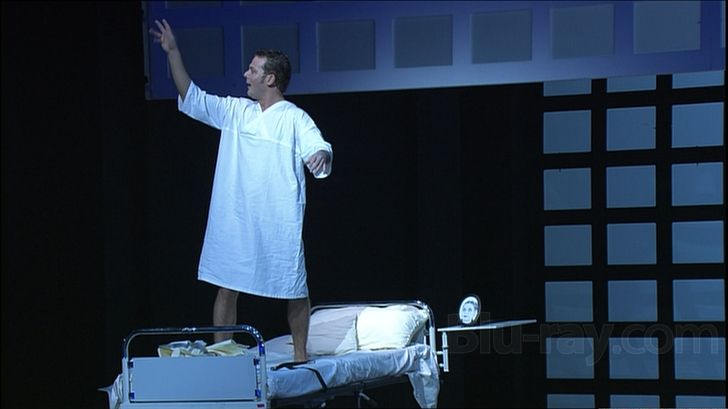
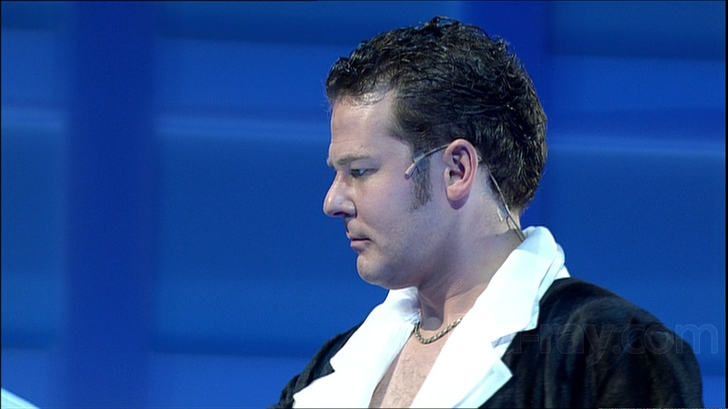
ArtHaus Musik, like its sister label Opus Arte, offers excellent 1080i/AVC encodes that, for live television performances, are astoundingly well detailed. If you're a fan on online high def reviews and sometimes wonder about the phraseology bandied about by critics, Admeto offers about the best example of black levels you're likely to see, at least in terms of recently released operatic titles. A huge swath of this piece is played out in near darkness, and for a lot of these scenes, Alceste and her courtiers are clad entirely in black. To go back a home theater iteration or two, I doubt you'd be able to make out much of anything on a VHS tape, aside from the faces, and DVDs might give at least a glimmer of the shades of black between the dresses, the scrim and the general (lack of) lighting, but this BD reveals all of the inky textures effortlessly. At other times, the opera exploits a rich, if frankly ghastly, palette of blues and greens. The greens in the Hades segment are especially impressive, giving an otherworldly glow to the scene that never degrades into blooming. Flesh tones, while not exceptionally lifelike due to the different makeups utilized, brilliantly recreate a wide range of shades, from Alceste's pale whiteness to Admeto's more robust pinkness. This is a very impressive looking BD, despite the bulk of it being quite (purposefully) dark.
Handel: Admeto Blu-ray Movie, Audio Quality
Two excellent mixes are available, a PCM 2.0 and DTS-HD MA 7.1. Both play at 48kHz, with the 2.0 at a stable 1.5 Mbps and the 7.1 ranging from around a low of 2.9 (which seems a bit on the pallid side at times) to a vigorous high of well over 4.0 Mbps. You'll notice a very apparent thinning of the sound in the 2.0 mix, with the orchestral forces sounding compressed (if no less clear), with a resultant lack of high end. Nonetheless, the overall balance between the voices and orchestra in the PCM offering is really quite good, with a more than adequate amount of dynamic range. The 7.1 mix, however, is where the soundfield really takes wings and soars. While there are very occasional balance issues, due to the extreme directionality of this mix (mostly when actors journey far upstage), this is about as brilliant a reproduction of Handel's elegant music as you're likely to hear. For those unaccustomed to period instruments, though as noted above Arman and company don't sound overly brittle (as is often the case on older instruments), the overall sound may strike some as a bit on the "dry" side, even with the abundance of live hall reverb ambience. All of the voices sound magnificent, though, again, it may take a bit of getting used to to accept the countertenors and surfeit of high voices.
Handel: Admeto Blu-ray Movie, Special Features and Extras
The only extra on this BD, if you can even call it that, is the insert booklet, which contains a nice essay on the history of the piece, as well as biographies of the lead singers and conductor Arman and his orchestra.
Handel: Admeto Blu-ray Movie, Overall Score and Recommendation
Curiously lesser known and less frequently performed than some of Handel's other "London operas," Admeto receives a smart updating here, despite the score being played on period instruments. While the plot may be overly convoluted (and may in fact be a contributing factor to the opera's modern lack of recognition), the music is completely glorious, a courtly assortment of lovely arias and thrilling accompaninment. ArtHaus offers a sterling BD here, perhaps lacking in bonus content, but providing a wonderful performance with excellent image and outstanding audio.