Handel: Admeto Blu-ray Movie
HomeHandel: Admeto Blu-ray Movie 
Naxos | 2009 | 181 min | May 25, 2010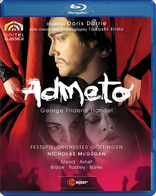

Movie rating
Movie has not been rated yetBlu-ray rating
| Users |  | 0.0 |
| Reviewer |  | 2.5 |
| Overall | | 2.5 |
Overview
Handel: Admeto (2009)
The Danish National Symphony Orchestra, The Danish National Symphony Choir.
Starring: Tim Mead, Marie Arnet, William Berger, Andrew Radley, David BatesDirector: Agnes Méth
| Music | 100% |
Specifications
Video
Video codec: MPEG-4 AVC
Video resolution: 1080i
Aspect ratio: 1.78:1
Audio
Italian: DTS-HD Master Audio 5.1
Italian: LPCM 2.0
Subtitles
English, French, German, Italian
Discs
50GB Blu-ray Disc
Single disc (1 BD)
Playback
Region free
Review
Rating summary
| Movie | | 2.5 |
| Video |  | 4.5 |
| Audio | | 4.5 |
| Extras | | 2.5 |
| Overall | | 2.5 |
Handel: Admeto Blu-ray Movie Review
Baroque meets Butoh. You may want to think twice before wanting to know what "Butoh" means.
Reviewed by Jeffrey Kauffman June 14, 2010Pity poor Admeto. By which I mean both the character and his eponymous opera. As I discussed in my review of the previously released Opernhaus Halle Blu-ray, Handel’s adaptation of parts of Euripides’ Alceste was hampered during its creation by Handel’s need to write parts for the two reigning prima donas of his day, Faustina Bordoni and Francesca Cuzzoni. That meant our putative hero, King Admeto (Tim Mead in this new Göttingen production), was forced to wade through three hours of ambivalent feelings toward two women, Alceste (Marie Arnet), his erstwhile spouse, and Antigona (Kirsten Blaise), a sort of operatic “sex bomb” who is out to consummate a long ago relationship with Admeto. Handel, who may have written his own libretto after work by Aurelio Aureli and Ortensio Mauro, never really came up with a satisfactory conclusion, since neither diva wanted to be the “loser” at the end of the opera. But that was just the beginning of Admeto’s (the opera, not the character) trials.
Though it was immensely popular in Handel’s own lifetime, the opera slowly fell out of favor, partially due no doubt to its incredibly complex plot. Over the past few years, though, it’s begun to regain some of its former luster, but here, too, problems have reared their ugly heads. In the Opernhaus Halle production, for example, we were treated to the incongruous melding of period instruments with a high-tech projection scheme which left the production in a sort of limbo, in terms of tone and style. But the Opernhaus Halle production has nothing, “vision”-wise, on this patently bizarre production mounted at the International Händel-Festspiele Göttingen, in the rather intimate Deutsches Theater, taped in May 2009. Stage director Doris Dörrie evidently has a lifelong love affair with feudal Japan, and so we have Baroque master Handel’s account of Greek myth transported to samurai times. Did I mention there’s also a Japanese dance troupe known as Mamu Dance Theatre engaging in the apparently “indefinable” ritual dance technique of Butoh? Fasten your Sumo loincloths, ladies and gentlemen, this is not your father’s, or your grandfather’s, or your great-grandfather’s Admeto.
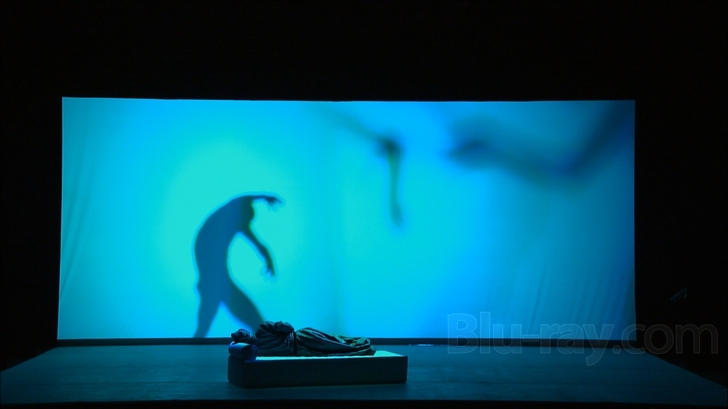
Admeto's having nightmares. They involve ritual Japanese dance.
For a quick précis of Admeto’s frankly labyrinthine plot, I refer you to my previous review of the Opernhaus Halle production. Suffice it to say we’re dealing with a somewhat atypical operatic love triangle between Admeto, Alceste and Antigona, which includes Alceste deciding to sacrifice herself for her husband’s well-being, and finding out that the thanks she receives is a dallying spouse. Mixed into this heady stew are both mythic characters like Hercules (Ercole, played by William Berger) and the more standard second string love interests of various characters like Trasimede (David Bates), who has eyes for Antigona. (It’s interesting to note that this production’s Admeto, Tim Mead, portrayed Trasimede in the Opernhaus Halle outing).
The plot of Admeto may mean less than it ever did in this outright strange mélange spilling from the Sinophile imagination of director Dörrie. Is there some hidden connection between the mythic world of Admeto, Alceste, Antigona and Hercules and samurai and, heaven forfend, Butoh dancers? To be fair, the Butoh troupe does seem to be at least an adequate representation of the fevered hallucinations Admeto is experiencing as the opera opens, but some of the dancers’ grimaces are simply comic, rather than terrifying. The rest of this conceit, though, seems odd, to say the least. Alceste a geisha? She is one of the most furious of spurned women in all of opera, not the subservient sex slave of a master. Dörrie also compounds the problems with a series of scenic cloths various actors pull in from the flies, perhaps redolent of Kabuki, but simply out of place here.
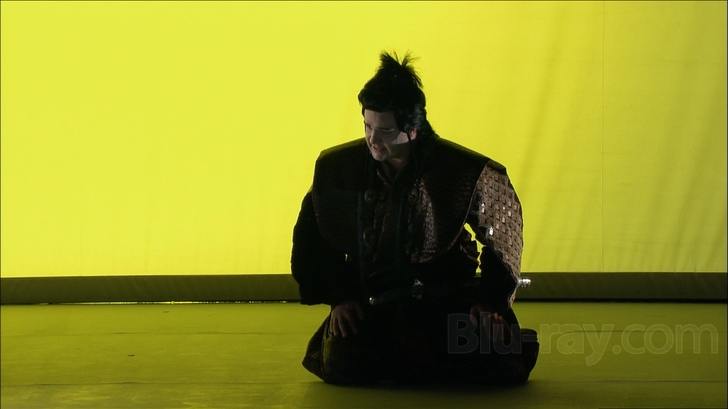
Unfortunately this emphasis on a misplaced conceit doesn’t help to mask the musical deficiencies of this production. Conductor Nicholas McGegan does the best he can with the period instrument Festspielorchester Göttingen, but their playing is often lackluster and imprecise. McGegan makes up for that somewhat in his often bracing continuo for the recitatives. The singing here is the biggest disappointment. Mead was quite excellent as Trasimede in the Opernhaus Halle offering, but he seems out of his element here, as if his gruesome makeup prevents him from completely inhabiting the character vocally. Blaise certainly has the charisma and stage presence for Antigona, but she’s occasionally strident in her arias. Arnet never really registers as Alceste, again perhaps due to the ridiculous costume and makeup she’s forced to wear. William Berger’s Ercole is fun, reimagined here as a buffoonish Sumo wrestler. That is one of the few apt parallels Dörrie manages to eke out of the original conception of Handel.
Dörrie won international acclaim for her Japanese-centric film Cherry Blossoms, and I fear that success may have led to her deciding her entire career now hinges on returning to the setting of that film, whether or not any project really benefits from it. Admeto has had a hard enough time as it is without having to weather directorial “vision” like this.
Handel: Admeto Blu-ray Movie, Video Quality
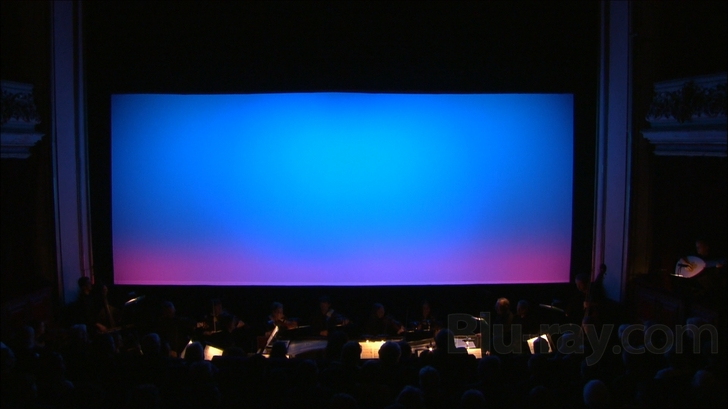
As off-putting as this particular conceit is for Admeto, it at least pays off visually in this sumptuous AVC encoded 1080i transfer, delivered in a 1.78:1 aspect ratio. Dörrie and her lighting designer Linus Fellbom fill the stage with a variety of brightly colored backdrops, from sunshine yellow to verdant green, and the Blu-ray delivers these colors spectacularly well. Detail on the singers is also remarkable, sometimes to the detriment of the performance. We can layers of pancake makeup applied to some of the women's faces, for example, drawing attention away from the actual opera. The samurai and sumo costumes are fanciful and very well rendered here. Black levels are strong and consistent and contrast is excellent. You may have qualms with this production, but visually, it's a treat and this Blu-ray supports the patent excesses brilliantly.
Handel: Admeto Blu-ray Movie, Audio Quality
If you were to ask me to rate this performance, I'd no doubt downgrade my audio rating by at least two stars (if not more). But in terms of the recording and inherent audio quality, this is another strong offering from C Major, with lossless audio options in both DTS-HD Master Audio 5.1 and LPCM 2.0 formats. The Deutsches Theater appears to be relatively "cozy," shall we say, and so directionality is not really very apparent in the onstage performances. The orchestra does fill the surround channels and there's a fair amount of ambient hall reverb apparent especially in the 5.1 mix. The recording is crisp and clear and there are no real balance problems to report between the singers and the orchestra. McGegan's group errs a bit too much on a "dry" sound, but, again, the DTS track especially reproduces that sound inerrantly. Because of the hall's rather narrow acoustics, the LPCM 2.0 track sounds quite good in comparison to the DTS track.
Handel: Admeto Blu-ray Movie, Special Features and Extras
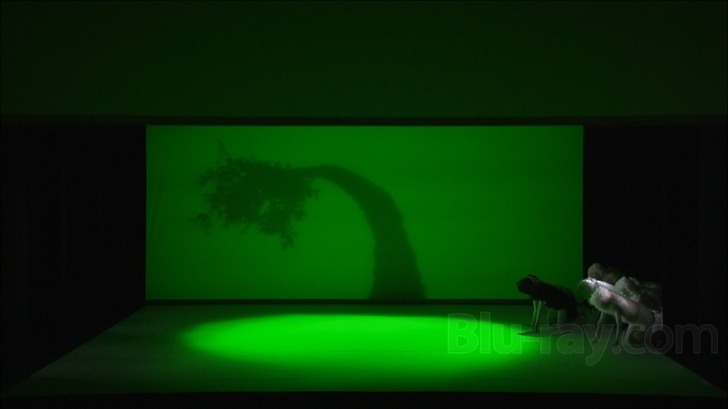
A better than average featurette, Baroque and Butoh (21:17) is the only on-disc supplement, and includes interviews with the main cast, the director and conductor. The insert booklet also contains a rather lengthy synopsis.
Handel: Admeto Blu-ray Movie, Overall Score and Recommendation
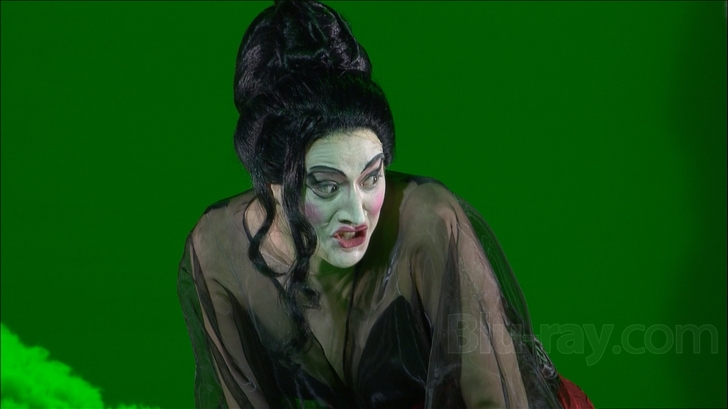
This is one of those productions where you find yourself repeatedly asking yourself, "Why?" Why transport Handel's account of a Greek story to the world of feudal Japan? Why include the weird dances of a Butoh troupe? The only reasonable answer is that it may look "cool." Unfortunately it's completely at odds with Handel's musical language and the intent, not to mention the setting, of the libretto. If Dörrie is obsessed with Japan, there's a little opera called Madama Butterfly she may want to consider staging.