Gauguin: Voyage to Tahiti Blu-ray Movie
HomeGauguin: Voyage to Tahiti Blu-ray Movie 
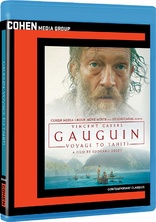
Gauguin - Voyage de TahitiCohen Media Group | 2017 | 102 min | Not rated | Nov 06, 2018

Movie rating
6.8 | / 10 |
Blu-ray rating
| Users |  | 0.0 |
| Reviewer |  | 3.0 |
| Overall | | 3.0 |
Overview
Gauguin: Voyage to Tahiti (2017)
Paul Gauguin feels smothered by the atmosphere prevailing in Paris in the year 1891. Around him, everything is so artificial and conventional: he needs authenticity to renew his art. Failing to convince his wife Mette and his five children to follow him to Paradise Lost, he sets out for Tahiti alone. Once there, he chooses to settle down in Mataiera, a village far away from Papeete, installing himself in a native-made hut. He soon starts working passionately, painting and carving in a style close to the primitive art specific to the island. During his two-year stay the artist will experience poverty, cardiac problems and other displeasures but also happiness in the arms of Tehura, a beautiful young native girl.
Starring: Vincent Cassel, Tuheï Adams, Malik ZidiDirector: Edouard Deluc
| Foreign | 100% |
| Drama | Insignificant |
| Biography | Insignificant |
| Romance | Insignificant |
Specifications
Video
Video codec: MPEG-4 AVC
Video resolution: 1080p
Aspect ratio: 2.39:1
Original aspect ratio: 2.39:1
Audio
French: DTS-HD Master Audio 5.1
French: Dolby Digital 5.1
Subtitles
English
Discs
Blu-ray Disc
Single disc (1 BD)
Playback
Region A (C untested)
Review
Rating summary
| Movie | | 3.0 |
| Video |  | 4.5 |
| Audio | | 4.5 |
| Extras |  | 1.0 |
| Overall | | 3.0 |
Gauguin: Voyage to Tahiti Blu-ray Movie Review
Lust or life.
Reviewed by Jeffrey Kauffman November 18, 2018Finally, a movie featuring Tahiti that doesn’t have all those pesky breadfruit to contend with. Of course, I joke when I reference the many films based on a certain sea uprising ( Mutiny on the Bounty, Mutiny on the Bounty, The Bounty), but in a way even those historically based epics point out a salient fact that plays quite forcefully into Gauguin: Voyage to Tahiti: this specific Polynesian island was seen by some as a virtual Paradise on Earth. It was certainly the beauty of Tahiti (and maybe, just maybe, the Tahitian women) that probably started to sway the H.M.S. Bounty’s crew’s thoughts toward insurrection (why should they return to soggy old England, especially when the journey homeward was being helmed by a martinet like Captain Bligh?), but for Paul Gauguin (Vincent Cassel), Tahiti was initially merely a dream — a promise of Paradise, so to speak, rather than one delivered for a brief, shining moment, and then snatched away, as with the Bounty crew. Some painting aficionados may easily recall that Gauguin shows up as a character in a somewhat glossier accounting of an artist’s life, namely Vincente Minnelli’s Lust for Life, ostensibly about Van Gogh. That film offered Anthony Quinn in a kind of combustible performance as Gauguin, but this film offers the artist as almost more of a feral presence, especially once he gets to Tahiti, where he seems to rather quickly assimilate with the native population (in more ways than one). Gauguin: Voyage to Tahiti kind of oddly elides huge swaths of its focal character’s life, and even tends to quickly deal with some elements of his time in the island paradise, and as such can be a somewhat clunky viewing experience from a narrative standpoint. But Cassel’s performance is consistently arresting, and the film is expectedly visually sumptuous throughout.
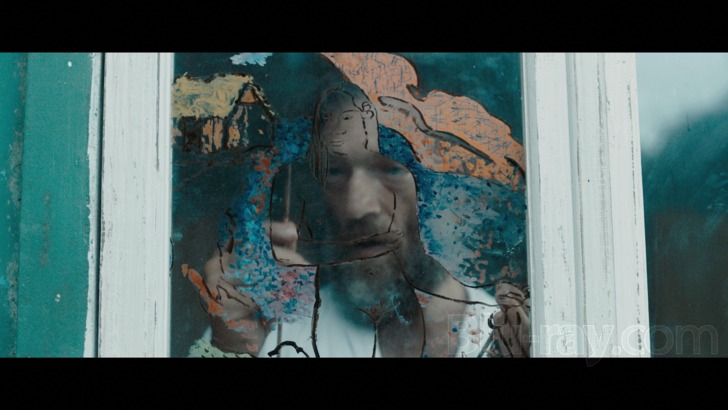
While Gauguin and Van Gogh kind of sadly shared a certain fate in terms of being largely ignored during their lifetimes, one of the things that Gauguin: Voyage to Tahiti completely omits in its depiction of its title character is the fact that at one point Gauguin was actually incredibly successful — albeit in the world of business, when his art was perhaps more of a hobby. Instead, the film starts in Paris with Gauguin a shambling, disheveled type who doesn’t even know his wife and (many) children have arrived, ostensibly to travel to Tahiti with him. With the entire brood stuffed into a tiny (and evidently smelly, as evidenced by some dialogue delivered by the Gauguin children) flat, Gauguin’s wife Mette (Pernille Bergendorff) confesses to her husband that she and the children will not be accompanying him. The film just kind of segues without further ado to Tahiti, where Gauguin takes up residence in a shack, though his “economic” lot in life is, if anything, even more distraught.
It’s hard to know what exactly the gaggle of screenwriters credited with this film hoped to accomplish with their “adaptation” of Gauguin’s “travel diary” from his first two year (or so) stay in Tahiti, especially since they have quite obviously (and rather unashamedly, it should be added) fictionalized so many elements. There’s a whole early sidebar documenting a supposed heart attack Gauguin suffers on the island, which does little to further the story other than to introduce another French character, a doctor named Henri Vallin (Malik Zidi), who kind of wafts in and out of the story at various (at times completely random) points, evidently in order to provide a bit more developed dialogue scenes than some of the understandably halting interchanges between Gauguin and the Tahitian natives. In fact, large swaths of the film play out virtually wordlessly, and in some ways, these are the most powerful moments in the film.
But where Gauguin: Voyage to Tahiti is perhaps most problematic is with regard to what is posited as the central relationship in the film, Gauguin’s “professional” (as in using her as a model) and “personal” (as in using her as a lover) affairs with a young native girl named Tehura (Tehei Adams). History buffs will know that Gauguin’s tendency toward “mentoring” young women has proven to be a major bugaboo in assessing his life, and the historical record is clear that the real life girl (and she was just that — a girl, not a woman) on whom this character was based was only 13 when Gauguin began a sexual relationship with her. The film completely omits this fact, and instead invents a totally needless quasi-ménage à trois involving a young Polynesian man named Jotepha (Pua-Taï Hikutini). Now it’s admittedly a “love triangle” that may exist mostly in Gauguin’s overly suspicious mind, but it just paints (sorry, couldn’t resist) this story with needless melodrama and is so far removed from the actual history that it may end up creating more obstacles (at least for those conversant with Gauguin’s actual life) than furthering any perceived story aims.
There is some kind of provocative material here nonetheless, even without the overt depiction of the seduction of a very young girl, including some kind of interesting subtext about the changing religious atmosphere on Tahiti, something that may actually remind some folks of another epic dealing with an island in the Pacific, Hawaii. But rather like another recent Cohen release about a famous artist, Rodin, there’s a curiously static feeling to much of this enterprise. As a travelogue, it’s ravishing, but as either “real” history or even as a cohesive fictionalized narrative, the journey tends to wander a bit aimlessly at times.
Gauguin: Voyage to Tahiti Blu-ray Movie, Video Quality
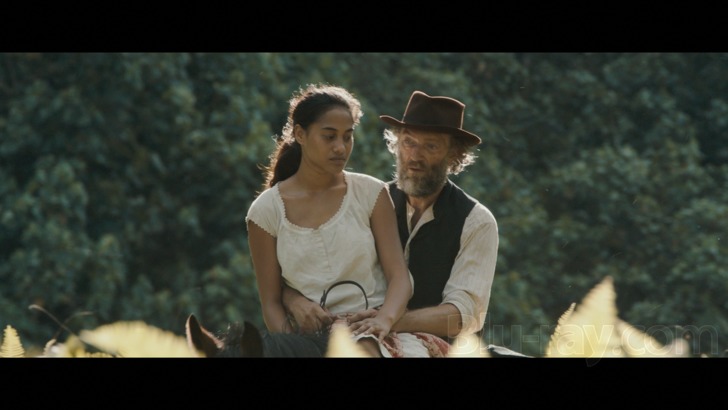
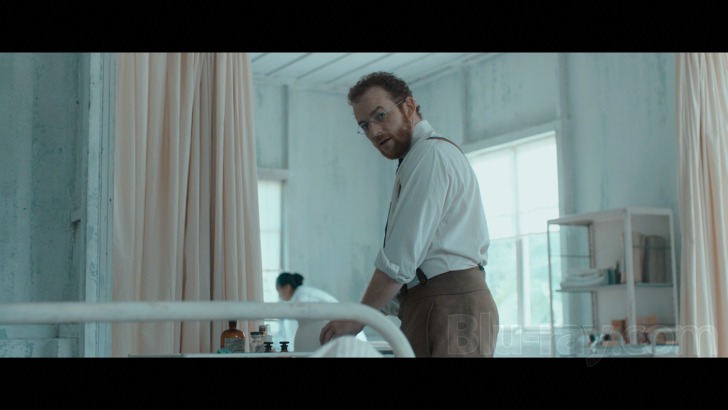
Gauguin: Voyage to Tahiti is presented on Blu-ray courtesy of Cohen Media Group with an AVC encoded 1080p transfer in 2.39:1. The IMDb doesn't really offer much in the way of technical data, but I found this really fascinating interview with both the cinematographer and colorist of the film which I highly recommend those interested in some background on the shoot at least peruse. Cinematographer Pierre Cottereau references the Arri Alexa Mini in his comments and I was interested to read how even he was concerned about how the camera would handle low light conditions (as regular readers of my reviews know, I tend to be something of a curmudgeon with regard to what I've termed "digital murk" that accrues in dimly lit environments, in my experience a bit more with Arri cameras than with Red). As the interview makes clear, very little if any additional lighting was utilized for this shoot, and as such shadow detail can be a little iffy at times, especially in some of the candlelit or nighttime moments. That said, even in the kind of surprisingly rainy and drab grays and greens of some of the Tahiti scenes, detail and fine detail levels are often very impressive, especially in close-ups. Some of the more brightly lit material really pops extremely vividly, though kind of ironically some of the brightest scenes are in the almost purely white environment of the little clinic where Gauguin ends up after his heart attack. The palette looks natural, if slightly skewed toward teal and blue-green tones in many of the forest/jungle scenes in the film.
Gauguin: Voyage to Tahiti Blu-ray Movie, Audio Quality
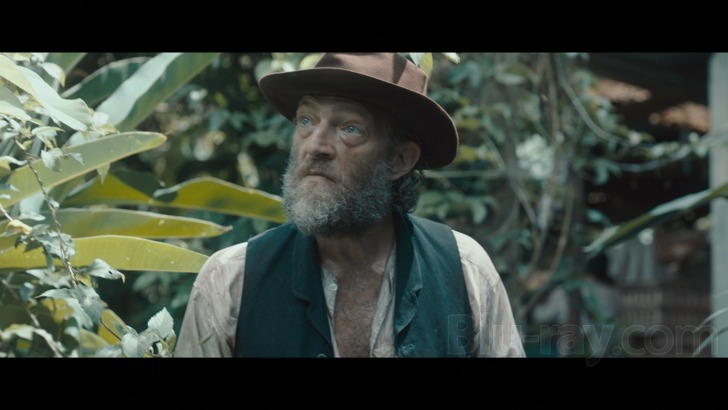
Gauguin: Voyage to Tahiti offers a wonderfully immersive DTS-HD Master Audio 5.1 track, one which really springs to abundant life in the many outdoor scenes in Tahiti, where things like bird calls are nearly constant as background noise. But even before the film gets to that exotic location, there's really good surround activity in scenes like a couple of sequences in bars or clubs in Paris early in the film. Warren Ellis' score also wafts quite nicely through the surround channels, and dialogue is always rendered cleanly and clearly on this very enjoyable track.
Gauguin: Voyage to Tahiti Blu-ray Movie, Special Features and Extras
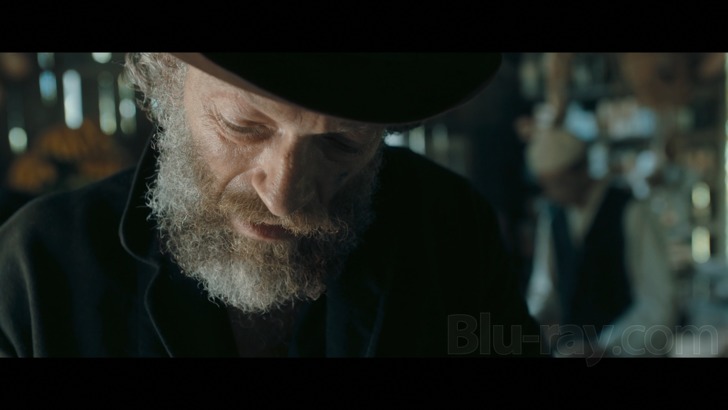
- Illustrations (1080p; 15:40) starts by offering a somewhat random assortment of shots, including some behind the scenes footage, before settling into some comments about the art in the film.
- Vincent Cassel is Gauguin (1080p; 3:47) is a brief piece focusing on the character and the actor portraying him.
- Life and Painting of Gauguin (1080p; 4:58) is another pretty brief piece that offers more of a general overview of the project, including its genesis in the "Noa Noa" diary of the artist.
- Tahiti (1080p; 2:25) focuses on the exotic locale of most of the film.
- Gaugin: Voyage to Tahiti Trailer (1080p; 1:44)
Gauguin: Voyage to Tahiti Blu-ray Movie, Overall Score and Recommendation
Gauguin: Voyage to Tahiti is almost deliberately misleading in its title, since there's virtually no "voyage" per se: the film has a few introductory scenes in Paris, and then, bam, he's on the island. I actually think the film might have delivered more of an emotional component had Gauguin's wife and children been kept in the story, instead of shunted aside after a moment or two. In fact Gauguin's abandonment of his family is really kind of disturbing on any number of levels, especially when one factors in his "relationships" with very young Tahitian girls (another facet of his life this film tends to elide). Cassel is amazing in a visceral performance, and some of the native Tahitians in the cast are also quite impressive. The film is lovely to look at, but it's a curiously uninvolving experience considering how dynamic its focal character must have been in real life. Technical merits are first rate for those considering a purchase.
Similar titles
Similar titles you might also like
(Still not reliable for this title)

Indochine
1992

Jules and Jim
Jules et Jim
1962

The Earrings of Madame de...
Madame de...
1953

Soleil Ô
Oh, Sun
1967

The Image Book
Le livre d'image
2018

Touki Bouki
1973

A Woman Is a Woman
Une femme est une femme
1961
Casque d'Or
Golden Marie
1952

Le Combat dans l'île
Fire and Ice | Limited Edition
1962

L' Argent
1928

A Single Girl
La fille seule
1995
Two English Girls
Anne and Muriel / Les deux Anglaises et le continent
1971

The Soft Skin
La peau douce
1964

Bastards
Les Salauds / Slipcover in Original Pressing
2013

Masculin Féminin
1966

Vagabond
Sans toit ni loi
1985

Wild Reeds
Les roseaux sauvages / Slipcover in Original Pressing
1994

Van Gogh: The Films of Maurice Pialat: Volume 3
1991

Queen Margot
La Reine Margot | 20th Anniversary Director's Cut
1994

César et Rosalie
Cesar & Rosalie
1972