Gatchaman: Complete Collection + OVAs Blu-ray Movie
HomeGatchaman: Complete Collection + OVAs Blu-ray Movie 
Sentai Filmworks | 1972-1995 | 2 Seasons | 2720 min | Rated TV-PG | Dec 10, 2013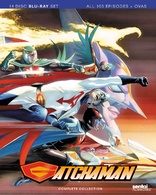
Price
List price:Listed on Amazon marketplace

Movie rating
Movie has not been rated yetBlu-ray rating
| Users |  | 4.0 |
| Reviewer | | 4.0 |
| Overall | | 4.0 |
Overview
Gatchaman: Complete Collection + OVAs (1972-1995)
Using amazing weapons powered by super-science, the international terrorist organization known as GALACTOR is out to steal all of Earth’s resources for itself and its inhuman masters. Mankind’s only hope? The International Science Organization and their elite strike force, the Science Ninja Team! But these five young heroes will have their work cut out for them as they take on the seemingly impossible task of defeating GALACTOR’s horrific arsenal of mechanized weapons of mass destruction and endless armies of henchmen.
| Foreign | 100% |
| Anime | 87% |
| Action | 25% |
| Sci-Fi | 25% |
| Fantasy | 8% |
| Teen | 6% |
| Adventure | 6% |
| Drama | Insignificant |
Specifications
Video
Video codec: MPEG-4 AVC
Video resolution: 1080p
Aspect ratio: 1.33:1
Original aspect ratio: 1.33:1
Audio
English: DTS-HD Master Audio Mono
Japanese: DTS-HD Master Audio Mono
Subtitles
English
Discs
50GB Blu-ray Disc
Fourteen-disc set (14 BDs)
Playback
Region A (C untested)
Review
Rating summary
| Movie | | 4.0 |
| Video | | 4.0 |
| Audio |  | 3.5 |
| Extras | | 4.0 |
| Overall | | 4.0 |
Gatchaman: Complete Collection + OVAs Blu-ray Movie Review
Environmental Protection Ninjas.
Reviewed by Jeffrey Kauffman November 27, 2013Generation X-ers and perhaps even some “historically” minded Millennials may have fond memories of the 1990s cartoon Captain Planet and the Planeteers, an environmentally themed animated series that promised a brighter future if only we could all work together to make the Earth a more sustainable, green enterprise. What some fans of this series may not know is that Captain Planet and his cohorts were actually pretty late to the animated environmentalism game, for some two decades before this series, Gatchaman aired for around two years in Japan, and then fairly slowly matriculated to American airwaves (in heavily edited versions) first in the late seventies as Battle of the Planets and then again in the late eighties as G Force: Guardians of Space. Gatchaman (which in its original Japanese form was actually titled Science Ninja Team Gatchaman) didn’t traffic exclusively in environmental issues, and it in fact had more of a fantasy science fiction aspect than Captain Planet ever did, but Gatchman, much like its antecedent, depicted a world where technology could actually help Mankind rather than shackling it and contributing to the destruction of vital natural resources. Of course technology—especially alien technology—can also be used for evil, and that sets up one of Gatchaman’s central conceits. In the case of this series, it isn’t necessarily the boneheaded actions of humans which are threatening the planet, but instead a nefarious group called Galactor, which is out to usurp Earth’s natural resources for their own villainous ends. Galactor is headed by an alien who utilizes a bunch of thuggish human underlings to do his dirty work, and the heroes of the series, the Science Ninja Team, must band together to try to protect the planet from this horrifying incursion. This valiant quintet has their own mastermind as well as an array of high tech devices which help them in their battles. It’s interesting to note that a lot of anime fans tend to turn to such iconic titles as Akira or Royal Space Force: Wings of Honneamise (both recently re-released on Blu-ray and so probably back on the radar for many genre aficionados) as the beginning points for this idiom, but of course older series like Gatchaman prove that that is obviously not the case. Gatchaman may strike some younger viewers especially as being a bit on the quaint side, but this complete version offers a lot of excitement and interest that even those who may have caught either of the English language redacted versions may find surprising.
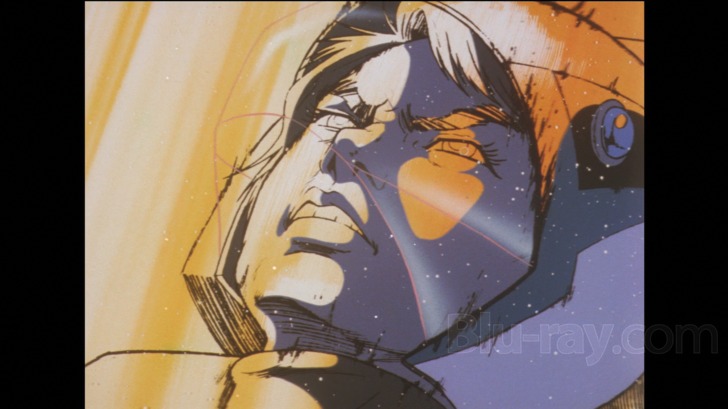
Now anyone coming to Gatchaman expecting the kind of dense, layered writing and character development that later became anime staples in franchises like Ghost in the Shell is going to be in for something of a shock. This is a much more basic enterprise, one that simply posits the good guys versus the bad guys, albeit in a futuristic, science fiction setting. The show is undeniably repetitive, with Galactor coming up with all manner of mecha and other “beasts” to try to defeat the Science Ninja Team, but of course, good wins out in the end. What may in fact interest a lot of fans of anime is some of the nascent tropes which would later become staples of the genre. These include those selfsame mecha (even if they’re sometimes not “traditional” mecha in this series), the emphasis on technology, and in what may seem like a minor plot point but which in fact is integral to understanding all sorts of Japanese media outings, the subliminal fear of nuclear annihilation. Any given anime fan can certainly come up with manifold examples of post-Apocalyptic films and series that take place in the wake of a nuclear holocaust, but Gatchaman might be thought of as a pre- Apocalyptic drama, one where the Science Ninja Team is attempting to keep Galactor from getting their hands on enough uranium to do some real damage (this aspect seems incredibly relevant even today, as headlines are currently full of the deal brokered between Iran and the United States and its allies over the “appropriate” levels of uranium use).
The five Science Ninja Team members each have a bird totem which figures into their character (and costume). Ken is the leader and is also known as The Eagle; Joe is The Condor; Jun is The Swan; Jinpei is The Swallow; and Ryu is The Owl. This quintet is mentored by super-scientist Dr. Nambu, who also schools the five in various battle techniques. The original series is notable for its rather graphic violence, something that was expurgated from its various American incarnations, at least in part. Nambu also served as a surrogate father figure for Ken, whose biological father disappeared under mysterious circumstances but whose presence ends up being a major plot development later in the series. Joe, like Ken, was raised by Dr. Nambu, but his parentage is perhaps more problematic, tracing back to Galactor. Jun and Jinpei were orphans recruited by Dr. Nambu, but Ryu actually has an intact family unit, though that aspect never becomes a major issue in the series. On the villain side of things, there's the enigmatic Leader X (Sosai X), a superpowered being who has a coterie of human minions, including the putative human leader, Berg Katse.
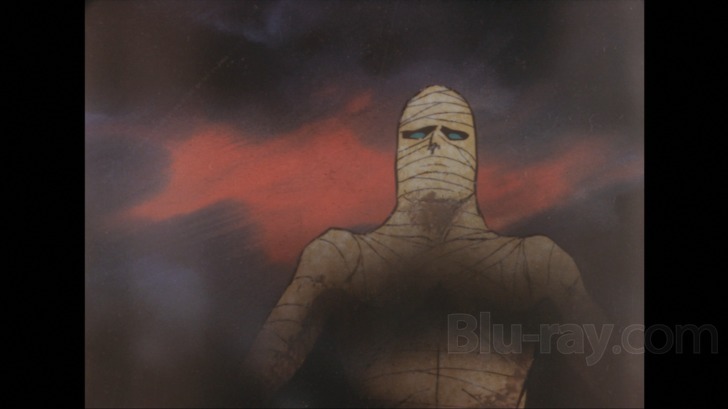
None of even this minimal back story is actually that important in understanding the often pretty cut and dried plots of virtually every episode of Gatchaman. The series pretty much dives right into it story, with Galactor trying to harvest some uranium, which leads Dr. Nambu to announce not just the existence of the previously shielded villains, but also of the creation of Science Ninja Team, who will seek to defeat Galactor. That then sends the Team off into its first of many battles with various creatures or entities that Galactor seems to come up with virtually at will. Several of the episodes of Gatchaman tended to remind me of the old Hanna Barbera classic Jonny Quest, especially with regard to the high tech gizmos the Science Team Ninja uses to defeat its enemies, as well as the monsters that Galactor brings to bear (including a giant mummy that is more than a bit reminiscent of the similar mutant seen in every Jonny Quest opening credits sequence).
One of the interesting things about Gatchaman is that even though each episode is understandable as a standalone entity, there is attention paid to developing the overall arc of the Galactor-Science Ninja Team conflict over the rather astounding number of episodes this show entails (105, plus OVAs). While there are passing attempts to give some of the main characters salient pieces of information, the real interest here is actually in the slow but steady slog toward a fairly thoughtful denouement (this is one series that actually tries to tie things up into a more or less conclusive package). Without spoiling too much about what ends up happening, the show is to be commended for choosing not to answer every question (including one major one about some central motivations on the part of Galactor), while at the same time trying to inject an almost Oshii-sque philosophical bent toward explaining all the mayhem that has rained down on the planet over the course of over a hundred episodes.
There’s a certain retro aspect to a lot of Gatchaman that may provoke giggles in more jaded viewers, but there’s also a certain sweetness and moral certitude. This is a series that never even dabbles in shades of gray, where the heroes and villains exist in clearly defined ways and the ultimate results are never much in question. Obviously at 105 episodes, there’s a lot of content here, and the show tends to show its repetitive side when viewed in a binge manner (as I did in revisiting the series for this review—and it still took me the better part of a month to make it through). But there are some surprises along the way, along with an overall through line that ultimately ends up offering a coherent story of technology and teamwork allowing good to triumph over evil.
Gatchaman: Complete Collection + OVAs Blu-ray Movie, Video Quality
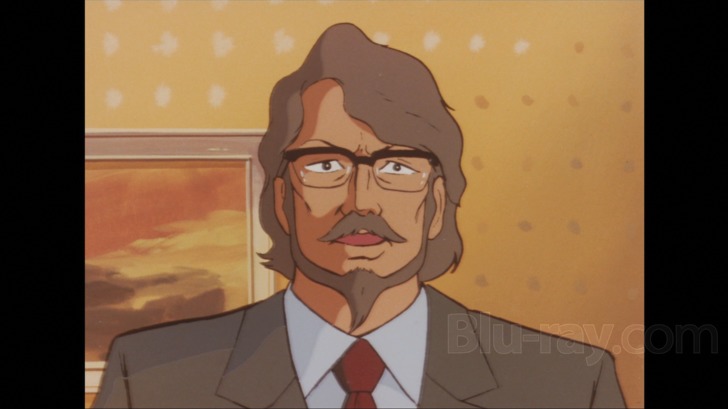
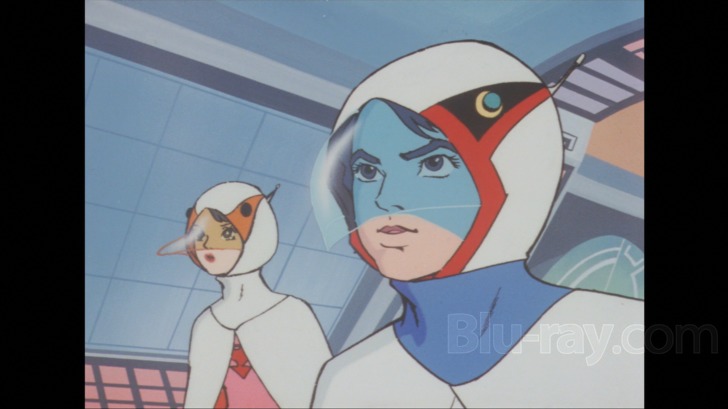
Gatchaman is presented on Blu-ray courtesy of Sentai Filmworks with an AVC encoded 1080p transfer in 1.37:1. As fans of the series know, the American broadcast versions were radically altered and edited, and the subsequent DVD releases, while a major step upward, still had some recurrent image issues. The good news here is that given reasonable expectations, the picture quality here is a major improvement. This show still shows its age, with occasionally problematic elements, including issues like telecine wobble, and some noticeably faded colors. But the transfer here is largely true to the source elements, though it does appear some digital cleanup and denoising has been applied, though not to the point where significant detail is lost or to where elements like line detail actually disappears. There are occasional minor blemishes which can be spotted in virtually every episode, but nothing that rises to any major level of concern. There are occasional minor alignment issues that can affect line detail (see screenshot 19). Gatchaman was not an extravagantly animated series to begin with, though occasionally there were some cooler design elements thrown into the mix (see screenshot 1). That general minimalism may seem to be at odds with the high tech ambience of the series, but this high definition presentation really invests new life into the enterprise and the show's fans should be very pleased with the look of this transfer.
Gatchaman: Complete Collection + OVAs Blu-ray Movie, Audio Quality
Gatchaman features both the original Japanese language track as well as the ADV English dub in DTS-HD Master Audio Mono (delivered via DTS-HD Master Audio 2.0). Both of these tracks sport good fidelity, though neither is as explosive as might be hoped for, given the glut of battle scenes and high tech wizardry that tend to be focal points of every episode. Voice work in both languages is quite good, though there are some interesting differences in characterization that provide even more content for the adventurous fan to explore. The older Japanese track sounds a bit boxier than its newer English sibling, and it has noticeably less amplitude than its English language counterpart, but neither track exhibits anything major in terms of damage or issues like hiss. (The score above represents an average of the two tracks put together, and it should be noted that I simply did not have time to listen to all 105 episodes in their entirety with both tracks. I spent most of my time with the English language track, occasionally toggling to the Japanese track for comparison purposes, including replaying things like action scenes to note the differences between them.)
Gatchaman: Complete Collection + OVAs Blu-ray Movie, Special Features and Extras
Most, but not quite all, of the copious supplemental features from the multi-volume DVD releases have been ported over
to the Blu-ray release:
Disc One
- Commentary with Leraldo Anazulda (Ken) and Charles Campbell (ADR Director) on "The Ghost Fleet From Hell". (Note: This is how Leraldo's surname is spelled on both the disc menu and the insert. It is not a typo, at least by me.)
- Commentary with Brian Jepson (Joe) and Charles Campbell (ADR Director) on "The Great Mini-Robot Operation".
- Commentary with Kim Prause (Jun) and Charles Campbell (ADR Director) on "The Mysterious Red Impulse".
- Commentary with Luci Christian (Jinpei) on "The Indestructible Machine Mechanika".
- Commentary with Victor Carsrud (Ryu) on "Who Is Leader X?".
- Commentary with Andy McAvin (Dr. Nambu) on "Kamisoral, The Guillotine Iron Beast".
- Commentary with George Manley (Narrator) on "The Plan to Assassinate Dr. Nambu".
- Commentary with Edwin Neal (Berg Katse) on "Murder Music".
- Commentary with Sarah Alys Lindholm (Senior Translator) on "A Romance Destroyed by Evil".
- Commentary with John Tyson (Red Impulse) on "Farewell, Red Impulse".
- Commentary with Leraldo Anzaldua (Ken) and Andy McAvin (Dr. Nambu) on "Science Ninja Team, Number G- 6". (Note: This is how Leraldo's surname is spelled on both the disc menu and the insert. It is not a typo.)
- Commentary with Kim Prause (Jun) and Luci Christian (Jinpei) on "A Christmas Present of Death".
- Commentary with Brian Jepson (Joe) and Winston Parish (Leader X) on "Death Girls Unite!".
- Minions and Mayhem Commentary with Josh Grelle, Glenn Fraser, Chris Ayres and Charles Campbell on "Mortal Combat! 5,000 Fathoms Under the Sea".
- Commentary with Marty Fleck (Director Anderson) and Charles Campbell (ADR Director) on "Smog Fiber, The Spider Web Iron Beast".
- Commentary with Samantha Inouye Harte and Charles Campbell (ADR Director) on "Patogiller, The Triple Combined Iron Beast".
- Commentary with Recording Enginers Eden Barrera and Bobby Gordon on "Counterattack! The Underground Torpedo Operation".
- Commentary by Luci Christian (Jinpei) and George Manley (Narrator) on "Storm Galactor's Headquarters!".
- Commentary with Leraldo Anzaldua (Ken) and Charles Campbell (ADR Director) on "Earth's Destruction 0002".
Disc Fourteen has nothing but special features:
- What is Gatchaman? (480i; 35:54) gives some background on the series, including its American iterations.
- What We Were Watching (1080p) is a text based entry detailing what was on television when Gatchaman originally aired.
- Character Profiles (1080p) is another text based supplement which gives brief "biographies" of all of the major characters.
- Character Sketches features artwork of the following characters (all looking slightly anamorphically
stretched):
- Ken, the Eagle (480i; 2:38)
- Joe, the Condor (480i; 1:08)
- Jun, the Swan (480i; 00:54)
- Jinpei, the Swallow (480i; 1:13)
- Ryu, the Owl (480i; 00:37)
- Dr. Nambu (480i; 1:16)
- Berg Katse (480i; 00:31)
- Additional Characters (480i; 1:25)
- Episode Sketches (480i; 12:18) has some basic artwork for several episodes.
- Science Ninja Technique! (480i; 7:46) is another anamorphically stretched compilation of Science Ninja Team exploits.
- Art Gallery (480i; 18:17) is an interesting narrated history of the franchise with lots of art examples of various home video releases. This is also anamorphically stretched.
- Gatchaman Music includes anamorphically stretched narrated examples of various international
soundtracks:
- Gatchaman: Battle of the Planets 7-Zark-7 Italian (480i; 6:05)
- Battle of the Planets Opening Theme Dutch (480i; 1:33)
- Battle of the Planets Closing Credits Dutch (480i; 1:31)
- The Archangels France (480i; 2:55)
- Commando G Spain (480i; 3:16)
- 7-Zark-7 Spain (480i; 3:13)
- Battle of the Planets Spain (480i; 3:15)
- Publishing Galleries includes these anamorphically stretched narrated galleries:
- Publishing Gallery I (480i; 10:31)
- Publishing Gallery II (480i; 8:15)
- Gatchaman in English (480i; 3:37)
- Gatchaman in Europe (480i; 5:17)
- Gatchaman in France (480i; 4:45)
- Gatchaman at Play (480i; 9:52) looks at various games based on the show. Yes, it's anamorphically stretched.
- The Origins of Tatsunoko Production (480i; 11:03) looks at the series' production house. Need I mention it's anamorphically stretched?
- Interview with Alex Ross (480i; 11:05) is (guess what?) an anamorphically stretched interview with illustrator Ross.
- Interview with English Director Charles Campbell (480i; 16:54) has some interesting background on the "uncut" version. But, wow, is Campbell ever wiiiide.
- English Actor Interviews offer, yes, anamorphically stretched moments with:
- Leraldo Anzuldua (Ken, the Eagle) (480i; 9:21)
- Brian Jepson (Joe, the Condor) (480i; 12:50)
- Kim Prause (Jun, the Swan) (480i; 11:52)
- Luci Christian (Jinpei, the Swallow) (480i; 13:24)
- Victor Carsrud (Ryu, the Owl) (480i; 11:14)
- Edwin Neal (Berg Katse) (480i; 18:10)
- Andy McAvin (Dr. Nambu) (480i; 7:06)
- George Manley (Narrator) (480i; 12:55)
- English Audition Footage includes a bunch of clips of actors who didn't get these roles (don't even ask about
stretching, okay?):
- Ken, the Eagle (480i; 9:03)
- Joe, the Condor (480i; 7:38)
- Jun, the Swan (480i; 14:35)
- Jinpei, the Swallow (480i; 13:35)
- Ryu, the Owl (480i; 9:25)
- Berg Katse (480i; 7:07)
- Dr. Nambu (480i; 5:30)
- Narrator (480i; 7:20)
- Leader X (480i; 7:46)
- English VA Round Table (480i; 40:39) features the principal cast not exactly gathered around a table and acting kind of silly. Yes, it's stretched.
- Gatchaman at the Alamo Draft House (480i; 7:18) documents a screening of the show in Austin. Yep, stretched. The video quality of this supplement is pretty shoddy.
- The Demon 5 In Concert (480i; 1:30) is a kind of music video. Need you ask?
- Clean Opening Animation (480i; 1:41) is, yes, anamorphically stretched.
- Clean Closing Animation (480i; 1:38) of course follows suit.
- Unused Ending Sequences (480i; 2:49) is stretched.
- Gatchaman ModelLock Commercial (480i; 00:36) is stretched but actually doesn't look too weird.
Gatchaman: Complete Collection + OVAs Blu-ray Movie, Overall Score and Recommendation
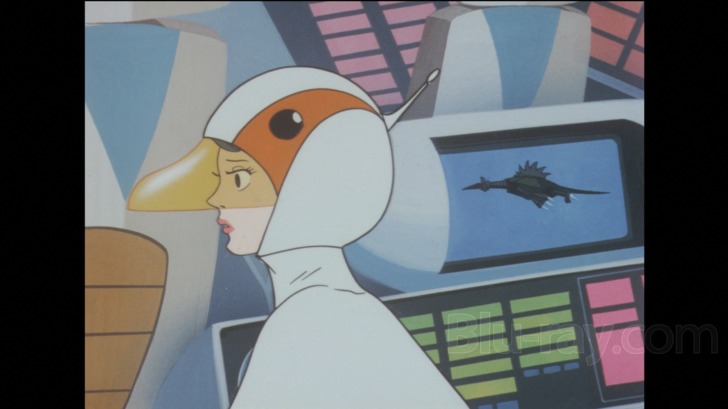
Gatchaman may not have the high public profile of more iconic anime, but it holds a very special place in a lot of fans' hearts, even though that place was initially held by heavily redacted American versions. Sentai Filmworks has delivered a very commendable package here with solid technical merits and a glut of supplements (though the video presentation of virtually everything on the fourteenth disc has unfortunately been anamorphically stretched). This is obviously a pretty pricey set, but it's wise to remember there are 14 discs, containing all 105 episodes, the OVAs, and lots of commentaries in addition to the fourteenth disc of bonus material. Highly recommended.