Gardenia Blu-ray Movie
HomeGardenia Blu-ray Movie 
Gardenia il giustiziere della mala / The Italian Collection #9288 Films | 1979 | 100 min | Rated BBFC: 15 | Jan 19, 2026


Movie rating
Movie has not been rated yetBlu-ray rating
| Users |  | 0.0 |
| Reviewer |  | 3.5 |
| Overall | | 3.5 |
Overview
Gardenia (1979)
A businessman comes into conflict with a gangster when he refuses to allow drugs to be sold through his restaurant.
Starring: Franco Califano, Martin Balsam, Robert Webber, Eleonora Vallone, Licinia LentiniDirector: Domenico Paolella
| Foreign | Uncertain |
| Crime | Uncertain |
| Drama | Uncertain |
Specifications
Video
Video codec: MPEG-4 AVC
Video resolution: 1080p
Aspect ratio: 1.85:1
Original aspect ratio: 1.85:1
Audio
English: LPCM 2.0
Italian: LPCM 2.0
Subtitles
English, English SDH
Discs
Blu-ray Disc
Single disc (1 BD)
Packaging
Slipcover in original pressing
Playback
Region B (locked)
Review
Rating summary
| Movie | | 3.5 |
| Video |  | 4.0 |
| Audio |  | 4.5 |
| Extras | | 3.5 |
| Overall | | 3.5 |
Gardenia Blu-ray Movie Review
Reviewed by Dr. Svet Atanasov February 19, 2026Domenico Paolella's "Gardenia" (1979) arrives on Blu-ray courtesy of 88 88 Films. The supplemental features on the release include new program with screenwriter Gino Capone; new program with cinematographer Sergio Rubini; new audio commentary by critics Eugenio Ercolani and Nanni Cobretti; vintage trailer; and more. In English or Italian, with optional English and English SDH subtitles for the main feature. Region-B "locked".
The lesson
One does not need extensive knowledge of Italian genre cinema to easily conclude that the party, or parties, who put together Gardenia were aiming to deliver a quality project and impress on multiple fronts at once. Martin Balsam and Robert Webber were undoubtedly cast as the big American magnets whose presence was supposed to legitimize Gardenia as a serious project on the other side of the Atlantic. Venantino Venantini and Franco Diogene, both instantly recognizable, very good Italian character actors, were cast as the domestic magnets. Augusto Caminito, who had penned several Django sequels, the international hit Grand Slam, and the excellent thriller The Designated Victim, was tasked to deliver a fine screenplay. Sergio Rubini, who had recently worked on a couple of very well-received poliziotteschi, was hired to lense Gardenia. All of these pieces were supposed to come together and produce a good genre film that would sell well domestically and internationally.
At the center of this undeniably sound plan was Franco Califano, a mostly decent actor and a very good composer and singer, who, in the 1970s, lived a wild life that repeatedly got him in trouble with the Italian authorities. Califano quickly developed a reputation, and, while he was nowhere near as popular as Adriano Celentano, it appears that, like the Milanese superstar, he was keen on leaving a lasting trail in the Italian film industry. However, it is precisely this admirable ambition that prevented Gardenia from becoming the film it was meant to be.
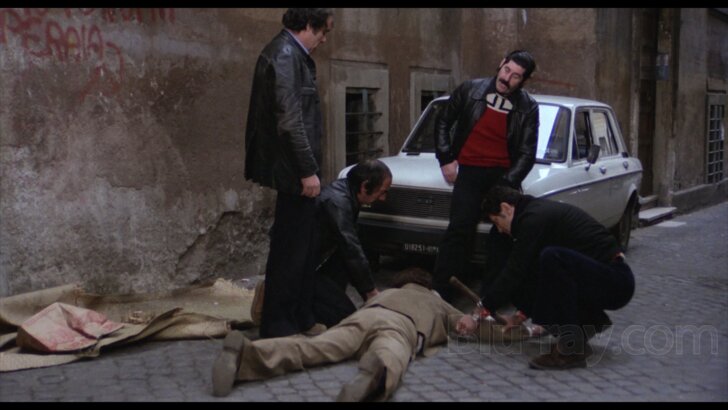
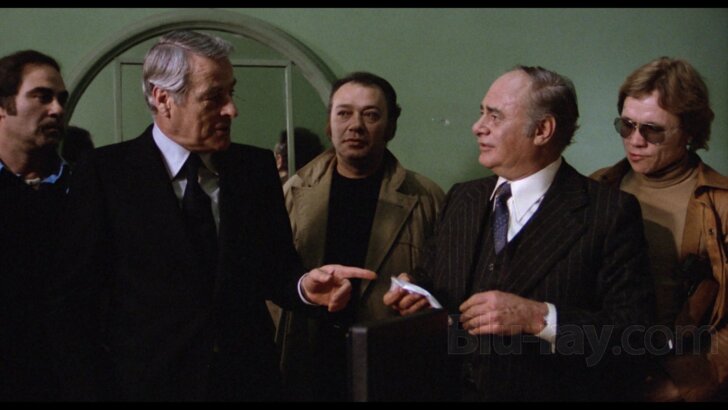
Directed by Domenico Paolella, a prolific Italian filmmaker famous for shooting musicarelli -- one of which was a 1960s hit with Celentano -- Gardenia presents a variation of a popular story that many Italian genre films have utilized. (One of the better such films is Lucio Fulci’s Contraband). In Rome, the influential crime boss Salluzzo (Balsam) organizes a big meeting and invites other crime bosses to become his partners in a massive business operation that will redirect large quantities of cheap drugs, all coming into the country via a secure channel controlled by Salluzzo and his people, to their restaurants, nightclubs, and brothels. Salluzzo then explains that the profits from the drug sales will quickly and expertly be invested to build a new, self-sustaining industry that will ensure the longevity of their organization. When one of the big crime bosses rejects his plan, Salluzzo kills him. Gardenia (Califano), another crime boss, who misses the meeting and later warns Salluzzo not to disrupt his restaurant business, also becomes a target. In the weeks following the meeting, Gardenia is repeatedly urged to reconsider his stance by Salluzzo’s closest ally, Caruso (Webber), but their short interactions only convince both parties that a gang war is inevitable.
The progression of the story and its resolution are entirely predictable. However, this is a common development in nearly all Italian crime films from the 1970s, and it is never detrimental.
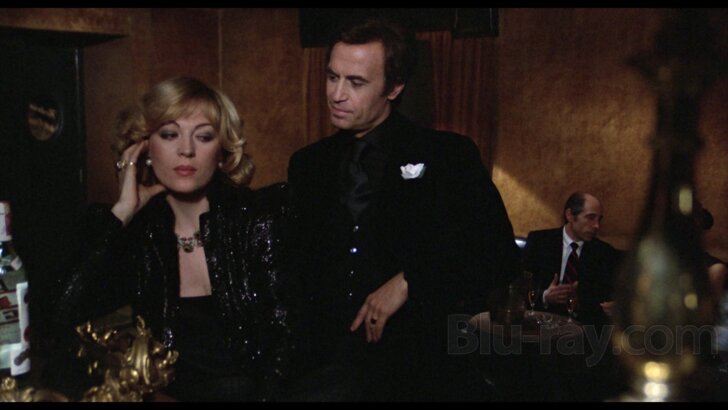
The reason Gardenia remains a small film is different. Califano plays a cynical crime boss with a heart, often seeking solace and choosing to remain silent, and his control of this complex character is inconsistent. For this reason, Gardenia is unable to establish a proper, convincing identity, either as a serious, realistic crime film or a flashy, darkly grotesque poliziotteschi.
Still, Gardenia is worth seeing because, like most such Italian genre films, it is still an effective time capsule. It is simply not one of the best amongst them.
Gardenia Blu-ray Movie, Video Quality
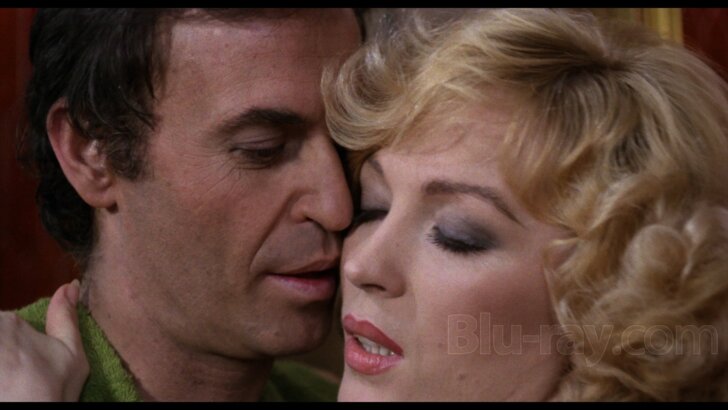
Presented in its original aspect ratio of 1.85:1, encoded with MPEG-4 AVC and granted a 1080p transfer, Gardenia arrives on Blu-ray courtesy of 88 Films.
It is immediately obvious that Gardenia has been recently restored because all of its visuals are very healthy and have strong organic qualities. The density levels of these visuals are consistently excellent as well. There are no traces of any problematic digital corrections or enhancements, such as sharpening, degraining, etc. I would describe color reproduction and balance as good. However, I must also point out that a few things could have been managed slightly better. For example, in several areas, blacks become a tad too strong. They do not crush, but a few darker nuances could have been exposed better. Also, I noticed small inconsistencies in facial tones, often emphasizing pinkish hues, usually during select sequences with varied light. Regardless, the current grading job is good. Image stability is excellent. My score is 4.25/5.00. (Note: This is a Region-B "locked" Blu-ray release. Therefore, you must have a native Region-B or Region-Free player in order to access its content).
Gardenia Blu-ray Movie, Audio Quality
There are two standard audio tracks on this Blu-ray release: English LPCM 2.0 and Italian LPCM 2.0. Optional English SDH subtitles (for the English track) and English subtitles (For the Italian track) are provided.
'
I viewed the entire film with the English track, which should be considered the original track for the film. It is healthy. I did not encounter any distracting anomalies to report in our review. However, as is usually the case with such tracks on Italian genre films, some of the overdubbing has created unevenness. Here, it is very small, practically unnoticeable, but it does have an impact on dynamic contrasts.
Gardenia Blu-ray Movie, Special Features and Extras
- Commentary - this exclusive audio commentary was recorded by critics Eugenio Ercolani and Nanni Cobretti.
- Gino of All Trades - in this new program, writer Gino Capone discusses Franco Califano's reputation during the 1970s and certain perceptions about his work amongst Italian filmgoers, which hurt his public image. Capone also comments on his relationship with Augusto Caminito, who penned the original story that inspired Gardenia. A good portion of the program is also dedicated to other projects Capone was involved with over the years. In Italian, with English subtitles. (16 min).
- Who Framed the Caliph? - in this new program, cinematographer Sergio Rubini recalls how he became involved with Gardenia and explains why his relationship with Stelvio Massi (Highway Racer), who frequently hired him as a camera operator, was so important for the evolution of his career. In Italian, with English subtitles. (25 min).
- Pac Men - in this new program, critic Eugenio Ercolani discusses the business environment and trends in Italian genre cinema during the 1970s and the production of Gardenia. In English, not subtitled. (33 min).
- Cover - a reversible cover with vintage Italian poster art for Gardenia.
Gardenia Blu-ray Movie, Overall Score and Recommendation
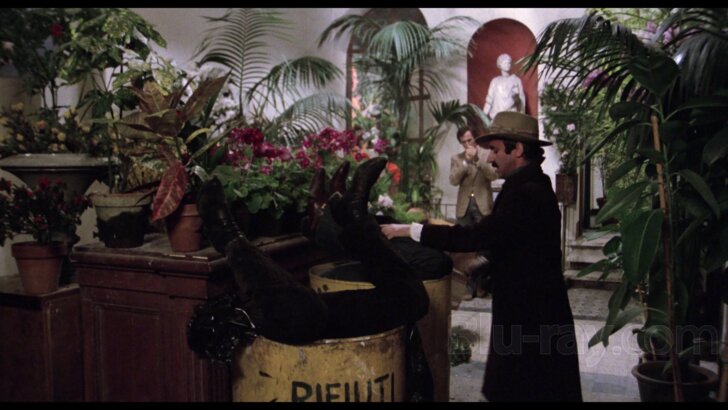
Seasoned connoisseurs of older Italian genre films know well that many of them attracted colorful characters with interesting reputations. The star of Gardenia, Franco Califano, was one such character, whose troubles with the law are well documented. I think that Califano could have had a pretty decent acting career, but he accepted various parts at the wrong time and in the wrong films. I also suspect that during the 1970s, perhaps for a short period of time, Califano must have envisioned a career similar to Adriano Celentano's, which would have been a very unhealthy ambition. Califano was not the best choice to play the stubborn mafia boss, but Gardenia is still worth seeing because, like most such Italian genre films, it is an effective, enjoyable time capsule. RECOMMENDED.