Gamera: Ultimate Collection Volume One Blu-ray Movie
HomeGamera: Ultimate Collection Volume One Blu-ray Movie 
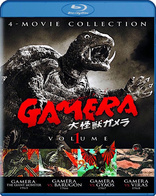
Daikaijû Gamera / Gamera tai Barugon / Gamera tai Gyaosu / Gamera tai BairasuMill Creek Entertainment | 1965-1968 | 4 Movies | 345 min | Not rated | Apr 29, 2014

Movie rating
Movie has not been rated yetBlu-ray rating
| Users |  | 3.0 |
| Reviewer |  | 1.0 |
| Overall |  | 1.9 |
Overview
Gamera: Ultimate Collection Volume One (1965-1968)
Gamera: The Giant Monster (1965), Gamera vs. Barugon (1966), Gamera vs. Gyaos (1967), Gamera vs. Viras (1968): The first 4 films of Daiei Studios’ monster series Gamera are unleashed and available on Blu-ray for the first time! Your favorite giant turtle returns to Earth leaving no fire-spitting scene behind. Beautifully captured to their lavish original cuts, viewers can experience four-times the thrills of this legend sci-fi classic like they have never seen before!
| Foreign | 100% |
| Sci-Fi | 45% |
| Fantasy | 31% |
| Action | 25% |
Specifications
Video
Video codec: MPEG-4 AVC
Video resolution: 1080i
Aspect ratio: 2.36:1
Original aspect ratio: 2.39:1
Audio
Japanese: Dolby Digital 2.0
Subtitles
English
Discs
50GB Blu-ray Disc
Single disc (1 BD)
Packaging
Slipcover in original pressing
Playback
Region free
Review
Rating summary
| Movie | | 2.0 |
| Video | | 2.0 |
| Audio |  | 1.5 |
| Extras |  | 0.0 |
| Overall | | 1.0 |
Gamera: Ultimate Collection Volume One Blu-ray Movie Review
Reviewed by Martin Liebman June 6, 2014They say one is the loneliest number, and never has that held true more than in Japan's monster movie landscape. The are so
many Godzilla films that it's almost impossible to keep
up without resorting
to
counting on finger, toes, and someone else's fingers. There may not be quite so many Gamera films -- fingers
and just a few toes
suffice -- but, hey, second fiddle is second fiddle, and even as ripoff franchise it's craved out quite a little niche. Unfortunately,
that hasn't
translated
to very good Blu-ray releases. Whereas studio like Criterion and Sony have released good-to-acceptable versions of many
of the
Godzilla
films, Mill Creek has pretty much punted away the Gamera series, releasing them sans special features and, worse,
with grossly subpar
video
and audio. Read on for the gory details...
For reviews of the individual titles, and for many more screenshots, please click through below:
Origins.
Gamera: The Giant Monster
Score: 2.0/5.0
By 1965, giant monsters, radiation, and Cold War backdrops were nothing new to the cinema landscape. American cinema was literally bursting at the seams with B-grade giant monster movies throughout the 1950s, matinee favorites that attracted a younger crowd born or raised (or both) into the post-war nuclear age fears of radiological disaster and MAD (Mutually Assured Destruction). Movies like Them! and Tarantula infested theaters and scored big money at the box office (and were smartly and comically parodied in the brilliant overlooked gem Matinee starring John Goodman). On the other side of the world, Japanese cinema, likewise, had fallen under attack by its own nightmarish, oversized, irradiated foe, Godzilla. Released more than a decade prior to Gamera and the franchise home to a handful of films by the time the giant monster's screen rival debuted in theaters, the Godzilla franchise had already established itself as a powerhouse of Japanese cinema and a staple of disaster-themed motion pictures. It was inevitable that a copycat would come along at some point -- that's just the nature of the beast, no pun intended -- but a giant turtle? It's not exactly a hero in a half shell -- not in this film, anyway -- but it does its duty admirably enough as it ambles around the screen while humans try to figure out what to do with it.
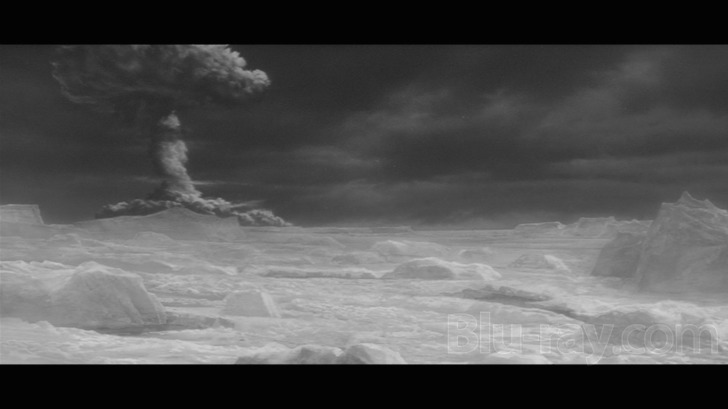
Deep in the arctic, at the height of the Cold War, Japanese scientists spot unidentified aircraft flying overhead. The American Air Force is called in to investigate. When the mysterious planes refuse to identify, they are destroyed. A nuclear explosion results. Out of the irradiated ice climbs Gamera, a 60-meter tall, fire-breathing "Mammoth Chelonian" turtle bent on destruction. Its appearance baffles the scientific community and all efforts to stop the creature fail. At the same time, an uptick in the sightings of unidentified flying objects go on the rise. Now, the military and scientific communities must join forces to carry out a daring plan to rid mankind of Gamera forever.
1965's Gamera works well enough as a cheap Godzilla knockoff, "cheap" being the operative word. The film simply doesn't have the budget, the muscle power, or the technical wherewithal to stand up to the better pictures of its era and its brothers-in-radiation. Like its title creature, it's a fairly slow, lumbering, poorly paced behemoth that's never really much fun -- outside of the ample opportunity to laugh at the sluggishness, the cheapness of the miniatures, and the general lethargy with which the story plays out and the monster attacks -- but certainly a curiosity in a classic "so bad it's good" sense of the term. Indeed, there's an underlying charm to it all, from the poor visual model effects to the humorously bad English dialogue and delivery. Somewhere in between is a straightforward story populated with throwaway characters, recycled dramatic content and scientific babble, and precious little feelings of danger and pending doom. The film works well enough as a lifeless time killer, but fans of classic monster movies should't expect to be fixated on much of anything other than the extreme level of monotony at play.
Gamera vs. Barugon
Score: 2.0/5.0
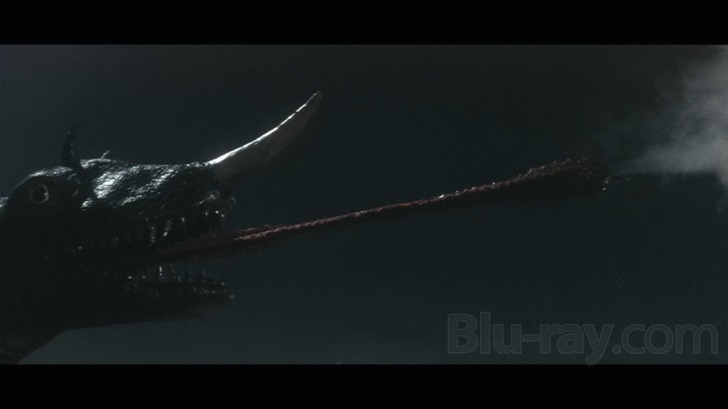
One monster is fun, but a second ads a little spice. Or, in the case of Gamera vs. Barugon, a little ice. The second installment in the second-place Japanese Monster movie universe, Gamera vs. Barugon is a step-up from its predecessor in every way, not a whole lot better, but a little bit bigger and a little more involved. It helps that there are two creatures -- something that the Godzilla franchise has made good use of over the years with a plethora of vs. films under its belt -- to occupy the screen, but not divide the audience's attention. Two creatures means double the mayhem, which doesn't necessarily mean double the fun but, hey, at least the franchise is growing, even if it's just growing into Godzilla's size ginormous shoes.
Light spoilers for 'Gamera: The Giant Monster' appear below.
This film begins with a recap of the first, including a look back at Gamera's Arctic arrival, his rampage of destruction, and the success of "Plan Z" that blasted the creature into outer space. Unfortunately, a meteorite has struck the pod carrying Gamera to Mars. He's returned to Earth and he's more powerful than ever. Meanwhile, a group of Japanese treasure hunters go out in search of a large gemstone one of them found and hid away years before during the war. They recover it at great cost. Little do they know it's actually an egg that will hatch and reveal a rapidly growing beast known as Barugon that has the power to freeze everything in its path. Now, only the returned Gamera stands in its way of total destruction.
Make no mistake about it, Gamera vs. Barugon isn't high art, and criticizing it for failing to do much beyond the typical Monster movie formula would be harsh. After all, it's a movie about a couple of oversized creatures doing battle in the streets of Japan and the mostly hopeless and hapless humans trying to devise a way out of the mess they're in. It's all very straightforward and, frankly, a movie like this doesn't need a lot more than that. Yet the film still falls short of meager expectations within its limited context of analysis. The opening act exposition drags on for far too long, leaving the audience waiting, and waiting, and waiting some more for the monsters to show up and do battle. Once they do, the film more or less dances to the same tune, maneuvering through a bunch of monotonous action sequences that are practically fully interchangeable with any Godzilla or Gamera film in terms of basic technical execution (and, as with the first film in the series, obvious toy models galore). The entire film, then, is basically one big serving of unoriginality, built either on unimaginative support drivel or recycled action sequences. It might be halfway interesting if this was the first Kaiju movie one has ever seen, but genre veterans will likely find it a rather tedious exercise in patience.
Gamera vs. Gyaos
Score: 2.0/5.0
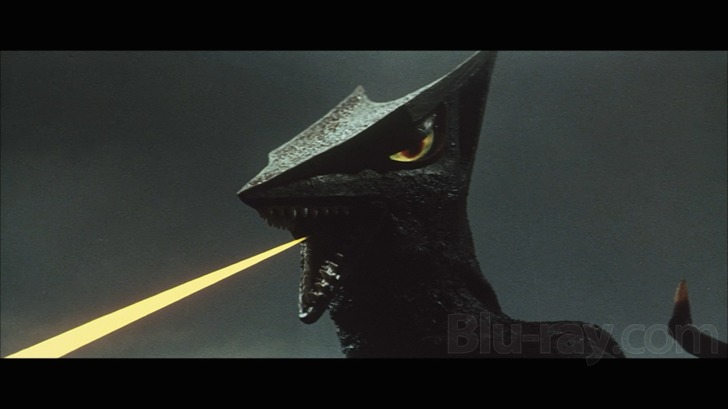
Big, brawling Kaiju monster movies can be quite good if they're done right. Gamera vs. Gyaos isn't done right, and therefore it isn't very good. The movie has its moments of cheesy glory, but for the most part it's an exercise in lowest-common-denominator Monster moviemaking, built around a straightforward and largely thoughtless script, laughably bad visual effects, and worst of all, boring monsters battling with nary an ounce of visual or dramatic originality. The film pits the title hero Gamera, once a menace to society and now a de facto caretaker for a young Japanese boy, against one of his oddest opponents yet and that he'll ever face, a regenerative vampire bat-thing with a dislike for the sun and that shoots yellow laser beams out of its mouth, capable of cleanly slicing a car in half but miraculously leaving the entire engine intact. So the villain isn't particularly noteworthy and its combat with the heroic spinning turtle with jet engines on all four corners plays out pretty much like every other Kaiju battle, yet there's an unmistakable charm to parts of this one, most of it a product of the classic "so bad it's good" paradox, the kind of movie that will leave the audience shaking its head but smiling at the same time.
In Japan, a major highway construction project near a suddenly active Mount Fuji falls under threat from nearby denizens who don't want their way of life upset. When a team of scientists travel by helicopter to survey the volcanic eruptions, they're shot down by laser beams emitting from a creature that will come to be known as Gayos, a bat-like monster that doesn't particularly like the sun. The creature attacks with a young boy named Eiichi (Naoyuki Abe) in its sights. Enter Gamera, Elichi's hero and a powerful monster ready to protect him at all costs. Gamera is severely wounded in the fight with Gayos. While he recovers, scientists work on a way of destroying Gayos once and for all.
Gamera, a creature that's part turtle, part Godzilla, and part UFO, ambles about the screen as he battles his opponent Gyao, a creature bent on destruction because, well, people want to see the two monsters battle it out. The movie is terribly straightforward to a fault, displaying no real drive or purpose beyond framing a few big action scenes around a fairly loose plot device about highway construction and protests and a young boy whose obsession with Gamera might prove much more unhealthy than anyone could have ever imagined. The picture is terribly repetitive and slow; the battles lack variety beyond the backdrop that frames them, and the subplots and characters don't add much to the experience. Yet few, if anybody, come into a Gamera movie concerned with the humans, anyway; they oftentimes feel in the way, present really only to extend the film's runtime because even an 80-some minute onslaught of corny monster battles would get old fairly quick. The problem is that the material that fills in the gaps isn't any more interesting, and they're just obstacles to the only marginally more interesting monster battles that people really pay to see.
Gamera vs. Viras
Score: 1.0/5.0
The Gamera series isn't exactly known for telling great stories, building them with unbeatable visual effects, and filling the screen with exciting monster-on-monster actions. The films certainly try, but all of the early movies -- Gamera: The Giant Monster, Gamera vs. Barugon, and Gamera vs. Gyaos -- fail in capturing the Godzilla-inspired Kaiju magic. Unfortunately, a further deterioration in quality is evident in Gamera vs. Viras, undoubtedly the worst of the bunch so far -- and by a wide margin -- and an example of how not to do "cheap." Imagine the worst of Star Trek: The Original Series, remove the last little bit of character charm and story cohesion that frequently saves that series' "worst of the worst," multiply that by a hundred or so, and vaguely understand the epic disaster that is Gamera vs. Viras. Fortunately, the old "so bad it's good" charm keeps this one from cinema oblivion.
An alien spacecraft approaches Earth with the intention of attacking and colonizing, a move essential to their species' survival. Enter Gamera, the flying turtle creature. Gamera repels the alien attack, but not before the aliens gather intelligence on the monster and prepare for a second assault. The aliens' new mission is to take out Gamera before conquering Earth. Gamera is caught in a "super catch ray" through which the aliens are capable of analyzing his strengths and weaknesses. When they discover his fondness for children, they abduct two Boy Scouts, Masao (Tôru Takatsuka) and Jim (Kurl Crane). While the boys attempt escape, Gamera plots his move to save them and fend off the aliens' secret weapon, a creature called Viras.
This one is just bad, and that's being kind to it. The film does everything the other Gamera films do poorly, like overuse obviously phony miniatures, populate the film with forgettable human characters, and suffer through incredibly slow action scenes. Yet there's almost a charming awfulness here, whether discussing the alien spaceship that looks like it's made from five or six bumblebee rear ends connected together in a circle or the scenes introducing the Boy Scouts and the submarine that are accompanied by circus music. That section that sees the submarine piloted with reversed controls lasts far too long and serves as an example of how the film falters, by dragging out everything to its limit and then some, whether overdrawn battles or the lengthy montage that basically serves as a highlight reel from the previous three films in the series and seems to occupy about a fifth of this film's entire runtime. It's like it's grasping at straws just to keep the length up, and the end result is a sluggish disaster brought further down by that aforementioned usual array of Gamera awfulness.
Gamera: Ultimate Collection Volume One Blu-ray Movie, Video Quality
Gamera: The Giant Monster
Score: 1.5/5.0
Gamera: The Giant Monster's 1080i transfer runs afoul of plenty of bumps in the road. The 2.27:1-framed image does
retain a bit of a
natural
grain structure, but it's hardly an attractive film-like presentation. Details can be adequate; the transfer occasionally has some
nice clothing and
facial
features to reveal, but more often than not it's flat, slightly soft, and just not much of a looker. To make matters worse, it takes
on a very
processed,
digitally artificial look about it. The transfer suffers from a fair bit of compression issues and combing is frequently bothersome,
though generally
only
in subtitle transitions. The grayscale is unimpressive, particularly at the ends. Blacks are flat and overly bright, while whites
and lighter shades of
gray
can look blown out and indistinct. In short, a fully unattractive image from Mill Creek.
Gamera vs. Barugon
Score: 1.5/5.0
Gamera vs. Barugon's 1080i transfer doesn't look much better than that of its predecessor, Gamera: The Giant
Monster (if at all),
but
it's not leaps and
bounds superior. This film is presented in color, and despite a rather flat and dull palette, it finds a few lively hues, particularly in
the first act, out in
the
bright sun, on attire and jungle vegetation. Black levels, however, fare poorly, appearing tired and washed out, overly bright
and gray with little
depth
or accuracy. Details are generally satisfying; facial textures are handled well enough in close-up shots, and the creature close-
ups show off a good
bit
of intimate textures. Light grain retention helps provide at least a hint of a filmic appearance. The transfer is rather flawed
elsewhere. Compression
issues leave many backgrounds, particularly darker backdrops, rather blocky and unattractive. Combing artifacts are visible
every time subtitles
transition, but are also evident in other fast-motion shots. Light flickering and banding are infrequent but present. In sum, it
can look good at-a-
glance but viewers doing more than that (read:
everyone) will find many flaws throughout.
Gamera vs. Gyaos
Score: 2.5/5.0
Gamera vs. Gyaos' 1080i transfer has some problems. While the image can look passably good, there are a number of
underlying issues
that
keep it from even Blu-ray mediocrity. First, the good news. Details can satisfy on a basic level. Image clarity ofttimes
impresses, and the transfer
occasionally displays nice, nearly filmic textures on clothes, faces, monsters, terrains, and even the shoddy models with relative
ease and command.
Additionally, colors are frequently impressive, certainly not vibrant and rich and nuanced like one might expect to find in a
modern film or digital
production, but good enough for a lower end movie many decades old. Unfortunately, the good stops at the basics. Black levels
are consistently a
shade or two too pale and bright. Frequent compression issues are clearly evident, particularly in darker backdrops. An
annoying combing effect is
visible every time one line of subtitles transitions to another. A fair amount of wear and tear is evident throughout, much
heavier in spots but rather
consistent nonetheless. Overall, it's a passable image but one that's wholly unimpressive.
Gamera vs. Viras
Score: 2.0/5.0
Gamera vs. Viras arrives on Blu-ray with an iffy, but watchable, 1080i transfer. The image is littered with compression
and combing
artifacts,
random smudges (check around the 8:00 mark), and dirt. These represent some major problems that do hinder one's ability to
fully enjoy the film.
On the plus side, light grain remains and details satisfy. Clothing details are particularly nice, with kudos to the clarity with
which Boy Scout
uniforms
and patches are revealed. The spacecraft floor is so well defined that viewers will see the cheap materials and scuff marks. The
1080i resolution
also
makes it easy to spot wires holding up Gamera in a number of shots (take a look right around the 17:00 mark). Colors are a bit
dim and
uninteresting,
even on the alien spacecraft where a fair variety of brighter shades appear on clunky readouts. While flesh tones appear mostly
accurate, black
levels
do look washed out. Overall, this is a watchable yet weak effort from Mill Creek Home Entertainment.
Gamera: Ultimate Collection Volume One Blu-ray Movie, Audio Quality
Gamera: The Giant Monster
Score: 1.5/5.0
Gamera: The Giant Monster rises onto Blu-ray...and immediately sinks back into the depth with a puny Japanese
language Dolby Digital 2.0
lossless soundtrack (note that the Blu-ray player reads it as an English track, but it is indeed in Japanese with short English bits;
of course, optional
English subtitles are included, and forced Japanese subtitles appear on the screen during the English language bits). The track
is terribly shallow
and
completely absent any sort of aggressive posture. Most every sound effect is weak and wanting, whether fighter jets zipping in
the sky, cracking ice,
or
general monster mayhem. There's practically no presence at all, just a flat, dull, cursory-at-best signature to every effect.
There are infrequently
light
audio dropouts and a low but perceptible underlying hiss. Music is mushed and muddled, and dialogue rarely fares much better.
The track is just
good
enough to get the listener through the film, but it does absolutely nothing above the bare minimum requirements of creating
identifiable sounds in
the
order the film requires.
Gamera vs. Barugon
Score: 1.5/5.0
Gamera vs. Barugon fizzles on Blu-ray with a dull Dolby Digital 2.0 soundtrack. Note that the Blu-ray will read the track
as "English" but it
is,
in fact, presented in Japanese (optional English subtitles are included). The track is a real downer. There's no range and only
limited clarity. It's
shallow at reference levels, flat, and featuring music and sound effects that, literally, sometimes only barely register. Music fails
to find even a
smidgen
of natural presence. Narration over the open sounds like a muddled whisper. Sound effects are frequently static and are often
only barely
identifiable
as to what they are. Raging waters, monster screeches, and other aggressive sounds enjoy neither volume nor clarity.
Dialogue, at least, comes
through with appreciable clarity and stage presence. All around, a terribly underwhelming soundtrack from Mill Creek.
Gamera vs. Gyaos
Score: 2.0/5.0
Gamera vs. Gyaos arrives on Blu-ray with a Japanese language Dolby Digital 2.0 soundtrack. Note that the Blu-ray
player reads it as an
English track, but it is indeed a presentation of the Japanese original (optional English subtitles are included and can only be
toggled on or off via the
remote's "subtitle" button). The track is a disappointment, a shallow, sometimes barely audible at reference levels listen. Music
sounds like it's
playing
at about a quarter of normal volume. Of course, it lacks even cursory range and clarity is iffy at best. Action effects, like
Gyaos' laser beams, fail to
do
much other than produce the base sound. Crashes, explosions, and other action sound effects are presented just loudly and
clearly enough to offer
base sonic definition and presence. Dialogue is adequately delivered though also a bit scratchy and shallow. This is a classic
case of a soundtrack
doing just enough to get the listener through the film, no more and no less.
Gamera vs. Viras
Score: 1.5/5.0
Gamera vs. Viras features a fairly pitiful Japanese language Dolby Digital 2.0 soundtrack (note that the player reads it
as an English track,
but
it is indeed in Japanese. Optional English subtitles are included, which must be toggled on or off (default is on) with the remote
control's "subtitle"
button). The track lacks command and presence. Music is crunchy and cramped. Sound effects are absent any sort of
perceptible energy or stage
presence and fail to track across the front. An underlying hiss may be heard throughout. Dialogue is crunchy and scratchy. In
short, a poor
soundtrack all around.
Gamera: Ultimate Collection Volume One Blu-ray Movie, Special Features and Extras
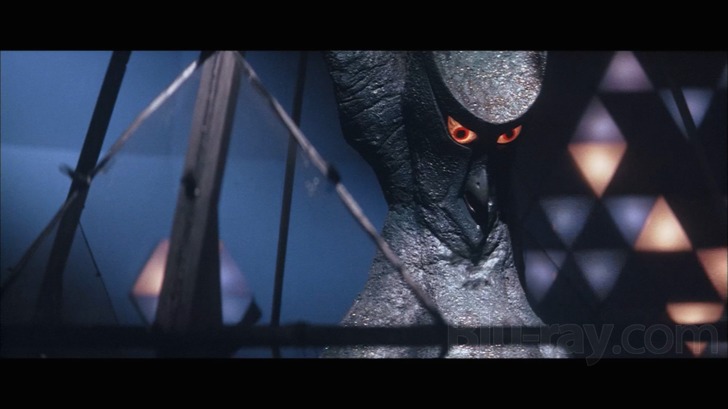
Gamera: Ultimate Collection Volume One contains no supplements. The main menu allows users to click on each individual film, starting that film rather than going to a new menu screen dedicated to that film.
Gamera: Ultimate Collection Volume One Blu-ray Movie, Overall Score and Recommendation
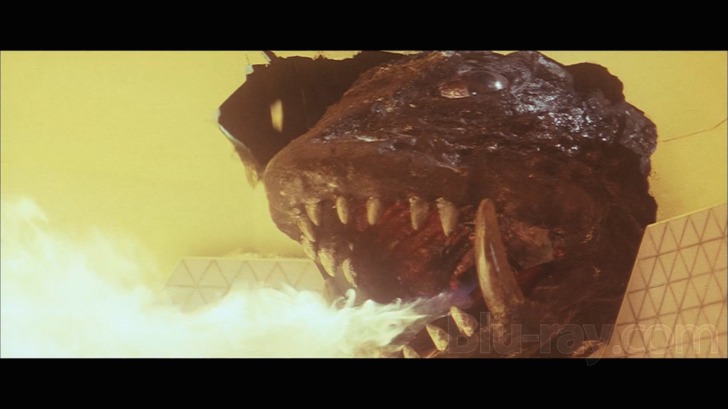
Gamera fans will be happy to have four films on one convenient disc, but the poor picture qualities, awful soundtracks, and lack of supplements make this set worth a purchase only for those who have yet to own the series on any home media format.