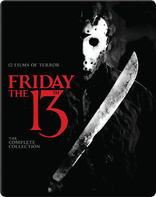
Friday the 13th: The Complete Collection Blu-ray Movie
HomeFriday the 13th: The Complete Collection Blu-ray Movie 
Blu-ray + Anaglyph 3D + UV Digital CopyWarner Bros. | 1980-2009 | 12 Movies, 13 Cuts | 1118 min | Rated R | Sep 13, 2013
Price
List price:Listed on Amazon marketplace

Movie rating
Movie has not been rated yetBlu-ray rating
| Users |  | 4.4 |
| Reviewer |  | 3.5 |
| Overall |  | 4.0 |
Overview
Friday the 13th: The Complete Collection (1980-2009)
See individual titles for their synopses.
| Horror | 100% |
| Thriller | 36% |
| Supernatural | 17% |
| Mystery | 12% |
| Sci-Fi | Insignificant |
| Action | Insignificant |
Specifications
Video
Video codec: MPEG-4 AVC
Video resolution: 1080p
Audio
See individual releases
Subtitles
None
Discs
50GB Blu-ray Disc
Ten-disc set (9 BDs, 1 DVD)
UV digital copy
Anaglyph 3D
Playback
Region free
Review
Rating summary
| Movie |  | 3.0 |
| Video | | 4.0 |
| Audio | | 4.0 |
| Extras | | 3.0 |
| Overall | | 3.5 |
Friday the 13th: The Complete Collection Blu-ray Movie Review
Do You Have Jason Voorhees in a Box?
Reviewed by Michael Reuben September 17, 2013Taking advantage of its licensing deal with Paramount, Warner Home Video has assembled all twelve films in the Friday the 13th series in a single collection. Seven of these films are new to Blu-ray. The "completeness" of the collection has been the subject of debate among hardcore fans, who have noted, for example, that the unrated cut of the ninth film in the series, Jason Goes to Hell: The Final Friday, while available on DVD, has not been included. And completists have already noted the absence of a few extras from previous releases of individual films over the years. Still, it's hard to dispute that The Complete Collection is, and will probably remain, the closest to a definitive presentation of this classic horror series for the foreseeable future, especially with ownership of the films split between two major studios. The set consists of nine (9) Blu-ray discs and a single DVD with additional bonus features. All ten discs are housed in cardboard sleeves bound into a book. (The quality of the sleeves and the pros and cons of storing Blu-ray discs in them over the long term have been much debated in the Blu-ray.com forum.) The book is housed in a metal tin, along with several additional items discussed below under "Supplements".
Listed below are links to reviews of the seven films newly released in this box set:
- Friday the 13th: The Final Chapter Blu-ray review
- Friday The 13th: A New Beginning Blu-ray review
- Friday the 13th Part VI: Jason Lives Blu-ray review
- Friday the 13th Part VII: The New Blood Blu-ray review
- Friday the 13th Part VIII: Jason Takes Manhattan Blu-ray review
- Jason Goes to Hell: The Final Friday Blu-ray review
- Jason X Blu-ray review
- Friday the 13th Blu-ray review
- Friday the 13th Part 2 Blu-ray review
- Friday the 13th Part 3 Blu-ray review
- Freddy vs. Jason Blu-ray review (go here for a listing of new language options)
- Friday The 13th (2009) Blu- ray review
Friday the 13th: The Complete Collection Blu-ray Movie, Video Quality
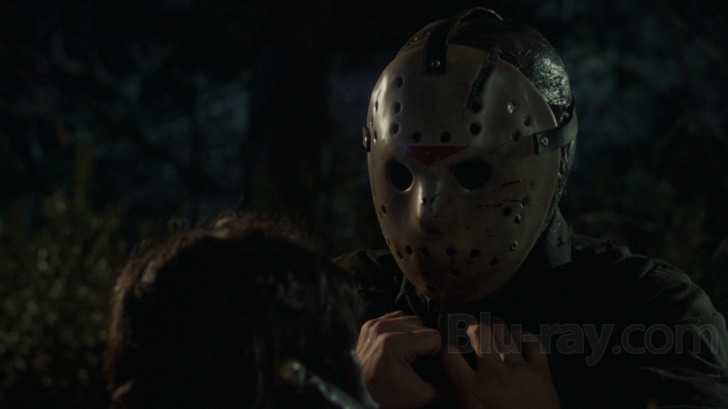
Friday the 13th: The Final Chapter (follow the link for screenshots) It may not be relevant, but it's certainly entertaining, to consider that The Final Chapter was photographed by João Fernandes, the same cinematographer who, under a pseudonym, shot the porno classics Deep Throat and The Devil in Miss Jones. Fernandes also shot the original adaptation of Children of the Corn. In the early Eighties, when the Friday the 13th franchise began, splatter films were still considered one rung above pornography, so that professionals easily circulated between the two worlds. Today, of course, graphic horror films have gone mainstream (and, arguably, so has porn). Warner/Paramount's 1080p, AVC-encoded Blu-ray of The Final Chapter represents a high-quality presentation of the film's low-budget aesthetic. Colors are strong but not overly assertive. Grain is natural but well controlled for much of the film, although it becomes heavy in some shots. The good news is that the grain is consistently natural in appearance, neither artificially smoothed nor frozen in place. Detail is relatively good, although the image reflects the softer look of an Eighties film production and sometimes disappears in the shadows (which, as far as I can tell, is by design). The black levels look right, and so does the contrast. I wouldn't say that the image has "depth", but then again depth is not a quality I associate with the photography of the Friday the 13th series. Probably because it has so many extras, The Final Chapter resides on its own BD-50, whereas a number of films in The Complete Collection are double features. The average bitrate is a healthy 25.95 Mbps, and compression artifacts were not an issue. Friday The 13th: A New Beginning (follow the link for screenshots) A New Beginning's cinematographer Stephen L. Posey was a horror veteran who would later graduate to directing TV shows like Buffy the Vampire Slayer and Star Trek: Deep Space Nine. By this point in the series, the aesthetic of Friday the 13th was sufficiently established that any capable DP could replicate it, and Posey's work fits comfortably with the look of prior entries in the series. Warner/Paramount's 1080p, AVC-encoded Blu-ray of A New Beginning is on a par with its presentation of The Final Chapter , and indeed somewhat better. There are almost no scenes where the film's grain becomes exaggerated to the point where grainophobes are likely to complain; whether that is a function of superior lighting, better film stock or just good fortune, I cannot say. Colors are distinct but not oversaturated, black levels and contrast are appropriately set, and detail is very good without the overly sharp edges that betray digital enhancement. The grain patterns appear natural and undisturbed, and the source material is in excellent condition. A New Beginning is the first entry in The Complete Collection to share a disc with another film (Jason Lives). Both films have fewer extras than the first four entries, but I was alert for signs of compression artifacts resulting from squeezing these two films (totaling just under three hours) onto a single BD-50. I didn't see any. The average bitrate for A New Beginning is 22.35 Mbps; while not overly generous, this is well within an acceptable range. Friday the 13th Part VI: Jason Lives (follow the link for screenshots) The cinematographer for Jason Lives was Jon Kranhouse, who would go on to specialize in aerial photography for such films as Star Trek IV and Broken Arrow. Like McLoughlin, Kranhouse was at the beginning of his career. As McLoughlin says at one point in his commentary, the relative youth of everyone involved was essential to their enthusiasm for the project. The image on Warner/Paramount's 1080p, AVC-encoded Blu-ray for Jason Lives represents an uptick in quality, compared to The Final Chapter and A New Beginning. I attribute this to the source rather than any improvement in the transfer or mastering. The basic aesthetic of the series did not change with Jason Lives, but from all appearances either the quality of lighting or the film stock (or both) improved to the point that the filmed image gained some measure of polish and fineness of grain. On Blu-ray, this translates into superior detail, slightly richer color and a look that's closer to "studio" than "exploitation". Black levels and contrast levels are well set, the source material is in pristine condition, and there are no signs of untoward digital manipulation. Jason Lives shares a BD-50 with A New Beginning, but like its roommate it has a healthy average bitrate, in this case of 22.52 Mbps. I kept watching for compression artifacts, but none presented themselves. Friday the 13th Part VII: The New Blood (follow the link for screenshots) The cinematographer for The New Blood, Paul Elliott, was just getting started, having served as a camera assistant on such independent productions as Dreamscape. He has become a frequent DP for HBO films, as well as successful small dramas such as My Girl and Soul Food. While The New Blood did not have a bigger budget than previous Friday the 13th films, its lighting and palette continue the movement away from the exploitation style that was already evident in A New Beginning. Pastels and lighter shades are more common; surfaces are less harshly lit; and the image gains a greater sense of texture and depth. The image on Warner/Paramount's 1080p, AVC-encoded Blu-ray for The New Blood is surprisingly good. (Why "surprisingly"? I'll get to that in a minute.) The detail is excellent, especially when Buechler's makeup for Jason's rotting carcass comes fully into the light, or in scenes in the surrounding woods, or even in something as ordinary as a group of people talking in a kitchen littered with party preparations. The blacks are solid, the contrast is never overstated, and the colors are appropriately saturated, with the red of blood and the orange of fire being the strongest. Why is this a surprise? The New Blood is on another of The Complete Collection's double features discs, sharing a BD-50 with Jason Takes Manhattan, which is one of the longest films in the series at 100 minutes. The combined running time of the two films is three hours, eight minutes, and both have significant extras. When I ran the average bitrate for both films, I was shocked at how low it came out—18.45 Mbps in the case of The New Blood. I was amazed that compression artifacts had not been obvious during viewing. One possible explanation is that significant portions of The New Blood occur at night, with much of the frame in darkness. With little or no change in those areas, the compressionist may have achieved substantial savings. It also no doubt helped that the grain pattern on The New Blood is fine and barely visible, although there is nothing to indicate that this was achieved by digital manipulation. In any case, the eye is a more meaningful judge than the statistics, and The New Blood looks just fine. Friday the 13th Part VIII: Jason Takes Manhattan (follow the link for screenshots) Jason Takes Manhattan was shot by Bryan England, who worked on numerous low-budget horror films but is probably best known for shooting Pamela Anderson's TV series V.I.P. On his commentary track, Hedden praises the flexibility that England's lighting allowed him in circumstances where he often had to revise his shooting plans on the spot. Warner/Paramount's 1080p, AVC-encoded Blu-ray offers perhaps the glossiest, most colorful of the Paramount entries in the series. If the studio wouldn't let writer/director Hedden place most of the movie in the Big Apple, they couldn't prevent him from importing its bright lights into the film's palette, which favors bright, saturated colors, often set against a solidly black background, provided either by the night or the darkness of the good ship Lazarus' interiors. Detail is plentiful, and the image is generally film-like, although there's an occasional hint of light grain reduction in large expanses of lighter areas, such as the daytime sky. (You really have to look for it, though.) Jason Take Manhattan shares a BD-50 with Friday the 13th Part VII: The New Blood, and as noted in the review of that title, the combined running time and substantial extras have knocked down the average bitrate for both titles. As it happens, Jason Takes Manhattan clocks in at the same average as The New Blood of 18.45 Mbps. Compression artifacts were not observable, however, and I can only attribute this to the fine-grained quality of the image and an obviously careful job of compression. Jason Goes to Hell: The Final Friday (follow the link for screenshots) Whatever the shortcomings of Jason Goes to Hell as a film, the image on Warner's 1080p, AVC-encoded Blu-ray is excellent. The passage of four years and the move to New Line Cinema upgraded the series' technical quality. Jason Goes to Hell was shot by William Dill, an experienced DP for TV and independent film, who now teaches cinematography full time. Dill photographed the film in a largely realistic manner that has since become commonplace in major TV productions, but in 1993 was ahead of its time. Except for sequences requiring stylized lighting (e.g., the all-out assault on Jason early in the film, the autopsy sequence and the spooky visits to the long-abandoned Voorhees mansion—wait, there was a mansion?), the lighting is gentle and the color palette isn't overstated. It's an ordinary world into which extraordinary events suddenly erupt. Warner's Blu-ray image is finely detailed, with solid blacks, good contrast and colors that are distinct without becoming overassertive. The sole exception is Campbell's TV broadcasts, where colors have been exaggerated into NTSC-style primaries; these portions of the film have been windowboxed at 1.33:1. The film's grain texture is fine and undisturbed by digital tampering. Jason Goes to Hell shares a BD-50 with Jason X , but the absence of major extras has allowed enough room for an average bitrate of 22.92 Mbps, which is sufficient to avoid any compression-related issues. Jason X (follow the link for screenshots) Although Jason X was shot on film by cinematographer Derick V. Underschultz (HBO's In Treatment), every frame was scanned into the digital realm at Blu-ray resolution, where the effects were designed and rendered, editing was done and the final color timing was finished. This is common practice today, but it was considered revolutionary when Jason X was made. The result, whether output to film, as would have been the case for the 2003 release, or translated to Blu-ray without any intervening analog stage, as is presumably the case here, has a substantially different look than any prior Friday the 13th film. The image on Warner's 1080p, AVC-encoded Blu-ray is generally bright, detailed and colorful. Even in scenes set in environments with low light, darkness is never total. Isaac made a conscious decision to head in the opposite direction from the dark dystopian futures that have become standard in science fiction movies. Wherever possible, he had Underschultz (or the CG techs in post-production) keep the scene illuminated. Even the desolated Earth isn't plunged into total darkness; it's just a dirty brown mess of swirling dust and wind. The color palette of the various quarters aboard the Grendel and its shuttle is soft and pleasing by design, in keeping with the benign vision of the future that the arrival of Jason violently disrupts. The blacks of space outside the ship are solid and deep. If there is any criticism to be made of the image, it's that the CG work is somewhat dated, lacking the organic quality that today's best CG artisans have the experience and computing power to lend their creations. However, this is not the fault of the Blu-ray. Fine detail in non-CG elements might also have been improved if an upper limit hadn't been initially imposed by the decision to shoot a smaller negative and scan the film elements at no more than HDTV resolution. (This is explained in more detail in the accompanying featurette.) Again, though, this is not a fault in the Blu-ray. Jason X shares a BD-50 with Jason Goes to Hell. However, the virtual absence of extras for the latter film has allowed sufficient room for the compressionist to deliver an average bitrate of 22.93 Mbps, which is somewhat lower than one would like for a film with so much action but is enough to provide an image without noticeable artifacts. Video evaluations of the five previously released titles can be found in their respective reviews:
- Friday the 13th Blu-ray review
- Friday the 13th Part 2 Blu-ray review
- Friday the 13th Part 3 Blu-ray review
- Freddy vs. Jason Blu-ray review
- Friday The 13th (2009) Blu-ray review
Friday the 13th: The Complete Collection Blu-ray Movie, Audio Quality
Friday the 13th: The Final Chapter The Final Chapter's original mono soundtrack has been remixed for 5.1 and is presented in lossless DTS-HD MA 5.1, but it's a conservative remix that remains front-oriented. The dialogue is clear, and the essential thwacks, crunches and other assorted sounds of lethal injury that accompany Jason's handiwork register with sufficient impact to make their point. Harry Manfredini's signature score plays with decent stereo separation and good dynamic range, although the top end can get a bit shrill. That may be by design, though, since those Psycho-style violin strokes aren't there to make anyone comfortable. Friday The 13th: A New Beginning Once again, an original mono mix has been given a conservative 5.1 remix and presented as lossless DTS-HD MA 5.1. The sound remains almost entirely in front, even during such likely candidates as the opening downpour. Henry Manfredini's score benefits from the enhanced stereo separation and extended dynamic range, while the dialogue remains clear and the screams are piercing. Fans of The Shining will recognize its familiar opening theme, which makes its first appearance in Manfredini's score for A New Beginning. The original source is the fifth movement of Berlioz' Symphonie Fantastique, which was also the favorite love song of the abusive husband in Sleeping with the Enemy. Friday the 13th Part VI: Jason Lives As best as I have been able to determine, Jason Lives was the first film in the series to be released in Ultra Stereo, the generic version of Dolby Stereo. That track has been remixed as 5.1 and presented as lossless DTS-HD MA 5.1, and it's the first soundtrack in the series to provide an enveloping surround environment. Supervising sound editor Dane Davis has since become a major figure in film audio, winning an Oscar for The Matrix and designing sound for such films as The Cabin in the Woods and the upcoming Enders Game. Davis' layered stereo mix has provided the remix team with worthy material for a 5.1 experience. The wind, thunder and lighting accompanying Jason's resurrection register with solid impact, and the forest environments are alive with insects and rustling leaves. You can feel the movement of cars racing down the road, and the sound of kids at camp yelling (or screaming) reaches out to envelop the viewer. Especially impressive is the final battle between Tommy and Jason, a complex blend of fire, water, body blows and clanking chains, all of which has to be appropriately modulated as the edits shift the viewer's perspective. Harry Manfredini's score plays with increased authority as it expands to fill the entire speaker array. Adding to the soundtrack's impact are three songs by Alice Cooper, including "He's Back (The Man Behind the Mask)", which plays over the closing credits. The entire track has wide dynamic range and the deepest bass extension of any entry in the series to date. Friday the 13th Part VII: The New Blood From the opening bars of Harry Manfredini's music, selected, edited and, at a few points, filled in by Fred Mollin, the Blu-ray's lossless DTS-HD MA 5.1 track provides punch and an enveloping surround presence. The New Blood was originally released in Ultra Stereo, and the remix has made good use of the discrete multi-channel format to open out the two-track matrixed version. As with Jason Lives , the sound editing was overseen by future Oscar winner Dane Davis, who used all his talents to bring the big telekinetic events to life. The pier that collapses into the water at the beginning does so with a cracking, sickening thud. The various crashes, collapses, live wires and flying objects involved in the final showdown between Jason and Tina have equally distinctive sonic signatures. A vehicle crash midway through the film is a symphony of screeching tires, jarring impact and grinding metal. Jason's various murders, a number of which are performed by sheer physical force instead of with cutting tools, are accompanied by a cacophony of sickening blows and crunches. And there's a hedge trimmer with a distinctive high-pitched roar. The dialogue is very clear, particularly that of Dr. Crews, who seems to yell everything at full volume. Friday the 13th Part VIII: Jason Takes Manhattan Jason Takes Manhattan was released in Ultra Stereo but has been remixed for 5.1 and encoded on Blu-ray as lossless DTS-HD MA 5.1.The track announces its aggressive surround presence with a growl of "Jason!" that travels from left to right and echoes to the back, as the moody theme song "Darkest Side of the Night" kicks in and a brief opening narration by an anonymous radio DJ celebrates the adrenaline of New York City (and thereby prolongs the tease of the film's title and opening montage). Composer Fred Mollin, who had primarily arranged music cues composed by Harry Manfredini in The New Blood, scored this film on his own, which gives it a distinctive sound different it from all the others. (Mollin scored the TV show, which made him a natural fit, when Hedden was picked to write and direct the film.) Whatever its drawbacks as a narrative device, a ship is always a good locale for sound design, and the SS Lazarus is full of creaks, groans, clanking metal and assorted sounds of machinery and water. The storm adds an entire new layer, and of course there are Jason's various kills, each with its own sonic peculiarities. The 5.1 remix moves much of the ambiance into the surrounds, and this approach continues in the abbreviated Manhattan sequences, with the sounds of seagulls at the landing site, subway noise during a brief ride underground and the elaborate finale in the tunnels. It's an effective mix with wide dynamic range, good bass extension and clear dialogue. Jason Goes to Hell: The Final Friday Jason Goes to Hell was released in Dolby Surround, but by 1993 studios and sound designers knew that multichannel formats were the future and most of them were saving their tracks and stems for future remixes. The Blu-ray's lossless DTS-HD MA 5.1 track begins quietly enough with echoes of Harry Manfredini's original score announcing the possibility of Jason's presence, but it kicks in with authority and presence when the man in the hockey mask reveals himself to his intended victim. The military assault on Jason is classic movie overkill, with rifles, small arms and grenades exploding around the room. Until the film's fiery conclusion, no scene quite matches this one in sonic intensity, but there's plenty of loud gunfire, bone-cracking (not all of it by Jason's "carriers") and various roars, screams and wails to fill out the track. Ambiant noises from distinct environments appear in the surrounds, and Manfredini has taken the opportunity of composing for a different kind of film to write a more expansive score. If nothing else, the film sounds great. Jason X Outer space has always provided sound designers with room to play, and Jason X is no exception. The good ship Grendel is alive with sounds of equipment and machinery, both mechanical and electronic. Sequences like the nanotechnology reconstruction of Rowan (and later Jason) are full of subtle sound cues accompanying the labor of the tiny machines. Big effects like the roaring winds of the now-deserted Earth, or the cryostasis imposed on Jason and Rowan at the beginning, or a spectacular collision between the Grendel and a space station, or an explosion rigged by the Grendel survivors as an emergency life-saving measure, all register with forceful impact and the full involvement of the surround speaker array. The track has wide dynamic range and deep bass extension when it's needed. This is the first Friday the 13th film to have a truly impressive 5.1 soundmix. The Blu-ray's presentation, of course, is lossless DTS-HD MA 5.1. Harry Manfredini once again supplied the score, but now that he was writing for an entirely different kind of Jason film, Manfredini was free to write in a new style. Taking full advantage of the expanded audio capability, he wrote a more expansive musical experience to accompany Jason into the final frontier. Audio evaluations of the five previously released titles can be found in their respective reviews (although, as noted, Freddy vs. Jason has a new audio track):
- Friday the 13th Blu-ray review
- Friday the 13th Part 2 Blu-ray review
- Friday the 13th Part 3 Blu-ray review
- Freddy vs. Jason Blu-ray review
- Friday The 13th (2009) Blu-ray review
Friday the 13th: The Complete Collection Blu-ray Movie, Special Features and Extras
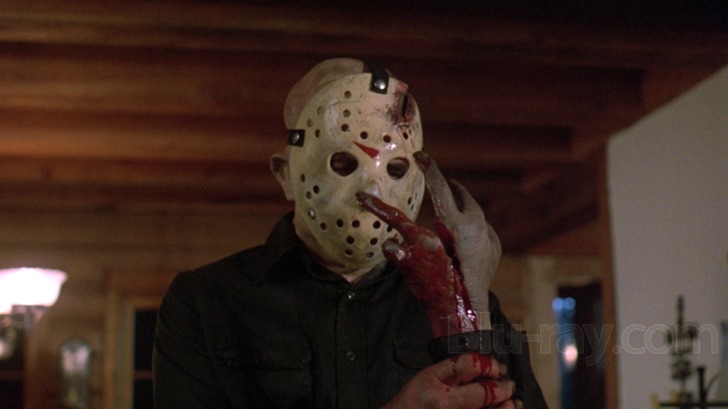
Extras on individual discs are listed in their separate reviews. The following is a list of extras on the supplemental DVD, entitled "Killer Extras", which was previously released with a 2004 box set of the first eight films on DVD subtitled "From Crystal Lake to Manhattan". To the extent these features are repeated elsewhere in the set, cross-references are provided. The "Killer Extras" disc has optional subtitles in English, French and Spanish.
- The Friday the 13th Chronicles
- Part I (20:33): see Friday the 13th Blu-ray review
- Part II (14:04): Sean Cunningham provides a brief overview of the origins of the first sequel, and actress Adrienne King describes her few days of shooting to establish a bridge with the first film. The bulk of the featurette consists of intercut interviews with Amy Steel Pulitzer (Ginny Field) and Warrington Gillette (Jason) sharing their memories of shooting the film.
- Part III (8:51): Gerald Feil, director of photography, describes in detail the film's innovative 3D photography and the challenges of working with a process that was still in the early stages of development. Actor Larry Zerner, whose character, Shelly, bears the heavy responsibility of having introduced Jason to his iconic hockey mask, recalls the additional burdens imposed on the actors by the demands of filming in 3D.
- Part IV (13:13): see Friday the 13th: The Final Chapter Blu-ray review
- Part V (5:49): see Friday The 13th: A New Beginning Blu-ray review
- Part VI (14:39): see Friday the 13th Part VI: Jason Lives Blu-ray review
- Part VII (11:37): see Friday the 13th Part VII: The New Blood Blu-ray review
- Part VIII (14:29): see Friday the 13th Part VIII: Jason Takes Manhattan Blu-ray review
- Secrets Galore Behind the Gore
- Tom Savini on Part I (9:32): see Friday the 13th Blu-ray review
- Tom Savini on Part IV (13:28): see Friday the 13th: The Final Chapter Blu-ray review
- John Carl Buechler on Part VII (11:09): see Friday the 13th Part VII: The New Blood Blu-ray review
- Crystal Lake Victims Tell All (15:36): Strictly speaking, not everyone interviewed for this entertaining collection of memories was a "victim" of Jason, but they are all interesting subjects with worthwhile stories. The participants are: Larry Zerner (Shelly, Part 3), William Butler (Michael, The New Blood), Lar Park-Lincoln (Tina, The New Blood), Adrienne King (Alice, Parts 1 & 2), makeup artist Tom Savini, director Joseph Zito (The Final Chapter), Amy Steel Pulitzer (Ginny Field, Part 2) and Corey Feldman (Tommy, The Final Chapter).
- Tales from the Cutting Room Floor (17:12): "What follows is a series of deleted, extended and alternate scenes from some of the Friday the 13th films." Some of the scenes are presented in split screen, with the final version provided for comparison. Scenes are included from:
- Friday the 13th (including a gorier death for Kevin Bacon's character)
- Friday the 13th: The Final Chapter (various extended and deleted scenes)
- Friday the 13th Part VI: Jason Lives (similar to the deleted scenes on the Blu-ray, but the split screen comparison is useful)
- Friday the 13th Part VII: The New Blood (with commentary by Kane Hodder and director John Carl Buechler)
- Friday Artifacts and Collectibles (7:01): Director Rob Hedden shows the killer guitar and one of the masks from Jason Takes Manhattan, as well as a slate with the working title "Ashes to Ashes", which was the film's "code" name. Tom McLoughlin shows Jason's tombstone and his coffin from Jason Lives. John Carl Buechler shows the original, but unused, makeup for the apparition that appears at the end of The New Blood. A fan, a merchandising exec and William Butler holding a model of his former director's head round out the collection.
- Original Trailers
- Part I—Theatrical Trailer (2:32): see Friday the 13th Blu-ray review
- Part II—Theatrical Trailer (2:11): see see Friday the 13th Part 2 Blu-ray review
- Part III—Theatrical Trailer (2:13): see Friday the 13th Part 3 Blu-ray review
- Part IV—Theatrical Trailer (1:52): see Friday the 13th: The Final Chapter Blu-ray review
- Part V—Theatrical Trailer (1:56): see Friday The 13th: A New Beginning Blu-ray review
- Part VI—Teaser Trailer (1:40): see Friday the 13th Part VI: Jason Lives Blu-ray review
- Part VII—Theatrical Trailer (1:36): see Friday the 13th Part VII: The New Blood Blu-ray review
- Part VIII—Theatrical Trailer (1:16): see Friday the 13th Part VIII: Jason Takes Manhattan Blu-ray review
- Crystal Lake Memories: This glossy 40-page booklet has been adapted from the 320-page volume originally published in 2006 by Titan Books. It includes behind-the-scenes photographs for each of the twelve films, plus a sampling of entertaining quotations from various participants in each.
- Counselor Patch: Now you too can be a counselor at Camp Crystal Lake! Just iron this patch onto your favorite garment—and watch out for Jason. (I refuse to count the giant elastic band holding everything together as an extra, but it does say: "I told the others. They wouldn't believe me. You're all doomed!")
Friday the 13th: The Complete Collection Blu-ray Movie, Overall Score and Recommendation
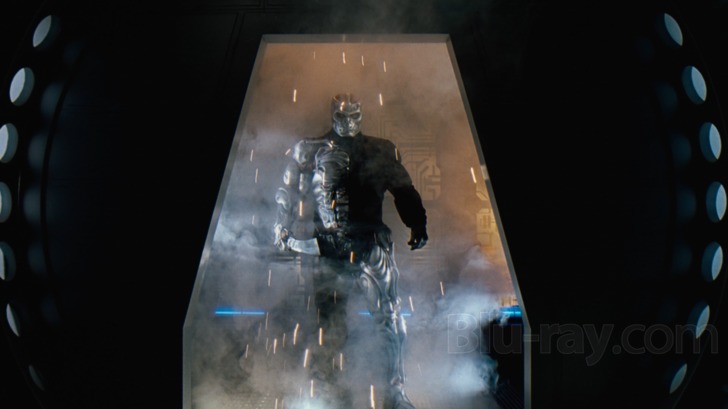
Leaving aside any concerns one might have about packaging, I cannot imagine a Friday the 13th fan who wouldn't want to acquire The Complete Collection. While it's conceivable that one or more of the seven titles newly released with this set may someday be issued separately, we would have been seen them by now if their respective studios anticipated significant sales from solo releases. As frustrating as it may be for fans, catalog titles are not big money makers on Blu-ray unless they're either major classics or their release can be transformed into an event. The Complete Collection certainly qualifies as an event, and it's been enhanced by the simultaneous release of the exhaustive documentary Crystal Lake Memories: The Complete History of Friday the 13th. As for the packaging issues, I sympathize with the various reports of damaged shipments, defective inserts and scratched discs. Quality control isn't what it used to be. All one can do is hope for the best and insist on an exchange when something goes wrong. That doesn't alter the fact that this is an excellent set and well worth any fan's investment. Highly recommended.